Kirjojen hintavertailu. Mukana 11 590 110 kirjaa ja 12 kauppaa.

Kirjahaku

Etsi kirjoja tekijän nimen, kirjan nimen tai ISBN:n perusteella.

1000 tulosta hakusanalla Lawrence R. Pianin

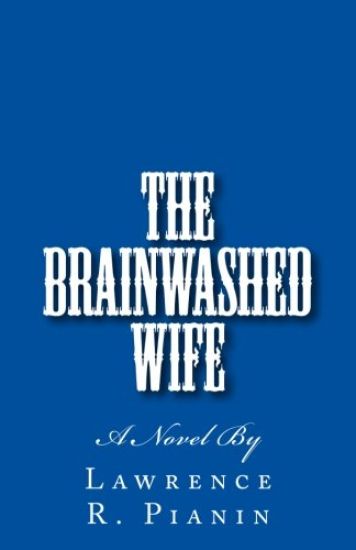
The Brainwashed Wife

The Brainwashed Wife

Lawrence R. Pianin

Createspace Independent Publishing Platform
2013
nidottu
"The Brainwashed Wife Leonard Price makes good, but winds up relinquishing everything he worked so hard to achieve: His business, his friends, his family and most of all the children he loves When life gets a little difficult in Lenny's business and when he needs his family the most: they abandon him. His wife Sarah and Lenny's two children are "Brainwashed" by his mother-in-law and Sarah's two jealous step brothers. Edith, Sarah's mother tells her daughter after a two year marriage engagement to Lenny that: "Rich Girls Don't Marry Poor Boys " Here is a person you love to hate Lenny is the kind of person you can empathize with. He always wants to do the right thing, but he has only one person to turn to: Maurice. In spite of all his difficulties Lenny has a Positive Attitude because he says "That's all you have " He is the consummate believer. Fortunately, Lenny does not despair even after his divorce and relationship of 16 years with Sarah ends and he gives up his legal right to be the father of his two children unceremoniously. Lenny always believes it is better to have loved and lost than not to have loved at all. He is the ultimate optimist through-out his ordeal. The author, Lawrence Pianin describes how Lenny's betrayal and devious deception by his wife Sarah and her family reinvigorated him to become a stronger person. This deception promulgated Lenny's new lust for life that would lead him on a new adventure that awakened his new passion and desire for women and his ardent enthusiasm for business. Written with skill and humor, "The Brainwashed Wife" is an uncompromisingly frank novel that captures all the excitement of a clever young man trying to make his way through life. In spite of a lost love and a demoralizing experience Lenny learns to overcome through the power of internal faith and the help of his new love
Recapture the Romance

Recapture the Romance

Lawrence Pianin

Createspace Independent Publishing Platform
2017
nidottu
Lewis Payne learns if you want to live the fast life you go it alone, but if you want to live a complete full life you do it together with the person you love Lewis learns that intimacy nurtured through romance must be done by learning how to play with your partner. Lewis finds out that sex alone is not love nor is it intimacy. Everytime Lewis loves or cares for someone, it's taken away from him. He's afraid to love again. He saw his first love end in a contemptuous divorce; and he saw the person he loved most in his life die. Lewis feels that all he has left is himself, until he met Joy; who said, "You can't be afraid to love someone again because all we have that's good on this earth is the love of one another."
Great Violinists and Pianists

Great Violinists and Pianists

John Lok; Lawrence Lok

VIJ Books (India) Pty Ltd
2022
nidottu
Can human behavior influence economic development or technology influences economic development? Can robot influence human or organizational behavioral change in order to bring economic benefit? Can construction apply facility management method to help it to bring long term reducing cost economic benefit? Can technology become one kind of production resource in order to help organizations to reduce cost? Technology will bring only positive benefit to organizational development or negative influence also. Can education or government policy may bring economic development. Which factor is the best method to bring economic development. I shall attempt to explain above factors whether which is the best factor to help our economy to develop. In recent years, machines had been used to be human's tasks in the performance of certain tasks related to intelligence, such as aspects of image recognition. Experts also forecast that rapid progress in the field of specialized artificial intelligence will continue. Then, it also brings this question: Does (AI) exceed that of human performance on more and more tasks? If it is truth, will some of human jobs to be disappeared? (AI) will be instead of human some simple jobs, then unemployment rate to the low skillful and low educated workers will be increased. How organizations implement facility management method to reduce long term cost ? How economic environment can influence global fuel price change? How reducing pollution cost brings airline organizations and energy supply organizations and social benefit ? I shall indicate on how economic environment can influence the relationship between airline freight service fuel consumption useful price change .Can economic measurement can predict when airline fuel price changes to airline freight service industry I shall indicate what factors cause the fuel price will raise as well as what the other external threats can cause risk to airline industry. Moreover, I shall also compare the different fuel price rising factors and other external threats whether which is the most effort to influence airline industry failure. Then, I shall give recommend how global airline industry can apply behavioral economic method to predict when the fuel price will rise possibly. I shall indicate how developed country, such as US how to apply micro economic method to predict and measure second energy will be accepted to be used by global householders to replace primary energy . What are second energy to bring human beneficial advantage and why it has more advantages more than primary energy. Is it technological product invention image or story ? Do global householders need to use primary energy to be essential energy consumption product to replace secondary energy in our future daily life ? What are the economic factors and how and why economic factors which can influence householder electricity energy consumers to impact their behaviors how to choose electricity energy every day? All these questions, I shall attempt to explain how to reduce cost can help airlines, energy supply organizations to bring benefit.
Letter to Mr. Lawrence R. Houston from Matthew Baird

Letter to Mr. Lawrence R. Houston from Matthew Baird

Central Intelligence Agency

Hassell Street Press
2021
nidottu
This work has been selected by scholars as being culturally important and is part of the knowledge base of civilization as we know it.This work is in the public domain in the United States of America, and possibly other nations. Within the United States, you may freely copy and distribute this work, as no entity (individual or corporate) has a copyright on the body of the work.Scholars believe, and we concur, that this work is important enough to be preserved, reproduced, and made generally available to the public. To ensure a quality reading experience, this work has been proofread and republished using a format that seamlessly blends the original graphical elements with text in an easy-to-read typeface.We appreciate your support of the preservation process, and thank you for being an important part of keeping this knowledge alive and relevant.
Global Economic Modeling: A Volume In Honor Of Lawrence R Klein
Global econometric models have a long history. From the early 1970s to the present, as modeling techniques have advanced, different modeling paradigms have emerged and been used to support national and international policy making. One purpose of this volume — based on a conference in recognition of the seminal impact of Nobel Prize winner in Economic Sciences Lawrence R Klein, whose pioneering work has spawned the field of international econometric modeling — is to survey these developments from today's perspective.A second objective of the volume is to shed light on the wide range of attempts to broaden the scope of modeling on an international scale. Beyond new developments in traditional areas of the trade and financial flows, the volume reviews new approaches to the modeling of linkages between macroeconomic activity and individual economic units, new research on the analysis of trends in income distribution and economic wellbeing on a global scale, and innovative ideas about modeling the interactions between economic development and the environment.With the expansion of elaborated economic linkages, this volume makes an important contribution to the evolving literature of global econometric models.
Landmark Papers in Economic Fluctuations, Economic Policy and Related Subjects Selected By Lawrence R. Klein
The computer revolution of the 1960s ushered in a golden period of econometric model building. Lawrence Klein was constantly in the forefront of this development. He was awarded the Alfred Nobel Memorial Prize in Economics for this and other contributions to applied econometrics.The 20th century witnessed a great expansion of economics as a scholarly discipline. The editor has chosen a selection of papers which sparked his interest as a student, a teacher and a researcher. This key volume includes both classic articles as well as lesser known papers which Professor Klein judges will stand the test of time.
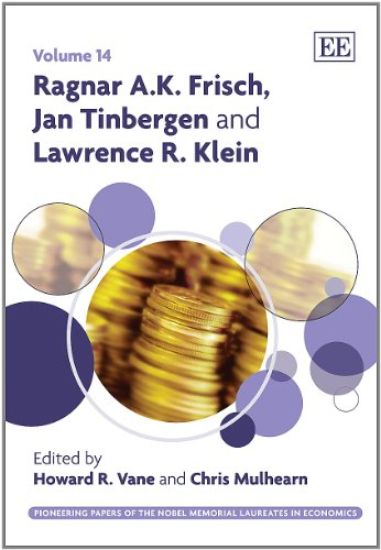
Ragnar A.K. Frisch, Jan Tinbergen and Lawrence R. Klein
This groundbreaking title brings together a critical selection of key papers by the Nobel Memorial Laureates in Economics that have helped shape the development and present state of economics. The editors have organised this comprehensive series by theme and focuses on those Laureates working in the same broad area of study. The careful selection of papers is set in context by an insightful introduction to the Laureates' careers and main published works. This landmark title will be an essential reference for scholars throughout the world.
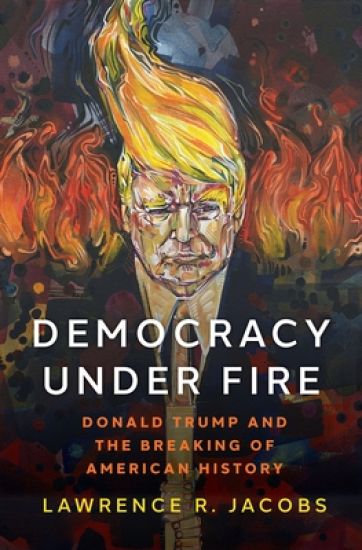
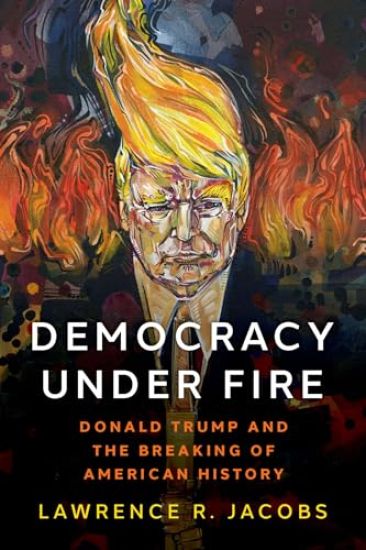
Democracy under Fire

Democracy under Fire

Lawrence R. Jacobs

OXFORD UNIVERSITY PRESS INC
2022
sidottu
Donald Trump's presidency offered Americans a dire warning regarding the vulnerabilities in their democracy, but the threat is broader and deeper-and looms still. "January 6th was a disgrace," Senate Republican Leader Mitch McConnell solemnly intoned at the end of Donald Trump's second impeachment trial on February 13, 2021. As to the culprit, Senator McConnell declared that "there is no question that President Donald Trump is practically and morally responsible." Before Trump even ran for President, his disdain for the rules, procedures, and norms of American democracy and the US Constitution was well-known and led prominent Republicans to repudiate him as "unfit" for the GOP nomination. Given the clear-eyed assessment of candidate Trump, why did the Republican Party nominate him as its presidential candidate in 2016 and then stand by him during the next four years? Much of the attention paid to Trump's rise to power has focused on his corrosive personality and divisive style of governing. But he alone is not the problem. The vulnerability is much broader and deeper. The ascendance of Trump is the culmination of nearly 250 years of political reforms that gradually ceded party nominations to small cliques of ideologically-motivated party activists, interest groups, and donors. Trump's rise is not an aberration but a predictable outcome of trends deeply rooted in American history but which accelerated in the last few decades. In Democracy under Fire, Lawrence Jacobs provides a highly engaging, if disturbing, history of political reforms since the late-eighteenth century that over time dangerously weakened democracy, widened political inequality as well as racial disparities, and rewarded toxic political polarization. Jacobs' searing indictment of political reformers concludes with recommendations to restrain the unbridled ambition of politicians who thrive on division and instead generate broad citizen engagement with tangible policy making.
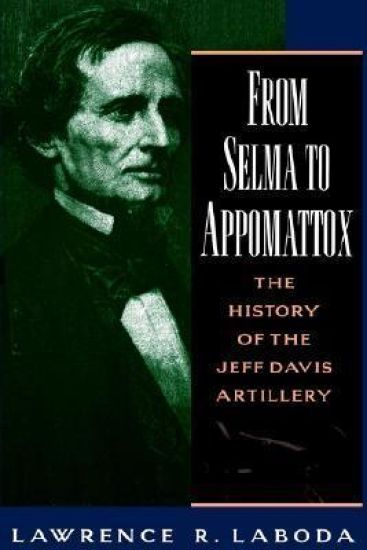
From Selma to Appomattox

From Selma to Appomattox

Lawrence R. Laboda

Oxford University Press Inc
1997
nidottu
The history of the Jeff Davis Artillery is the story of a company of Alabamians who fought with valor and distinction for the Confederacy during more than three and a half years of active service. As part of the Army of Northern Virginia, these soldiers played an integral part in most of the major campaigns of the Eastern Theatre, participating in the crucial battles at Sharpsburg, Gettysburg, and Spotsylvania, among others. Here, Lawrence Laboda tells the story of an artillery unit relatively unknown to Civil War enthusiasts, but whose performance on the fields of battle more than justified the honor of being named after the President of the Confederacy. After their recruitment in Selma, Alabama, we learn that the men of the Jeff Davis Artillery found themselves under many different commanders. It was only when First Lieutenant Robert F. Beckham, Captain James W. Bondurant, and Captain William J. Reese took command that the unit matured as a military organization, and provided its most efficient service on the field of battle. Even though unfortunate circumstances later in the war caused the company to be divided between two commands, the Alabama Battery's skill and determination carried through in all of the engagements that followed. On more than one occassion, the Jeff Davis Artillery received praise from the Confederate high command, including General Robert E. Lee himself. Within the Confederate Army, the reputation of the unit was no doubt one of the best, but after the fighting was done, the war record of this particular company, except for a rare article or mention in an obituary, never received proper recognition. It is only fitting, therefore, that the entire story of the gallant Alabamians finally be told. From Selma to Appomattox goes beyond the unit's combat record to explore its day to day challenges. Conditions on and off the battlefield were less than ideal at times, and from the beginning, the company as a whole fell victim to the horrors of disease. One glance down the roster list shows the extreme seriousness of the situation. Even disease was not their most immediate concern, however, as Laboda describes the unit's difficulties in finding food, horses, and even recruits while enduring the reorganizations of an army at war. With the assistance of numerous detailed maps, he follows the ever-proud Alabamians into their first fight at Seven Pines, through the major battles of the Peninsula, South Mountain, Antietam, Fredericksburg, Chancellorsville, Gettysburg, Spotsylvania, and Cedar Creek, and ultimately to their surrender at Appomattox. Scholars and Civil War buffs alike will applaud the efforts of Lawrence Laboda in bringing to life the endurance and bravery of the Jeff Davis Artillery.
Democracy under Fire

Democracy under Fire

Lawrence R. Jacobs

OXFORD UNIVERSITY PRESS INC
2024
nidottu
Donald Trump's presidency offered Americans a dire warning regarding the vulnerabilities in their democracy, but the threat is broader and deeper-and looms still. "January 6th was a disgrace," Senate Republican Leader Mitch McConnell solemnly intoned at the end of Donald Trump's second impeachment trial on February 13, 2021. As to the culprit, Senator McConnell declared that "there is no question that President Donald Trump is practically and morally responsible." Before Trump even ran for President, his disdain for the rules, procedures, and norms of American democracy and the US Constitution was well-known and led prominent Republicans to repudiate him as "unfit" for the GOP nomination. Given the clear-eyed assessment of candidate Trump, why did the Republican Party nominate him as its presidential candidate in 2016 and then stand by him during the next eight years, nominating him three times? Much of the attention paid to Trump's rise to power has focused on his corrosive personality and divisive style of governing. But he alone is not the problem. The vulnerability is much broader and deeper. The ascendance of Trump is the culmination of nearly 250 years of political reforms that gradually ceded party nominations to small cliques of ideologically motivated party activists, interest groups, and donors able to exploit the more open primary system that began in the 1970s?. Trump's rise is not an aberration, but a predictable outcome of trends deeply rooted in American history that have only accelerated in the last few decades. In the updated paperback edition of Democracy under Fire, Lawrence Jacobs provides a highly engaging, if disturbing, history of political reforms since the late-eighteenth century that over time dangerously weakened democracy, widened political inequality as well as racial disparities, and rewarded toxic political polarization. Jacobs' searing indictment of political reformers concludes with recommendations to restrain the unbridled ambition of politicians who thrive on division and instead generate broad citizen engagement with tangible policy making.
The Biology of Disturbed Habitats

The Biology of Disturbed Habitats

Lawrence R. Walker

Oxford University Press
2011
sidottu
This book provides the first global synthesis of the biology of disturbed habitats and offers readers both the conceptual underpinnings and practical advice required to comprehend and address the unprecedented environmental challenges facing humans. Every habitat on earth has been impacted by natural disturbances such as volcanoes, earthquakes, landslides, fires, floods, and droughts. Humans have contributed many additional disturbances such as mining, urbanization, forestry, agriculture, fishing, and recreation. These anthropogenic disturbances modify and often exacerbate the effects of the natural disturbances. Together, they result in the abrupt loss of biomass or ecosystem structure and function to create denuded surfaces where novel mixtures of native and non-native microbes, plants, and animals establish, grow, and die. The Biology of Disturbed Habitats examines both natural and anthropogenic disturbances in aquatic and terrestrial habitats. It explores how nutrients and productivity are altered in the disturbed habitats, the effects of disturbance on biodiversity, and the spatial and temporal dynamics of organisms that colonize disturbed habitats. This book also addresses how to manage disturbances through appropriate conservation and restoration measures, and discusses how climate change and overpopulation now represent the most challenging disturbances at a global scale.
The Biology of Disturbed Habitats

The Biology of Disturbed Habitats

Lawrence R. Walker

Oxford University Press
2011
nidottu
This book provides the first global synthesis of the biology of disturbed habitats and offers readers both the conceptual underpinnings and practical advice required to comprehend and address the unprecedented environmental challenges facing humans. Every habitat on earth has been impacted by natural disturbances such as volcanoes, earthquakes, landslides, fires, floods, and droughts. Humans have contributed many additional disturbances such as mining, urbanization, forestry, agriculture, fishing, and recreation. These anthropogenic disturbances modify and often exacerbate the effects of the natural disturbances. Together, they result in the abrupt loss of biomass or ecosystem structure and function to create denuded surfaces where novel mixtures of native and non-native microbes, plants, and animals establish, grow, and die. The Biology of Disturbed Habitats examines both natural and anthropogenic disturbances in aquatic and terrestrial habitats. It explores how nutrients and productivity are altered in the disturbed habitats, the effects of disturbance on biodiversity, and the spatial and temporal dynamics of organisms that colonize disturbed habitats. This book also addresses how to manage disturbances through appropriate conservation and restoration measures, and discusses how climate change and overpopulation now represent the most challenging disturbances at a global scale.
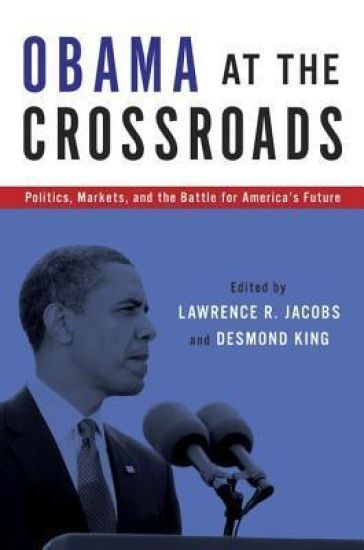
Obama at the Crossroads

Obama at the Crossroads

Lawrence R. Jacobs; Desmond S. King

Oxford University Press Inc
2012
nidottu
The 2010 election serves as a bookend to one of the remarkable political periods in recent U.S. history. Amidst a profound economic crisis, Americans elected an African American to the presidency and massive Democratic majorities to Congress. Beginning in 2009, the President and Congress put forward a sweeping agenda to both address the economic crisis and enact progressive policies that liberals had been advocating for decades. Within a year and a half, they would pass health care reform and financial reform alongside a stimulus package of nearly a trillion dollars. Democrats also rescued the auto industry via a partial government takeover and expanded the Bush administration's incipient program for saving the banking sector by pouring hundreds of billions of dollars into it. Finally, the Obama administration dramatically increased our commitment in Afghanistan while simultaneously winding down our presence in Iraq. In Obama at the Crossroads, eminent political scientists Desmond King and Larry Jacobs have gathered some of the best scholars in American politics to take stock of this extraordinary period. Covering the financial crisis, health care reform, racial politics, foreign policy, the nature of Obama's leadership, and the relationship between the administration's agenda and broader progressive goals, this will serve as a comprehensive overview of the key issues facing the Obama administration as it entered office.
Politicians Don't Pander

Politicians Don't Pander

Lawrence R. Jacobs; Robert Y. Shapiro

University of Chicago Press
2000
sidottu
Public opinion polls are everywhere. Journalists report their results without hesitation, and political activists of all kinds spend millions of dollars on them, fuelling the widespread assumption that elected officials "pander" to public opinion -that they tailor their policy decisions to the results of polls. In this provocative and engagingly written book, the authors argue that the reality is quite the opposite. In fact, when not facing election, contemporary presidents and members of Congress routinely ignore the public's policy preferences and follow their own political philosophies, as well as those of their party's activists, their contributors and their interest group allies. Politicians devote substantial time, effort and money to tracking public opinion, not for the purposes of policymaking, but to change public opinion - to determine how to craft their public statements and actions to win support for the policies they and their supporters want. Taking two recent, dramtic episodes - President Clinton's failed health care reform campaign and Newt Gingrich's "Contract with America" - as examples, the authors show how both used public opinion research and the media to change the public's mind. Such orchestrated displays help explain the media's preoccupation with political conflict strategy and, the authors argue, have propelled levels of public distrust and fear of government to record highs. Revisiting the fundamental premises of representative democracy, this accessible book asks us to reexamine whether our government really responds to the broad public or to the narrower interests and values of certain groups. And with the 2000 campaign season heating up, "Politicians Don't Pander" could not be more timely.
Politicians Don't Pander

Politicians Don't Pander

Lawrence R. Jacobs; Robert Y. Shapiro

University of Chicago Press
2000
nidottu
Public opinion polls are everywhere. Journalists report their results without hesitation, and political activists of all kinds spend millions of dollars on them, fuelling the widespread assumption that elected officials "pander" to public opinion -that they tailor their policy decisions to the results of polls. In this provocative and engagingly written book, the authors argue that the reality is quite the opposite. In fact, when not facing election, contemporary presidents and members of Congress routinely ignore the public's policy preferences and follow their own political philosophies, as well as those of their party's activists, their contributors and their interest group allies. Politicians devote substantial time, effort and money to tracking public opinion, not for the purposes of policymaking, but to change public opinion - to determine how to craft their public statements and actions to win support for the policies they and their supporters want. Taking two recent, dramtic episodes - President Clinton's failed health care reform campaign and Newt Gingrich's "Contract with America" - as examples, the authors show how both used public opinion research and the media to change the public's mind. Such orchestrated displays help explain the media's preoccupation with political conflict strategy and, the authors argue, have propelled levels of public distrust and fear of government to record highs. Revisiting the fundamental premises of representative democracy, this accessible book asks us to reexamine whether our government really responds to the broad public or to the narrower interests and values of certain groups. And with the 2000 campaign season heating up, "Politicians Don't Pander" could not be more timely.
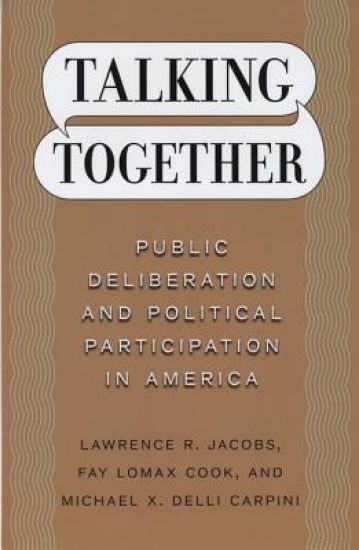
Talking Together – Public Deliberation and Political Participation in America

Talking Together – Public Deliberation and Political Participation in America

Lawrence R. Jacobs; Fay Lomax Cook; Michael X. Dell Carpini

University of Chicago Press
2009
sidottu
Challenging the conventional wisdom that Americans are less engaged than ever in national life and the democratic process, "Talking Together" paints the most comprehensive portrait available of public deliberation in the United States and explains why it is important to America's future. The authors' original and extensive research reveals how, when, and why citizens talk to each other about the issues of the day. They find that - in settings ranging from one-on-one conversations to e-mail exchanges to larger and more formal gatherings - a surprising two-thirds of Americans regularly participate in public discussions about such pressing issues as the Iraq War, economic development, and race relations. Pinpointing the real benefits of public discourse while considering arguments that question its importance, "Talking Together" presents an authoritative and clear-eyed assessment of deliberation's function in American governance. In the process, it offers concrete recommendations for increasing the power of talk to foster political action.