

Kirjahaku
Etsi kirjoja tekijän nimen, kirjan nimen tai ISBN:n perusteella.
1000 tulosta hakusanalla Lee H Cayard

Lee(h)rbuch 2.0
via tolino media
2024
nidottu


Parish-Smithsonian Expedition to Haiti, 1930. Diaries of Watson M. Perrygo and Lee H. Parish (copy)
Watson M. 1906-1984 Perrygo; Alexander 1886-1978 Wetmore
Hassell Street Press
2021
nidottu
This work has been selected by scholars as being culturally important and is part of the knowledge base of civilization as we know it.This work is in the public domain in the United States of America, and possibly other nations. Within the United States, you may freely copy and distribute this work, as no entity (individual or corporate) has a copyright on the body of the work.Scholars believe, and we concur, that this work is important enough to be preserved, reproduced, and made generally available to the public. To ensure a quality reading experience, this work has been proofread and republished using a format that seamlessly blends the original graphical elements with text in an easy-to-read typeface.We appreciate your support of the preservation process, and thank you for being an important part of keeping this knowledge alive and relevant.

When Lee H. Hamilton joined Congress in 1965 as a US Representative from southern Indiana, he began writing commentaries for his constituents describing his experiences, impressions, and developing views of what was right and wrong in American politics. He continued to write regularly throughout his 34 years in office and up to the present. Lively and full of his distinctive insights, Hamilton's essays provide vivid accounts of national milestones over the past fifty years: from the protests of the Sixties, the Vietnam War, and the Great Society reforms, through the Watergate and Iran-Contra affairs, to the post-9/11 years as the vice chairman of the 9/11 commission. Hamilton offers frank and sometimes surprising reflections on Congress, the presidency, and presidential character from Lyndon Johnson to Barack Obama. He argues that there are valuable lessons to be learned from past years, when Congress worked better than it does now. Offering history, politics, and personal reflections all at once, this book will appeal to everyone interested in understanding America of the 20th and 21st centuries.
How Congress Works and Why You Should Care is a concise introduction to the functions and vital role of the U.S. Congress by eminent former Congressman Lee H. Hamilton. Drawing on 34 years as a U.S. Representative, Hamilton explains how Congress reflects the diversity of the American people, serves as a forum for finding consensus, and provides balance within the federal government. Addressing widespread public misperceptions, he outlines areas where Congress can work better and ways for citizens to become more engaged in public affairs through their representatives in Washington. How Congress Works and Why You Should Care is essential reading for anyone who wants to understand the inner workings of Congress, and how all citizens can participate in its unique mission.
With the benefit of an insider's perspective, distinguished former congressman Lee H. Hamilton argues that America needs a stronger Congress and a more engaged citizenry in order to ensure responsive and effective democracy. Hamilton explains how Congress has drifted away from the role envisioned for it in the Constitution as a body whose power and influence would be preeminent in the American system of government. He details the steps that Congress should take to re-establish its parity with the executive branch and become an institution that works reliably and effectively for the betterment of the nation—reinforce congressional oversight, restore the deliberative process, curb the influence of lobbyists, and reduce excessive partisanship. Concurrently, Hamilton calls upon Americans to take more seriously their obligations and responsibilities as citizens and engage with the critical issues facing their communities and the nation.

International Accounting and Multinational Enterprises
Lee H. Radebaugh; Sidney J. Gray; Ervin L. Black
John Wiley Sons Inc
2006
sidottu
Make informed decisions in today's dynamic international business environments International accounting has never been so exciting. Not only is the pace of international business, finance, and investment rapidly increasing, but we are also moving closer than ever before toward a convergence of accounting standards worldwide. Updated and revised to keep pace with these changes, this Sixth Edition of Radebaugh, Gray, and Black's International Accounting and Multinational Enterprises focuses on international business strategies and how accounting applies to these strategies. You'll learn how to use financial and accounting information across borders, and make more informed decisions in an increasingly complex international business environment. The authors also explain the key factors, including cultural differences, that influence accounting standards and practices in different countries, and how those factors impact the harmonization of standards worldwide. New to This Edition: * New coauthor, Ervin L. Black of Brigham Young University. * Updated coverage on corporate governance, Sarbanes-Oxley, the Public Company Accounting Oversight Board (PCAOB), and how these forces affect U.S.-based multinationals, as well as companies in other countries. * Increased coverage of the efforts of the International Accounting Standards Board (IASB) to establish a uniform set of International Financial Reporting Standards (IRFS) worldwide and its interface with different national standard setters, especially the FASB. Special attention is given to the experience of the European Union and Australia in adopting IFRS in 2005. * A web-based International Accounting Practice Problem, which helps students see how to apply IFRS to a set of transactions. * Brief, user-oriented examples called Strategic Decision Points at the beginning of each chapter. * Expanded end-of-chapter material, including more discussion questions and exercises. * New cases (two per chapter) on the web. * Accounting for foreign exchange is now covered in two chapters. One chapter focuses on accounting issues, and the other chapter, which is new, focuses on foreign exchange risk management.

An Enlisted Man's Point of View: Lessons Learned in the 199th 1966-1967
Lee H. Houston
Dunn Houston
2020
nidottu
If you are interested in infantry combat, this book may appeal you. I tell this story from my point of view as an enlisted man in one of the most successful combat operations in the Vietnam War, Operation Fairfax. It is an overlooked point of view for our part of the war was often close and personal. I am testifying as one of the soldiers who did the fighting and the killing. It has been more than fifty years since I was a machine gunner in the 199th Light Infantry Brigade in Vietnam. Consequently, I do not remember many of the names of the men with whom I fought nor the precise places we did battle nor the exact sequence of events for some of my memories are a bit sketchy particularly the more painful ones. However, I have done my best to be as close to the truth as my recollections will permit.This book does more than what the title says; using the language of GIs, it exposes the thinking of the time. It takes the reader on a brief journey over an exciting decade: from the end segregation to the start of integration; from Search and Destroy missions to the era of protest and changing values; from a male dominated world to the beginning of a gender-neutral society, it's in this book.I also write about learning to live with many violent combat experiences that contribute to my Post Traumatic Stress Disorder (PTSD). Trying to pick the encounters that caused my problems is kind of like sprinting through a great briar patch and then looking back to see which briars cut me. Many of the cuts are still bleeding for I relive them almost every night. That is the reason for the book. For decades, I avoided even mentioning that I am a Vietnam veteran and had no desire for friendships with my Vietnam comrades. I lived the life of a success driven workaholic. This book was to identify painful recollections. I found that writing them down in an organized fashion took these memories out of my dreams and put them into my past where they belong.


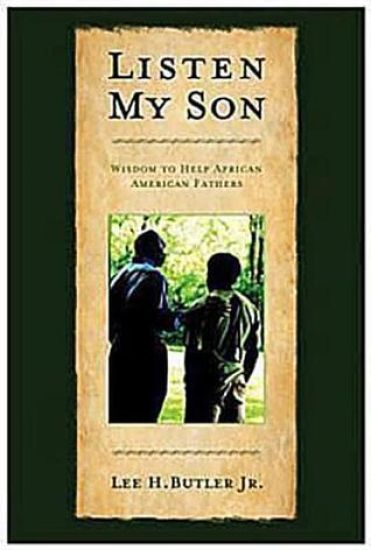
Straight talk about what it means to be African American men. "Let s have a conversation. Let s talk man-to-man and brother-to-brother.Let s talk about how we grow into adults and what manhood means. Let s talk brother-to-brother and man-to-man about how we relate to one another as we grow into adults. Let s talk about what defines our maleness and our manhood.Let s talk brother-to-brother as African American men.Let s talk openly and honestly about what it means to be black men and American.We can no longer assume that we all know what it means to be African American men.This is a conversation that is long overdue. Let s talk together and listen to one another.This is our time to talk instead of being talked about.It is time for us to shed the unhealthy images and opinions that we have accepted as the standards of what it means to be Black men.The benefits of our talk will transform our souls as well as benefit all the girls and women in our lives." from the book"

When one journeys to Ghana, one is confronted with the origins of the European-driven slave industry, symbolized by the dungeons of Elmina and Cape Coast.... Each time I have made the pilgrimage to these dungeons ... what came to me as tears ran down my face was the realization that this is probably where the difficulties in our collective relational history between African American women and men began. What stands between us? Lee Butler sends out a clarion call for us to come home. He sees our African understandings of God and humanity as foundational to our fully embracing who we are as an African (American) people -- as the whole people of God. -- The Rev. Dr. Marsha Foster Boyd, President of Ecumenical Theological Seminary, Detroit, Michigan Dr. Lee Butler has written an important work that every minister engaged in Pastoral Care needs to read. He provides culturally specific tools, hints, suggestions, and resources for working with families using love as the guiding principle and the foundation upon which meaningful Pastoral Care is built. His book is a must read for any and everyone in ministry who is serious about working with families from a position of cultural strengths and not from the usual 'deficit' model that has crippled so many African American families. I highly endorse his work, his scholarship, his insights, his sensitivity, his experience, and his expertise as a minister of the Gospel whose integrity is awesome. -- The Rev. Dr. Jeremiah A. Wright Jr., Senior Pastor, Trinity United Church of Christ, Chicago, Illinois.

In the early years of Yellowstone National Park, many companies offered buggy and stage rides through the park, their drivers telling stories to the passengers. Some had no basis in fact, especially those attributed to ""Indian legends,"" but others came from the early trappers and fur traders and were informational as well as entertaining.Lee H. Whittlesey, former Yellowstone National Park historian, devoted years of research to these pre-1920 stories told by the Park's ""tour guides,"" or interpreters. He includes the campfire stories of the traders and trappers, Yellowstone as it was portrayed in early photos and movies, the first Yellowstone guidebooks, and the ""fool tenderfoot questions"" posed by late nineteenth-century tourists. Whittlesey devotes chapters to the first two National Park interpreters, Philetus ""Windy"" Norris and G. L. Henderson. Each had his own delivery style and each awed his respective tour groups. Finally, there are the stagecoach drivers who chauffeured the public over Yellowstone's dirt roads and regaled their passengers with tales of the great Geyserland.Today, National Park Service, private, and concessioner tour guides have taken over the duties of these early guides, sharing Yellowstone National Park's many stories.All author proceeds from this book are being donated to the National Park Service.

Ho! For Wonderland
Lee H. Whittlesey; Elizabeth A. Watry
University of New Mexico Press
2009
sidottu
Since it became the world's first national park in 1872, Yellowstone has welcomed tourists from all corners of the globe who returned to their hometowns and countries with reports of this American wonderland. Stories from the park's earliest visitors began to spread so rapidly that by 1897 Yellowstone became solidly established as a successful tourist destination with more than ten thousand tourists passing through its entrances. Travelers in the park's first years faced long, dusty, and tediously slow stagecoach trips and could choose only between rather primitive hotels and tent camps for their overnight accommodations. Devoured by nineteenth-century readers, many of the narratives from this era are long forgotten today and are only gradually being recovered from historical archives. Park historians Lee Whittlesey and Elizabeth Watry have combed thousands of firsthand accounts, selecting nineteen tales that offer unique and engaging perspectives of visitors during Yellowstone's stagecoach era. From an 1873 newspaper serial that represents one of the earliest park's recorded trips to the 1914 ""Little Journey"" that popular writer Elbert Hubbard took with his wife Alice, the chronicles included here reveal the enduring captivation that Yellowstone held in the popular imagination, as it does today.


Genealogical Facts and Stories of the Dierdorff Family.
Lee H. Dierdorff
Hassell Street Press
2021
nidottu

A Century of Oregon Covered Bridges, 1851-1952: A History of Oregon Covered Bridges, Their Beginnings, Development and Decline
Lee H. Nelson
Literary Licensing, LLC
2012
sidottu
""A Century of Oregon Covered Bridges, 1851-1952"" is a comprehensive historical account of the covered bridges of Oregon. Written by Lee H. Nelson, the book explores the origins, evolution, and eventual decline of these iconic structures over the course of a century. The book is organized chronologically, with each chapter focusing on a specific time period and the bridges that were built during that era. The text is accompanied by numerous photographs, illustrations, and maps that help to bring the story of Oregon's covered bridges to life. Throughout the book, Nelson provides detailed information on the construction techniques, materials, and designs that were used to build these unique structures, as well as the challenges and obstacles that were faced by the bridge builders. The book also includes a comprehensive index and bibliography, making it an invaluable resource for anyone interested in the history of covered bridges or the development of transportation infrastructure in the Pacific Northwest. Overall, ""A Century of Oregon Covered Bridges, 1851-1952"" is a fascinating and informative read that will appeal to anyone with an interest in Oregon history, engineering, or architecture.Together With Some Mention Of The Builders And Techniques. Illustrated With Old Views And The Author's Own Photographs.This scarce antiquarian book is a facsimile reprint of the old original and may contain some imperfections such as library marks and notations. Because we believe this work is culturally important, we have made it available as part of our commitment for protecting, preserving, and promoting the world's literature in affordable, high quality, modern editions, that are true to their original work.