Kirjojen hintavertailu. Mukana 11 244 527 kirjaa ja 12 kauppaa.

Kirjahaku

Etsi kirjoja tekijän nimen, kirjan nimen tai ISBN:n perusteella.

744 tulosta hakusanalla Leeann Sharpe

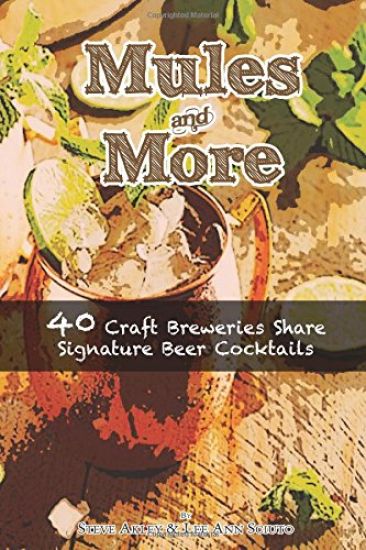
Mules & More: 40 Craft Breweries Share Signature Beer Cocktails
With the resurgence of the Moscow Mule (first popular in the 1940s), bartenders began taking a refreshed look at utilizing beer in cocktails. Now, nearly a decade into the "Mule craze," beer is a standard on cocktail menus across the nation. As bartenders, and consumers, began seeking out cocktail recipes with beer, craft breweries took note. Whether its unique recipes created for their tasting bars, or simply recipes to share with consumers, craft breweries are now at the forefront of the beer cocktail trend. Mules & More takes a look at forty craft breweries and features them sharing their signature beer cocktail. Here's a look at the lineup for this book: 7 Mile Brewery (Rio Grande, New Jersey) - 16 Mile Brewing Company (Georgetown, Delaware) - 32 North Brewing Co. (San Diego, California) - Abbey of the Holy Goats Brewery (Roswell, Georgia) - Absolution Brewing Company (Torrance, California), Aleman Brewing Company (Chicago, Illinois), Aloha Brewing Company (Honolulu, Hawaii), Alulu Brew Pub (Chicago, Illinois) - Anderson Valley Brewing Company (Boonville, California), Argyle Brewing Company (Greenwich, New York), Bear Bones Beer (Lewiston, Maine), Belching Beaver Tavern & Grill (Vista, California), Cape Cod Beer (Hyannis, Massachusetts), Cinder Block Brewery (North Kansas City, Missouri), Combustion Brewery & Taproom (Pickerington, Ohio), Crane Brewing Company (Raytown, Missouri), Demented Brewing Company (Middlesex, New Jersey), Deschutes Brewery (Bend, Oregon), Dry Dock Brewing Company (Aurora, Colorado), Emprical Brewing Company (Chicago, Illinois), Firetrucker Brewery (Ankeny, Iowa), Foothills Brewing (Winston-Salem, North Carolina), Forbidden Root Restaurant and Brewery (Chicago, Illinois), Friendship Brewing Company (Wentzville, Missouri), Half Day Brewing Company (Lincolnshire, Illinois), Heavy Seas Alehouse Baltimore (Baltimore, Maryland), Jolly Pumpkin Artisan Ales (Dexter, Michigan), Lefthand Brewing Company (Longmont, Colorado), Logboat Brewing Company (Columbia, Missouri), Maui Brewing Company / Waikiki Pub (Honolulu, Hawaii), Midnight Sun Brewing Company (Anchorage, Alaska), Outlaw Brewing Company (Winchester, New Hampshire), Red Clay Brewing Company (Opelika, Alabama), Revolution Brewing (Chicago, Illinois), SanTan Brewing Company (Chandler, Arizona), Square One Brewery (St. Louis, Missouri), Sun King Brewery (Indianapolis, Indiana), ThirstyBear Brewing Company (San Francisco, California), Twisted Spike Brewing Company (Oklahoma City, Oklahoma) and Voodoo Brewery (Meadville, Pennsylvania).
The Shape of the River

The Shape of the River

William G. Bowen; Derek Bok; Nicholas Lemann

Princeton University Press
2019
pokkari
The landmark New York Times bestseller that demonstrates the benefits of race-conscious admissions in higher education First published in 1998, William Bowen and Derek Bok’s The Shape of the River became an immediate landmark in the debate over affirmative action in America. It grounded a contentious subject in concrete data at a time when arguments surrounding it were characterized more by emotion than evidence—and it made a forceful case that race-conscious admissions were successfully helping to promote equal opportunity. Today, the issue of affirmative action remains unsettled. Much has changed, but The Shape of the River continues to present the most compelling data available about the effects of affirmative action. Now with a new foreword by Nicholas Lemann and an afterword by Derek Bok, The Shape of the River is an essential text for anyone seeking to understand race-conscious admissions in higher education.
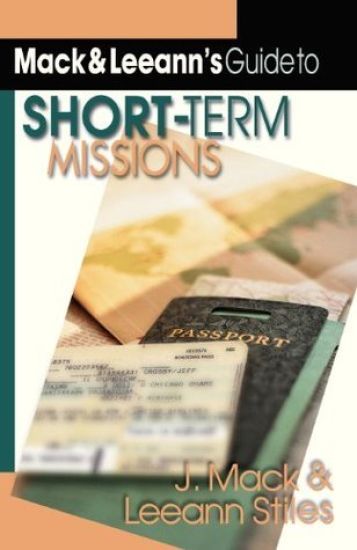
Mack Leeann`s Guide to Short–Term Missions

Mack Leeann`s Guide to Short–Term Missions

J. Mack Stiles; Leeann Stiles

Inter-Varsity Press
2000
nidottu
Today the world is as close as an airplane flight. Thousands take advantage of this, going for short visits to other countries to be more involved in God's worldwide mission. How can you prepare for such a trip? What are the hazards to avoid and the opportunities to embrace? Here is field-tested advice you should not leave home without! Mack and Leeann Stiles are veteran leaders of more than a dozen two-month mission trips that have taken them around the globe. Their practical advice, hard-won lessons and hilarious stories will help you know what to expect as you get ready to see God in action in new ways. This book offers you the keys to establishing partnerships with sending churcheslearning from your hosts in the countries you visitbecoming a culturally sensitive personovercoming the shortcomings of short-term missionsgrowing a servant spiritlearning to trust God, your hosts and yourselffacing injustice with realism and compassionspeaking about Jesus in a way that makes sense in a new culturedealing with reentry culture shock when you get back home Short mission trips can put feet on your knowledge of God and give you a God-sized picture of the world. In the process of going you will grow, and even though you may feel inadequate or scared, you will also give much to those you go to.
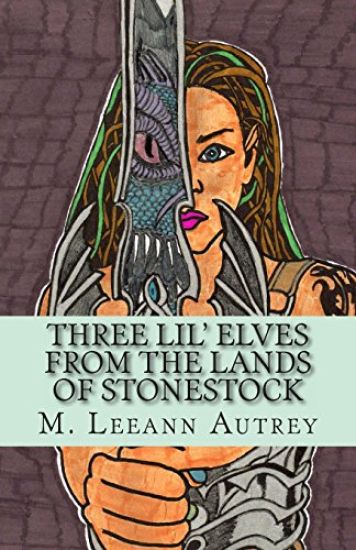
THREE LIL' ELVES FROM THE LANDS OF STONESTOCK -M. Leeann Autrey

THREE LIL' ELVES FROM THE LANDS OF STONESTOCK -M. Leeann Autrey

Millie Leeann Autrey

Createspace Independent Publishing Platform
2011
nidottu
This book is a re-told fairytale. It has the same conscept as "The Three Lil' Pigs". But with a different twist. It has elves instead of pigs and a evil dragon instead of a big bad wolf. The people of Stonestock have been run underground by the evil Dragon Zander. They have lived there in fear of Zander for many many years. But one day there were Three elves named Skylark, Ishwar, and Paz Bloom set off to prove the people of Stonestock could once again live above ground in peace and not underground in fear. There had been no sign of Zander in many years. The three go off on there own and build house out of material that they think will out stand a attack from Zander if he does show back up. Paz the youngest and only girl of the three elves has a point to prove. Join her and in join in her victory when she proves it.
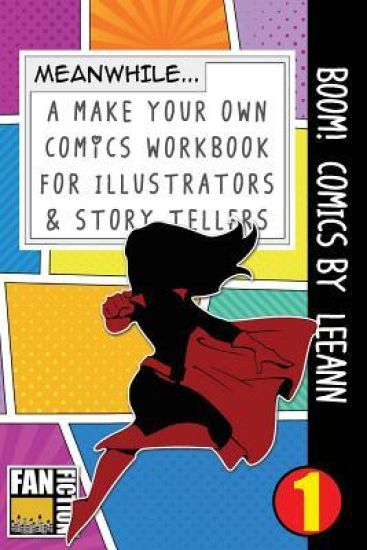
Boom! Comics by Leeann: A What Happens Next Comic Book for Budding Illustrators and Story Tellers
Grab This Deal For The Comics Artist In Your Life For Less Than $10See that girl always doodling and dreaming up stories and plots? She's gonna LOVE the What Happens Next Comic Book For Budding Artists edition, created especially for young artists between 9 and 14 years of age.Bokkaku Dojinshi has created this book as a 6 by 9 inch, perfect pocket book form. Plenty of different templates to explore as well as loads of room to keep track of plot ideas.There is even space for special expression studies of the main characters so the budding artist hits the right emotion in her images every single time.This book is perfect for: mangagraphic novelsSunday funniesanimefan fictionParents and teachers love What Happens Next Comics series for these reasons: helps speech developmentincreases literacydevelops a sense of sequencecreates confidencedevelops an appreciation for artboots creativityOnce you get this book, notice how handy it is - perfect pocket book size means no bulky bags on summer trips or lazy afternoons under a willow tree. All you need is your pencil and ink pen Can't wait to see what you make of your And then... comic book
Life Rescue 9 11: What do you give your life to?
A life-giving, true story, of dual heroes that saved and are changing lives. Joe Hunter is a firefighter that gave his life to save others in the Twin Towers of the World Trade Center. The courage to act in love comes alive while telling the history of 9/11. This deadliest attack on American soil impacts fireman Tommy Maher, and a deep interest for the value of life and the wellbeing of others develops. Focus shifts off self and towards acts of kindness and goodness, as the question of what the greatest thing a person can give is asked. Tommy is changing lives as he networks honoring others with random acts of kindness. The movement to Pay it Forward, has brought a unifying domino effect. Choosing to be the good in the world brings people together and helps heal our country and changes the world.
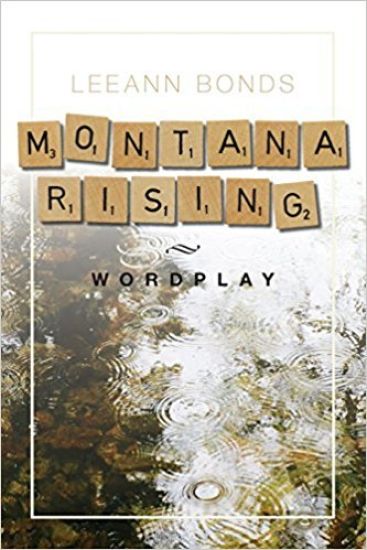
Montana Rising

Montana Rising

Leeann Bonds

Leeann Bonds
2017
pokkari
Montana Rising is a mild-mannered--okay not mild, but at least well-mannered--teacher by day, avid Scrabble player by early evening, and fast asleep by 10pm. Unless she's up writing a fantastical story using all the words played in a particularly good Scrabble game. But after her granddaughter brings home a frightened friend, Monti's life starts reading more like a crime drama than a romantic comedy. How will she write her Scrabble story to a satisfying "Happily Ever After" conclusion? And how can she get her own sweet life back when the situation is spiraling dangerously out of control?
Maintaining Segregation

Maintaining Segregation

LeeAnn G. Reynolds

Louisiana State University Press
2017
sidottu
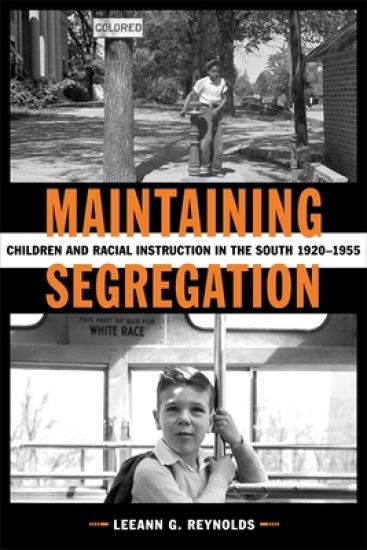
In Maintaining Segregation, LeeAnn G. Reynolds explores how black and white children in the early twentieth-century South learned about segregation in their homes, schools, and churches. As public lynchings and other displays of racial violence declined in the 1920s, a culture of silence developed around segregation, serving to forestall, absorb, and deflect individual challenges to the racial hierarchy. The cumulative effect of the racial instruction southern children received, prior to highly publicized news such as the Brown v. Board of Education decision and the Montgomery bus boycott, perpetuated segregation by discouraging discussion or critical examination.As the system of segregation evolved throughout the early twentieth century, generations of southerners came of age having little or no knowledge of life without institutionalized segregation. Reynolds examines the motives and approaches of white and black parents to racial instruction in the home and how their methods reinforced the status quo. Whereas white families sought to preserve the legal system of segregation and their place within it, black families faced the more complicated task of ensuring the safety of their children in a racist society without sacrificing their sense of self-worth. Schools and churches functioned as secondary sites for racial conditioning, and Reynolds traces the ways in which these institutions alternately challenged and encouraged the marginalization of black Americans both within society and the historical narrative.In order for subsequent generations to imagine and embrace the sort of racial equality championed by the civil rights movement, they had to overcome preconceived notions of race instilled since childhood. Ultimately, Reynolds's work reveals that the social change that occurred due to the civil rights movement can only be fully understood within the context of the segregation imposed upon children by southern institutions throughout much of the early twentieth century.
The Civil War as a Crisis in Gender

The Civil War as a Crisis in Gender

LeeAnn Whites

University of Georgia Press
2000
pokkari
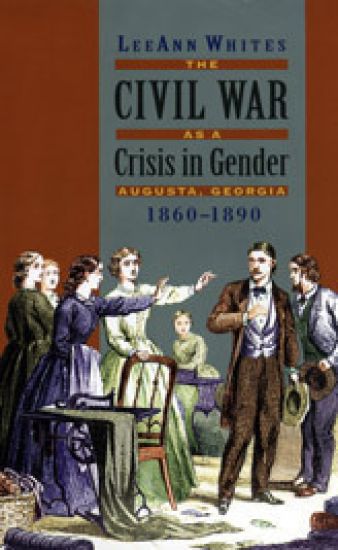
Gender is the last vantage point from which the Civil War has yet to be examined in-depth, says LeeAnn Whites. Gender concepts and constructions, Whites says, deeply influenced the beliefs underpinning both the Confederacy and its vestiges to which white southerners clung for decades after the Confederacy's defeat. Whites's arguments and observations, which center on the effects of the conflict on the South's gender hierarchy, will challenge our understanding of the war and our acceptance of its historiography.The ordering principle of gender roles and relations in the antebellum South, says Whites, was a form of privileged white male identity against which others in that society were measured and accorded worth and meaning—women, wives, children, and slaves. Over the course of the Civil War the power of these men to so arbitrarily construct their world all but vanished, owing to a succession of hardships that culminated in defeat and the end of slavery. At the same time, Confederate women were steadily—and ambivalently—empowered. Drawn out of their domestic sphere, these women labored and sacrificed to prop up an apparently hollow notion of essential manliness that rested in part on an assumption of female docility and weakness.Whites focuses on Augusta, Georgia, to follow these events as they were played out in the lives of actual men and women. An antebellum cotton trading center, Augusta was central to the Confederacy's supply network and later became an exemplary New South manufacturing city. Drawing on primary sources from private family papers to census data, Whites traces the interplay of power and subordination, self-interest and loyalty, as she discusses topics related to the gender crisis in Augusta, including female kin networks, women's volunteer organizations, class and race divisions, emancipation, Sherman's invasion of Georgia, veteran aid societies, rural migration to cities, and the postwar employment of white women and children in industry.Whites concludes with an account of how elite white Augustans "reconstructed" themselves in the postwar years. By memorializing their dead and mythologizing their history in a way that presented the war as a valiant defense of antebellum domesticity, these Augustans sought to restore a patriarchy—however attenuated—that would deflect the class strains of industrial development while maintaining what it could of the old Southern gender and racial order. Inherent in this effort, as during the war, was an unspoken admission by the white men of Augusta of their dependency upon white women. A pioneering volume in Civil War history, this important study opens new debates and avenues of inquiry in culture and gender studies.
The Culture of Property

The Culture of Property

LeeAnn B. Lands

University of Georgia Press
2009
sidottu
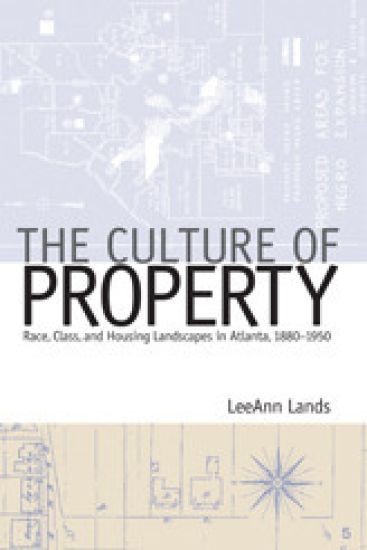
This history of the idea of “neighborhood” in a major American city examines the transition of Atlanta, Georgia, from a place little concerned with residential segregation, tasteful surroundings, and property control to one marked by extreme concentrations of poverty and racial and class exclusion. Using Atlanta as a lens to view the wider nation, LeeAnn Lands shows how assumptions about race and class have coalesced with attitudes toward residential landscape aesthetics and home ownership to shape public policies that promote and protect white privilege.Lands studies the diffusion of property ideologies on two separate but related levels: within academic, professional, and bureaucratic circles and within circles comprising civic elites and rank-and-file residents. By the 1920s, following the establishment of park neighborhoods such as Druid Hills and Ansley Park, white home owners approached housing and neighborhoods with a particular collection of desires and sensibilities: architectural and landscape continuity, a narrow range of housing values, orderliness, and separation from undesirable land uses—and undesirable people.By the 1950s, these desires and sensibilities had been codified in federal, state, and local standards, practices, and laws. Today, Lands argues, far more is at stake than issues of access to particular neighborhoods, because housing location is tied to the allocation of a broad range of resources, including school funding, infrastructure, and law enforcement. Long after racial segregation has been outlawed, white privilege remains embedded in our culture of home ownership.
The Culture of Property

The Culture of Property

LeeAnn B. Lands

University of Georgia Press
2009
pokkari
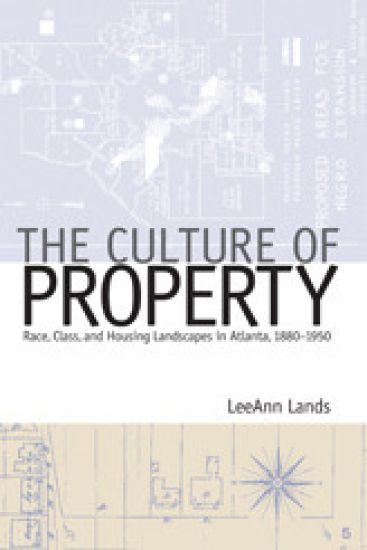
This history of the idea of “neighborhood” in a major American city examines the transition of Atlanta, Georgia, from a place little concerned with residential segregation, tasteful surroundings, and property control to one marked by extreme concentrations of poverty and racial and class exclusion. Using Atlanta as a lens to view the wider nation, LeeAnn Lands shows how assumptions about race and class have coalesced with attitudes toward residential landscape aesthetics and home ownership to shape public policies that promote and protect white privilege.Lands studies the diffusion of property ideologies on two separate but related levels: within academic, professional, and bureaucratic circles and within circles comprising civic elites and rank-and-file residents. By the 1920s, following the establishment of park neighborhoods such as Druid Hills and Ansley Park, white home owners approached housing and neighborhoods with a particular collection of desires and sensibilities: architectural and landscape continuity, a narrow range of housing values, orderliness, and separation from undesirable land uses—and undesirable people.By the 1950s, these desires and sensibilities had been codified in federal, state, and local standards, practices, and laws. Today, Lands argues, far more is at stake than issues of access to particular neighborhoods, because housing location is tied to the allocation of a broad range of resources, including school funding, infrastructure, and law enforcement. Long after racial segregation has been outlawed, white privilege remains embedded in our culture of home ownership.
Poor Atlanta

Poor Atlanta

LeeAnn B. Lands

UNIVERSITY OF GEORGIA PRESS
2023
pokkari
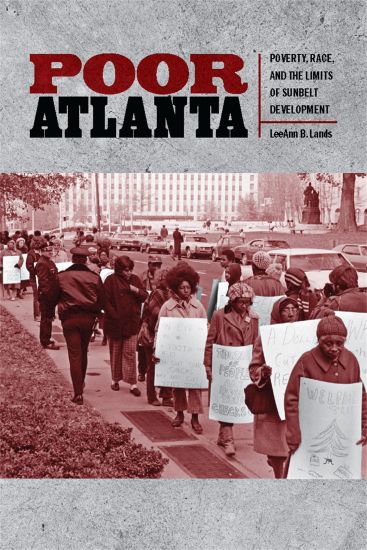
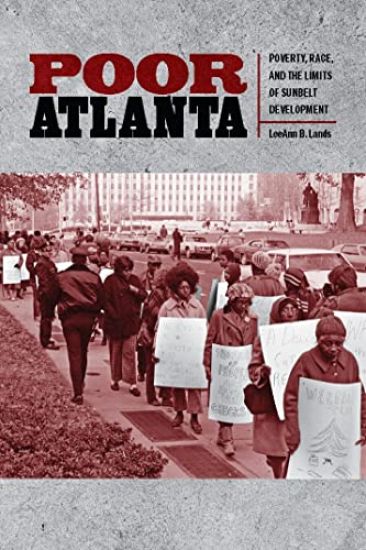
Poor Atlanta looks at the poor people’s campaigns in Atlanta in the 1960s and 1970s, which operated in relationship to Sunbelt city- building efforts. With these efforts, city leaders aimed to prevent urban violence, staunch disinvestment, check white flight, and amplify Atlanta’s importance as a business and transportation hub. As urban leaders promoted Forward Atlanta, a program to, in Mayor Ivan Allen Jr.’s words, “sell the city like a product,” poor families insisted that their lives and living conditions, too, should improve.While not always operating within public awareness, antipoverty campaigns among the poor presented a regular and sometimes strident critique of inequality and Atlanta’s uneven urban development. With Poor Atlanta, LeeAnn B. Lands demonstrates that, while eclipsed by the Black freedom movement, antipoverty organizing (including direct action campaigns, legal actions, lobbying, and other forms of activism) occurred with regularity from 1964 through 1976. Her analysis is one of the few citywide studies of antipoverty organizing in late twentieth-century America.
Poor Atlanta

Poor Atlanta

LeeAnn B. Lands

UNIVERSITY OF GEORGIA PRESS
2023
sidottu
Poor Atlanta looks at the poor people’s campaigns in Atlanta in the 1960s and 1970s, which operated in relationship to Sunbelt city- building efforts. With these efforts, city leaders aimed to prevent urban violence, staunch disinvestment, check white flight, and amplify Atlanta’s importance as a business and transportation hub. As urban leaders promoted Forward Atlanta, a program to, in Mayor Ivan Allen Jr.’s words, “sell the city like a product,” poor families insisted that their lives and living conditions, too, should improve.While not always operating within public awareness, antipoverty campaigns among the poor presented a regular and sometimes strident critique of inequality and Atlanta’s uneven urban development. With Poor Atlanta, LeeAnn B. Lands demonstrates that, while eclipsed by the Black freedom movement, antipoverty organizing (including direct action campaigns, legal actions, lobbying, and other forms of activism) occurred with regularity from 1964 through 1976. Her analysis is one of the few citywide studies of antipoverty organizing in late twentieth-century America.