In this short book, Evans interrogates the implications of VR’s re-emergence into the media mainstream, critiquing the notion of a VR revolution by analysing the development and ownership of VR companies while also exploring the possibilities of immersion in VR and the importance of immersion in the interest and ownership of VR enterprises. He assesses how the ideologies and desires of both computer programmers and major Silicon Valley industries may influence how VR worlds are conceived and experienced by users while also exploring the mechanisms that create the immersive experience that underpins interest in the medium.
In this short book, Evans interrogates the implications of VR’s re-emergence into the media mainstream, critiquing the notion of a VR revolution by analysing the development and ownership of VR companies while also exploring the possibilities of immersion in VR and the importance of immersion in the interest and ownership of VR enterprises. He assesses how the ideologies and desires of both computer programmers and major Silicon Valley industries may influence how VR worlds are conceived and experienced by users while also exploring the mechanisms that create the immersive experience that underpins interest in the medium.
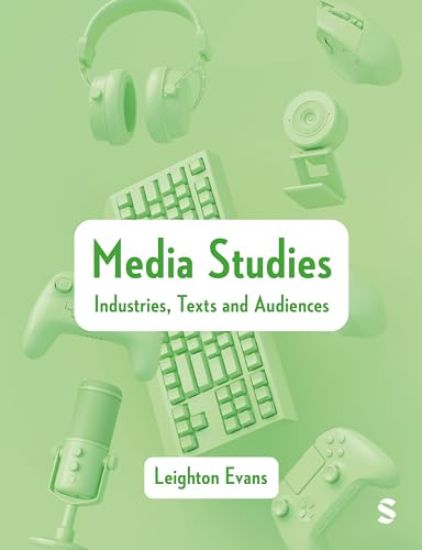
Contemplating studying media? This handy text will tell you everything you need to know! Beginning with the definition and history of media studies, this book delves into exciting subjects like the political economy of mass media, digitalization, AI, filter bubbles, misinformation and much more. Reading this text, you will encounter: - Real case studies, from a day in the life of a journalist, to global media conglomerates - An exploration of key themes like race and gender in the 'critical issues' section - Accessible content, with 'key material' boxes, a glossary and further reading - A lively style that won't leave you bored A must-have for undergraduate media students, this book enables a broad, confident understanding of key issues and kick starts success in your studies
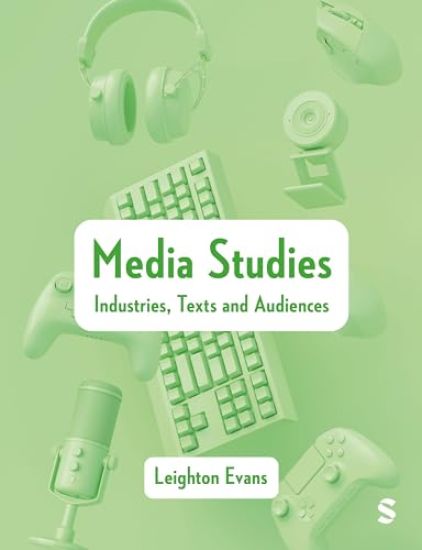
Contemplating studying media? This handy text will tell you everything you need to know! Beginning with the definition and history of media studies, this book delves into exciting subjects like the political economy of mass media, digitalization, AI, filter bubbles, misinformation and much more. Reading this text, you will encounter: - Real case studies, from a day in the life of a journalist, to global media conglomerates - An exploration of key themes like race and gender in the 'critical issues' section - Accessible content, with 'key material' boxes, a glossary and further reading - A lively style that won't leave you bored A must-have for undergraduate media students, this book enables a broad, confident understanding of key issues and kick starts success in your studies
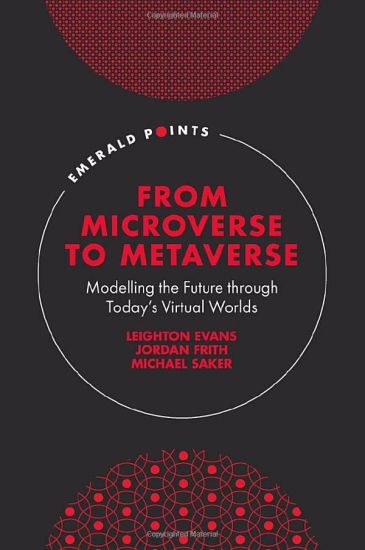
While the metaverse is often marketed as a future utopia, the vision of the metaverse represents an attempt for private corporations to control the code of the real. In the hands of companies that established and maintain the surveillance capitalism model, the ability to build a persistent, all-compassing environment means all activity in that world can be metricized and commodified, making the metaverse worthy of critical examination. Significant parts of life are already conducted in a digital place that combines various aspects of digital culture. Likewise, digital worlds for socializing already exist, and in a form akin to the VR metaverse, just as VR worlds based on play now coexist with online worlds of user generated content. These discreet private “microverses”, as we refer to them, are spaces which can model the tensions that would be inherent in the metaverse. From Microverse to Metaverse: Modelling the Future through Today's Virtual Worlds examines the place attachments, world-feeling and dwelling of several “microverses” to assess the possibilities of the metaverse as a realistic proposition. Critically analyzing the phenomenological feeling of place, the political economy of emerging tech, the mechanisms of identity and self along with the behavioral constraints involved, the authors map what a metaverse might be like, whether it can happen, and just why some companies seem so determined to make it happen.
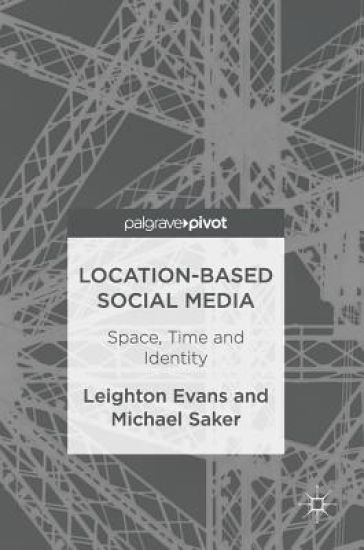
This book extends current understandings of the effects of using locative social media on spatiality, the experience of time and identity. This is a pertinent and timely topic given the increase in opportunities people now have to explicitly and implicitly share their location through digital and mobile technologies. There is a growing body of research on locative media, much of this literature has concentrated on spatial issues. Research here has explored how locative media and location-based social media (LBSN) are used to communicate and coordinate social interactions in public space, affecting how people approach their surroundings, turning ordinary life “into a game”, and altering how mobile media is involved in understanding the world. This book offers a critical analysis of the effect of usage of locative social media on identity through an engagement with the current literature on spatiality, a novel critical investigation of the temporal effects of LBSN use and a view of identity as influenced by the spatio-temporal effects of interacting with place through LBSN. Drawing on phenomenology, post-phenomenology and critical theory on social and locative media, alongside established sociological frameworks for approaching spatiality and the city, it presents a comprehensive account of the effects of LBSN and locative media use.
This book extends current understandings of the effects of using locative social media on spatiality, the experience of time and identity. This is a pertinent and timely topic given the increase in opportunities people now have to explicitly and implicitly share their location through digital and mobile technologies. There is a growing body of research on locative media, much of this literature has concentrated on spatial issues. Research here has explored how locative media and location-based social media (LBSN) are used to communicate and coordinate social interactions in public space, affecting how people approach their surroundings, turning ordinary life “into a game”, and altering how mobile media is involved in understanding the world. This book offers a critical analysis of the effect of usage of locative social media on identity through an engagement with the current literature on spatiality, a novel critical investigation of the temporal effects of LBSN use and a view of identity as influenced by the spatio-temporal effects of interacting with place through LBSN. Drawing on phenomenology, post-phenomenology and critical theory on social and locative media, alongside established sociological frameworks for approaching spatiality and the city, it presents a comprehensive account of the effects of LBSN and locative media use.
Intergenerational Locative Play: Augmenting Family examines the social, spatial and physical impact of the hybrid reality game (HRG) Pokémon Go on the relationship between parents and their children. The ubiquity of digital media correlates with a mounting body of work that considers the part digital technologies, such as video games, play in the lives of children. Consequently, commentators have deliberated the effects of rising levels of screen time and the association of this trend with antisocial behaviour, mental health-related problems, and the interference of family life. Yet, recent studies have demonstrated that the intergenerational play of video games can in fact strengthen familial connections by facilitating communication between adults, and children, and allowing adolescents to experiment with a range of roles. Research on intergeneration play, however, has tended to focus on video games played within the domestic sphere. In contrast, Locative games, such as Pokémon Go involve players physically interacting and moving through their surroundings. Through an original study of Pokémon Go this book extends developing research on intergenerational play to the field of locative games.
FREDERIC LORD LEIGHTON AN ILLUSTRATED RECORD OF HIS LIFE AND WORK By Ernest Rhys A study of the 19th century British artist Lord Leighton, known for his historical paintings, murals, sculptures, and landscapes. First published in 1900. Includes chapters on Leighton's contemporaries, his sculpture, his techniques, his artistic concepts, and his famous house in West London. Fully illustrated, with works from Leighton and many of his contemporary artists. With a full colour cover. Painters Series. Bibliography and notes. www.crmoon.com
Leighton has been regarded as significant work throughout human history, and in order to ensure that this work is never lost, we have taken steps to ensure its preservation by republishing this book in a contemporary format for both current and future generations. This entire book has been retyped, redesigned, and reformatted. Since these books are not made from scanned copies, the text is readable and clear.
The 18th century was a wealth of knowledge, exploration and rapidly growing technology and expanding record-keeping made possible by advances in the printing press. In its determination to preserve the century of revolution, Gale initiated a revolution of its own: digitization of epic proportions to preserve these invaluable works in the largest archive of its kind. Now for the first time these high-quality digital copies of original 18th century manuscripts are available in print, making them highly accessible to libraries, undergraduate students, and independent scholars.Western literary study flows out of eighteenth-century works by Alexander Pope, Daniel Defoe, Henry Fielding, Frances Burney, Denis Diderot, Johann Gottfried Herder, Johann Wolfgang von Goethe, and others. Experience the birth of the modern novel, or compare the development of language using dictionaries and grammar discourses. ++++The below data was compiled from various identification fields in the bibliographic record of this title. This data is provided as an additional tool in helping to insure edition identification: ++++British LibraryT037720J. H. = Joseph Harris.London: printed for A. Baldwin, 1702. 39, 1]p.; 2
Title: Leighton Court: a Country House Story.Publisher: British Library, Historical Print EditionsThe British Library is the national library of the United Kingdom. It is one of the world's largest research libraries holding over 150 million items in all known languages and formats: books, journals, newspapers, sound recordings, patents, maps, stamps, prints and much more. Its collections include around 14 million books, along with substantial additional collections of manuscripts and historical items dating back as far as 300 BC.The FICTION & PROSE LITERATURE collection includes books from the British Library digitised by Microsoft. The collection provides readers with a perspective of the world from some of the 18th and 19th century's most talented writers. Written for a range of audiences, these works are a treasure for any curious reader looking to see the world through the eyes of ages past. Beyond the main body of works the collection also includes song-books, comedy, and works of satire. ++++The below data was compiled from various identification fields in the bibliographic record of this title. This data is provided as an additional tool in helping to insure edition identification: ++++ British Library Kingsley, Henry; 1866. 2 vol.; 8 . 12624.aaa.6.