

Kirjahaku
Etsi kirjoja tekijän nimen, kirjan nimen tai ISBN:n perusteella.
565 tulosta hakusanalla Lemuel Kenneth David









Lemuel
Palala Press
2018
pokkari
This work has been selected by scholars as being culturally important, and is part of the knowledge base of civilization as we know it. This work was reproduced from the original artifact, and remains as true to the original work as possible. Therefore, you will see the original copyright references, library stamps (as most of these works have been housed in our most important libraries around the world), and other notations in the work.This work is in the public domain in the United States of America, and possibly other nations. Within the United States, you may freely copy and distribute this work, as no entity (individual or corporate) has a copyright on the body of the work.As a reproduction of a historical artifact, this work may contain missing or blurred pages, poor pictures, errant marks, etc. Scholars believe, and we concur, that this work is important enough to be preserved, reproduced, and made generally available to the public. We appreciate your support of the preservation process, and thank you for being an important part of keeping this knowledge alive and relevant.



Lemuel
Outlook Verlag
2024
pokkari
Reprint of the original, first published in 1883.

Lemuel
Outlook Verlag
2024
sidottu
Reprint of the original, first published in 1883.

Lemuel
Outlook Verlag
2024
pokkari
Reprint of the original, first published in 1883.

Lemuel
Outlook Verlag
2024
sidottu
Reprint of the original, first published in 1883.
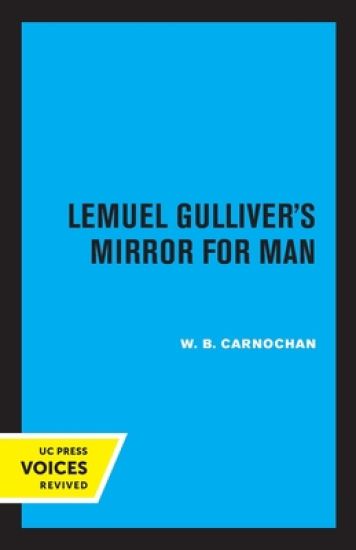
Satire, long the most neglected of literary genres, has begun to claim its share of critical attention. And no book in the satiric tradition has generated more controversy that Gulliver's Travels; since it was first published it has been the subject of an often passionate debate about its moral and esthetic value--a debate inseparable from the question of what Swift was really saying about us all, especially in Book IV. Despite the running controversy, this is the first extended study of the Travels to appear in over forty years. It places Swift's masterpiece in the perspective of its own age, but also in relation to ours. First it reviews the philosophical doubts of the Augustans about the nature of man--doubts now recognized as a major force behind Swift's satire. It examines Augustan satiric theory and its Continental background; and, coming to the Travels, treats them as one instance of a conventional form, the "satire on man." On the vexed problem of Book IV it argues that alternative views of Swift as a savage misanthrope and as a benign humanist are both inadequate, and that as in Swift's irony generally, what seem to be contradictory truths are simultaneously in force. The study is concerned throughout with the way values operate in a satiric context. What, for example are we to make of Gulliver's pious attachment to "truth"-telling? In this connection, a speculative theory is proposed which relates Swift's satiric intentions to the epistemology of John Locke. Finally, an epilogue looks ahead to some modern writers--Lewis Carroll, Joyce, Vladimir Nabokov--whose habits throw a retrospective light on Swift's. The study, broadly speaking, is not only about Gulliver's Travels but also about the psychology of the satirist and about the mind's response, whether the Augustans' or our own, at moments of intellectual crisis. This title is part of UC Press's Voices Revived program, which commemorates University of California Press's mission to seek out and cultivate the brightest minds and give them voice, reach, and impact. Drawing on a backlist dating to 1893, Voices Revived makes high-quality, peer-reviewed scholarship accessible once again using print-on-demand technology. This title was originally published in 1968.

Satire, long the most neglected of literary genres, has begun to claim its share of critical attention. And no book in the satiric tradition has generated more controversy that Gulliver's Travels; since it was first published it has been the subject of an often passionate debate about its moral and esthetic value--a debate inseparable from the question of what Swift was really saying about us all, especially in Book IV. Despite the running controversy, this is the first extended study of the Travels to appear in over forty years. It places Swift's masterpiece in the perspective of its own age, but also in relation to ours. First it reviews the philosophical doubts of the Augustans about the nature of man--doubts now recognized as a major force behind Swift's satire. It examines Augustan satiric theory and its Continental background; and, coming to the Travels, treats them as one instance of a conventional form, the "satire on man." On the vexed problem of Book IV it argues that alternative views of Swift as a savage misanthrope and as a benign humanist are both inadequate, and that as in Swift's irony generally, what seem to be contradictory truths are simultaneously in force. The study is concerned throughout with the way values operate in a satiric context. What, for example are we to make of Gulliver's pious attachment to "truth"-telling? In this connection, a speculative theory is proposed which relates Swift's satiric intentions to the epistemology of John Locke. Finally, an epilogue looks ahead to some modern writers--Lewis Carroll, Joyce, Vladimir Nabokov--whose habits throw a retrospective light on Swift's. The study, broadly speaking, is not only about Gulliver's Travels but also about the psychology of the satirist and about the mind's response, whether the Augustans' or our own, at moments of intellectual crisis. This title is part of UC Press's Voices Revived program, which commemorates University of California Press's mission to seek out and cultivate the brightest minds and give them voice, reach, and impact. Drawing on a backlist dating to 1893, Voices Revived makes high-quality, peer-reviewed scholarship accessible once again using print-on-demand technology. This title was originally published in 1968.

Lemuel Clap Chart, 1630-1902-1961; Pioneer Clap Ancestors.
Frederick Lewis 1895-1966 Weis
Hassell Street Press
2021
nidottu

Auto-biography Of Lemuel Sawyer, Formerly Member Of Congress From North Carolina
Lemuel Sawyer
Hutson Street Press
2025
sidottu