

Kirjahaku
Etsi kirjoja tekijän nimen, kirjan nimen tai ISBN:n perusteella.
1000 tulosta hakusanalla Leo G. Schaad

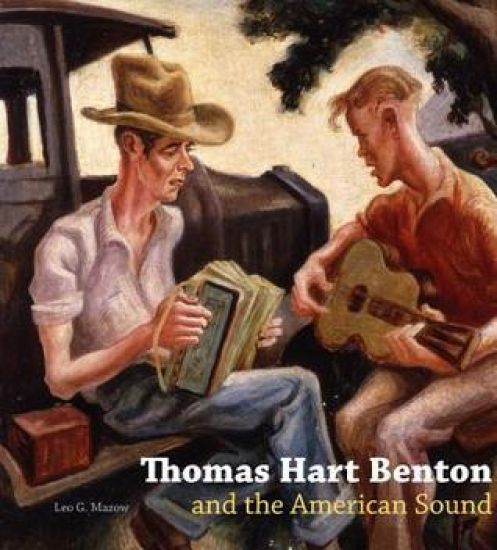
Thomas Hart Benton and the American Sound
Leo G. Mazow
Pennsylvania State University Press
2012
sidottu
Alternately praised as “an American original” and lampooned as an arbiter of kitsch, the regionalist painter Thomas Hart Benton has been the subject of myriad monographs and journal articles, remaining almost as controversial today as he was in his own time. Missing from this literature, however, is an understanding of the profound ways in which sound figures in the artist’s enterprises. Prolonged attention to the sonic realm yields rich insights into long-established narratives, corroborating some but challenging and complicating at least as many. A self-taught and frequently performing musician who invented a harmonica tablature notation system, Benton was also a collector, cataloguer, transcriber, and distributor of popular music. In Thomas Hart Benton and the American Sound, Leo Mazow shows that the artist’s musical imagery was part of a larger belief in the capacity of sound to register and convey meaning. In Benton’s pictorial universe, it is through sound that stories are told, opinions are voiced, experiences are preserved, and history is recorded.
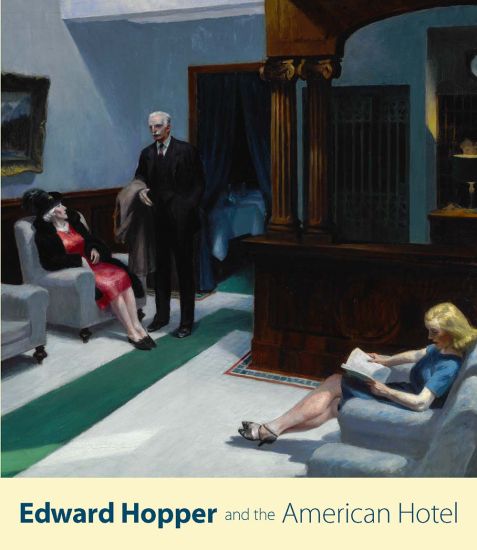
Edward Hopper and the American Hotel
Leo G. Mazow; Sarah G Powers
Yale University Press
2019
pokkari
Using recreated itineraries, travel along with Edward Hopper on his various road trips and encounter hotels, staff, and guests as seen through the artist's eyes The painter, draftsman, and illustrator Edward Hopper (1882–1967) is one of America’s best-known and most frequently exhibited artists. Hotels, motels, and tourist homes are recurring motifs in his work, along with streets, lighthouses, and gas stations forming a visual vocabulary of transportation infrastructure. In ten essays, this fascinating volume explores Hopper’s lifelong investigation of such spaces, shedding light on both his professional practice and far-reaching changes in transportation and communications, which affected not only work and leisure but also dynamics of race, class, and gender. Hopper’s covers for the trade journal Hotel Management, in addition to other well-known works, invite reflection on the complicated roles of the nascent New Woman; the erasure of hotel work and workers; contemporary associations of the color white with cleanliness and purity; the watercolors Hopper made from hotel windows and rooftops in Mexico; and the broader context of transportation history. A final chapter then situates Hopper's contribution to the fascinating role that the hotel has played in the broader development of American art in the 20th century. As a unique feature, the book's backflap also holds two "TripTik"-like, removable maps that trace the journeys that Hopper and his wife, the artist Josephine “Jo” Nivison Hopper, took by car in the 1940s and 1950s; selected correspondence and quotations from Jo’s own diaries join reproductions of postcards and ephemera illuminating their—and fellow Americans’—shifting travel habits. Distributed for the Virginia Museum of Fine Arts Exhibition Schedule: Virginia Museum of Fine Arts, Richmond (October 26, 2019–February 23, 2020) Indianapolis Museum of Art at Newfields (June 4, 2020–September 13, 2020)
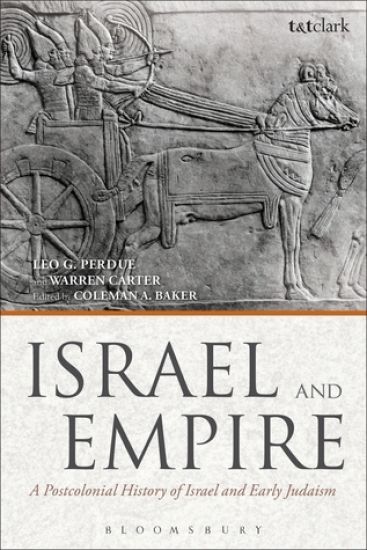
This is an examination of Ancient Israel and the Hebrew Bible through the lens of Postcolonial interpretation and Empire Studies. "Israel and Empire" introduces students to the history, literature, and theology of the Hebrew Bible and texts of early Judaism, enabling them to read these texts through the lens of postcolonial interpretation. This approach should allow students to recognize not only how cultural and socio-political forces shaped ancient Israel and the worldviews of the early Jews but also the impact of imperialism on modern readings of the Bible. Perdue and Niang cover a broad sweep of history, from 1300 BCE to 72 CE, including the late Bronze age, Egyptian imperialism, Israel's entrance into Canaan, the Davidic-Solomonic Empire, the Assyrian Empire, the Babylonian Empire, the Persian Empire, the Greek Empire, the Maccabean Empire, and Roman rule. Additionally the authors show how earlier examples of imperialism in the Ancient Near East provide a window through which to see the forces and effects of imperialism in modern history.
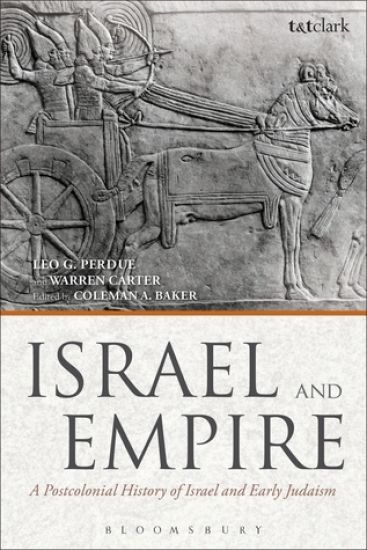
This is an examination of Ancient Israel and the Hebrew Bible through the lens of Postcolonial interpretation and Empire Studies. "Israel and Empire" introduces students to the history, literature, and theology of the Hebrew Bible and texts of early Judaism, enabling them to read these texts through the lens of postcolonial interpretation. This approach should allow students to recognize not only how cultural and socio-political forces shaped ancient Israel and the worldviews of the early Jews but also the impact of imperialism on modern readings of the Bible. Perdue and Niang cover a broad sweep of history, from 1300 BCE to 72 CE, including the late Bronze age, Egyptian imperialism, Israel's entrance into Canaan, the Davidic-Solomonic Empire, the Assyrian Empire, the Babylonian Empire, the Persian Empire, the Greek Empire, the Maccabean Empire, and Roman rule. Additionally the authors show how earlier examples of imperialism in the Ancient Near East provide a window through which to see the forces and effects of imperialism in modern history.
Once the 'poor relation' of biblical theology, Wisdom is now assuming a central role in the reconstruction of Israelite religion and the formation of scripture. This clear yet sophisticated study brings together creation, anthropology, myth, narrative, metaphor and much else in a comprehensive synthesis representing the fruits of nearly two decades of research by a leading student of Wisdom.

The Old Testament's wisdom literature offers one of the most intriguing collections of biblical books (Proverbs, Job, the Psalms about Torah and wisdom, Ecclesiastes, Qoheleth, Ben Sira, and the Wisdom of Solomon). In this magisterial textbook, preeminent wisdom scholar Leo G. Perdue sets each book of wisdom in its historical context, examining the conditions that produced the book and shaped its thinking. This allows him to show how wisdom thought changed over time in response to shifting historical and social conditions. In addition to analyzing the historical setting of wisdom, Perdue discerns the theological themes and theological developments within this rich literature.
The book of Proverbs is a collection of sayings, poems, and "life's little instructions." Wrestling with the values of things such as creation, livelihood, or moral character, Proverbs exhorts its readers to seek the higher ideals--knowledge, discipline, piety, and order--and offers guidance on how to live in harmony with God, others, and oneself.
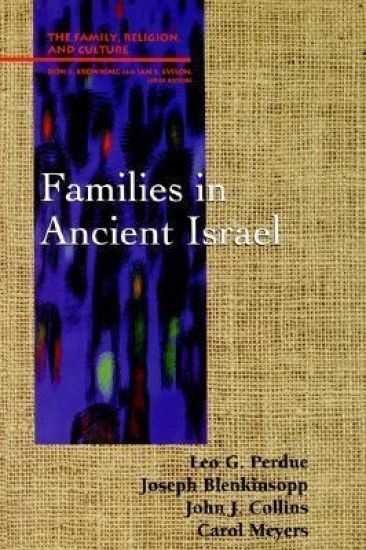
Families in Ancient Israel
Leo G. Perdue; Joseph Blenkinsopp; John J. Collins; Carol L. Meyers
Westminster/John Knox Press,U.S.
1997
nidottu
Four respected scholars of the Hebrew Bible and early Judaism provide a clear portrait of the family in ancient Israel. Important theological and ethical implications are made for the family today.The Family, Culture, and Religion series offers informed and responsible analyses of the state of the American family from a religious perspective and provides practical assistance for the family's revitalization.
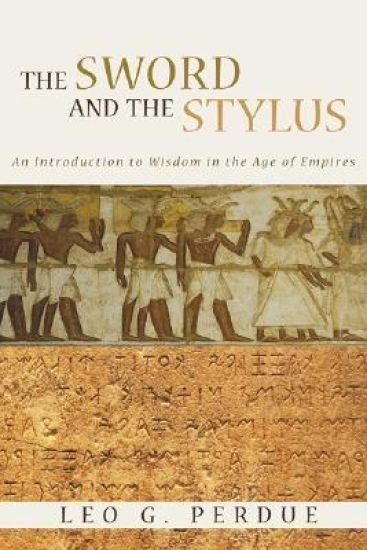
The all-too-frequent disregard of historical and social contexts by many wisdom scholars often leads to the distortion of this literature and transforms its teachings into abstract ideas lacking any incarnation in the social and historical world of human living. Leo Perdue here argues from a sociohistorical approach that the proper understanding of ancient wisdom literature requires one to move out of the realm of philosophical idealism into the flesh and blood of human history. Arguing that wisdom was international in practice and outlook, Perdue traces the interaction between both ruling and subject nations and their sages who produced their respective cultures and their foundational worldviews. While not always easy to reconstruct, he acknowledges, the historical and social settings of texts provide necessary contexts for interpretation and engagement by later readers and hearers. Wisdom texts did not transcend their life settings to espouse values regardless of time and circumstance. Rather, they are located in a variety of historical events in an evolving nation, reflecting a vast array of different and changing moral systems, epistemologies, and religious understandings.
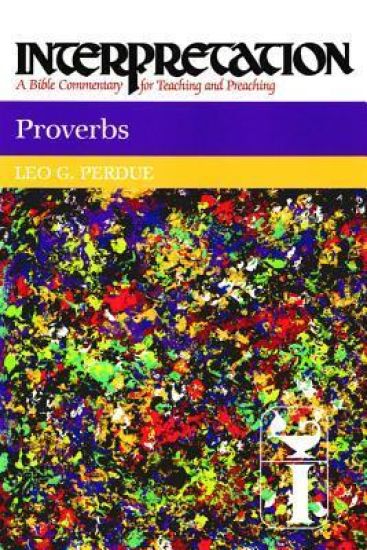
The book of Proverbs is a collection of sayings, poems, and "life's little instructions." Wrestling with the values of things such as creation, livelihood, or moral character, Proverbs exhorts its readers to seek the higher ideals--knowledge, discipline, piety, and order--and offers guidance on how to live in harmony with God, others, and oneself.Interpretation: A Bible Commentary for Teaching and Preaching is a distinctive resource for those who interpret the Bible in the church. Planned and written specifically for teaching and preaching needs, this critically acclaimed biblical commentary is a major contribution to scholarship and ministry.
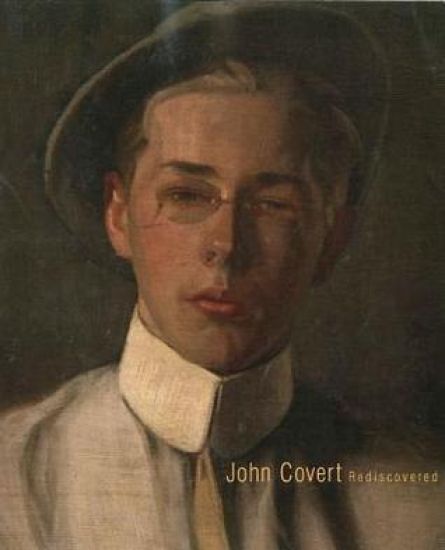
Although little known today, John R. Covert (1882–1960) played a pivotal role in the development of American modernism. He was a founder of the Society of Independent Artists, an active participant in the Société Anonyme, and produced innovative paintings and collage-constructions that reflect his experiences of the renowned art collection of his cousin, Walter Arensberg. Yet, in 1923, Covert broke off his association with key modernists like Marcel Duchamp and Charles Demuth, closed his New York studio, and went to work as a salesman for the Vesuvius Crucible Company of Pittsburgh. Generally, the artist’s story is thought to end there, but John Covert Rediscovered, published in conjunction with an exhibition of the same name organized by the Palmer Museum of Art, shows that Covert never abandoned his artistic endeavors even if he did spend the last decades of his life at the periphery of the art world. Drawing on Covert’s daybooks (recently conserved at the Philadelphia Museum of Art) and art in the collection of the late Charles Covert Arensberg, John Covert Rediscovered not only establishes that Covert continued his artistic explorations long after his supposed retirement in 1923 but also introduces several hitherto lost works. No less surprising and significant is its revelation that Covert became a filmmaker and prolific photographer, working both within and against modernist ideas of the image. In his introduction, Leo G. Mazow presents a new view of Covert’s multifaceted activities, including his exercises in secret writing and cryptography. John Covert Rediscovered also contains an essay by Michael R. Taylor that breaks new ground by tracing Covert’s "conversion" to modernism back to his life in Munich and Paris during the turbulent years leading up to World War I. All the art in the exhibition is reproduced in this publication, the value of which is further augmented by Leo Mazow’s informative commentaries on each art work.The exhibition, "John Covert Rediscovered," organized by the Palmer Museum of Art, has also been shown at The Demuth Foundation and will be at the Suzanne H. Arnold Gallery, Lebanon Valley College, August 28–October 12, 2003.
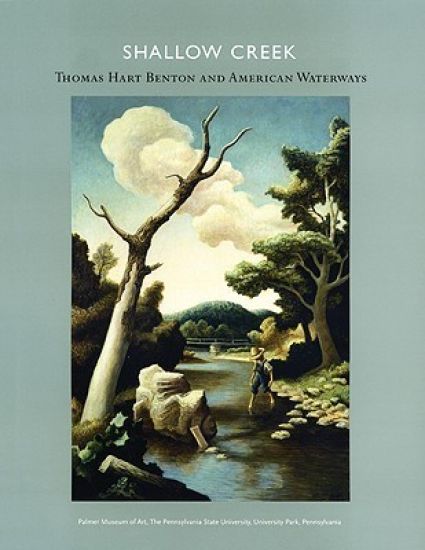
Images of waterways figure prominently in the art of Thomas Hart Benton (1889–1975). His depictions of rivers, streams, gullies, and creeks form a subgenre of American landscape painting, inviting us to rethink the artistic meaning and historical legacy of even the narrowest of inlets. Among Benton’s most significant representations of this subject matter is a body of work from 1938 to 1942 depicting smaller, more intimate coves and creeks. The painting Shallow Creek (1938, Collection of James and Barbara Palmer) is a linchpin of this series, an extraordinarily personal canvas and one of the most symbolically charged works produced by the artist.This catalogue, accompanying an exhibition of the same name and organized by the Palmer Museum of Art at Penn State University, unravels the work’s richly expressive forms and densely loaded iconographies to reveal a narrative at once markedly public and deeply private in scope. Several additional works by Benton shed further light on the artist’s river imagery and related subject matter, especially his return to remarkably similar themes later in life, based on his numerous “float trips” on the Buffalo and White Rivers in northern Arkansas.
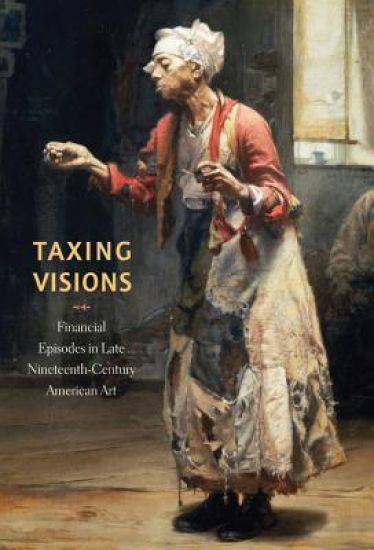
In Taxing Visions, Leo Mazow and Kevin Murphy explore taxes, rents, economic depression, and financial inequity as subject matter in several visually provocative paintings and works on paper. Although this period is often identified artistically with leisure-laden impressionist landscapes, flowing-with-abundance still-life paintings, and class-conscious “official” portraits, practitioners working in a variety of stylistic idioms reckoned with financial panics and occupational turmoil that marked the Reconstruction, Gilded Age, and early Progressive eras. These paintings, drawings, and prints demonstrate with sometimes startling clarity the experience of economic downturn, ultimately picking up where facts, figures, and the printed word leave off.Featured artists include William Michael Harnett, George Inness, Eastman Johnson, and James McNeill Whistler, as well as several lesser-known individuals, in part because their art “taxes” our sensibilities of socioeconomic propriety. Taxing Visions shows satire and protest playing out through a sizable body of work, with artists confronting recession and depression with equal parts reportage, invective, humor, and hope. This catalogue accompanies an exhibition of the same name organized by the Palmer Museum of Art at Penn State University and the Huntington Library and Art Collections in San Marino, California.

![CHROMECAST [Owners Manual]: How to Painlessly Setup Your Old or New Chromecast Device and Stream Magnificent Contents Like A Pro With Few Steps in](/covers/9781080815586.jpg)
CHROMECAST [Owners Manual]: How to Painlessly Setup Your Old or New Chromecast Device and Stream Magnificent Contents Like A Pro With Few Steps in
Leo G. Boss
Independently Published
2019
nidottu
CHROMECAST Owners Manual] How to Painlessly Setup Your Old or New Chromecast Device and Stream Magnificent Contents Like A Pro With Few Steps in 5 MinutesChromecast is an amazing digital device that is becoming popular, this device that is used to stream contents online with the aid of an internet connection directly on your Television.This handy device is connected to a Television set which will grant you access to several services or contents you can stream.But the big issue Chromecast users are faced with is how to set it up in order to enjoy these stuff online. Not to worry This book will show you all you need to know, including a step by step stress-free approach to set up your chromecast and get access to awesome contents online. What are you waiting for?Click the BUY NOW button to get your copy today