Len Beck, Author of V2G-101, assembled this book of 3-demintional art projects he created during his lifetime. He uses wood and many other media to create fun and enduring works of art. Some last only a day or less, as in food art and sand carvings. Some ceramics and plaster pieces are over 40 years old His son's questions about the various pieces inspired stories about each project. This book is a collection of photos of over 100 projects, accompanied with a short story containing the details and some history about the topic.
One of the foremost American historians of his generation, Leonard J. Arrington (1913-1999) revolutionized the writing of Mormon history. Through the publication of his groundbreaking "Great Basin Kingdom: An Economic History of the Latter-day Saints, " as well as numerous other publications, he established the dominant interpretation of the Mormon experience. Yet until now, there has been little analysis of his contribution to western history.Focusing on Arrington's intellectual career, Gary Topping examines the facets of Arrington's life that influenced his historical ideas: how his Idaho farm background shaped his values and interests, and how his nontraditional upbringing differed from that of other young Mormons. Topping also offers a critical evaluation and major new interpretation of Arrington's works that will likely spark controversy in the scholarly community.Topping re-examines Arrington's role in founding and promoting what is known as the New Mormon History. Arrington has been criticized for relying on the assistance of numerous staff members in the church's History Division, but Topping shows this collaborative approach to have been in keeping with the cooperative spirit of Mormonism. Yet, as Topping relates, Arrington's efforts to make archival material more accessible to the public were undermined by the more conservative wing of the church hierarchy, which released him from his position as Church Historian in 1982.Both an engaging biography and a sharp appraisal of Arrington's methods and interpretive work, Topping's book expands on Arrington's own autobiography by offering the first thorough analysis of his contributions.
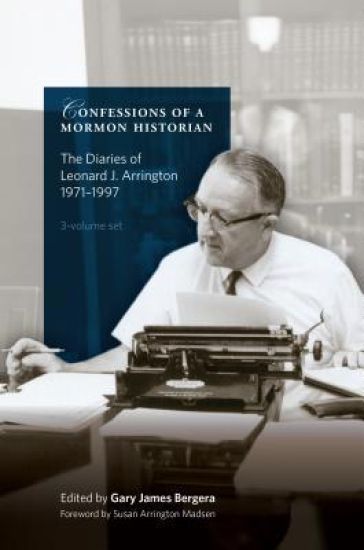
Leonard Arrington (1917-99) was born an Idaho chicken rancher whose early interests seemed not to extend much beyond the American west. Throughout his life, he tended to project a folksy persona, although nothing was farther from the truth. He was, in fact, an intellectually oriented, academically driven young man, determined to explore the historical, economic, cultural, and religious issues of his time. After distinguishing himself at the University of North Carolina (Chapel Hill) and serving in the army during World War II in North Africa and Italy, Arrington accepted a professorship at Utah State University. In 1972 he was called as the LDS Church Historian--an office he held for ten years until, following a stormy tenure full of controversy over whether the "New Mormon History" he championed was appropriate for the church, he was quietly released and transferred, along with the entire Church History Division, to Brigham Young University. It was hoped that this would remove the impression in people's minds that his writings were church-approved. His personal diaries reveal a man who was firmly committed to his church, as well as to rigorous historical scholarship. His eye for detail made him an important observer of "church headquarters culture."
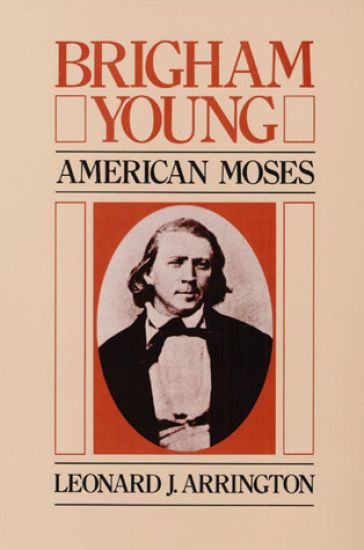
From the preface: "Brigham Young was the supreme American paradox, not because he contained elements foreign to American soil but because he united them--the business genius of a Rockefeller with the spiritual sensitivities of an Emerson, the lusty enjoyments of the pleasures of good living with the tenderness of a Florence Nightingale. He was not merely an entrepreneur with a shared vision of America as the Promised Land; he was a prophet with visions of his own and he built beyond himself."
This exciting volume uses closeup looks at nineteen Mormon dissenters to focus on the variety of religious sentiment within the Mormon church and to explore how it has encouraged divergent ideas from the early 1800s through modern times. "An absolute necessity for anyone interested in the history/direction of the Latter Day Saint Movement." -- Gerald John Kloss, Latter Day Saint History "Well done. . . . Respectful and professional." -- Lynn D. Wardle, BYU Studies "Makes a valuable contribution to our improved understanding of the rich heritage and faith of Mormonism." -- Milan D. Smith Jr., Sunstone "An important and thought-provoking book." -- Lola Van Wagenen, Utah Historical Quarterly "A splendid collection. . . . Essential reading for anyone interested even slightly in the Restoration movement." -- Paul Shupe, The John Whitmer Historical Association Journal
Leonard Arrington, who died in 1999, is considered by most, if not all, serious scholars of Mormon and western history as the single most important figure to write on LDS history. Great Basin Kingdom is perhaps his greatest work. A classic in Mormon studies and western history, Great Basin Kingdom offers insights into the ‘underdeveloped' American economy, a comprehensive treatment of one of the few native American religious movements, and detailed, exciting stories from little-known phases of Mormon and American history. This edition includes thirty new photographs and an introduction by Ronald W. Walker that provides a brief biography of Arrington, as well as the history of the work, its place in Mormon and western historiography, and its lasting impact.
Healthcare ethics is not just about decisions made at the bedside. It is also about decisions made in executive offices and in boardrooms. Business Ethics in Healthcare offers perspectives that can assist healthcare managers achieve the highest ethical standards as they face their roles as healthcare providers, employers, and community service organizations. Weber suggests guidelines and criteria based on the understanding that the healthcare organization is committed to patients' rights, to careful stewardship of resources, to just working conditions for employees, and to service to the community. As Weber shows, addressing business ethics issues in a healthcare organization starts with complying with relevant laws and regulations. As a provider of high quality patient care with limited resources, it needs to be able to distinguish between the right way and the wrong way of taking cost into consideration when making decisions about patient care practices. As employer, the organization needs to use good criteria for determining wages and salaries, to know how to make fair decisions about downsizing, and to respond most appropriately to union organizing efforts and employee strikes. As a community service organization, it has particular responsibilities to the community in the way it advertises, how it disposes of medical waste, and the types of mergers it enters into. Leonard J. Weber is on the faculty of the University of Detroit, Mercy. He has published over 70 articles and is the principal author of the "Case Studies in Ethics" column in Clinical Leadership & Management Review. He serves as an ethics consultant to several healthcare organizations and is a past president of the Medical Ethics Resource Network of Michigan. Medical Ethics Series—David H. Smith and Robert M. Veatch, editors
The saints are good company. They are the heroes of the faith who blazed new and creative paths to holiness; they are the witnesses whose testimonies echo throughout the ages in the memory of the Church. Most Christians, and particularly Catholics, are likely to have their own favorite saints, those who inspire and "speak" to believers as they pray and struggle through the challenges of their own lives. Leonard DeLorenzo's book addresses the idea of the communion of saints, rather than individual saints, with the conviction that what makes the saints holy and what forms them into a communion is one and the same. Work of Love investigates the issue of communication within the communio sanctorum and the fullness of Christian hope in the face of the meaning—or meaninglessness—of death. In an effort to revitalize a theological topic that for much of Catholic history has been an indelible part of the Catholic imaginary, DeLorenzo invokes the ideas of not only many theological figures (Rahner, Ratzinger, Balthasar, and de Lubac, among others) but also historians, philosophers (notably Heidegger and Nietzsche), and literary figures (Rilke and Dante) to create a rich tableau. By working across several disciplines, DeLorenzo argues for a vigorous renewal in the Christian imagination of the theological concept of the communion of saints. He concludes that the embodied witness of the saints themselves, as well as the liturgical and devotional movements of the Church at prayer, testifies to the central importance of the communion of saints as the eschatological hope and fulfillment of the promises of Christ.
At the outset of his second term, President Bush's proposal to partially privatize Social Security has touched off a debate of enormous proportion. Disentangling the rhetoric and hyperbole from fact is essential for anyone trying to evaluate the potential merits or pitfalls of the plan. Leonard and Mark Santow—a father-and-son team who integrate two different political viewpoints (fiscally conservative and socially liberal, respectively)—offer specific recommendations for improving Social Security, Medicare, and Medicaid in socially responsible ways that relieve some of the stress on the middle class and promote upward mobility. Explaining sophisticated economic concepts in layman's terms, the Santows expose myths about how entitlement programs actually work, arguing, for example, that while the financial state of Social Security gets most of the press, Medicare and Medicaid are in much more serious trouble. They integrate conservative and liberal viewponts to propose a package of reforms that includes both tax cuts and increases and an overhaul of the government's economic forecasting system. Synthesizing mountains of data and explaining sophisticated economic concepts in layman's terms, the Santows expose myths about how entitlement programs actually work, arguing, for example, that while the financial state of Social Security gets most of the press, Medicare and Medicaid are in much more serious trouble. Moreover, they are highly critical of privatization plans, demonstrating that similar programs have failed in other countries and that such plans are programs are neither fiscally nor socially sound. If the American people value the common commitments that these programs embody, we will need to see them as a package, and fund them accordingly. In response to this challenge, the Santows integrate conservative and liberal viewpoints to propose a package of reforms that includes both tax cuts and increases and an overhaul of the government's economic forecasting system. Featuring a timeline of key events since Franklin Roosevelt signed the Social Security Act in 1935 and an appendix of data tables, the authors offer a primer for concerned citizens, policymakers, educators, students, and finance professionals—anyone with a stake in designing a system that pays for these essential programs in an equitable manner and contributes to our collective prosperity.Featuring a timeline of key events since Franklin Roosevelt signed the Social Security Act in 1935 and an appendix of data tables, the authors offer a primer for concerned citizens, policymakers, educators, students, and finance professionals—anyone with a stake in designing a system that pays for these essential programs in an equitable manner and contributes to our collective prosperity.
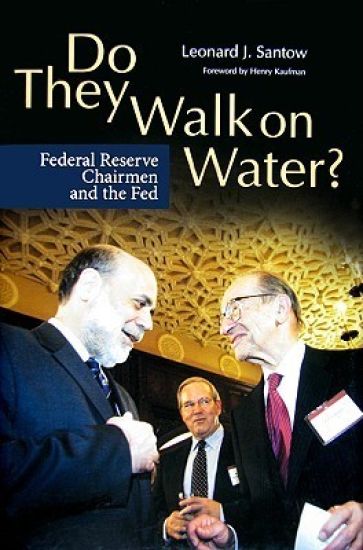
A crowd gathers. People crane their necks. Cameras flash. The limo door opens. Who is it—Mick Jagger? Oprah? Tiger Woods? No. It's Alan Greenspan—and the crowd still goes wild. Many felt Greenspan walked on water during his lengthy term as Chairman of the Federal Reserve System. But was he a genius or, as Tolstoy might portray him, simply someone who could manifest confidence while attempting to captain an uncontrollable ship? In this book, economist Leonard Santow casts a steely eye on the Fed and its five most recent chairmen—Arthur Burns, G. William Miller, Paul Volcker, Alan Greenspan, and Ben Bernanke. Along the way, readers learn what function the Fed performs and why, how monetary policy differs from fiscal policy, which levers the Fed uses to change the money supply and control inflation, and more. This is one of the few books to explain the inner workings of the Fed and its Open Market Operations in layman's terms, while evaluating its most recent chiefs in their efforts to keep inflation at bay and the economy humming. Written in an easy and accessible style, the book also contains insights on the subprime mess and the securities that helped bring down the real estate house of cards, and it offers prescriptions for smoothing the choppy economic seas going forward.
At the outset of his second term, President Bush's proposal to partially privatize Social Security has touched off a debate of enormous proportion. Disentangling the rhetoric and hyperbole from fact is essential for anyone trying to evaluate the potential merits or pitfalls of the plan. Leonard and Mark Santow—a father-and-son team who integrate two different political viewpoints (fiscally conservative and socially liberal, respectively)—offer specific recommendations for improving Social Security, Medicare, and Medicaid in socially responsible ways that relieve some of the stress on the middle class and promote upward mobility. Explaining sophisticated economic concepts in layman's terms, the Santows expose myths about how entitlement programs actually work, arguing, for example, that while the financial state of Social Security gets most of the press, Medicare and Medicaid are in much more serious trouble. They integrate conservative and liberal viewponts to propose a package of reforms that includes both tax cuts and increases and an overhaul of the government's economic forecasting system. Synthesizing mountains of data and explaining sophisticated economic concepts in layman's terms, the Santows expose myths about how entitlement programs actually work, arguing, for example, that while the financial state of Social Security gets most of the press, Medicare and Medicaid are in much more serious trouble. Moreover, they are highly critical of privatization plans, demonstrating that similar programs have failed in other countries and that such plans are programs are neither fiscally nor socially sound. If the American people value the common commitments that these programs embody, we will need to see them as a package, and fund them accordingly. In response to this challenge, the Santows integrate conservative and liberal viewpoints to propose a package of reforms that includes both tax cuts and increases and an overhaul of the government's economic forecasting system. Featuring a timeline of key events since Franklin Roosevelt signed the Social Security Act in 1935 and an appendix of data tables, the authors offer a primer for concerned citizens, policymakers, educators, students, and finance professionals—anyone with a stake in designing a system that pays for these essential programs in an equitable manner and contributes to our collective prosperity.Featuring a timeline of key events since Franklin Roosevelt signed the Social Security Act in 1935 and an appendix of data tables, the authors offer a primer for concerned citizens, policymakers, educators, students, and finance professionals—anyone with a stake in designing a system that pays for these essential programs in an equitable manner and contributes to our collective prosperity.
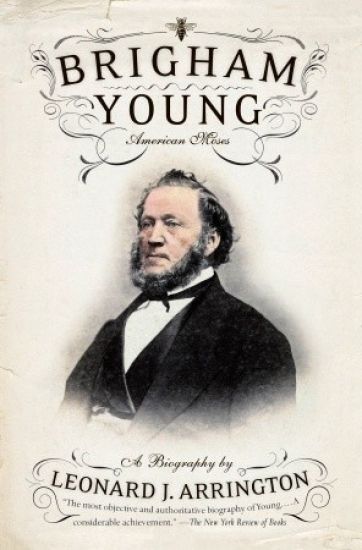
Brigham Young comes to life in this superlative biography that presents him as a Mormon leader, a business genius, a family man, a political organizer, and a pioneer of the West. Drawing on a vast range of sources, including documents, personal diaries, and private correspondence, Leonard J. Arrington brings Young to life as a towering yet fully human figure, the remarkable captain of his people and his church for thirty years, who combined piety and the pursuit of power to leave an indelible stamp on Mormon society and the culture of the Western frontier. From polygamy to the Mountain Meadows Massacre to the attempted preservation of Young's Great Basin Kingdom, we are given a fresh understanding of the controversies that plagued Young in his contentious relations with the federal government. Brigham Young draws its subject out of the marginal place in history to which the conventional wisdom has assigned him, and sets him squarely in the American mainstream, a figure of abiding influence in our society to this day.
Businesses and the accounting profession have never been under such close ethical scrutiny because of the ethics scandals that have prevented organizations and people from reaching their objectives. Understanding why ethical behavior is so important to success and knowing potential pitfalls are key to your own success. Business & Professional Ethics for Directors, Executives & Accountants, 9e demonstrates that it’s not just about learning rules. You must learn how to use ethical strategies, make ethical decisions, and integrate the latest information on ethics and governance scandals, legal liability and professional accounting and auditing issues. You must understand why developing an ethical corporate culture is essential to maintaining stakeholder support, and for auditors to audit financial statements. To keep learning interesting and underscore the importance of ethical issues, this edition provides more than 130 cases, including classic frauds, bankruptcies, loss of reputation, and unprofessional practices. Cases provide excellent opportunities for role playing and for developing your understanding of soft skills, including communications, persuasion, presentation, leadership and a global mindset.
Landscape Architectural Graphic Standards is the must have "bible" for landscape architects. Version 1.0 of the CD-ROM brings the book to the desktop of landscape architects and related design professionals. What this CD-ROM offers: * User-friendly interface that allows the user to navigate the CD using familiar and easy-to-use web-browser functions * 100% of the details in CAD-compatible format--available in .dwg, .dgn, and .dxf file formats * Easy search capabilities--Topic Search and Key Word search functions * Bookmark feature allows the user to save and find the details they use most * Network Version is ideal for firms with 20+ employees * Compatible with Windows network servers and Windows clients
Quick, reliable answers to your most common on-site questions When you're in the field, you never know what you'll come across. The Wiley Graphic Standards Field Guide to Softscape gives you fast access to the practical information you need when you're on-site and under pressure. Presented in a highly visual and easily portable format, the Field Guide is organized to follow a logical project sequence from site evaluation of existing conditions through construction maintenance. Covering everything from soils and planting to storm water drainage, this handy companion conveys the most common answers that landscape architects addressing issues pertaining to softscape need when visiting construction sites and meeting with architects, engineers, clients, or contractors. The Field Guide to Softscape extends the familiar Landscape Architectural Graphic Standards beyond the office, with: Quick access to essential information when away from the studio Things to look for when assessing existing conditions during preliminary design site visits or pre-construction meetings Graphic Standards-quality details accompanied by real-world photographs of best construction practices and techniques Illustrations and real-world photographs that help you troubleshoot problems, along with on-the-spot solutions A list of common construction mistakes and problems to avoid Compact format that's easy to reference and carry along to job sites The Graphic Standards Field Guide to Softscape is the ideal companion for the on-the-go landscape architect, design professional, inspector, facilities manager, or anyone who is involved with site construction. Immediate access to information on over 50 on-site conditions More than 325 details and photos throughout Identifies reference standards, acceptable practices, and things to avoid
Renegotiating Health Care Since the first edition of Renegotiating Health Care was published in 1995, new treatments, technologies, business models, reimbursement methods, and regulations have tangibly transformed the substance of health care negotiation. This thoroughly revised and updated edition of Renegotiating Health Care offers a practical guide to negotiation and conflict resolution in the health care field. It explores why unresolved conflict can hamper any organization's ability to make timely, cost-effective decisions and implement new strategies. The book focuses on the complex interactions between those who deliver, receive, administer, and oversee health care. It defines negotiation techniques and conflict resolution approaches that can improve efficiency, quality of care, and patient safety. Renegotiating Health Care outlines strategies and methods to resolve the myriad thorny issues encompassing the health care enterprise. It should be required reading for students and professionals in health services management, clinicians, leaders, policy makers, and conflict resolution experts working in the health care field. Praise for Renegotiating Health Care "An outstanding book! I learned their principles of meta-leadership while at the CDC and continue to use them at ABC News. This book is a must for anyone in leadership: practical, intuitive, and priceless." ?Richard E. Besser, MD, chief health and medical editor, ABC News "This book is a must-read to assist today's health professional navigate the ever-changing health care delivery system. Leadership will be the key to success." ?Pat Ford-Roegner, RN, MSW, FAAN, senior health consultant and former CEO, American Academy of Nursing
Written for the design professional, this book offers basic concepts for site security design and risk/threat assessment, and their relationship and integration into the overall design/streetscape projects. * This book is the only reference to offer coverage of security design for the site, rather than for the building * It provides landscape architects and other design professionals with the fundamental knowledge they need in order to work with clients and security consultants * It includes guidelines for conducting security/risk assessments as well as case studies that offer a variety of site designs that successfully integrate security