Kirjahaku
Etsi kirjoja tekijän nimen, kirjan nimen tai ISBN:n perusteella.
1000 tulosta hakusanalla Leora Batnitzky
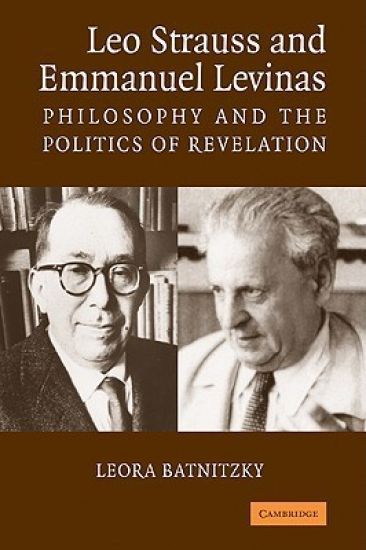
Leo Strauss and Emmanuel Levinas, two twentieth-century Jewish philosophers and two extremely provocative thinkers whose reputations have grown considerably, are rarely studied together. This is due to the disparate interests of many of their intellectual heirs. Strauss has influenced political theorists and policy makers on the right while Levinas has been championed in the humanities by different cadres associated with postmodernist thought. In Leo Strauss and Emmanuel Levinas: Philosophy and the Politics of Revelation, first published in 2006, Leora Batnitzky brings together these two seemingly incongruous contemporaries, demonstrating that they often had the same philosophical sources and their projects had many formal parallels. While such a comparison is valuable in itself for better understanding each figure, it also raises profound questions in the debate on the definitions of 'religion', suggesting ways that religion makes claims on both philosophy and politics.
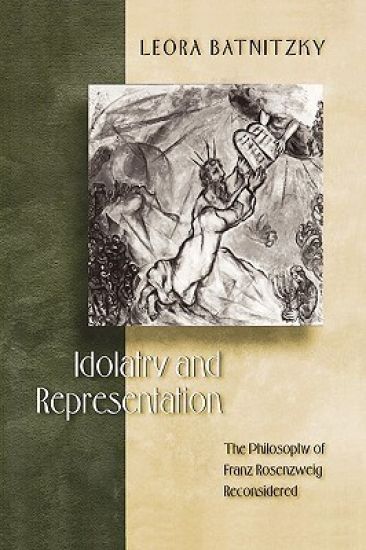
Although Franz Rosenzweig is arguably the most important Jewish philosopher of the twentieth century, his thought remains little understood. Here, Leora Batnitzky argues that Rosenzweig's redirection of German-Jewish ethical monotheism anticipates and challenges contemporary trends in religious studies, ethics, philosophy, anthropology, theology, and biblical studies. This text, which captures the hermeneutical movement of Rosenzweig's corpus, is the first to consider the full import of the cultural criticism articulated in his writings on the modern meanings of art, language, ethics, and national identity. In the process, the book solves significant conundrums about Rosenzweig's relation to German idealism, to other major Jewish thinkers, to Jewish political life, and to Christianity, and brings Rosenzweig into conversation with key contemporary thinkers. Drawing on Rosenzweig's view that Judaism's ban on idolatry is the crucial intellectual and spiritual resource available to respond to the social implications of human finitude, Batnitzky interrogates idolatry as a modern possibility. Her analysis speaks not only to the question of Judaism's relationship to modernity (and vice versa), but also to the generic question of the present's relationship to the past--a subject of great importance to anyone contemplating the modern statuses of religious tradition, reason, science, and historical inquiry. By way of Rosenzweig, Batnitzky argues that contemporary philosophers and ethicists must relearn their approaches to religious traditions and texts to address today's central ethical problems.
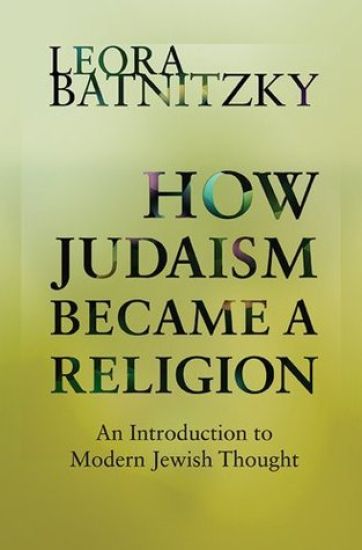
Is Judaism a religion, a culture, a nationality--or a mixture of all of these? In How Judaism Became a Religion, Leora Batnitzky boldly argues that this question more than any other has driven modern Jewish thought since the eighteenth century. This wide-ranging and lucid introduction tells the story of how Judaism came to be defined as a religion in the modern period--and why Jewish thinkers have fought as well as championed this idea. Ever since the Enlightenment, Jewish thinkers have debated whether and how Judaism--largely a religion of practice and public adherence to law--can fit into a modern, Protestant conception of religion as an individual and private matter of belief or faith. Batnitzky makes the novel argument that it is this clash between the modern category of religion and Judaism that is responsible for much of the creative tension in modern Jewish thought. Tracing how the idea of Jewish religion has been defended and resisted from the eighteenth century to today, the book discusses many of the major Jewish thinkers of the past three centuries, including Moses Mendelssohn, Abraham Geiger, Hermann Cohen, Martin Buber, Zvi Yehuda Kook, Theodor Herzl, and Mordecai Kaplan. At the same time, it tells the story of modern orthodoxy, the German-Jewish renaissance, Jewish religion after the Holocaust, the emergence of the Jewish individual, the birth of Jewish nationalism, and Jewish religion in America. More than an introduction, How Judaism Became a Religion presents a compelling new perspective on the history of modern Jewish thought.
Liberties Journal of Culture and Politics
Cass R. Sunstein; Carissa Veliz; Ekaterina Pravilova; Richard Taruskin; Claire Malroux; Richard Wolin; Mark Polizzotti; Jonathan Zimmerman; Marissa Grunes; Andrew Butterfield; Scott Spillman; Leora Batnitzky; Helen Vendler; Jared Marcel Pollen; Paula Bohince
Liberties Journal Foundation
2022
nidottu
“A Meteor of Intelligent Substance”“Something was Missing in our Culture, and Here It Is”"Invaluable""Liberties is THE place to be. Change starts in the mind.” Liberties, a journal of Culture and Politics, is essential reading for those engaged in the cultural and political issues and causes of our time. Liberties features serious, independent, stylish, and controversial essays by significant writers and leaders throughout the world; new poetry; and, introduces the next generation of writers and voices to inspire and impact the intellectual and creative lifeblood of today’s culture and politics.In this issue of Liberties: Cass R. Sunstein - The Supreme Court Gone Wrong; Carissa Veliz - Digitization is Surveillance; Ekaterina Pravilova - The Autocrat’s War; Richard Taruskin - What is Bad Taste; Jonathan Zimmerman - Memoirs of a White Savior; Richard Wolin - The Cult of Carl Schmitt; Mark Polizzotti - Surrealism and Cancellation; Andrew Butterfield - Dante During Covid; Scott Spillman - The Strange History of the Slave Songs; Leora Batnitzky - The Sacrifice of Edith Stein; Helen Vendler - Sylvia Plath on Motherhood; Jared Marcel Pollen - Was Havel Right?; Celeste Marcus - The Curse of the Radical Israeli Right; Leon Wieseltier - The Future of Nature; and new poems by Claire Malroux, Marissa Grunes, Paula Bohince.
Leora's Letters: The Story of Love and Loss for an Iowa Family During World War II
Robin Grunder; Joy Neal Kidney
Joy Neal Kidney
2019
nidottu
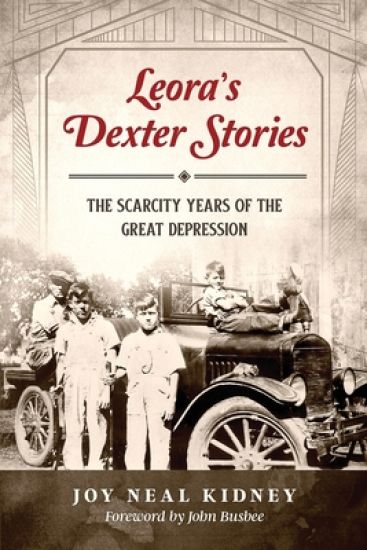
The undertow of the Great Depression becomes poignantly personal as we experience the travails of Leora and Clabe Wilson, a displaced Iowa farm family. Gritty determination fuels this family's journey of loss and hope, a reflection of what many American families endured during those challenging times. In this true story the Wilsons slowly slide into unemployment and poverty. Leora must find ways to keep her dreams alive while making a haven for her flock of seven children in one run-down house after another.
Aerial Nurse Corps of America: Lauretta Schimmoler and Leora Stroup Pilot-In Air Evac
Cynthia Broze
Semper Publishing
2023
nidottu
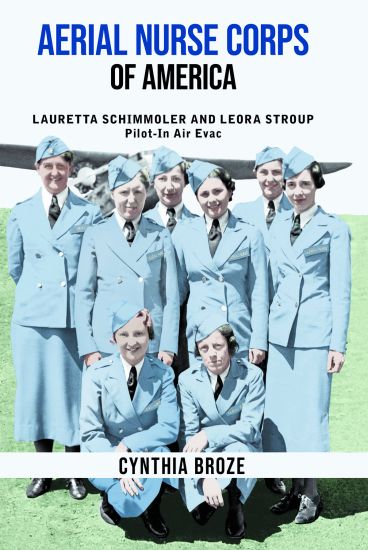
If we are sick and require air transport, we expect a skilled flight nurse will assist us. Before 1936 this was far from reality. Air transportation of critically ill patients began sporadically during World War I, but they crammed the wounded behind the pilot's area with no one to attend to them-the sick and dying patients had to fend for themselves. Lauretta Schimmoler realized this and sought to change it. She thought nurses trained in the aspects of air ambulance transport would be valuable for society. She hoped it could also benefit the military. She found nurses who believed in her cause. Some were pilots or became pilots. Dedicated nurses like Leora Stroup championed the idea when others doubted its relevance. Schimmoler understood airport management, flight school operations, aircraft manufacturing, first aid, chemical warfare, air mail transport, weather, and flight recorders. She even designed special medical equipment to fit inside small airplanes. But the various ranks scrutinized her actions because she wasn't a nurse. Schimmoler and Stroup were born, spent their childhoods, and were buried within 120 miles of each other in Ohio. Both became pilots and early members of the Ninety-Nines club. Stroup had also thought nurses should train for aerial duty even before she met Schimmoler. And Stroup had an edge on Schimmoler-she was a nurse-but Schimmoler barreled ahead despite lacking those credentials.Schimmoler expected people would see the value and appreciate what she and the nurses wanted to accomplish with this specialty they were trying to create. She was wrong. She hadn't realized one essential detail when developing her idea: nursing administration groups and the military didn't accept proposals from outsiders. Thus, she would spend her air ambulance life trying to work with them, through them, or around them.
Catfight: Rivalries Among Women--From Diets to Dating, from the Boardroom to the Delivery Room
Leora Tanenbaum
HARPER PERENNIAL
2003
nidottu
Women often behave toward one another in sneaky, underhanded, ruthlessly competitive ways. Catfight is a remarkably researched and insightful foray into the American woman's world of aggression, rivalry, and competition. Tanenbaum draws on real-life examples and the most important studies to date in psychology, human aggression, psychoanalytic theory, and social movements to uncover the pressures that leave women regarding one another as adversaries rather than allies.Most women highly value female approval and friendship, but the darker side of sisterhood can evoke covertly competitive behavior: A career woman quits to become a full-time mom. Although she misses her job and the income, she belittles you, a working mother, as selfishly unconcerned with your children's welfare.You're at a party in mid-conversation with your boyfriend when an attractive woman comes over to mingle. You move closer to him, touching him and glaring at her.A female colleague "accidentally" misplaces your files and "forgets" to e-mail you about an important upcoming meeting.What is the state of "sisterhood" today? And how much progress have we really made?
Girls may be called "sluts" for any number of reasons, including being outsiders, early developers, victims of rape, targets of others' revenge. Often the labels has nothing to do with sex -- the girls simply do not fit in. An important account of the lives of these young women, Slut weaves together powerful oral histories of girls and women who finally overcame their sexual labels with a cogent analysis of the underlying problem of sexual stereotyping.Author Leora Tanenbaum herself was labeled a slut in high school. The confessional article she wrote for Seventeen about the experience caused a sensation and led her to write this book.
I Am Not a Slut: Slut-Shaming in the Age of the Internet
Leora Tanenbaum
HARPER PERENNIAL
2015
nidottu
The author of the groundbreaking work Slut explores the phenomenon of slut-shaming in the age of sexting, tweeting, and "liking." She shows that the sexual double standard is more dangerous than ever before and offers wisdom and strategies for alleviating its destructive effects on young women's lives.Young women are encouraged to express themselves sexually. Yet when they do, they are derided as "sluts." Caught in a double bind of mixed sexual messages, young women are confused. To fulfill the contradictory roles of being sexy but not slutty, they create an "experienced" identity on social media-even if they are not sexually active--while ironically referring to themselves and their friends as "sluts."But this strategy can become a weapon used against young women in the hands of peers who circulate rumors and innuendo--elevating age-old slut-shaming to deadly levels, with suicide among bullied teenage girls becoming increasingly common. Now, Leora Tanenbaum revisits her influential work on sexual stereotyping to offer fresh insight into the digital and face-to-face worlds contemporary young women inhabit. She shares her new research, involving interviews with a wide range of teenage girls and young women from a variety of backgrounds as well as parents, educators, and academics. Tanenbaum analyzes the coping mechanisms young women currently use and points them in a new direction to eradicate slut-shaming for good.
Presents five cases in which the legal system has failed to protect incest victims from their abusers, especially in the context of divorce, and advocates a federal agency for children at risk
Pulmonary Adenocarcinoma: Approaches to Treatment
Leora Horn
Elsevier - Health Sciences Division
2018
nidottu
Get a quick, expert overview of the latest treatment and management approaches for adenocarcinoma of the lung, including novel therapeutics in immunotherapy and targeted therapies. This practical title, edited by Dr. Leora Horn, offers succinct coverage of clinically-focused topics and guidelines, making it an ideal resource for practicing and trainee oncologists and other members of the cancer care team. Discusses surgical approaches, molecular testing, adjuvant therapy, first- and second-line therapy, and much more. Helps you translate current research and literature into practical information for daily practice. Consolidates today's available information on this timely topic into one convenient resource.
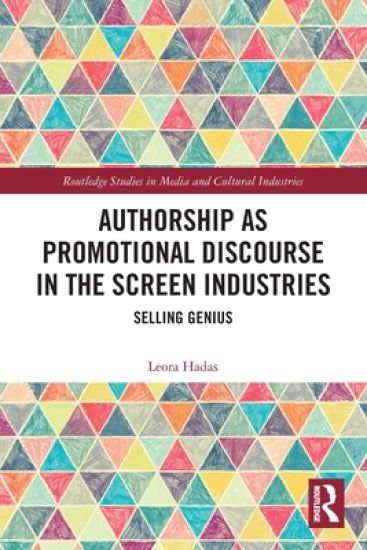
This book discusses the use of authorship discourses and author figures in the promotion and marketing of media content, dealing with the U.S. mainstream media, including franchise film, network television, and triple-A video games. The research takes a unique approach studying ideas of authorship in promotion, diverging from extant approaches looking at the text, production, or reception. Conceptualizing authorship within the logic of media branding, the book studies the construction of ideas around creativity and the creative person in marketing and publicity content where media industries communicate with audiences. A cross-media approach allows the book to take a broad look and make comparisons across the increasingly integrated media industries. The book will be of great relevance to academics in the fields of film, television, and media studies, including postgraduate students, conducting teaching and research around authorship, media industries, and media promotion.
Authorship as Promotional Discourse in the Screen Industries
Leora Hadas
TAYLOR FRANCIS LTD
2022
nidottu
This book discusses the use of authorship discourses and author figures in the promotion and marketing of media content, dealing with the U.S. mainstream media, including franchise film, network television, and triple-A video games. The research takes a unique approach studying ideas of authorship in promotion, diverging from extant approaches looking at the text, production, or reception. Conceptualizing authorship within the logic of media branding, the book studies the construction of ideas around creativity and the creative person in marketing and publicity content where media industries communicate with audiences. A cross-media approach allows the book to take a broad look and make comparisons across the increasingly integrated media industries. The book will be of great relevance to academics in the fields of film, television, and media studies, including postgraduate students, conducting teaching and research around authorship, media industries, and media promotion.
Can Israel be both Jewish and democratic?Transformative Justice, Leora Bilsky's landmark study of Israeli political trials, poses this deceptively simple question. The four trials that she analyzes focus on identity, the nature of pluralism, human rights, and the rule of law-issues whose importance extends far beyond Israel's borders. Drawing on the latest work in philosophy, law, history, and rhetoric, Bilsky exposes the many narratives that compete in a political trial and demonstrates how Israel's history of social and ideological conflicts in the courtroom offers us a rare opportunity to understand the meaning of political trials. The result is a bold new perspective on the politics of justice and its complex relationship to the values of liberalism. Leora Bilsky is Professor of Law, Tel Aviv University.
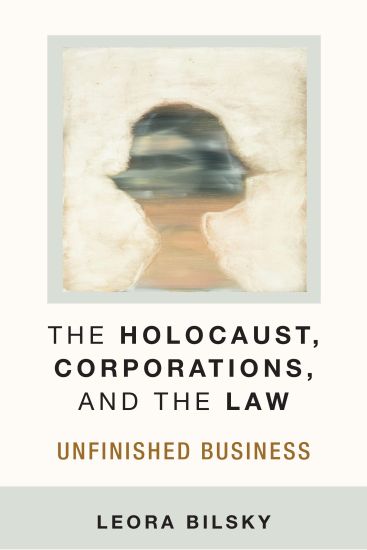
The Holocaust, Corporations, and the Law
Leora Yedida Bilsky
The University of Michigan Press
2017
nidottu
The Holocaust, Corporations, and the Law explores the challenge posed by the Holocaust to legal and political thought by examining issues raised by the restitution class action suits brought against Swiss banks and German corporations before American federal courts in the 1990s. Although the suits were settled for unprecedented amounts of money, the defendants did not formally assume any legal responsibility. Thus, the lawsuits were bitterly criticized by lawyers for betraying justice and by historians for distorting history. Leora Bilsky argues class action litigation and settlement offer a mode of accountability well suited to addressing the bureaucratic nature of business involvement in atrocities. Prior to these lawsuits, legal treatment of the Holocaust was dominated by criminal law and its individualistic assumptions, consistently failing to relate to the structural aspects of Nazi crimes. Engaging critically with contemporary debates about corporate responsibility for human rights violations and assumptions about “law,” she argues for the need to design processes that make multinational corporations accountable, and examines the implications for transitional justice, the relationship between law and history, and for community and representation in a post-national world. Her novel interpretation of the restitution lawsuits not only adds an important dimension to the study of Holocaust trials, but also makes an innovative contribution to broader and pressing contemporary legal and political debates. In an era when corporations are ever more powerful and international, Bilsky’s arguments will attract attention beyond those interested in the Holocaust and its long shadow.
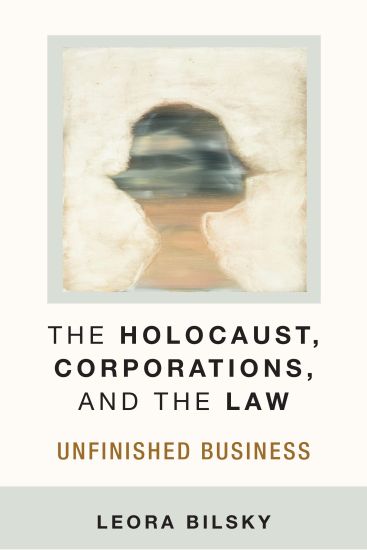
The Holocaust, Corporations, and the Law
Leora Yedida Bilsky
The University of Michigan Press
2017
sidottu
The Holocaust, Corporations, and the Law explores the challenge posed by the Holocaust to legal and political thought by examining issues raised by the restitution class action suits brought against Swiss banks and German corporations before American federal courts in the 1990s. Although the suits were settled for unprecedented amounts of money, the defendants did not formally assume any legal responsibility. Thus, the lawsuits were bitterly criticized by lawyers for betraying justice and by historians for distorting history. Leora Bilsky argues class action litigation and settlement offer a mode of accountability well suited to addressing the bureaucratic nature of business involvement in atrocities. Prior to these lawsuits, legal treatment of the Holocaust was dominated by criminal law and its individualistic assumptions, consistently failing to relate to the structural aspects of Nazi crimes. Engaging critically with contemporary debates about corporate responsibility for human rights violations and assumptions about “law,” she argues for the need to design processes that make multinational corporations accountable, and examines the implications for transitional justice, the relationship between law and history, and for community and representation in a post-national world. Her novel interpretation of the restitution lawsuits not only adds an important dimension to the study of Holocaust trials, but also makes an innovative contribution to broader and pressing contemporary legal and political debates. In an era when corporations are ever more powerful and international, Bilsky’s arguments will attract attention beyond those interested in the Holocaust and its long shadow.
Can Israel be both Jewish and democratic?Transformative Justice, Leora Bilsky's landmark study of Israeli political trials, poses this deceptively simple question. The four trials that she analyzes focus on identity, the nature of pluralism, human rights, and the rule of law-issues whose importance extends far beyond Israel's borders. Drawing on the latest work in philosophy, law, history, and rhetoric, Bilsky exposes the many narratives that compete in a political trial and demonstrates how Israel's history of social and ideological conflicts in the courtroom offers us a rare opportunity to understand the meaning of political trials. The result is a bold new perspective on the politics of justice and its complex relationship to the values of liberalism. Leora Bilsky is Professor of Law, Tel Aviv University.
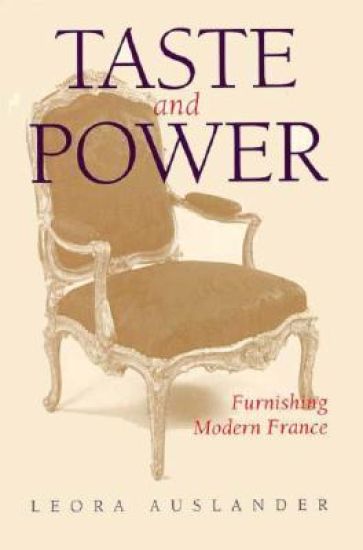
Louis XIV, regency, rococo, neoclassical, empire, art nouveau, and historicist pastiche: furniture styles march across French history as regimes rise and fall. In this extraordinary social history, Leora Auslander explores the changing meaning of furniture from the mid-seventeenth to the early twentieth century, revealing how the aesthetics of everyday life were as integral to political events as to economic and social transformations. Enriched by Auslander's experience as a cabinetmaker, this work demonstrates how furniture served to represent and even generate its makers' and consumers' identities.