Kirjahaku
Etsi kirjoja tekijän nimen, kirjan nimen tai ISBN:n perusteella.
1000 tulosta hakusanalla Leslie H. Allen
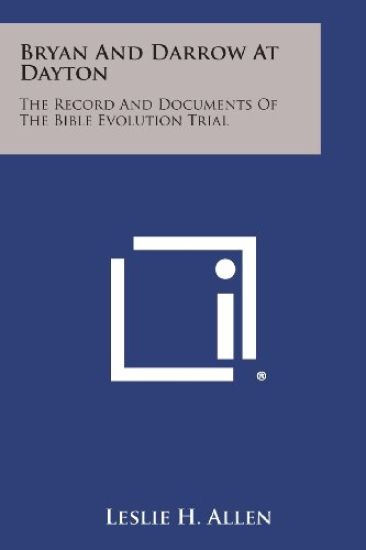
Bryan and Darrow at Dayton: The Record and Documents of the Bible Evolution Trial
Leslie H. Allen
Literary Licensing, LLC
2013
nidottu
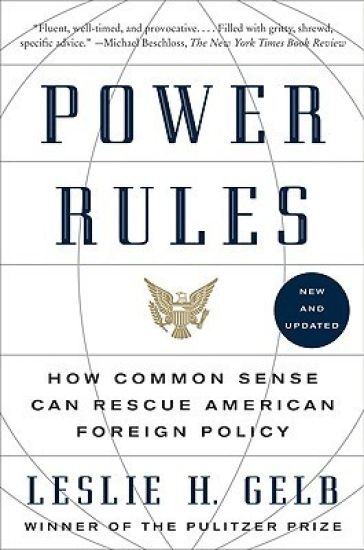
Power Rules: How Common Sense Can Rescue American Foreign Policy
Leslie H. Gelb
HARPER PERENNIAL
2010
nidottu
"Fluent, well-timed, provocative. . . . Filled with gritty, shrewd, specific advice on foreign policy ends and means. . . . Gelb's plea for greater strategic thinking is absolutely right and necessary." -- The New York Times Book Review "Few Americans know the inner world of American foreign policy--its feuds, follies, and fashions--as well as Leslie H. Gelb. . . . Power Rules builds on that lifetime of experience with power and is a witty and acerbic primer." -- The New York Times Power Rules is the provocative account of how to think about and use America's power in the world, from Pulitzer Prize winner Leslie H. Gelb, one of the nation's leading foreign policy minds and practitioners.

Physical Polymer Science 4th Edition with Principles Polymerization 4th Edition Set
Leslie H. Sperling; George Odian
John Wiley Sons Inc
2006
sidottu
Odian's Principles of Polymerization: The new edition of this classic textbook describes the physical and organic chemistry of the reactions that produce polymers. Three primary features distinguish this book from the competition: 1) each topic is prefaced with a thorough discussion at the elementary level, assuming at most only a limited background in physical and organic chemistry. 2) the presentation and writing are geared for the student. 3) each topic is subsequently considered at an advanced level, allowing both the novice and more accomplished student to achieve an advanced understanding of polymer synthesis. Sperling's Introduction to Physical Polymer Science: This classic textbook provides a thorough introduction to the area of physical polymer science, emphasizing interrelationships between molecular structure and the morphology and mechanical behavior of polymers. New to the fourth edition are sections on: controlled drug delivery with biopharmaceutical polymers, nanotechnology-based materials, the 3D structure and function of biopolymers (as well as the use of optical tweezers), friction and wear in polymers, kinetics of crystallization, mechanical behavior of biomedical polymers, glass transition behavior of thin films, light-emitting polymers and electroactive materials, fire retardancy, interfaces of polymeric biomaterials with living organisms, polymer self-assembly, and much more.

An Updated Edition of the Classic Text Polymers constitute the basis for the plastics, rubber, adhesives, fiber, and coating industries. The Fourth Edition of Introduction to Physical Polymer Science acknowledges the industrial success of polymers and the advancements made in the field while continuing to deliver the comprehensive introduction to polymer science that made its predecessors classic texts. The Fourth Edition continues its coverage of amorphous and crystalline materials, glass transitions, rubber elasticity, and mechanical behavior, and offers updated discussions of polymer blends, composites, and interfaces, as well as such basics as molecular weight determination. Thus, interrelationships among molecular structure, morphology, and mechanical behavior of polymers continue to provide much of the value of the book. Newly introduced topics include: Nanocomposites, including carbon nanotubes and exfoliated montmorillonite claysThe structure, motions, and functions of DNA and proteins, as well as the interfaces of polymeric biomaterials with living organismsThe glass transition behavior of nano-thin plastic films In addition, new sections have been included on fire retardancy, friction and wear, optical tweezers, and more. Introduction to Physical Polymer Science, Fourth Edition provides both an essential introduction to the field as well as an entry point to the latest research and developments in polymer science and engineering, making it an indispensable text for chemistry, chemical engineering, materials science and engineering, and polymer science and engineering students and professionals.

Devoted to Life: A 365 Day Devotional to Restore America's Greatness
Leslie H. Young
Encouragement for End-Times Endurance
2019
nidottu
50% OF ALL NET PROCEEDS WILL BE DONATED TO PRO-LIFE MINISTRIES SUPPORTING PERSONHOOD AT CONCEPTION. UPDATED to address the Dobbs v. Jackson Decision. What Others Have Said: "Our Dad, Flip Benham, has said for years, 'Abortion will end when the church says so and not a minute sooner.' Francis Schaeffer used to say, 'In front of every abortion clinic in America there should be a sign that reads, 'Open by permission of the church.' Les Young has written a devotional that points the church towards her duty to defend the pre-born, providing a roadmap of activities that are non-threatening weapons which every Christian can use to pull down the stronghold of abortion."David & Jason BenhamThe Benham BrothersBest Selling Authors of "Whatever the Cost" and Living Among Lions"Founders and CEO's of The Benham CompaniesThe founding fathers of the United States recognized that Life was the first of three unalienable rights endowed by the Creator. They declared that the primary duty of government was to protect and preserve those rights. As long as we adhered to those principles, God blessed us. French historian Alexis De Tocqueville once said, "America is great because America is good, and if America ever ceases to be good, America will cease to be great." Some 170 years later, presidential candidate Donald Trump campaigned on the slogan, "Make America Great Again." He was elected president, but he lacked solid foundation for his MAGA plan. This book reveals what is necessary to restore America's greatness. More importantly, it reveals what is necessary for America to incur God's blessings. This book will engage the passive and energize the active in the preservation and protection of the first unalienable right from our Creator. This is not a solo plan. Together we can change lives, heart, and even laws.
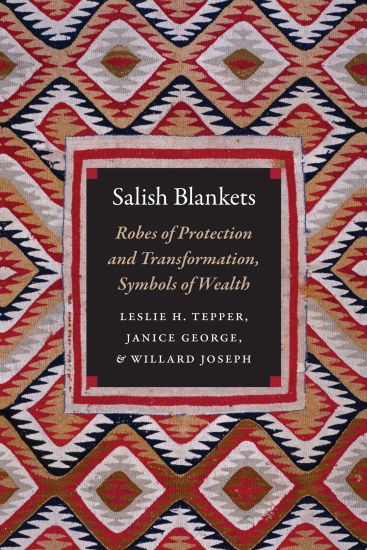
Salish Blankets
Leslie H. Tepper; Janice George; Willard Joseph
University of Nebraska Press
2017
pokkari
Salish Blankets presents a new perspective on Salish weaving through technical and anthropological lenses. Worn as ceremonial robes, the blankets are complex objects said to preexist in the supernatural realm and made manifest in the natural world through ancestral guidance. The blankets are protective garments that at times of great life changes-birth, marriage, death-offer emotional strength and mental focus. A blanket can help establish the owner’s standing in the community and demonstrate a weaver’s technical expertise and artistic vision. The object, the maker, the wearer, and the community are bound and transformed through the creation and use of the blanket. Drawing on first-person accounts of Salish community members, object analysis, and earlier ethnographic sources, the authors offer a wide-ranging material culture study of Coast Salish lifeways. Salish Blankets explores the design, color/pigmentation, meaning, materials, and process of weaving and examines its historical and cultural contexts.
The Irony of Vietnam
Leslie H. Gelb; Richard K. Betts; Fareed Zakaria
Brookings Institution
2016
nidottu
"""If a historian were allowed but one book on the American involvement in Vietnam, this would be it."" — Foreign Affairs When first published in 1979, four years after the end of one of the most divisive conflicts in the United States, The Irony of Vietnam raised eyebrows. Most students of the war argued that the United States had ""stumbled into a quagmire in Vietnam through hubris and miscalculation,"" as the New York Times's Fox Butterfield put it. But the perspective of time and the opening of documentary sources, including the Pentagon Papers, had allowed Gelb and Betts to probe deep into the decisionmaking leading to escalation of military action in Vietnam. The failure of Vietnam could be laid at the door of American foreign policy, they said, but the decisions that led to the failure were made by presidents aware of the risks, clear about their aims, knowledgeable about the weaknesses of their allies, and under no illusion about the outcome.The book offers a picture of a steely resolve in government circles that, while useful in creating consensus, did not allow for alternative perspectives. In the years since its publication, The Irony of Vietnam has come to be considered the seminal work on the Vietnam War."
"Few analysts of U.S. involvement in Vietnam would agree with the provocative conclusion of this book. The thesis of most postmortems is that the United States lost the war because of the failure of its foreign policy decisionmaking system. According to Gelb and Betts, however, the foreign policy failed, but the decisionmaking system worked. They attribute this paradox to the efficiency of the system in sustaining an increasingly heavy commitment based on the shared conviction of six administrations that the United States must prevent the loss of Vietnam to communism. However questionable the conviction, and thus the commitment, may have been, the authors stress that the latter ""was made and kept for twenty-five years. That is what the system—the shared values, the political and bureaucratic pressures—was designed to do, and it did it."" The comprehensive analysis that supports this contention reflects the widest use thus fare of available sources, including recently declassified portions of negotiations documents and files in presidential libraries. The frequently quoted statement of the principals themselves contradict the commonly held view that U.S. leaders were unaware of the consequences of their decisions and deluded by false expectations of easy victory. With few exceptions, the record reveals that these leaders were both realistic and pessimistic about the chances for success in Vietnam. Whey they persisted nonetheless is explained in this thorough account of their decisionmaking from 1946 to 1968, and how their mistakes might be avoided by policymakers in the future is considered in the final chapter. "
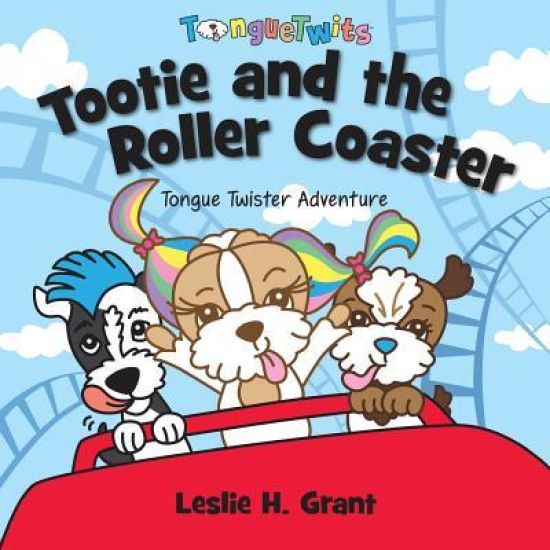
Tootie the Cutie has decided she will enter the Tongue Twister Contest at Rainbow Park. Tootie loves to create tongue twisters with her brothers, Hawkster and Fluffs. The contest takes place on the roller coaster and the winner will get a prize. Tootie finally creates the perfect tongue twister to win the prize But on the day, when Tootie sits in her seat on the roller coaster, she finds that Buzz Barker, one of the smartest doggies in school, has entered the contest too. Will Tootie the Cutie win the prize? Strap yourself in for a roller-coasting, tongue-twisting adventure with Tootie the Cutie and her brothers Children will learn how to be kind, share, and enjoy reciting tongue twisters. Tongue twisters are perfect for novice readers and will add a fun dimension to learning new words, help readers recognize familiar words, and develop proper enunciation skills.
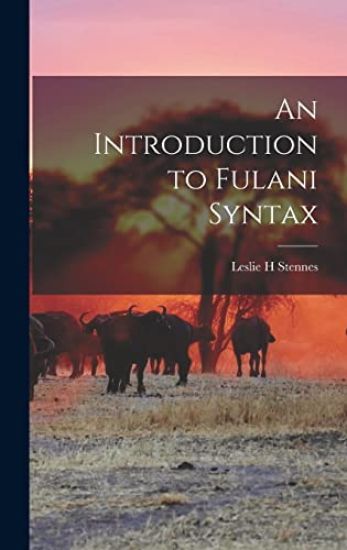
This work has been selected by scholars as being culturally important and is part of the knowledge base of civilization as we know it.This work is in the public domain in the United States of America, and possibly other nations. Within the United States, you may freely copy and distribute this work, as no entity (individual or corporate) has a copyright on the body of the work.Scholars believe, and we concur, that this work is important enough to be preserved, reproduced, and made generally available to the public. To ensure a quality reading experience, this work has been proofread and republished using a format that seamlessly blends the original graphical elements with text in an easy-to-read typeface.We appreciate your support of the preservation process, and thank you for being an important part of keeping this knowledge alive and relevant.
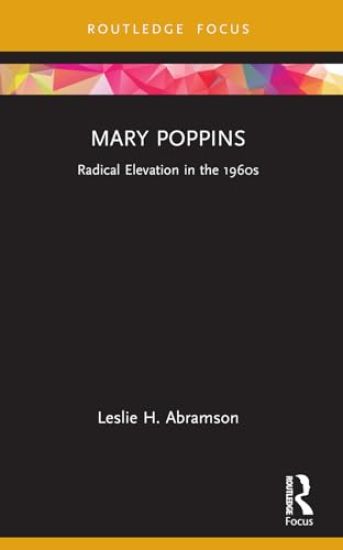
This volume examines Mary Poppins as a 1960s film reflecting and invested in its radically changing times, a largely but not unmitigatedly antiestablishment musical resonant with conditions and issues powerfully affecting baby boomers.Among the explosion of baby boomer films that rocked the 1960s, the most stirring early work was likely Mary Poppins. This 1964 film captivated young audiences, earning top-grossing ticket sales, multiple Oscars, and landmark status as a cultural phenomenon. The book illuminates Mary Poppins as a musical teeming with preoccupations of American youth in the early-to-mid-1960s, including antiestablishment desires, anxieties, and pleasures. Reading against the dominant grain, this book deciphers Mary Poppins as a mid-century reflection that spans the generation gap, dysfunctional nuclear family, youth unrest, activism including feminist advocacy, counterculturalism, capitalist imperialism, race relations, socially conscious music, and hallucinogenic consciousness expansion. Conjunctively, the book explores tensions inherent in this studio production as a mainstream Disney release evoking imperatives of 1960s American youth while sanitizing figures and values representing radical change. Further, examining the film’s collective authorship, this volume traces Mary Poppins’ origins in the writings and life of nonconformist author P.L. Travers as well as in Disney cinema and the studio’s adaptation processes. Analysis extends to diverse facets of Mary Poppins’ reception, including the shifting image of its star, Julie Andrews, the film’s influence on popular culture and controversy among some as an adaptation, its appropriation by drug culture, association with the teenpic, and status as cinema of social consciousness. This book is ideal for students, researchers, and scholars of cinema studies and youth culture.


"Kindle Paperwhite For Dummies, 3E" is a how-to guide showing the core and expanded operation of the new 7th generation Kindle ereader. It offers detailed insight into all the details readers want to know to get the most out of their Kindle Paperwhite. Content includes: - Getting to know Kindle Paperwhite - basic operation, including connecting to WiFi - Reading on your Kindle Paperwhite - creating and managing a content collection, using text-to-speech, and making notes - Finding content for your Kindle Paperwhite - going beyond the Amazon Kindle bookstore to find free content, blogs, games and apps, and other Kindle goodies - Create your own Kindle Paperwhite content - steps on creating and converting content to Kindle formats and publishing in the Kindle store - Accessories - a shopping list of accessories that dress up and improve a Kindle Paperwhite - Beyond Reading - using Kindle's extra features including audio files and photo sharing - The all-new reading features - Kindle Page Flip, Goodreads, Kindle FreeTime, Smart Lookup, and Vocabulary Builder - Kindle Paperwhite for kids - parental controls and features for fun and engaging reading for kids. - Troubleshooting - tips for dealing with connectivity and other typical Kindle Paperwhite problems
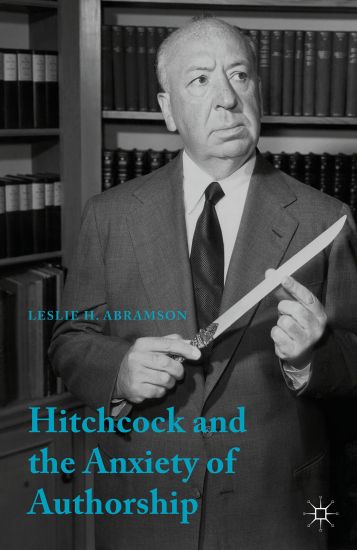
Hitchcock and the Anxiety of Authorship examines issues of cinema authorship engaged by and dynamized within the director's films. A unique study of self-reflexivity in Hitchcock's work from his earliest English silents to his final Hollywood features, this book considers how the director's releases constitute ever-shifting meditations on the conditions and struggles of creative agency in cinema. Abramson explores how, located in literal and emblematic sites of dramatic production, exhibition, and reception, and populated by figures of directors, actors, and audiences, Hitchcock's films exhibit a complicated, often disturbing vision of authorship - one that consistently problematizes rather than exemplifies the director's longstanding auteurist image. Viewing Hitchcock in a striking new light, Abramson analyzes these allegories of vexed agency in the context of his concepts of and commentary on the troubled association between cinema artistry and authorship, as well as the changing cultural, industrial, theoretical, and historical milieus in which his features were produced. Accordingly, the book illuminates how Hitchcock and his cinema register the constant dynamics that constitute film authorship.
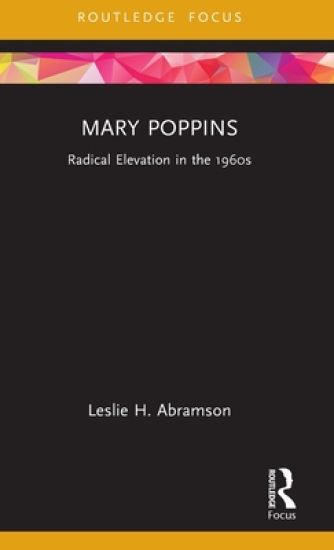
This volume examines Mary Poppins as a 1960s film reflecting and invested in its radically changing times, a largely but not unmitigatedly antiestablishment musical resonant with conditions and issues powerfully affecting baby boomers.Among the explosion of baby boomer films that rocked the 1960s, the most stirring early work was likely Mary Poppins. This 1964 film captivated young audiences, earning top-grossing ticket sales, multiple Oscars, and landmark status as a cultural phenomenon. The book illuminates Mary Poppins as a musical teeming with preoccupations of American youth in the early-to-mid-1960s, including antiestablishment desires, anxieties, and pleasures. Reading against the dominant grain, this book deciphers Mary Poppins as a mid-century reflection that spans the generation gap, dysfunctional nuclear family, youth unrest, activism including feminist advocacy, counterculturalism, capitalist imperialism, race relations, socially conscious music, and hallucinogenic consciousness expansion. Conjunctively, the book explores tensions inherent in this studio production as a mainstream Disney release evoking imperatives of 1960s American youth while sanitizing figures and values representing radical change. Further, examining the film’s collective authorship, this volume traces Mary Poppins’ origins in the writings and life of nonconformist author P.L. Travers as well as in Disney cinema and the studio’s adaptation processes. Analysis extends to diverse facets of Mary Poppins’ reception, including the shifting image of its star, Julie Andrews, the film’s influence on popular culture and controversy among some as an adaptation, its appropriation by drug culture, association with the teenpic, and status as cinema of social consciousness. This book is ideal for students, researchers, and scholars of cinema studies and youth culture.

THIS BOOK HAS BEEN DEVELOPED FROM A SHORT LECTURE COURSE GIVEN to advanced undergraduate students as part of a general introduction to the subject of parasitology for zoologists. The book is written for the undergraduate who has no previous experience of parasitology and little background in either biochemistry or physiology. It is not a long book, and students will have to consult some of the more detailed textbooks in parasitology and physiology to gain a full understanding of the topics considered here. My objective in writing this book is to introduce the breadth of parasite physiology, leaving the reader to obtain a depth of knowledge by his own library research. Each chapter covers a single topic or related topics in physiological parasitology, and the variable length of the chapters reflects the amount of research interest that has been generated over the last few decades. It is to be hoped that by use of this book students will develop an interest in some of the more neglected areas and be stimulated to make good some of the more glaring deficiencies in our current knowledge. I should like to acknowledge with gratitude the assistance of my colleagues Dr 1. Barrett, Dr R. A. Klein, Dr A. W. Pike and Dr R. A.