

Kirjahaku
Etsi kirjoja tekijän nimen, kirjan nimen tai ISBN:n perusteella.
1000 tulosta hakusanalla Lewis D. Mason
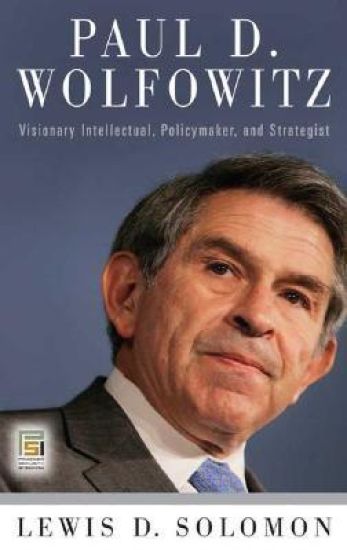
With the announcement of his resignation from the World Bank, the ongoing saga of Paul Wolfowitz, played out in the front pages of the world's newspapers, came to a dramatic conclusion. Paul D. Wolfowitz, as columnist George F. Will wrote in the Washington Post (May 12, 2005), has never been elected to office or served in a president's cabinet, but he has mattered much more than most who have. A longtime State Department hand (Assistant Secretary of State for East Asian and Pacific Affairs, Ambassador to Indonesia), a leading scholar/intellectual (Dean of the Johns Hopkins School of Advanced International Studies), Deputy Secretary of Defense for four years, and one of the architects of the Bush Doctrine, Wolfowitz is a crucial figure in post-Cold War foreign and security policy. He most recently served as President of the World Bank. In each of these roles, he has stood out for his neoconservative and often uncompromising positions. It is no wonder that he is often vilified by the Left and lionized by the Right. In this first full-length biography of Wolfowitz, Solomon attempts to capture him not by delineating the quotidian details of his career, but by tracing his intellectual development and bureaucratic influence at key points along the road to Baghdad and beyond.

As we approach the 21st century, we must rethink our centralized monetary system as part of a larger reexamination of existing political economy, according to Solomon. In questioning the passive acceptance of a federal monopoly in producing money, the author challenges prevailing notions of progress and economic life. Advancing the idea of local currencies to promote a political economy based on empowerment, self-reliance, and ecological permanence, the book discusses three viable systems, all of which are possible under federal and state laws: barter, customer discounts, and local scrip not pegged to the U.S. dollar. The business and practical aspects of each of these systems is considered. This original work will be of interest to scholars, students, and policy-makers in political economy, money and banking, public finance, and public policy.

Halo and the Devil's Tail
Lewis D Ladd; Trish Lindsey Jaggers
Lewis D. Ladd Trish Lindsey Jaggers
2019
pokkari
If you crave a new twist to literary fiction--beyond the "soul-mate romance" genre--one that not only engages but rewrites history, Halo & the Devil's Tail is the book you've been looking for in this growing paranormal market. I use "adult" generally. Hundreds of students--young adults--having been fed snippets of the story's synopsis, have been clamoring for when and where they can buy the book--though this was not written as a YA novel.Halo reaches across three hundred years of humanity's conflicts and grounds them in characters who have lived--and live again--in an effort to subvert mankind's self-destruction. This mystical-fantasy epic novel is actually coauthored by its main characters--two very different people who have been thrown into not only a relationship precast over several past lives, but also given the nearly-impossible task of preventing a Satan(S)-driven nuclear attack on New York City in the current time line--set to occur December 21, 2021--in less than three years.Halo is in the vein of Winter's Tale and The Kingdom of This World--with a dash of The Time Traveler's Wife (emphasis on time slips) and the mathematical genius of The Da Vinci Code. One character, Aaron, is Jewish; the protagonist, Helen, is a somewhat-agnostic poet. Both are psychic on myriad levels. The lines blur between authorship and fiction, its characters, the dream visions experienced and lived. But through time-slips into past lives--and the risk of not returning to the present--both characters are shown that (Y)'s plans for the couple's success hinge on undoing (S)'s work while preserving the past's true history--as intended before human interference. Both Aaron and Helen learn the importance of the historical characters they inhabited in past lives. The plot begs: Does the past indeed disappear? Further, can the Titanic be saved? Hitler's reign cut short? The Sandy Hook massacre prevented? Will changing those pieces of history avert our current destiny? Can the reader, by acting on the book's subliminal message, indeed alter the future?We have until December 21, 2021 to prevent NYC's nuclear annihilation and a satanic stutter for WWIII to follow a twenty-first century's "Roaring 20s." And this novel holds within it the keys to humanity's (and Y's]) ability, through Aaron and Helen (and their past lives' embodiments) to overcome (S)'s stranglehold. If Aaron and Helen fail, the world won't remember their names, but 12/21/2021 will forever be entrenched in history as "The US's Darkest Day." After all, the novel's full name is Halo & the Devil's Tail: A Fictionalized Account of Genuine Paranormal Experiences.

From Athens to America calls for the reversal of the withdrawal of the character-forming function from the political domain, arguing for public sector—federal, state, and local—involvement in character formation. Solomon focuses on four specific virtues to serve as a guide to public policy formation: self-esteem, joy and optimism, equanimity, and personal responsibility. He calls for the public sector to move beyond the efforts of families, faith communities, and civic organizations, and take a vital role in fostering character development and promoting these virtues. Combining political science with philosophy, the Judeo-Christian tradition, and medical research, this book illustrates how we formulate public policies that enable people to grow and develop into healthy humans, what each of us is fully capable of becoming.

From Athens to America calls for the reversal of the withdrawal of the character-forming function from the political domain, arguing for public sector_federal, state, and local_involvement in character formation. Solomon focuses on four specific virtues to serve as a guide to public policy formation: self-esteem, joy and optimism, equanimity, and personal responsibility. He calls for the public sector to move beyond the efforts of families, faith communities, and civic organizations, and take a vital role in fostering character development and promoting these virtues. Combining political science with philosophy, the Judeo-Christian tradition, and medical research, this book illustrates how we formulate public policies that enable people to grow and develop into healthy humans, what each of us is fully capable of becoming.

The Jewish Tradition, Sexuality and Procreation
Lewis D. Solomon
University Press of America
2002
sidottu
In The Jewish Tradition, Sexuality, and Procreation, Lewis Solomon presents the guidance offered by the Jewish tradition regarding questions of sexual and reproductive ethics. Solomon's approach is unique in presenting a wide spectrum of viewpoints from various strands of contemporary Judaism- traditional (Orthodox) and more modern and flexible (Conservative, Reform, and Reconstructionist). In providing the guidance offered by the Jewish tradition, Solomon draws upon modern commentators and authorities, who while looking to ancient text sources, have witnessed the contemporary societal transformation over the past three or four decades. Solomon also presents a new, nonlegalistic approach, drawing on the perspective of Spiritual Judaism.

Death and the Afterlife comprise the latest frontier of human knowledge and awareness. Rabbi Solomon addresses the Jewish perspective on the soul's afterlife journey. As a work of practical spirituality, The Jewish Book of Living and Dying applies traditional Jewish concepts to help us meet the difficult times we all face.
"[In Evangelical Christian Executives,] Dr. Solomon has captured the essence of an effective and refreshingly different approach to business. In telling the compelling stories of six Christian CEOs, he shows us an alternative to an ethic of greed that has so tarnished corporate America." --John D. Beckett, CEO and Chairman of R.W. Beckett Corp. Events of recent years have encouraged a high degree of skepticism and doubt about business institutions and markets. In the face of widespread cynicism about corporate credibility, business leaders are seeking to restore the trust and confidence not only of investors, but of employees, customers, suppliers, shareholders, potential investors, and the public-at-large. In this volume, Lewis D. Solomon focuses on evangelical Christians who have founded or come to lead six firms. He explores whether religion offers a constructive way to think about corporate governance and the tensions between profitability and social responsibility. Solomon finds that many Christian executives have a private faith, leading quietly by example. Others want their faith to shine forth. Solomon focuses on this latter group, dividing them into two categories. The first group he identifies as preachers, who weave visible demonstrations of their faith into the fabric of their businesses. The second are those who take a more sophisticated approach, based on two biblical principles: stewardship and/or servant-leadership. In addition to examining how these leaders of faith have successfully brought their religious values into their businesses, he assesses the consequences of incorporating their faith and values into their business organizations, considering profitability, employee and customer satisfaction, legal and environmental compliance, and charitable giving. Together with these leadership styles and results, Solomon presents three business models--constant, transformational, and evolving--that enable readers to gain a further understanding of the six companies. While Solomon shows that it is possible to integrate financial profitability and broader religious goals, he finds that it is difficult, though not impossible, to maintain a biblically based leadership style after a firm goes public or expands. With the growth of evangelical Christianity in many sectors of American public life, this volume will be of broad interest to business executives, sociologists, students of religion, and economists. Lewis D. Solomon is Theodore Rinehart Professor of Business Law at the George Washington University Law School, where he has taught corporate and tax law for over twenty-five years. A prolific author on legal, business, public policy, and religious topics, he has written over fifty books and numerous articles. He is an ordained rabbi and interfaith minister.

America's elderly population is soaring, presenting numerous challenges for policymakers in the United States. Other developed nations with aging populations face similar problems. There will be fewer workers relative to retirees in coming decades and the elderly are also expected to live longer. The impact of these demographic changes in the United States is likely to be challenging, especially for America's system of social security. Solomon offers new perspectives on how to meet the future costs of social security without bankrupting the next generation or gravely damaging the U.S. economy. He also shows, more broadly, how to provide for the financial security of America's senior populations.Over the past two decades, primary responsibility for providing a financially adequate retirement has shifted from the federal government and employers to individuals. For most Americans, social security alone will not provide enough income. Most companies have shed their pension plans for 401(k) plans, to which companies and employees contribute, and in which participants must make their own investment decisions. Consequently, achieving financial security in retirement has increasingly become one's personal responsibility.Solomon deals extensively with the politics of social security, past and present. He examines the presidential leadership of Franklin D. Roosevelt and Ronald Reagan, both of whom revived the nation's spirit in times of crisis, both of whom introduced economic policies that remain controversial to the present day. He also considers in detail contemporary efforts to rethink social security, focusing on fundamental reform of the social security system and the expansion and simplification of employer-sponsored retirement plans and individual retirement arrangements.Richly textured, informed, and informative, Financial Security and Personal Wealth encompasses history, demography, political economy, public finance, social policy. It will be of interest to policymakers, economists, and political scientists in the United States and elsewhere.
Many scientists today are working to retard the aging process in humans so as to increase both life expectancy and the quality of life. Over the past decade impressive results have been achieved in targeting the mechanisms and pathways of aging. In The Quest for Human Longevity, Lewis D. Solomon considers these scientific studies by exploring the principal biomedical anti-aging techniques. The book also considers cutting edge research on mental enhancements and assesses the scientific doubts of skeptics. The Quest for Human Longevity is also about business. Solomon examines eight corporations pursuing various age-related interventions, profiling their scientific founders and top executives, and examining personnel, intellectual property, and financing for each firm. Academic scientists form the link between research and commerce. Solomon notes that the involvement of university scientists and researchers follows one of two models. The first is a traditional model in which scientists leave academia to work for a corporation or remain in academia and obtain business support for their research. The second is a modern model in which scientists use their intellectual property as a catalyst for acquiring equity interests in the firms they organize. Critics have pointed to the dangers of commercialized science, but Solomon's analysis, on balance, finds that the benefits outweigh the costs and that problems of secrecy and conflicts of interest can be addressed. If scientists succeed in unlocking the secrets of aging and developing drugs or therapies that will allow us to live decades longer, the consequences for society will include profound social, political, economic, and ethical questions. Solomon deals with the public policy aspects of significant life extension and looks at the conflict between those who advocate the acceptance of mortality and the partisans of life. The Quest for Human Longevity will be of interest to policymakers, sociologists, scientists, and students of business, as well as general readers interested in these compelling issues. Lewis D. Solomon is Theodore Rinehart Professor of Business Law at George Washington University Law School. A prolific author on legal, business, public policy, and religious topics, he has written over fifty books and numerous articles. He is an ordained rabbi and interfaith minister.

"This critical study analyzes the development of the hard-boiled detective novel from the 1920's to the present. It shows that while the genre has undergone many changes it still employs a recognizable form and thematic focus throughout. The book covers three main periods, the Early (1927-1955), the Transitional (1964-1977), and the Modern (1979-present)"--Provided by publisher.
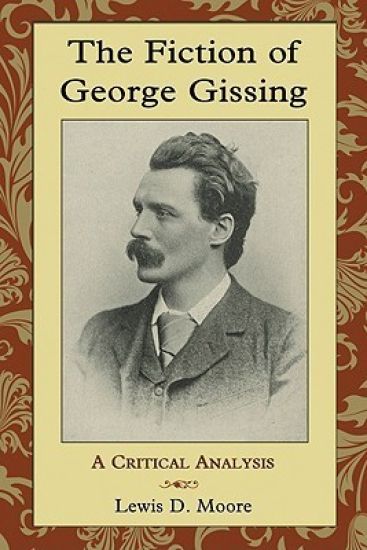
Most of George Gissing's 23 novels have a certain air of autobiography, despite Gissing's frequent arguments that his fictional plots bear little resemblance to his own life and experiences. Starting with Workers in the Dawn (1880), almost all of Gissing's fictional works are set in his own time period of late-Victorian England, and five of his first six novels focus on the working-class poor that Gissing would have encountered frequently during his early writing career. While most recent criticism focuses on Gissing's works as biographical narratives, this work approaches Gissing's novels as purely imaginative works of art, giving him the benefit of the doubt regardless of how well his books seem to match up with the events of his own life. By analyzing important themes in his novels and recognizing the power of the artist's imagination, especially through the critical works of Coleridge, Wordsworth, Shelley, and Keats, the author reveals how Gissing's novels present a lived feel of the world Gissing knew firsthand. The author asserts that, at most, Gissing used his personal experiences as a starting point to transform his own life and thoughts into stories that explain the social, personal, and cultural significance of such experiences.

A literary examination of the influence of 19th century sleuths on the early hard-boiled investigators, this book explores the importance of works by Edgar Allan Poe, Charles Dickens, Wilkie Collins and Sir Arthur Conan Doyle to the development of detective series by Carroll John Daly, Dashiell Hammett, Raymond Chandler, Brett Halliday, Mickey Spillane, Thomas B. Dewey, John D. MacDonald, Ross Macdonald, Richard S. Prather and William Campbell Gault. Authors from the transitional (1964-1977) and modern periods (1979 to the present) are also discussed to show the ongoing influence of the 19th century detective writers.

This work explores John D. MacDonald's Travis McGee series, with special emphasis on MacDonald's examination of the conflicts and joys of twentieth-century American culture and society. MacDonald describes himself as a moralist and this, combined with his narrative gifts, infuses his ever-present concerns for the quality and durability of American life. The first and last chapters, respectively, discuss MacDonald's early novels and the four he wrote concurrently with the series. The remaining chapters analyze various themes that figure prominently in the series. MacDonald's thinking reflects many of the concerns of his fellow citizens during his writing career while revealing his own personal reaction to the society around him. Noting his sense of an uncaused evil in the world and his prolific inventiveness, this work examines MacDonald's narrative exploration of America in which he reveals an unwillingness to give up either his frequently pessimistic views of society or the hope that it can somehow continue. His posthumous Reading for Survival sounds the latter note in typical MacDonald fashion: Read and learn or die. McGee, in the hard-boiled detective tradition, exemplifies MacDonald's picture of the struggling, but coping, culture with no guarantees for the future.
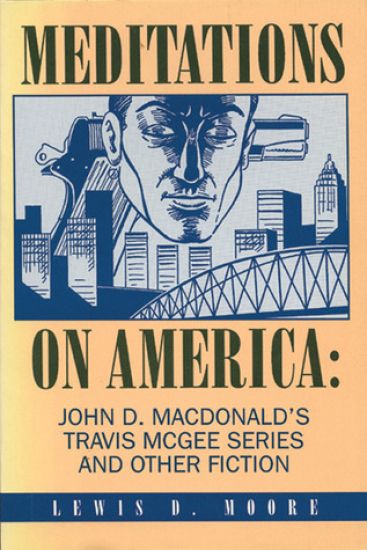
Meditations on America
Lewis D Moore; John D MacDonald
Bowling Green University Popular Press,US
1994
nidottu

This research-grounded guide helps college educators use generative AI to strengthen, not sideline, what they already know about effective teaching. Drawing on decades of experience in faculty development and learning science, Ludwig and Zakrajsek propose a three-stage progression model—Adapt, Create, Embed—to help faculty from any discipline thoughtfully incorporate AI into their teaching. Rather than chasing the latest tech tools, this book focuses on how AI can deepen student learning by enhancing time-tested frameworks such as TILT, Universal Design for Learning, Bloom’s Taxonomy, and Backward Design, all summarized in a handy appendix. Each chapter includes classroom-tested examples, reflection prompts, and activities ready for individual exploration or group discussion. Whether you’re skeptical, curious, or cautiously optimistic, this book offers a clear, practical path to using AI as a partner, not a replacement, in ways that support students and reinvigorate teaching.
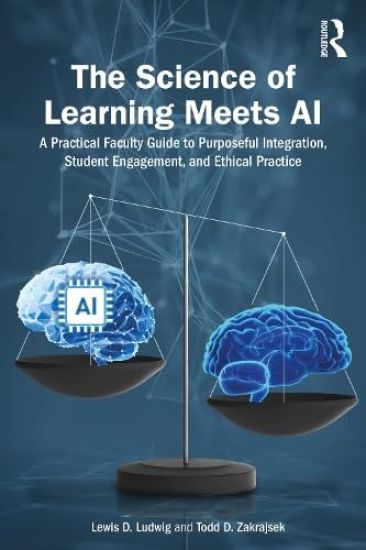
This research-grounded guide helps college educators use generative AI to strengthen, not sideline, what they already know about effective teaching. Drawing on decades of experience in faculty development and learning science, Ludwig and Zakrajsek propose a three-stage progression model—Adapt, Create, Embed—to help faculty from any discipline thoughtfully incorporate AI into their teaching. Rather than chasing the latest tech tools, this book focuses on how AI can deepen student learning by enhancing time-tested frameworks such as TILT, Universal Design for Learning, Bloom’s Taxonomy, and Backward Design, all summarized in a handy appendix. Each chapter includes classroom-tested examples, reflection prompts, and activities ready for individual exploration or group discussion. Whether you’re skeptical, curious, or cautiously optimistic, this book offers a clear, practical path to using AI as a partner, not a replacement, in ways that support students and reinvigorate teaching.

In his new book, Lewis D. Sargentich shows how two different kinds of legal argument - rule-based reasoning and reasoning based on principles and policies - share a surprising kinship and serve the same aspiration. He starts with the study of the rule of law in life, a condition of law that serves liberty - here called liberal legality. In pursuit of liberal legality, courts work to uphold people's legal entitlements and to confer evenhanded legal justice. Judges try to achieve the control of reason in law, which is manifest in law's coherence, and to avoid forms of arbitrariness, such as personal moral judgment. Sargentich offers a unified theory of the diverse ways of doing law, and shows that they all arise from the same root, which is a commitment to liberal legality.

In his new book, Lewis D. Sargentich shows how two different kinds of legal argument - rule-based reasoning and reasoning based on principles and policies - share a surprising kinship and serve the same aspiration. He starts with the study of the rule of law in life, a condition of law that serves liberty - here called liberal legality. In pursuit of liberal legality, courts work to uphold people's legal entitlements and to confer evenhanded legal justice. Judges try to achieve the control of reason in law, which is manifest in law's coherence, and to avoid forms of arbitrariness, such as personal moral judgment. Sargentich offers a unified theory of the diverse ways of doing law, and shows that they all arise from the same root, which is a commitment to liberal legality.