Kirjojen hintavertailu. Mukana 11 244 527 kirjaa ja 12 kauppaa.

Kirjahaku

Etsi kirjoja tekijän nimen, kirjan nimen tai ISBN:n perusteella.

1000 tulosta hakusanalla Lewis L. Gould

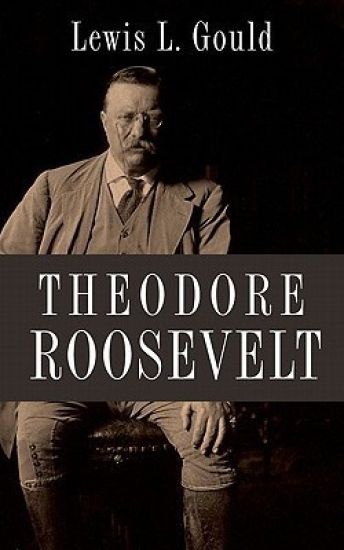
Theodore Roosevelt

Theodore Roosevelt

Lewis L. Gould

Oxford University Press Inc
2012
sidottu
Sportsman. Naturalist. Warrior. President. There are so many sides to Theodore Roosevelt that it is easy to overlook one of his most enduring contributions to American public life: the use of fame to fuel his political career. In this concisely written, enlightening book, presidential historian Lewis L. Gould goes beyond the "bully pulpit" stereotypes to reveal how Roosevelt used his celebrity to change American politics. Based on research gleaned from the personal papers of Roosevelt and his contemporaries, Theodore Roosevelt recaptures its subject's bold activism and irrepressible, larger-than-life personality. Beginning with his privileged childhood in New York City, the narrative traces his election to the New York Assembly, where he quickly rose through the ranks of the Republican Party. It is here that he first applied his shrewd ability to keep himself in the spotlight--a skill that served him well as commander of a volunteer regiment (dubbed "Roosevelt's Rough Riders") in the Spanish-American War. Gould shows how Roosevelt rode a wave of popular acclaim at the war's end, assuming the governorship of New York and serving as president from 1901 to 1909. While covering his major accomplishments as chief executive, including his successes as a trust-buster, labor mediator, and conservationist, Gould explains how fame both sustained and limited Roosevelt when he ran for president in 1912 and opposed Woodrow Wilson's policies during World War I. Theodore Roosevelt delivers the most insightful look yet at a pioneer of political theater--a man whose vigorous idealism as a champion of democracy serves as a counterpoint to the cynicism of today's political landscape. The book will coincide with the 100th anniversary of Roosevelt's third party run for the Progressive or Bull Moose Party.
The Republicans

The Republicans

Lewis L. Gould

Oxford University Press Inc
2014
nidottu
The Republicans is a revised and updated edition of Lewis L. Gould's 2003 history of the Republican party. The book retains the features that made the first edition a success--a fast-paced account of Republican fortunes, a deep knowledge of the evolution of national political history, and an acute feel for the interplay of personalities and ideology. All the main players in the Republican story are captured in penetrating sketches and deft analysis. Gould brings to life such forgotten Republican leaders as James G. Blaine, Mark Hanna, Wendell Willkie, and Robert A. Taft. He also does full justice to such contemporary figures as Newt Gingrich, Sarah Palin, and John McCain. The Republicans contains a new chapter on the George W. Bush presidency, the election of 2008, and the response of the Grand Old Party to Barack Obama. Gould argues that the historic Republican skepticism about the legitimacy of the Democratic party has shaped American politics since the Civil War. In his view, that persistent flaw in the relations between the two parties has led the nation to the current crisis of stalemate and partisan bitterness. The Republicans won praise for its even-handed, incisive analysis of Republican history a decade ago. Gould's extension of the story through 2008 makes The Republicans an even more useful volume for students and general readers alike. No other account of Republican history is as up-to-date, crammed with fascinating information, and ready to serve as an informed guide to today's partisan warfare. Political junkies and readers seeking the best first book on Republican history will find what they are looking for in Gould's comprehensive volume.
Alexander Watkins Terrell

Alexander Watkins Terrell

Lewis L. Gould

University of Texas Press
2004
pokkari
Alexander Terrell's career placed him at the center of some of the most pivotal events in nineteenth- and early twentieth-century history, ranging from the Civil War to Emperor Maximilian's reign over Mexico and an Armenian genocide under the Ottoman Empire. Alexander Watkins Terrell at last provides the first complete biographical portrait of this complex figure. Born in Virginia in 1827, Terrell moved to Texas in 1852, rising to the rank of Confederate brigadier general when the Civil War erupted. Afterwards, he briefly served in Maximilian's army before returning to Texas, where he was elected to four terms in the state Senate and three terms in the House. President Grover Cleveland appointed him minister to the Ottoman Empire, dispatching him to Turkey and the Middle East for four years while the issues surrounding the existence of Christians in a Muslim empire stoked violent confrontations there. His other accomplishments included writing legislation that created the Texas Railroad Commission and what became the Permanent University Fund (the cornerstone of the University of Texas's multibillion-dollar endowment). In this balanced exploration of Terrell's life, Gould also examines Terrell's views on race, the impact of the charges of cowardice in the Civil War that dogged him, and his spiritual searching beyond the established religions of his time. In his rich and varied life, Alexander Watkins Terrell experienced aspects of nineteenth-century Texas and American history whose effects have continued down to the present day.
The Presidency of William McKinley

The Presidency of William McKinley

Lewis L. Gould

University Press of Kansas
1981
sidottu
In this interpretation of the McKinley presidency Lewis L. Gould contends that William McKinley was the first modern president. Making use of extensive original research in manuscript collections in the United States, Great Britain, and France, Gould argues that during McKinley's four and a half years in the White House the executive office began to resemble the institution as the twentieth century would know it. He rejects the erroneous stereotypes that have long obscured McKinley's historical significance: McKinley as the compliant agent of Mark Hanna or as an irresolute executive in the Cuban crisis that led to war with Spain. He contends that McKinley is an important figure in the history of the United States because of the large contributions he made to the strengthening and broadening of the power of the chief executive. While this volume touches on many aspects of McKinley's leadership, the core of it relates to the coming of the Spanish-American War, the president's conduct of the war itself, and the emergence of an American empire from 1898 to 1900. According to Gould, the Spanish-American War was not the result presidential weakness or of cowardice before public hysteria. McKinley sought to persuade Spain to relinquish Cuba peacefully, turning to war only when it became apparent that Madrid would never acquiesce. During the war, McKinley effectively directed the American military effort and the diplomacy that brought territorial acquisitions and peace. The process of making peace with Spain--involving, as it did, American annexation of the Philippines--and of securing the ratification of the resulting treaty in the Senate underscored McKinley's expansive view of presidential power. He functioned as chief diplomat, from the sending of senators on the peace commission to the personal supervision of the terms of the negotiation. At home he made tours of the West and South in 1898 to lead popular opinion to his position as no president had done before him. For the Senate he evidenced a readiness to dispense patronage, woo votes with personal persuasion, and marshal the resources of the political system behind his treaty. Later episodes in McKinley's administration support Gould's thesis. In administering Puerto Rico and Cuba and in suppressing an insurrection in the Philippines, McKinley relied further on the war power and continued to shape affairs from the White House. He sent troops to china during the Boxer Rebellion in 1900 without congressional authorization, governed the new possessions through presidential commissions, and allowed Capitol Hill only a subsidiary role in the process. By 1901 the nation had an empire and a president whose manner and bearing anticipated the imperial executives of six decades later. Gould does not argue that McKinley was a great president. He maintains, instead, that what McKinley contributed to the office, the examples he offered and the precedents he set make him an important figure in the emergence of the modern presidency in this century.
The Spanish-American War and President McKinley

The Spanish-American War and President McKinley

Lewis L. Gould

University Press of Kansas
1982
nidottu
This succinct, readable outgrowth of the author’s highly-acclaimed volume The Presidency of William McKinley, deserves widespread adoption in courses on late nineteenth- and early twentieth-century U.S. diplomatic history and foreign policy. It substantially supersedes other accounts of the coming of the Spanish-American War, the war itself, and the aftermath of the conflict. Based on the most up-to-date research available, it provides a new and refreshing perspective on McKinley's handling of the war.According to Gould, McKinley’s expansive view of presidential power had a significant effect on his role as commander-in-chief during the war years and on his efforts to make the White House a command post. McKinley laid the foundation of the modern presidency by his courageous and principled presidential leadership during the coming of the war, by the way he conducted and oversaw the war itself, and by the manner in which he made peace with Spain, acquired the Philippines, and gained approval of the Treaty of Paris in the Senate.
Four Hats in the Ring

Four Hats in the Ring

Lewis L. Gould

University Press of Kansas
2008
sidottu
Imagine a presidential election with four well-qualified and distinguished candidates and a serious debate over the future of the nation! Sound impossible in this era of attack ads and strident partisanship? It happened nearly a century ago in 1912, when incumbent Republican William Howard Taft, former president Theodore Roosevelt running as the Progressive Party candidate, Democratic nominee Woodrow Wilson, and Socialist candidate Eugene V. Debs all spoke to major concerns of the American people and changed the landscape of national politics in the bargain.The presidential election of 1912 saw a third-party candidate finish second in both popular and electoral votes. The Socialist candidate received the highest percentage of the popular vote his party ever attained. In addition to year-round campaigning in the modern style, the 1912 contest featured a broader role for women, two exciting national conventions, and an assassination attempt on Roosevelt's life. The election defined the major parties for generations to come as the Taft-Roosevelt split pushed the Republicans to the right and the Democrats' agenda of reform set them on the road to the New Deal.Lewis L. Gould, one of America's preeminent political historians, tells the story of this dramatic race and explains its enduring significance. Basing his narrative on the original letters and documents of the candidates themselves, he guides his readers down the campaign trail through the factional splits, exciting primaries, tumultuous conventions and the turbulent fall campaign to Wilson's landslide electoral vote victory in November.It's all here - Gene Debs' challenge to capitalism, the progressive rivalry of Roosevelt and Robert La Follette, the debate between the New Freedom of Wilson and the New Nationalism of Roosevelt, and the resolve of Taft to defeat his one-time friend TR and keep the Republican Party in conservative hands. Gould combines lively anecdotes, the poetry and prose of the campaign, and insights into the clash of ideology and personality to craft a narrative that moves as fast as did the 1912 election itself.Americans sensed in 1912 that they stood at a turning point in the nation's history. ""Four Hats in the Ring"" demonstrates why the people who lived and fought this significant election were more right than they could ever have known.
The William Howard Taft Presidency

The William Howard Taft Presidency

Lewis L. Gould

University Press of Kansas
2009
sidottu
The only president to later serve as chief justice of the United States, William Howard Taft remarked in the 1920s that 'I don't remember that I ever was President'. Historians have agreed, and Taft is usually portrayed, when written about at all, as nothing more than a failed chief executive. In this provocative new study, the first treatment of the Taft presidency in four decades, Lewis L. Gould presents a compelling assessment of Taft's accomplishments and setbacks in office. Rich in human interest and fresh analysis of the events of Taft's four years in Washington, Gould's book shows why Taft's presidency is very much worth remembering on its own terms. Gould argues that Taft wanted to be president and had an ambitious agenda when he took power in March 1909. Approaching his duties more as a judge than as a charismatic executive in the mold of Theodore Roosevelt, Taft soon found himself out of step with public opinion. Gould shows how the Payne-Aldrich Tariff and the Ballinger-Pinchot controversy squandered Taft's political capital and prepared the ground for Democratic victories in the elections of 1910 and 1912. His seamless narrative provides innovative treatments of these crucial episodes to make Taft's presidency more understandable than in any previous account. On Canadian Reciprocity, Dollar Diplomacy, and international arbitration, Gould's well-researched work goes beyond earlier stale cliches about Taft's administration to link his tenure to the evolution of the modern presidency. Taft emerges as a hard-working but flawed executive who lacked the excitement of Theodore Roosevelt or the inspiration of Woodrow Wilson. The break with Theodore Roosevelt in 1912 doomed the Taft presidency, and Gould supplies an evenhanded analysis of the erosion of their once warm friendship. At bottom, the two men clashed about the nature of presidential power, and Gould traces with insight how this personal and ideological rupture influenced the future of the Republican party and the course of American politics. In Gould's skilled hands, this neglected presidency again comes alive. Leaving the White House in 1913, Taft wrote that 'the people of the United States did not owe me another election'. What his presidency deserved is the lively and wise appraisal of his record in office contained in this superb book.
The Presidency of Theodore Roosevelt

The Presidency of Theodore Roosevelt

Lewis L. Gould

University Press of Kansas
2011
sidottu
First published in 1991, The Presidency of Theodore Roosevelt has won acclaim as a lucid and thorough narrative of Roosevelt's two terms in the White House. Reviewers praised the depth of Lewis L. Gould's research, his comprehensive coverage of major aspects of Roosevelt's tenure, and the persuasiveness of his conclusions about his subject's personalized presidency. Writing in Reviews in American History, Willard Gatewood called the book essential reading for all who wish to understand the complex, charismatic, and perennially fascinating political figure that was Theodore Roosevelt. Long considered the standard work on its subject, Gould's book is a trusted source that newcomers to Roosevelt's years in the White House and experts in the field could consult with confidence in its research and historical judgments. It has also become an essential adoption for courses on the era, effectively engaging undergraduates and graduate students who have praised the author for his clarity and evenhandedness. Responding to frequent suggestions that the book be brought up-to-date to incorporate the excellent studies of Roosevelt's presidency that have appeared since 1991, Gould has provided a new edition that he believes will reintroduce a new generation of readers to the fun and importance of an ebullient, lively chief executive. In this revised and expanded edition, Gould has built on the sterling qualities of the first edition and added new information and analysis based on continuing research and a command of the literature on Theodore Roosevelt's presidency published during the last two decades. He has tightened the prose and added numerous references to the latest scholarship on this most engaging of presidents. Interested readers will find new discussions of the origins of Roosevelt's creation of the Tongass Forest in Alaska, his treatment of a dissenting federal employee named Rebecca Taylor who took her grievance to the Supreme Court, the recent controversy over Roosevelt's relationship with Japan, the dispute over whether the president issued a warning to Germany about Venezuela in 1902-1903, and the important role of a little-known conservative senator named Winthrop Murray Crane. With these and other changes, the updated version of Gould's text provides an even more compelling narrative that broadens the already fascinating story of Roosevelt in power with new insights and perceptive conclusions.
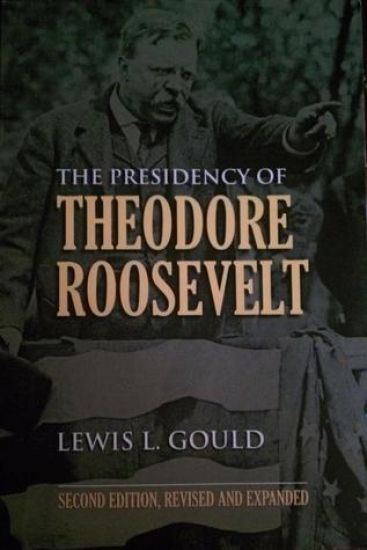
The Presidency of Theodore Roosevelt

The Presidency of Theodore Roosevelt

Lewis L. Gould

University Press of Kansas
2011
nidottu
First published in 1991, The Presidency of Theodore Roosevelt has won acclaim as a lucid and thorough narrative of Roosevelt's two terms in the White House. Reviewers praised the depth of Lewis L. Gould's research, his comprehensive coverage of major aspects of Roosevelt's tenure, and the persuasiveness of his conclusions about his subject's personalized presidency. Writing in Reviews in American History, Willard Gatewood called the book "essential reading for all who wish to understand the complex, charismatic, and perennially fascinating political figure that was Theodore Roosevelt."Long considered the standard work on its subject, Gould's book is a trusted source that newcomers to Roosevelt's years in the White House and experts in the field could consult with confidence in its research and historical judgments. It has also become an essential adoption for courses on the era, effectively engaging undergraduates and graduate students who have praised the author for his clarity and evenhandedness. Responding to frequent suggestions that the book be brought up-to-date to incorporate the excellent studies of Roosevelt's presidency that have appeared since 1991, Gould has provided a new edition that he believes "will reintroduce a new generation of readers to the fun and importance of an ebullient, lively chief executive."In this revised and expanded edition, Gould has built on the sterling qualities of the first edition and added new information and analysis based on continuing research and a command of the literature on Theodore Roosevelt's presidency published during the last two decades. He has tightened the prose and added numerous references to the latest scholarship on this most engaging of presidents. Interested readers will find new discussions of the origins of Roosevelt's creation of the Tongass Forest in Alaska, his treatment of a dissenting federal employee named Rebecca Taylor who took her grievance to the Supreme Court, the recent controversy over Roosevelt's relationship with Japan, the dispute over whether the president issued a warning to Germany about Venezuela in 1902-1903, and the important role of a little-known conservative senator named Winthrop Murray Crane.With these and other changes, the updated version of Gould's text provides an even more compelling narrative that broadens the already fascinating story of Roosevelt in power with new insights and perceptive conclusions.
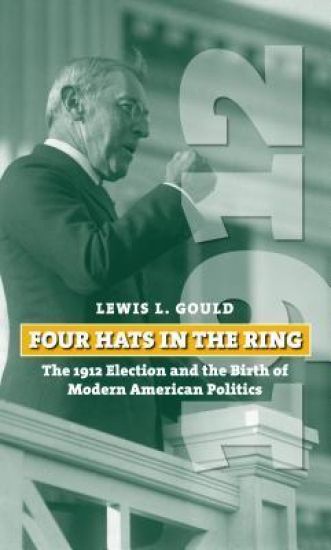
Four Hats in the Ring

Four Hats in the Ring

Lewis L. Gould

University Press of Kansas
2008
nidottu
Imagine a presidential election with four well-qualified and distinguished candidates and a serious debate over the future of the nation! Sound impossible in this era of attack ads and strident partisanship? It happened nearly a century ago in 1912, when incumbent Republican William Howard Taft, former president Theodore Roosevelt running as the Progressive Party candidate, Democratic nominee Woodrow Wilson, and Socialist candidate Eugene V. Debs all spoke to major concerns of the American people and changed the landscape of national politics in the bargain. The presidential election of 1912 saw a third-party candidate finish second in both popular and electoral votes. The Socialist candidate received the highest percentage of the popular vote his party ever attained. In addition to year-round campaigning in the modern style, the 1912 contest featured a broader role for women, two exciting national conventions, and an assassination attempt on Roosevelt's life. The election defined the major parties for generations to come as the Taft-Roosevelt split pushed the Republicans to the right and the Democrats' agenda of reform set them on the road to the New Deal. Lewis L. Gould, one of America's pre-eminent political historians, tells the story of this dramatic race and explains its enduring significance. Basing his narrative on the original letters and documents of the candidates themselves, he guides his readers down the campaign trail through the factional splits, exciting primaries, tumultuous conventions and the turbulent fall campaign to Wilson's landslide electoral vote victory in November. It's all here-Gene Debs's challenge to capitalism, the progressive rivalry of Roosevelt and Robert La Follette, the debate between the New Freedom of Wilson and the New Nationalism of Roosevelt, and the resolve of Taft to defeat his one-time friend TR and keep the Republican Party in conservative hands. Gould combines lively anecdotes, the poetry and prose of the campaign, and insights into the clash of ideology and personality to craft a narrative that moves as fast as did the 1912 election itself. Americans sensed in 1912 that they stood at a turning point in the nation's history. Four Hats in the Ring demonstrates why the people who lived and fought this significant election were more right than they could ever have known.
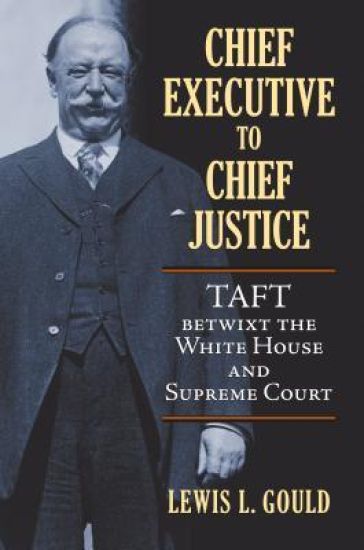
Chief Executive to Chief Justice

Chief Executive to Chief Justice

Lewis L. Gould

University Press of Kansas
2014
sidottu
As America’s 27th president from 1909 to 1913, and then as chief justice of the Supreme Court from 1921 to 1930, William Howard Taft was the only man ever to lead two of America's three governing branches. But between these two well-documented periods in office, there lies an eight-year patch of largely unexplored political wilderness. It was during this time, after all, that Taft somehow managed to rise from his ignominious defeat by both Woodrow Wilson and Theodore Roosevelt in the 1912 election to achieve his lifelong goal of becoming chief justice. In the first in-depth look at this period in Taft's singular career, eminent presidential historian Lewis L. Gould reveals how a man often derided for his lack of political acumen made his way through the hazards of Republican affairs to gain his objective. In the years between the presidency and the Supreme Court Taft was, as one commentator observed, ""the greatest of globe trotters for humanity."" Gould tracks him as he crisscrosses the country from 1913 through the summer of 1921, the inveterate traveler reinventing himself as an elder Republican statesman with no visible political ambition beyond informing and serving the public. Taft was, however, working the long game, serving on the National War Labor Board, fighting for the League of Nations, teaching law and constitutional history at Yale, making up his differences with Roosevelt, all while negotiating the Republican Party's antipathy and his own intense dislike of Woodrow Wilson, whose wartime policies and battle for the league he was bound to support. Throughout, his judicial ambition shaped his actions, with surprising adroitness. This account of Taft's journey from the White House to the Supreme Court fills a large gap in our understanding of an important American politician and jurist. It also discloses how intricate and complicated public affairs had become during the era of World War I and its aftermath, an era in which William Howard Taft, as a shrewd commentator on the political scene, a resourceful practitioner of party politics, and a man of consummate ambition, made a significant and lasting mark.
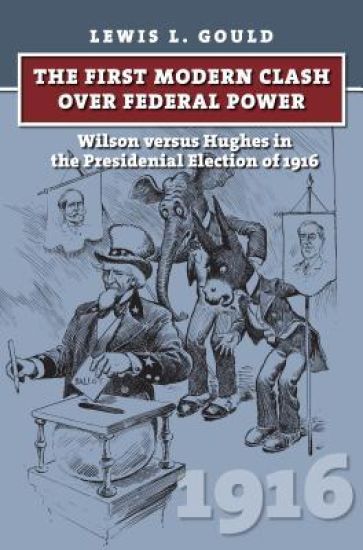
The First Modern Clash over Federal Power

The First Modern Clash over Federal Power

Lewis L. Gould

University Press of Kansas
2016
sidottu
Fully examined for the first time in this engrossing book by one of America's preeminent presidential scholars, the election that pitted Woodrow Wilson against Charles Evan Hughes emerges as a clear template for the partisan differences of the modern era. The 1916 election dramatically enacted the two parties' fast-evolving philosophies about the role and reach of federal power. Lewis Gould reveals how, even more than in the celebrated election of 1912, the parties divided along class-based lines in 1916, with the Wilson campaign in many respects anticipating the New Deal while the Republicans adopted the small government, anti-union, and anti-regulation positions they have embraced ever since. The Republicans dismissed Wilson's 1912 win as a fluke, the result of Theodore Roosevelt's ""Progressive"" apostasy splitting the party. But in US Supreme Court Justice Hughes, whose electoral prowess had been proven in two successful runs for governor of New York, the Republicans had anointed a flawed campaigner whose missteps in California sealed his fate very late in the election. Wilson's strong performance as the head of a united Democratic government (for the first time since 1894), along with Americans' uncertainty about the outbreak of war in Europe, led to victory.Along with the ins and outs of the race itself, Gould's book explores the election's broader meaning-as, for the first time, the popular election of the Senate coincided with a presidential election, and the women's suffrage movement gathered steam. The year 1916 also marked the restoration of a two-party competition for president and, as we see in this enlightening book, the beginning of the two-party battle for the hearts and minds of Americans that continues to this day.
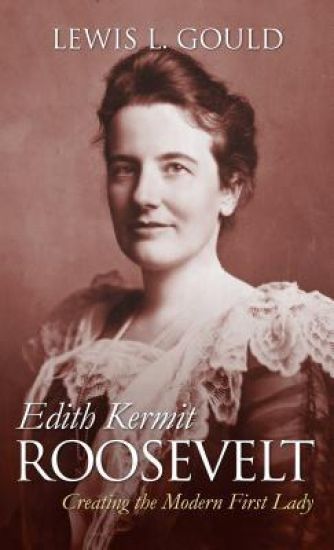
Edith Kermit Roosevelt

Edith Kermit Roosevelt

Lewis L. Gould

University Press of Kansas
2018
nidottu
Few first ladies have enjoyed a better reputation among historians than Edith Kermit Roosevelt. Aristocratic and sophisticated, tasteful and discreet, she managed the White House with a sure hand. Her admirers say that she never slipped in carrying out her duties as hostess, mother, and adviser to her husband. Lewis Gould's path-breaking study, however, presents a more complex and interesting figure than the somewhat secularized saint Edith Roosevelt has become in the literature on first ladies. While many who knew her found her inspiring and gracious, family members also recalled a more astringent and sometimes nasty personality. Gould looks beneath the surface of her life to examine the intricate legacy of her tenure from 1901 to 1909.The narrative in this book thus uncovers much new about Edith Roosevelt. Far from being averse to activism, Edith Roosevelt served as a celebrity sponsor at a New York musical benefit and also intervened in a high-profile custody dispute. Gould traces her role in the failed marriage of a United States senator, her efforts to secure the ambassador from Great Britain that she wanted, and the growing tension between her and Helen Taft in 1908-1909. Her commitment to bringing classical music artists to the White House, along with other popular performers, receives the fullest attention to date.Gould also casts a skeptical eye over the area where Edith Roosevelt's standing has been strongest, her role as a mother. He looks at how she and her husband performed as parents and dissents from the accustomed judgment that all was well with the way the Roosevelt offspring developed. Most important of all, Gould reveals the first lady's deep animus toward African Americans and their place in American society. She believed ""that any mixture of races is an unmitigated evil."" The impact of her bigotry on Theodore Roosevelt's racial policies must now be an element in any future discussion of that sensitive subject.On balance, Gould finds that Edith Roosevelt played an important and creative part in how the institution of the first lady developed during the twentieth century. His sprightly retelling of her White House years will likely provoke controversy and debate. All those interested in how the role of the presidential wife has evolved will find in this stimulating book a major contribution to the literature on a fascinating president. It also brings to life a first lady whose legacy must now be seen in a more nuanced and challenging light.
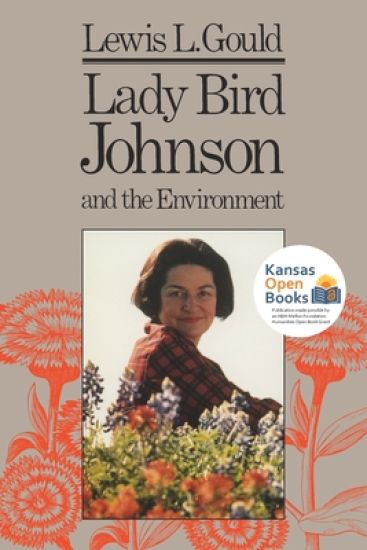
Lady Bird Johnson and the Environment

Lady Bird Johnson and the Environment

Lewis L. Gould

UNIVERSITY PRESS OF KANSAS
2021
nidottu
In the 1960s Lady Bird Johnson sought to improve the natural appearance of Washington, D.C., to make the nation’s highways less cluttered with billboards and junkyards, and to advance the environmental agenda of Lyndon Johnson’s presidency. The popular understanding of what she did remains incomplete, and her role as a woman conservationist has not been well understood. In this, the first book to example her accomplishments as First Lady, Lewis Gould shows Lady Bird Johnson as a catalyst for environmental ideas and as a powerful and persuasive force within her husband’s administration.Although passage of the Highway Beautification Act in 1965 was the legislative apex of her efforts, Lady Bird Johnson also articulated a wide range of conservation issues, framing policy initiatives and focusing public opinion. She instilled conservation and ecological ideas in the national mind, Gould argues, with a skill and adroitness that puts Mrs. Johnson in the front rank among modern First Ladies. Indeed, in his view, only Eleanor Roosevelt surpasses her in importance.This book is the result of Gould’s extensive research in the LBJ Library and draws on his interviews with such key figures as Interior Secretary Steward Udall, Press Secretary Liz Carpenter, District of Columbia Mayor Walter Washington, and Lady Bird Johnson herself.
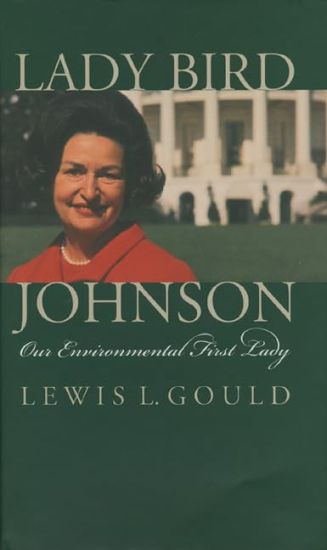
Lady Bird Johnson

Lady Bird Johnson

Lewis L. Gould

UNIVERSITY PRESS OF KANSAS
2026
nidottu
Unique among presidents’ wives, Lady Bird Johnson was not only one of the leading environmentalists of the twentieth century, she also redefined the institution of First Lady. In this first book in an innovative new series, Lewis Gould shows why Mrs. Johnson ranks with Eleanor Roosevelt as a significant innovator of the First Lady role. Building upon his much admired Lady Bird Johnson and the Environment, Gould has refocused and revised his thinking to create a fresh, informative, and entertaining new portrait of LBJ's First Lady. Using Lady Bird's White House papers and interviews with her and her close associates, Gould captures both her spirit and considerable achievements during her tenure in the White House. He shows how Lady Bird's efforts to advance the cause of beautifying highways and the city of Washington, D.C.—which included attending legislative strategy sessions and lobbying for the programs that she endorsed—represented a new departure for a First Lady. He also tells how she devised and developed the staff, procedures, and tactics that subsequent First Ladies have since employed in the public arena. The book sheds light on the personal side of Mrs. Johnson's activism as well, telling how her appearances on behalf of environmental issues were often marred by antiwar protests and how she agonized with her husband over his decision not to run for reelection. It also reveals details of her life after LBJ's death, showing that the consistency with which she pursued her vision of the environment has added to her historical influence. Today Lady Bird's efforts are commemorated at such sites as a grove in Redwoods National Park and a park by the Potomac River that both bear her name. Equally important, she herself participated in the policymaking process in a more direct way than any previous First Lady had dared. All in all, Lady Bird Johnson set a high standard for future First Ladies to follow, while raising the environmental awareness of millions of Americans. For those reasons especially, her legacy will endure.
1968

1968

Lewis L. Gould

Ivan R Dee, Inc
2010
pokkari
The race for the White House in 1968 was a watershed event in American politics. In this brilliantly succinct narrative analysis, Lewis L. Gould shows how the events of that tumultuous year changed the way Americans felt about politics and their national leaders; how Republicans used the skills they brought to Richard Nixon's campaign to create a generation-long ascendancy in presidential politics; and how Democrats, divided and torn after 1968, emerged as only crippled challengers for the White House throughout most of the years until the early twenty-first century. Bitterness over racial issues and the Vietnam War that marked the 1968 election continued to shape national affairs and to rile American society for years afterward. And the election accelerated an erosion of confidence in American institutions that has not yet reached a conclusion. In his lucid account, now revised and updated, Mr. Gould emphasizes the importance of race as the campaign's key issue and examines the now infamous "October surprises" of Lyndon Johnson and Richard Nixon as he describes the extraordinary events of what Eugene McCarthy later called the "Hard Year."
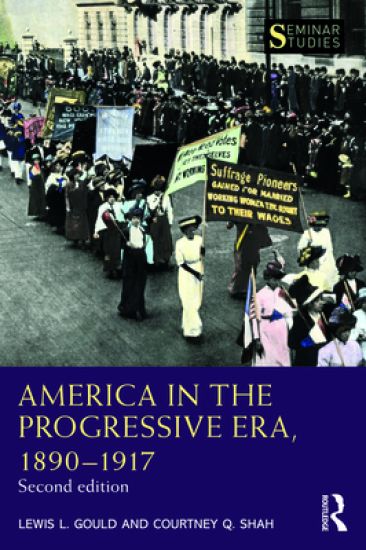
America in the Progressive Era, 1890–1917

America in the Progressive Era, 1890–1917

Lewis L. Gould; Courtney Q. Shah

Routledge
2021
nidottu
Now in its second edition, America in the Progressive Era, 1890–1917 provides a readable, analytical narrative of the emergence, influence, and decline of the spirit of progressive reform that animated American politics and culture around the turn of the twentieth century.Covering the turbulent 1890s to the American entry into World War I, the text examines the political, social, and cultural events of a period which set the agenda for American public life during the remainder of the twentieth century. This new edition places progressivism in a transatlantic context and gives more attention to voices outside the mainstream of party politics.Key features include: A clear account of the continuing debate in the United States over the role of government, citizenship, and the pursuit of social justice A full examination of the impact of reform on women and minorities A rich selection of documents that allow the historical actors to communicate with today’s readers An extensive, updated bibliography providing a valuable guide to additional reading and research Based on the most recent scholarship and written to be read by students, this book will be of interest to students of American History and Political History.
America in the Progressive Era, 1890–1917

America in the Progressive Era, 1890–1917

Lewis L. Gould; Courtney Q. Shah

Routledge
2021
sidottu
Now in its second edition, America in the Progressive Era, 1890–1917 provides a readable, analytical narrative of the emergence, influence, and decline of the spirit of progressive reform that animated American politics and culture around the turn of the twentieth century.Covering the turbulent 1890s to the American entry into World War I, the text examines the political, social, and cultural events of a period which set the agenda for American public life during the remainder of the twentieth century. This new edition places progressivism in a transatlantic context and gives more attention to voices outside the mainstream of party politics.Key features include: A clear account of the continuing debate in the United States over the role of government, citizenship, and the pursuit of social justice A full examination of the impact of reform on women and minorities A rich selection of documents that allow the historical actors to communicate with today’s readers An extensive, updated bibliography providing a valuable guide to additional reading and research Based on the most recent scholarship and written to be read by students, this book will be of interest to students of American History and Political History.
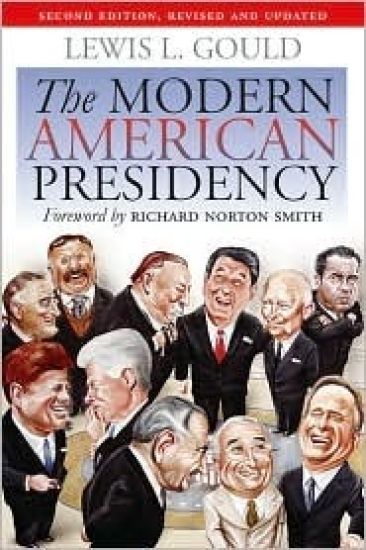
The Modern American Presidency

The Modern American Presidency

Lewis L. Gould; Richard Norton Smith

University Press of Kansas
2009
sidottu
When the first edition of this book appeared in 2003, it was chosen as a Main Selection of both the Book-of-the-Month Club and History Book Club and quickly became the standard work on the modern American presidency - from William McKinley through William Jefferson Clinton. In that original edition, Lewis L. Gould argued that, while the president may be the most powerful man in the world, most presidents have fallen well short of the daunting challenges that confronted them while in office. During George W. Bush's two administrations, as Gould discusses in a substantial new chapter, those challenges grew in scope and ferocity, encompassing two intractable wars, natural disaster on an inconceivable scale, and a near-meltdown of the national and global economies. Unfortunately, Gould argues, President Bush was woefully unprepared for those challenges, failed spectacularly as a leader, and ultimately lost the public's trust. His failures further reinforce and underscore Gould's previous conclusions. This new edition, like the first, offers a lively interpretive synthesis filled with intriguing insights into the presidency's evolution during America's rise to global prominence. Gould traces the decline of the party system, the increasing importance of the media and its role in creating the president-as-celebrity, and the growth of the White House staff and executive bureaucracy. He also shows us a succession of chief executives who increasingly have known less and less about the business of governing the country, observing that most would have had a better historical reputation if they had contented themselves with a single term. Gould's sharply critical new chapter on George W. Bush's presidency notes how he and his associates extended the troubling trends of continuous campaigning, media manipulation, celebrity politics, and inattention to governance so characteristic of the modern presidential office. Gould also amplifies his commentary on the Clinton presidency and lays out the treacherous terrain that President Obama must now traverse. This book remains a must read for everyone who cares about the future of our nation and the presidents who lead it.
The Modern American Presidency

The Modern American Presidency

Lewis L. Gould; Richard Norton Smith

University Press of Kansas
2009
nidottu
When the first edition of this book appeared in 2003, it was chosen as a Main Selection of both the Book-of-the-Month Club and History Book Club and quickly became the standard work on the modern American presidency - from William McKinley through William Jefferson Clinton. In that original edition, Lewis L. Gould argued that, while the president may be the most powerful man in the world, most presidents have fallen well short of the daunting challenges that confronted them while in office. During George W. Bush's two administrations, as Gould discusses in a substantial new chapter, those challenges grew in scope and ferocity, encompassing two intractable wars, natural disaster on an inconceivable scale, and a near-meltdown of the national and global economies. Unfortunately, Gould argues, President Bush was woefully unprepared for those challenges, failed spectacularly as a leader, and ultimately lost the public's trust. His failures further reinforce and underscore Gould's previous conclusions. This new edition, like the first, offers a lively interpretive synthesis filled with intriguing insights into the presidency's evolution during America's rise to global prominence. Gould traces the decline of the party system, the increasing importance of the media and its role in creating the president-as-celebrity, and the growth of the White House staff and executive bureaucracy. He also shows us a succession of chief executives who increasingly have known less and less about the business of governing the country, observing that most would have had a better historical reputation if they had contented themselves with a single term. Gould's sharply critical new chapter on George W. Bush's presidency notes how he and his associates extended the troubling trends of continuous campaigning, media manipulation, celebrity politics, and inattention to governance so characteristic of the modern presidential office. Gould also amplifies his commentary on the Clinton presidency and lays out the treacherous terrain that President Obama must now traverse. This book remains a must read for everyone who cares about the future of our nation and the presidents who lead it.