

Kirjahaku
Etsi kirjoja tekijän nimen, kirjan nimen tai ISBN:n perusteella.
1000 tulosta hakusanalla Lewis R Donelson
Pseudepigraphy and Ethical Argument in the Pastoral Epistles
Lewis R Donelson
Wipf Stock Publishers
2015
pokkari

The letters of 1 and 2 Peter and of Jude come from a time in Christian history about which we know little; thus they represent rare voices from a crucial time in Christianity's development. And the picture of early Christianity suggested by these letters is a fascinating one.
In this clearly written introduction to the latter half of the New Testament, Lewis Donelson begins by asking, if we read this text in this way, what voices do we hear? Such a reading strategy requires historical imagination because the documents are separated from us by time, space, language, and culture. It also requires making these texts conversation partners in our understanding about God and ourselves.
Colossians, Ephesians, First and Second Timothy, and Titus
Lewis R. Donelson
Westminster/John Knox Press,U.S.
1996
nidottu
Paul's influence on Christian thought has been powerful and formative. The deuteropauline epistles, attributed to but not written by Paul, were actually authored by early Christians in an attempt to apply Pauline insights to particular challenges not addressed specifically by Paul. According to Lewis Donelson, this rearticulation and reinterpretation of Pauline wisdom served these early communities by linking them more closely to their apostolic roots. It also provided them with a living gospel that had continuing relevance for their particular time and place.Books in the Westminster Bible Companion series assist laity in their study of the Bible as a guide to Christian faith and practice. Each volume explains the biblical book in its original historical context and explores its significance for faithful living today. These books are ideal for individual study and for Bible study classes and groups.
Pseudepigraphy and Ethical Argument in the Pastoral Epistles
Lewis R. Donelson
Mohr Siebeck
2006
nidottu
By employing analyses of the literary structure of ancient pseudepigraphical letters and of the logical structure of ethical argument, Lewis R. Donelson discovers in the Pastoral Epistles a consistent theological ethic which has cosmological and cultic grounding. First, an investigation of Greco-Roman religious pseudepigraphical letters identifies those literary patterns which determine the form of argumentation in the Pastoral Epistles. Second, an investigation of the structure of ethical argument produces categories for organizing and analyzing the apparently disorganized arguments in these letters. Finally, this study concludes that the author of the Pastoral Epistles builds a coherent theological ethic by falsifying Pauline history and by grounding his ethical warrants in church officers."Donelson has made important contributions to unraveling the mystery of these three small epistles, which bear the name of Paul ..."Robert J. Karries in Journal of Biblical Literature, Dec. 1988, 558ff."Dr. L.R. Donelson has written an interesting and potentially fruitful study of the Pastoral Epistles ..."Anthony Hanson in The Expository Times 12 (1986)"Insgesamt ist die vorgestellte Arbeit uneingeschränkt zu begrüßen. Sie ermöglicht einen gut fundierten hermeneutischen Ansatz für das Verständnis der Past und läßt diesen drei Briefen zugleich eine gerechte sachliche Beurteilung zukommen."Eckart Reinmuth in TLZ 7 (1990), S. 508
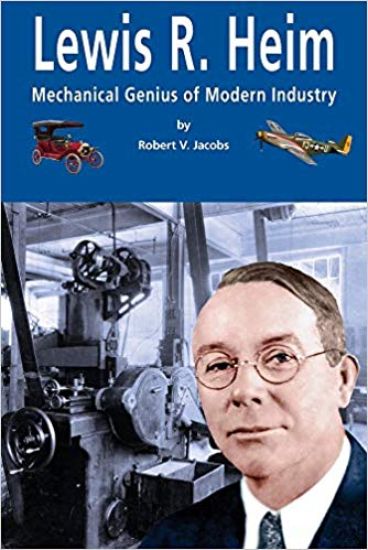
Lewis R. Heim was an American machinists, engineer and manufacturer who invented the Centerless Cylindrical Grinder and the Rod End Bearing known as the "Heim Joint" and was one of the pioneers of modern antifriction and spherical bearings. Lewis Heim had an inherent ability to visualize complex mechanisms and mechanical processes that resulted in the creation of novel machines, manufacturing methods, tools, and mechanical bearings. He was granted his first patent in 1896 at the age of 22 and his last patent in 1968, four years after his death at age 89. His inventions ranged from machines to manufacture hats and automate the ironing of fold collars, to precision grinders and swaging devices for bearing components plus plain and antifriction bearings used in submarines, tanks, aircraft, trucks, automobiles, and industrial machinery. With every invention Heim sought to improve product designs, increase production rates, and reduce costs to compete in highly competitive markets. Heim became internationally known as an industrialist and designer of machinery and at the time of his retirement, he was president of the Heim Company of Fairfield, Connecticut. During his long career, which spanned more than seven decades, he was granted 92 patents for his inventions, many of which are still in use today. As the inventor of the centerless cylindrical grinder, which was critical to the growth and success of the automobile and aircraft industries, Heim saw his invention revolutionize machine shop practices around the world through the high-speed production of cylindrical metal components used in the internal combustion engine, mechanical bearings, and machines. His invention continues in wide use over 100 years after its conception.Mr. Heim was the original inventor of the Spherical Rod End Bearing that became known as the "Heim Joint" and "Heim Rod End". With its ability to handle misalignment and relatively heavy loads in linkages transmitting motion or power, it was developed at the request of US Army Air Force and installed in most US and Allied aircraft by the end of World War II. The Rod End, and its cousin, the Spherical Plain Bearing, continues to be widely used in aircraft and machines requiring their unique abilities.

'Important . . . powerful . . . . an explanation of why Black protest is such a dangerous prospect to the white power structure' Kehinde Andrews, GuardianWhere is the path to racial justice? In this ground-breaking book, philosopher Lewis R. Gordon ranges over history, art and pop culture - from ancient African languages to the film Get Out - to show why the answer lies not just in freeing Black bodies from the fraud of white supremacy, but in freeing all of our minds. Building on the influential work of Frantz Fanon and W. E. B. Du Bois, Fear of Black Consciousness is a vital contribution to our conversations on racial politics, identity and culture. 'Expansive . . . reminds us that the ultimate aim of Black freedom quests is, indeed, universal liberation' Angela Y. Davis
Archeology shares with other anthropological sciences the goal of explaining differences and similarities among cultural systems. Sally R. Binford and Lewis R. Binford, therefore are concerned with theory and arguments which treat problems of the interrelationship of cultural variables with explanatory value. Archeology in Cultural Systems is devoted to four different aspects of archeology.This book progresses from theoretical-methodological discussions to specific consideration of archeological materials. It focuses on the analysis of archeological remains from a single site. Its concern is primarily with recognizing, measuring and explaining variability in the form and distribution of a site's cultural remains. The authors argue that internal variability derives from the composition and distribution of societal segments represented at the site. The work then shifts to study of archeological components (or their attributes) and seeks explanations for observed differences and similarities. A final section of the volume comments and discusses materials in the volume.Archeology in Cultural Systems is not a monolithic presentation of any particular school of archeological thought. There are common interests and many points of agreement among the authors, but there is also diversity of opinion on several points. These points are the focus of research here.

Francis Lieber. His Life and Political Philosophy
Lewis R. Harley
Columbia University Press
2022
sidottu

'Expansive . . . reminds us that the ultimate aim of Black freedom quests is, indeed, universal liberation' Angela Y. Davis'There is a movement from a suffering black consciousness to a liberatory Black consciousness in which revelation of the dirty laundry and fraud of white supremacy and black inferiority is a dreaded truth' Lewis Gordon, one of the leading scholars of Black Existentialism, has spent decades putting philosophical thought at the heart of activism for racial justice around the world. In this boldly original book, he delves into history, art, politics and popular culture to show how the process of racialization - and its absence - affects not only how individuals and society perceive black people but also how black people perceive themselves. Fear of Black Consciousness traces the ways in which the lived experience of black people has been rendered invisible in the Western world and the breadth of rich cultural expression that encapsulates the truth nonetheless - from ancient African languages to films such as Get Out and Black Panther. Gordon offers a stunning philosophical and social critique while highlighting the fundamental role of Black people as agents of history and of the social change required to build a humane world of dignity, freedom and respect.
Religious conversion provides converts with an opportunity to embrace a community of faith and a philosophy that nurture and guide, that offer a focus for loyalty and a framework for action. Whether the conversion is from one religious tradition to another, from one denomination to another, from no involvement to participation in a religious community, or is an intensification of commitment within one's faith, the process can be complex but compelling and transformative.In this book Lewis Rambo discusses the dynamics of conversion, presenting it as a multifaceted process of change with personal, cultural, social, and religious implications. Drawing on insights from psychology, sociology, anthropology, history, theology, and missiology, as well as on interviews with converts from disparate backgrounds, Rambo explores the forces that shape the conversion experience. He considers various theories of conversion, examines the role of cultural and social factors in the conversion process, and describes how different religions and disciplines view conversion. While acknowledging the individual nature of each conversion experience, Rambo discerns stages that are illuminating. These include opening oneself to new options; seeking a resolution to the dilemma or deprivation that makes change seem attractive; meeting the agent who embodies the religious vision; learning new roles, rituals, and rhetoric; and committing oneself to a new way of life. His book will not only encourage empathy for the converting process but will also provide a nuanced strategy of critique and evaluation of religious conversion throughout the world.
Assessment of Intellectual Functioning
Lewis R. Aiken
Kluwer Academic/Plenum Publishers
1996
sidottu
This fully updated, comprehensive text examines the assessment of intellectual abilities in children and adults. Chapters emphasize the rationale and techniques for measuring intellectual function in educational, clinical, and other organizational settings. The author includes detailed descriptions of the most widely used procedures for administering, scoring, and interpreting individual and group intelligence tests. This second edition features additional material on testing the handicapped, individual and group differences in mental abilities, theories and issues in the assessment of mental abilities, and new tests for measuring intelligence and related abilities.
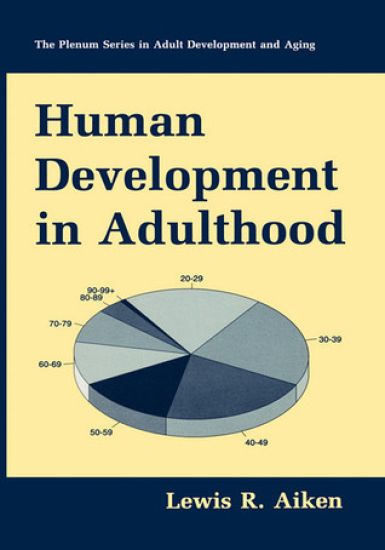
Human Development in Adulthood is a comprehensive, multidisciplinary overview of adult development in a number of areas both personal and societal, from mental and physical health, to economic and social conditions. Variables including race, gender, economic status, and political and religious affiliation are considered in the discussion of such human issues as - love and marital relations - economic concerns, including employment and living conditions - violence in its various forms, including crime and war - aging and death. The numerous illustrations, chapter summaries, and glossary will prove especially useful to students.
Assessment of Intellectual Functioning
Lewis R. Aiken
Kluwer Academic/Plenum Publishers
2004
nidottu
This fully updated, comprehensive text examines the assessment of intellectual abilities in children and adults. Chapters emphasize the rationale and techniques for measuring intellectual function in educational, clinical, and other organizational settings. The author includes detailed descriptions of the most widely used procedures for administering, scoring, and interpreting individual and group intelligence tests. This second edition features additional material on testing the handicapped, individual and group differences in mental abilities, theories and issues in the assessment of mental abilities, and new tests for measuring intelligence and related abilities.

The intellectual history of the last quarter of this century has been marked by the growing influence of Africana thought--an area of philosophy that focuses on issues raised by the struggle over ideas in African cultures and their hybrid forms in Europe, the Americas, and the Caribbean. Existentia Africana is an engaging and highly readable introduction to the field of Africana philosophy and will help to define this rapidly growing field. Lewis R. Gordon clearly explains Africana existential thought to a general audience, covering a wide range of both classic and contemporary thinkers--from Douglass and DuBois to Fanon, Davis and Zack.
The intellectual history of the last quarter of this century has been marked by the growing influence of Africana thought--an area of philosophy that focuses on issues raised by the struggle over ideas in African cultures and their hybrid forms in Europe, the Americas, and the Caribbean. Existentia Africana is an engaging and highly readable introduction to the field of Africana philosophy and will help to define this rapidly growing field. Lewis R. Gordon clearly explains Africana existential thought to a general audience, covering a wide range of both classic and contemporary thinkers--from Douglass and DuBois to Fanon, Davis and Zack.
Understand all the aspects of becoming an executive coach, from acquiring training to marketing your practice, with Executive Coaching: Building and Managing Your Professional Practice. Hands-on information on topics like acquiring the right training and making the transition from other fields is written in an accessible manner by a successful and experienced coach. Whether you’re a novice or an established coach looking to expand your practice, you will benefit from the step-by-step plan for setting up and operating a lucrative executive coaching practice.
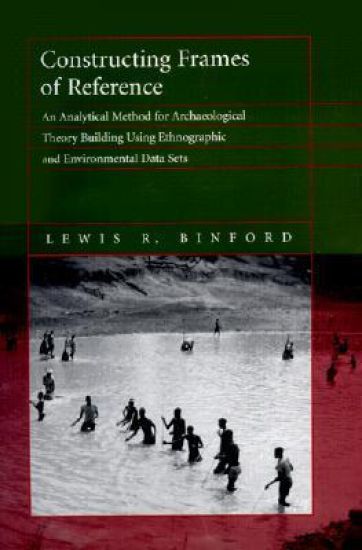
Many consider Lewis Binford to be the single most influential figure in archaeology in the last half-century. His contributions to the 'New Archaeology' changed the course of the field, as he argued for the development of a scientifically rigorous framework to guide the excavation and interpretation of the archaeological record. This book, the culmination of Binford's intellectual legacy thus far, presents a detailed description of his methodology and its significance for understanding hunter-gatherer cultures on a global basis. This landmark publication will be an important step in understanding the great process of cultural evolution and will change the way archaeology proceeds as a scientific enterprise. This work provides a major synthesis of an enormous body of cultural and environmental information and offers many original insights into the past. Binford helped pioneer what is now called 'ethnoarchaeology' - the study of living societies to help explain cultural patterns in the archaeological record - and this book is grounded on a detailed analysis of ethnographic data from about 340 historically known hunter-gatherer populations. The methodological framework based on this data will reshape the paradigms through which we understand human culture for years to come.
Many consider Lewis Binford to be the single most influential figure in archaeology in the last half-century. His contributions to the "New Archaeology" changed the course of the field as he argued for the development of a scientifically rigorous framework to guide the excavation and interpretation of the archaeological record. In this book, first published nearly two decades ago, Binford provided students and general readers with an introduction to his challenging and provocative ideas about understanding the human past. Now available again, this important component of Binford's intellectual legacy will convey the drama and intellectual excitement of contemporary archaeology to a new generation of archaeologists and others interested in the field. Throughout the book, Binford questions old ideas and proposes new theories based on his comparative archaeological and ethnographic research in North America, Europe, South Africa, and Australia. A new afterword by Binford surveys the direction archaeology has taken since the publication of this book and shares his hopes for the future of the discipline.