Kirjojen hintavertailu. Mukana 11 244 527 kirjaa ja 12 kauppaa.

Kirjahaku

Etsi kirjoja tekijän nimen, kirjan nimen tai ISBN:n perusteella.

1000 tulosta hakusanalla Lillian Hoban

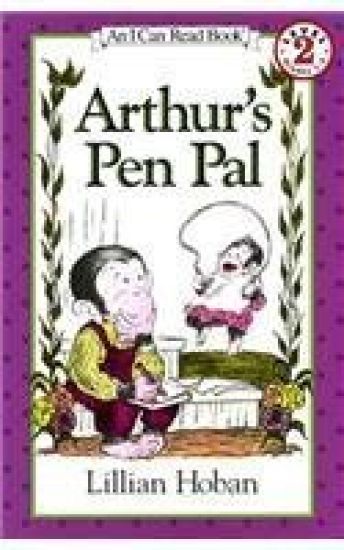
Arthur's Pen Pal

Arthur's Pen Pal

Lillian Hoban

Harpercollins
1982
nidottu
Arthur thinks his pen pal is more fun than his little sister. Little sisters don't do things like karate and wrestling -- or do they? It takes a surprise letter to show Arthur that sometimes there's more to sisters -- and pen pals -- than meets the eye
Arthur's Funny Money

Arthur's Funny Money

Lillian Hoban

Harpercollins
1984
nidottu
'An hilarious account of Arthur's attempts to earn enough money to buy a T-shirt and cap, assisted by his sister Violet. Simple business concepts are ingeniously woven into the story. This marvelous book will capture the interest of eager learners and creative teachers.' --YC. Children's Choices for 1982 (IRA/CBC)Children's Books of 1981 (Library of Congress)
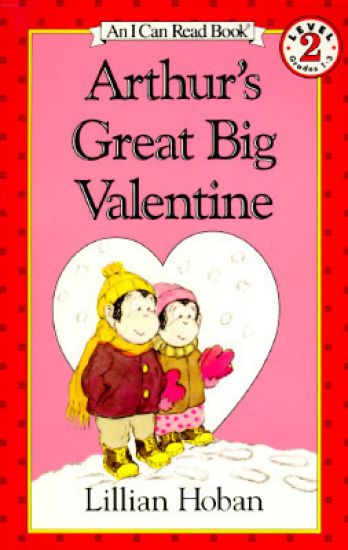
Arthur's Great Big Valentine

Arthur's Great Big Valentine

Lillian Hoban

Atlantic Books
1991
nidottu
"[In] this lovely valentine from Hoban to all beginning readers, a minor squabble with his best friend, Norman, has left Arthur all alone this wintry Valentine's Day [until] Norman's little brother saves the day, and the two best friends are reunited. This title will warm up any snowy, blustery day."—SLJ.
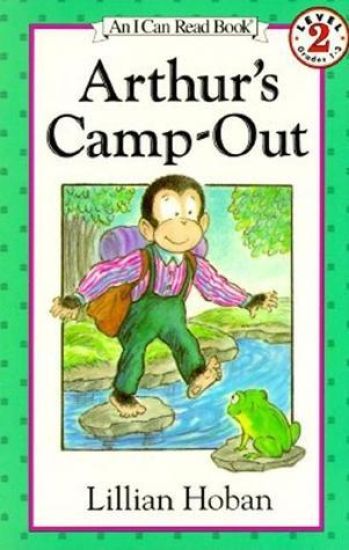
Arthur's Camp-Out

Arthur's Camp-Out

Lillian Hoban

Harpercollins
1994
nidottu
Arthur's gone Camping.Violet's camping out too, but her friends don't want Arthur around. So Arthur decidesto collect slimy things he knows Violet wouldn't like. But he doesn't count on slippery rocks and swooping bats, or hunger pangs. Then he smells hot dogs roasting over a warm fire...
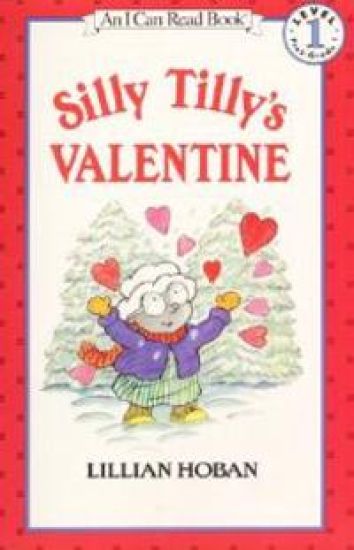
Silly Tilly's Valentine

Silly Tilly's Valentine

Lillian Hoban

Harpercollins
1998
nidottu
Silly Tilly Mole can't remember why today is special. Is it because it's snowing and the wind is swirling colored snowflakes all around her? Or maybe it's the bright red something special in her mailbox that makes this a special day.Beginning Readers will enjoy discovering what Tilly forgot to rememeber in Lillian Hoban's third charming story about this delightfully silly character.Tilly Mole knows it's a special day, but she just can't remember why.Is it because it's snowing outside? Or does it have something to do with that bright red something in her mailbox? Beginning readers will enjoy discovering what Tilly forgot to remember in this delightful Level 1 I can Read Book."Hoban's simple text and trademark illustrations make this story a fine addition for easy-reader collections.'--School Library Journal
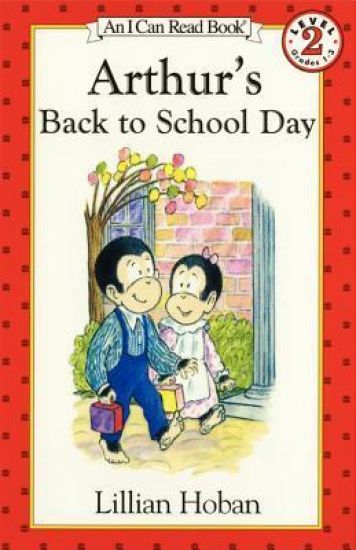
Arthur's Back to School Day

Arthur's Back to School Day

Lillian Hoban

HarperCollins Publishers (Australia) Pty Ltd
1998
nidottu
Brrr ... ing!There's the school bell!It's the first day back at school for Arthur and Violet and all of their friends. Time for riding the school bus, going to class, and best of all, eating snacks and playing games at recess.But this year the first day is full of surprises. The bus ride to school is an unexpected adventure, and Arthur's friend, Norman, almost loses his lunch box. Just when things settle down, Arthur finds his snack has disappeared from his lunch box. What will happen next on this exciting first day of schoolBeginning readers heading back to school will enjoy the humor in Lillian Hoban's tenth I Can Read Book about these much loved characters.
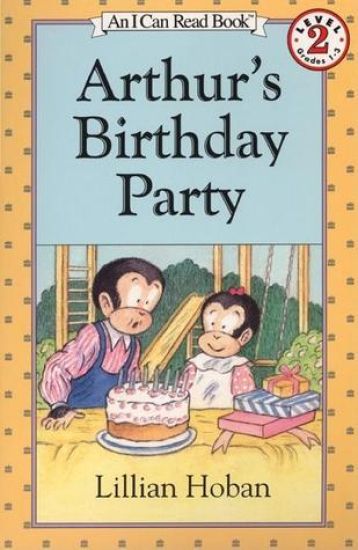
Arthur's Birthday Party

Arthur's Birthday Party

Hoban Lillian

HARPERCOLLINS PUBLISHERS INC
2000
nidottu
Happy Birthday, Arthur Arthur is having a gymnastics party for his birthday, with prizes for balancing, tumbling, and rope climbing. Arthur is sure that he will win the prize for best all--around gymnast. But his little sister, Violet, and her friend Wilma have been practicing-and they may have a surprise in store....
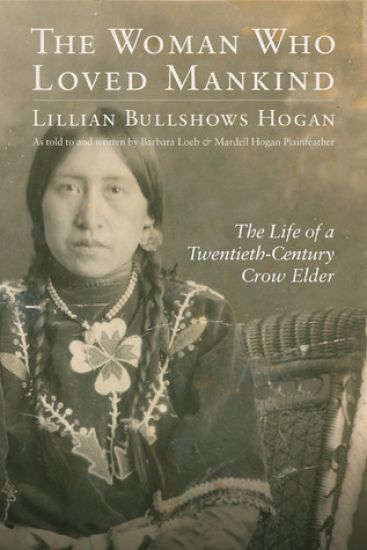
The Woman Who Loved Mankind

The Woman Who Loved Mankind

Lillian Bullshows Hogan

University of Nebraska Press
2012
sidottu
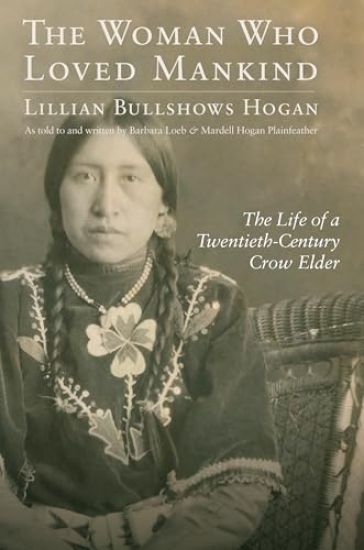
The oldest living Crow at the dawn of the twenty-first century, Lillian Bullshows Hogan, grew up on the Crow reservation in rural Montana. In The Woman Who Loved Mankind she enthralls readers with stories from her long and remarkable life and the stories of her parents, part of the last generation of Crow born to nomadic ways. As a child Hogan had a miniature tepee, a fast horse, and a medicine necklace of green beads; she learned traditional arts and food gathering from her mother and experienced the bitterness of Indian boarding school. As an adult she drove a car, maintained a bank account, and read the local English paper, but she spoke Crow as her first language, practiced beadwork, tanned hides, and often visited the last of the old chiefs and berdaches with her family. Though she married in the traditional Crow way and was a proud member of the Tobacco and Sacred Pipe societies, she also helped establish a Christian church on her reservation. Hogan’s stories are warm, funny, heartbreaking, and brimming with information about Crow life. Hogan told her stories to her daughter, Mardell Hogan Plainfeather, and to Barbara Loeb, a scholar and longtime friend of the family whose record of her words stays true to Hogan’s expressive speaking rhythms with its echoes of traditional Crow storytelling.
The Woman Who Loved Mankind

The Woman Who Loved Mankind

Lillian Bullshows Hogan

University of Nebraska Press
2025
pokkari
The oldest living Crow at the dawn of the twenty-first century, Lillian Bullshows Hogan, grew up on the Crow reservation in rural Montana. In The Woman Who Loved Mankind she enthralls readers with stories from her long and remarkable life and the stories of her parents, part of the last generation of Crow born to nomadic ways. As a child Hogan had a miniature tepee, a fast horse, and a medicine necklace of green beads; she learned traditional arts and food gathering from her mother and experienced the bitterness of Indian boarding school. As an adult she drove a car, maintained a bank account, and read the local English paper, but she spoke Crow as her first language, practiced beadwork, tanned hides, and often visited the last of the old chiefs and berdaches with her family. Though she married in the traditional Crow way and was a proud member of the Tobacco and Sacred Pipe societies, she also helped establish a Christian church on her reservation. Hogan’s stories are warm, funny, heartbreaking, and brimming with information about Crow life. Hogan told her stories to her daughter, Mardell Hogan Plainfeather, and to Barbara Loeb, a scholar and longtime friend of the family whose record of her words stays true to Hogan’s expressive speaking rhythms with its echoes of traditional Crow storytelling.
The Diné Hogan

The Diné Hogan

Lillian Makeda

TAYLOR FRANCIS LTD
2024
sidottu
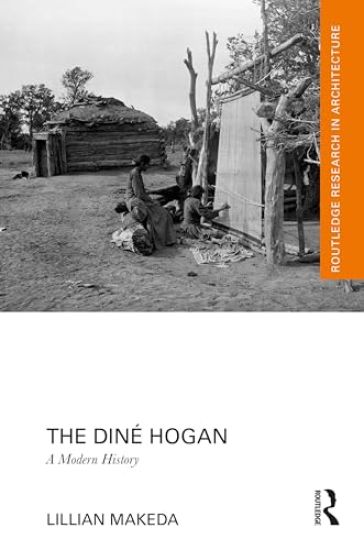
Over the course of their history, the Navajo (Diné) have constructed many types of architecture, but during the 20th century, one building emerged to become a powerful and inspiring symbol of tribal culture. This book describes the rise of the octagonal stacked-log hogan as the most important architectural form among the Diné.The Navajo Nation is the largest Indian reservation in the United States and encompasses territory from within Arizona, New Mexico, and Utah, where thousands of Native American homes, called hogans, dot the landscape. Almost all of these buildings are octagonal. Whether built from plywood nailed onto a wood frame or with other kinds of timber construction, octagonal hogans derive from the stacked-log hogan, a form which came to prominence around the middle of the last century. The stacked-log hogan has also influenced public architecture, and virtually every Diné community on the reservation has a school, senior center, office building, or community center that intentionally evokes it. Although the octagon recurs as a theme across the Navajo reservation, the inventiveness of vernacular builders and professional architects alike has produced a wide range of octagonally inspired architecture. Previous publications about Navajo material culture have emphasized weaving and metalwork, overlooking the importance of the tribe’s built environment. But, populated by an array of octagonal public buildings and by the hogan – one of the few Indigenous dwellings still in use during the 21st century – the Navajo Nation maintains a deep connection with tradition. This book describes how the hogan has remained at the center of Diné society and become the basis for the most distinctive Native American landscape in the United States.The Diné Hogan: A Modern History will appeal to scholarly and educated readers interested in Native American history and American architecture. It is also well suited to a broad selection of college courses in American studies, cultural geography, Native American art, and Native American architecture.
The Diné Hogan

The Diné Hogan

Lillian Makeda

TAYLOR FRANCIS LTD
2025
nidottu
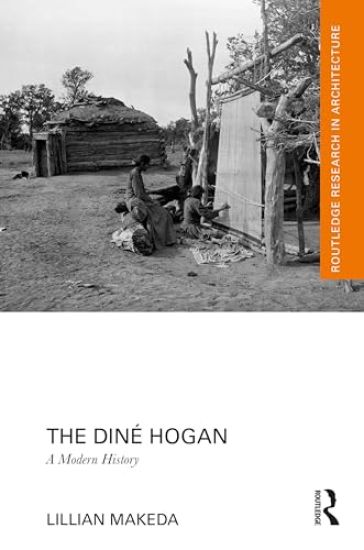
Over the course of their history, the Navajo (Diné) have constructed many types of architecture, but during the 20th century, one building emerged to become a powerful and inspiring symbol of tribal culture. This book describes the rise of the octagonal stacked-log hogan as the most important architectural form among the Diné. The Navajo Nation is the largest Indian reservation in the United States and encompasses territory from within Arizona, New Mexico, and Utah, where thousands of Native American homes, called hogans, dot the landscape. Almost all of these buildings are octagonal. Whether built from plywood nailed onto a wood frame or with other kinds of timber construction, octagonal hogans derive from the stacked-log hogan, a form which came to prominence around the middle of the last century. The stacked-log hogan has also influenced public architecture, and virtually every Diné community on the reservation has a school, senior center, office building, or community center that intentionally evokes it. Although the octagon recurs as a theme across the Navajo reservation, the inventiveness of vernacular builders and professional architects alike has produced a wide range of octagonally inspired architecture. Previous publications about Navajo material culture have emphasized weaving and metalwork, overlooking the importance of the tribe’s built environment. But, populated by an array of octagonal public buildings and by the hogan – one of the few Indigenous dwellings still in use during the 21st century – the Navajo Nation maintains a deep connection with tradition. This book describes how the hogan has remained at the center of Diné society and become the basis for the most distinctive Native American landscape in the United States. The Diné Hogan: A Modern History will appeal to scholarly and educated readers interested in Native American history and American architecture. It is also well suited to a broad selection of college courses in American studies, cultural geography, Native American art, and Native American architecture.
Lillian

Lillian

David Cale

Samuel French Ltd
2019
pokkari
Lillian a British middle-aged woman who's the bookish type falls for a man half her age Jimmy. She divorces her husband re-marries the young man and buys a flower shop to support his desire to be a gardener. What she doesn't know is that Jimmy has a heart condition and that his restless energy is because he doesn't have long to live.
Lillian

Lillian

Abbie Sears

Lulu.com
2015
pokkari
Keiran is an unmotivated highschool graduate, struggling to find his place in society. Lillian is a strange and dark teenage girl, plagued by a lust for death. Amongst their romance, Lillian is consumed by her demons. Keiran is forced to choose between the girl he loves and the shadow she becomes.
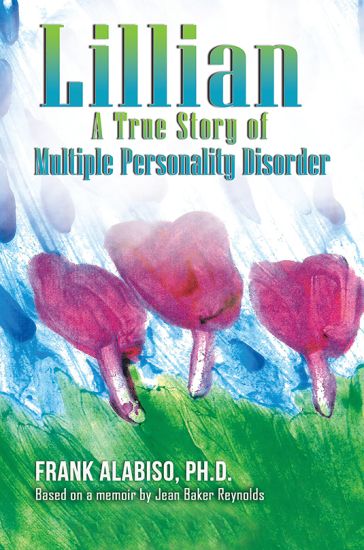
Lillian

Lillian

Frank Alabiso

austin macauley publishers llc
2023
pokkari
For most of us, the varied parts of our personalities are woven together and unified by our memories. But what happens when we have no memories? What happens when the components of memory (facts, feelings, and body states) are split apart and no longer relate to each other?When this story began more than 40 years ago, doctors and psychiatrists were mystified by patients with more than one personality. The diagnosis at the time was Multiple Personality Disorder. Lillian was afflicted with this condition owing to severe abuse during her childhood. Her mind held each trauma separately. Each personality took over her body, developing a life and personality of its own.Lillian's aunt, Jean, became friends with 22 personalities. She played hide and seek with four-year-old Mary, taught five-year-old Amy to write, shopped for undergarments with Robin Jean, and communicated endlessly with each of the others. In the process, each personality revealed its beginnings. Over time, each personality revealed its own memories of their trauma and eventually became integrated.This is an exquisite and beautifully written story of poverty, transgenerational abuse, mental illness, and the healing power of love, science, and spirituality.As one reader puts it: "You will laugh, cry, turn away and come back again to its compelling truth."
Lillian

Lillian

Frank Alabiso

austin macauley publishers llc
2023
sidottu
For most of us, the varied parts of our personalities are woven together and unified by our memories. But what happens when we have no memories? What happens when the components of memory (facts, feelings, and body states) are split apart and no longer relate to each other?When this story began more than 40 years ago, doctors and psychiatrists were mystified by patients with more than one personality. The diagnosis at the time was Multiple Personality Disorder. Lillian was afflicted with this condition owing to severe abuse during her childhood. Her mind held each trauma separately. Each personality took over her body, developing a life and personality of its own.Lillian's aunt, Jean, became friends with 22 personalities. She played hide and seek with four-year-old Mary, taught five-year-old Amy to write, shopped for undergarments with Robin Jean, and communicated endlessly with each of the others. In the process, each personality revealed its beginnings. Over time, each personality revealed its own memories of their trauma and eventually became integrated.This is an exquisite and beautifully written story of poverty, transgenerational abuse, mental illness, and the healing power of love, science, and spirituality.As one reader puts it: "You will laugh, cry, turn away and come back again to its compelling truth."