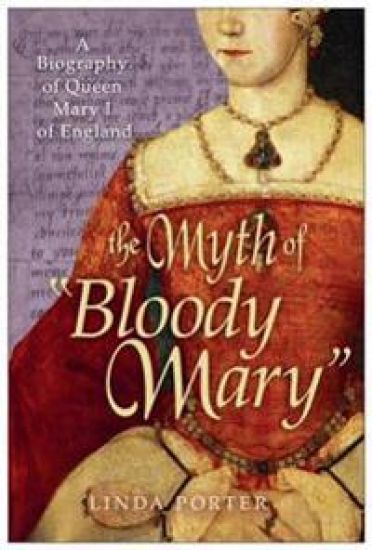
It is the tragedy of Queen Mary that today, 450 years after her death, she remains the most hated, least understood monarch in English history--remembered best for burning hundreds of Protestant heretics at the stake. Linda Porter's pioneering new biography cuts through the myths to reveal the truth about the first queen to rule England in her own right. Daughter of Henry VIII and Katherine of Aragon, Mary Tudor was a cultured Renaissance princess who was brought to the throne by an audacious coup. She made a grand marriage to Philip of Spain, but her attempts to revitalize England at home and abroad were cut short by her early death at the age of forty-two. The first popular biography of Mary in thirty years, The Myth of "Bloody Mary" offers a fascinating, controversial look at this much-maligned queen.
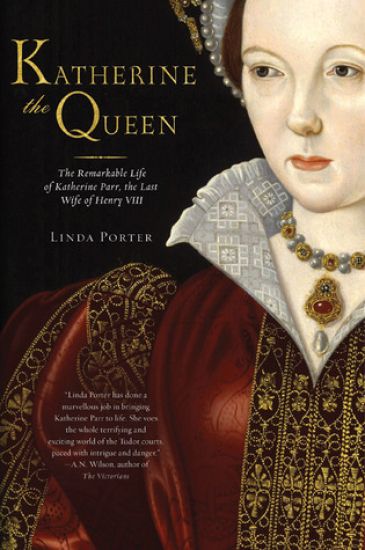
The general perception of Katherine Parr is that she was a provincial nobody with intellectual pretensions who became queen of England because the king needed a nurse as his health declined. Yet the real Katherine Parr was attractive, passionate, ambitious, and highly intelligent. Thirty years old (younger than Anne Boleyn had been) when she married the king, she was twice widowed and held hostage by the northern rebels during the great uprising of 1536 37 known as the Pilgrimage of Grace. Her life had been dramatic even before she became queen and it would remain so after Henry's death. She hastily and secretly married her old flame, the rakish Sir Thomas Seymour, and died shortly after giving birth to her only child in September 1548. Her brief happiness was undermined by the very public flirtation of her husband and stepdaughter, Princess Elizabeth. She was one of the most influential and active queen consorts in English history, and this is her story."
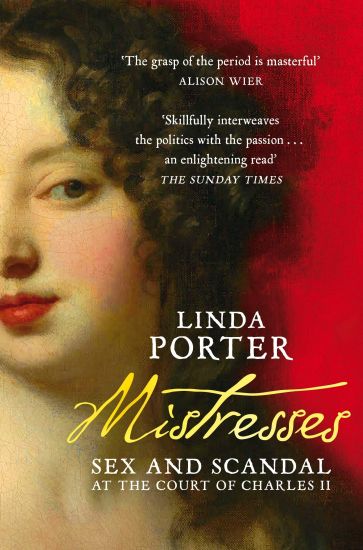
According to the great diarist, John Evelyn, Charles II was ‘addicted to women’, and throughout his long reign a great many succumbed to his charms. Clever, urbane and handsome, Charles presided over a hedonistic court, in which licence and licentiousness prevailed.Mistresses is the story of the women who shared Charles’s bed, each of whom wielded influence on both the politics and cultural life of the country. From the young king-in-exile’s first mistress and mother to his first child, Lucy Walter, to the promiscuous and ill-tempered courtier, Barbara Villiers. From Frances Teresa Stuart, ‘the prettiest girl in the world’ to history’s most famous orange-seller, ‘pretty, witty’ Nell Gwynn and to her fellow-actress, Moll Davis, who bore the last of the king’s fifteen illegitimate children. From Louise de Kéroualle, the French aristocrat – and spy for Louis XIV – to the sexually ambiguous Hortense Mancini. Here, too, is the forlorn and humiliated Queen Catherine, the Portuguese princess who was Charles’s childless queen. Drawing on a wide variety of original sources, including material in private archives, Linda Porter paints a vivid picture of these women and of Restoration England, an era that was both glamorous and sordid.
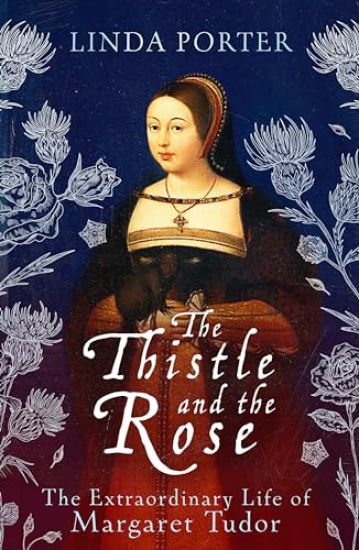
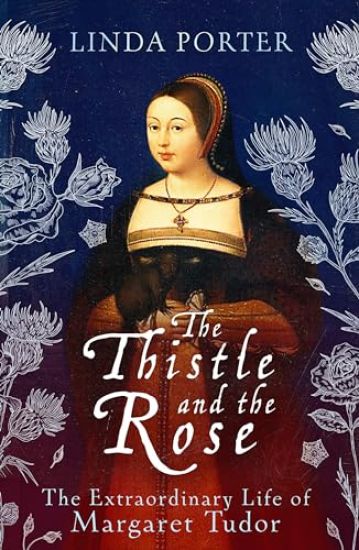
Margaret Tudor, the elder sister of her more famous brother Henry VIII, is the single most important Tudor figure of this era that historians have consistently overlooked. Married at thirteen to the charismatic James IV of Scotland, a man more than twice her age, she would learn the skills of statecraft that would enable her to survive his early death, and to construct a powerful position in her adopted country of Scotland as she dealt with domestic issues as well as navigating international relations with England and France.Often reviled for her hasty remarriage (and therefore the loss of the regency) the book shows that Margaret was damned if she did remarry and damned if she didn’t. Her two subsequent marriages were both disastrous personally, but she never gave up. Her son attained the throne in his own right in 1528, largely through his mother’s determination.Margaret’s story is also one of fierce sibling rivalry with her younger brother, Henry VIII, a series of matrimonial mishaps, and fighting off an unearned reputation as an over-sexed whinger fixated by clothes and jewels, Margaret was a complex (not always likeable) woman who had the true Tudor attributes of self-expression and a flair for the dramatic. She knew that you had to look like a queen.Drawing on Margaret’s extensive correspondence (more of her letters survive than of all the other Tudor queens put together), and contemporary poems and literature, Linda Porter fashions a compelling story of a misunderstood and underestimated Tudor monarch, whose determination to fight for the rights of her son, James V, is at the core of her dramatic life and indeed laid the groundwork for a future British state.
Margaret Tudor, the elder sister of her more famous brother Henry VIII, is the single most important Tudor figure of this era that historians have consistently overlooked. Married at thirteen to the charismatic James IV of Scotland, a man more than twice her age, she would learn the skills of statecraft that would enable her to survive his early death, and to construct a powerful position in her adopted country of Scotland as she dealt with domestic issues as well as navigating international relations with England and France.Often reviled for her hasty remarriage (and therefore the loss of the regency) the book shows that Margaret was damned if she did remarry and damned if she didn’t. Her two subsequent marriages were both disastrous personally, but she never gave up. Her son attained the throne in his own right in 1528, largely through his mother’s determination.Margaret’s story is also one of fierce sibling rivalry with her younger brother, Henry VIII, a series of matrimonial mishaps, and fighting off an unearned reputation as an over-sexed whinger fixated by clothes and jewels, Margaret was a complex (not always likeable) woman who had the true Tudor attributes of self-expression and a flair for the dramatic. She knew that you had to look like a queen.Drawing on Margaret’s extensive correspondence (more of her letters survive than of all the other Tudor queens put together), and contemporary poems and literature, Linda Porter fashions a compelling story of a misunderstood and underestimated Tudor monarch, whose determination to fight for the rights of her son, James V, is at the core of her dramatic life and indeed laid the groundwork for a future British state.
The notorious Linda Lovelace was America's first Queen of Porn, presiding over a fast-developing multi-billion-dollar film industry during the decadent 1970s. Her movie, Deep Throat, redefined the nation's views on obscenity and was credited with changing America's sexual attitudes more than anything since the 1948 Kinsey Report. But at decade's end, Linda, in a complete about-face, emerged as one of the more compelling voices in the feminist movement, denouncing the degradations of her cinematic past.
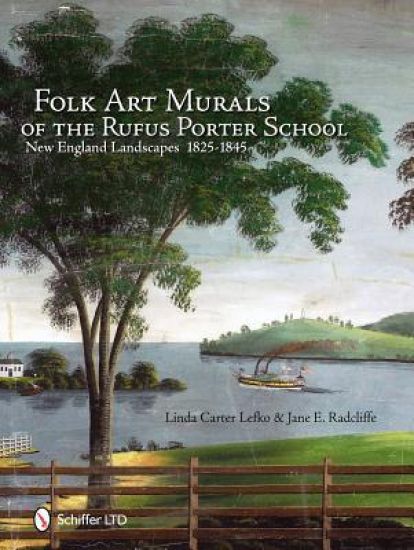
A look at over 400 New England folk art murals of Rufus Porter and his students. This book is the long awaited update of research on the Rufus Porter Landscape Mural School, greatly expanding the knowledge and understanding of this uniquely American folk art field of the 1820s to 1840s. The text provides detailed documentation never seen before in print, taking the reader on a virtual tour of Porter School murals in the New England states, presenting and analyzing more than 400 colorful images, which will provide inspiration for historians, researchers, designers, and painters alike. It offers evidence regarding the attribution of these mostly unsigned works, and encourages readers to apply that evidence in reaching their own conclusions. In addition, there is a section concerning the preservation of historic murals and various challenges and threats to such preservation. Finally, the book offers a "how-to" section that interprets Porter's original published mural painting instructions in terms of modern equipment, materials, and supplies.
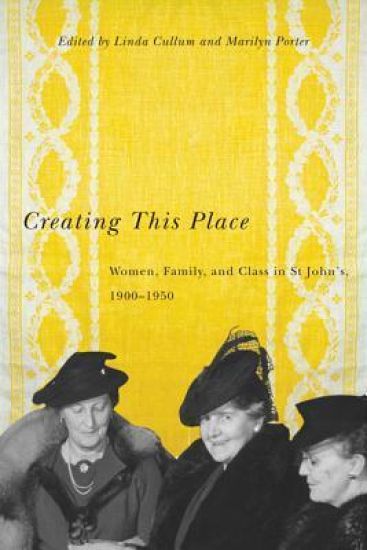
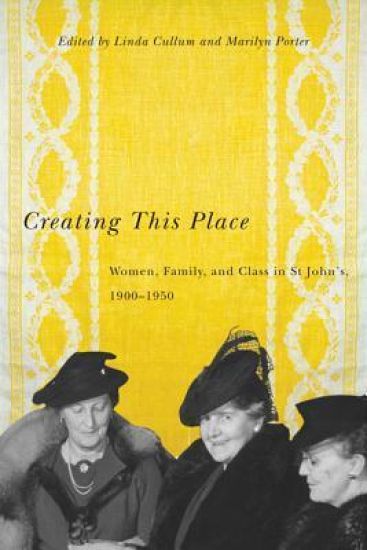
The twentieth century witnessed both the formation of Newfoundland as a self-conscious national entity and the construction of distinct and self-aware middle and upper classes in its capital city. This interdisciplinary collection examines the key roles played by women in the creation of this state and society, and the essential influence that gender, ethnicity, and religion played in class relations. Shifting class relations were formed in the salient political events of the first half of the twentieth century in Newfoundland: the First World War, the suffrage movement, the Great Depression, the Second World War, and finally Newfoundland's contested entry into the Canadian Confederation. Creating This Place shows how upper-, middle-, and working-class worlds were established in the everyday work of women, as well as the ways in which the complex social boundaries of the period were constructed. Individual chapters explore issues such as women's work in religious and voluntary institutions, their struggle for voice, suffrage, and political change, work of domestic servants, and the construction of "proper" women and mothers through denominational education. Creating This Place adopts an innovative perspective on Newfoundland and Labrador that focuses on the often overlooked lives of urban women. Contributors include Sonja Boon (Memorial University), Linda Cullum (Memorial University), Margot Duley (University of Illinois at Springfield), Vicki Hallett (Memorial University), Jonathan Luedee (doctoral candidate, University of British Columbia), Bonnie Morgan (doctoral candidate, University of New Brunswick), Marilyn Porter (emerita, Memorial University), Karen Stanbridge (Memorial University), Helen Woodrow (Educational Planning and Design Associates and Harrish Press Publications).
The twentieth century witnessed both the formation of Newfoundland as a self-conscious national entity and the construction of distinct and self-aware middle and upper classes in its capital city. This interdisciplinary collection examines the key roles played by women in the creation of this state and society, and the essential influence that gender, ethnicity, and religion played in class relations. Shifting class relations were formed in the salient political events of the first half of the twentieth century in Newfoundland: the First World War, the suffrage movement, the Great Depression, the Second World War, and finally Newfoundland's contested entry into the Canadian Confederation. Creating This Place shows how upper-, middle-, and working-class worlds were established in the everyday work of women, as well as the ways in which the complex social boundaries of the period were constructed. Individual chapters explore issues such as women's work in religious and voluntary institutions, their struggle for voice, suffrage, and political change, work of domestic servants, and the construction of "proper" women and mothers through denominational education. Creating This Place adopts an innovative perspective on Newfoundland and Labrador that focuses on the often overlooked lives of urban women. Contributors include Sonja Boon (Memorial University), Linda Cullum (Memorial University), Margot Duley (University of Illinois at Springfield), Vicki Hallett (Memorial University), Jonathan Luedee (doctoral candidate, University of British Columbia), Bonnie Morgan (doctoral candidate, University of New Brunswick), Marilyn Porter (emerita, Memorial University), Karen Stanbridge (Memorial University), Helen Woodrow (Educational Planning and Design Associates and Harrish Press Publications).
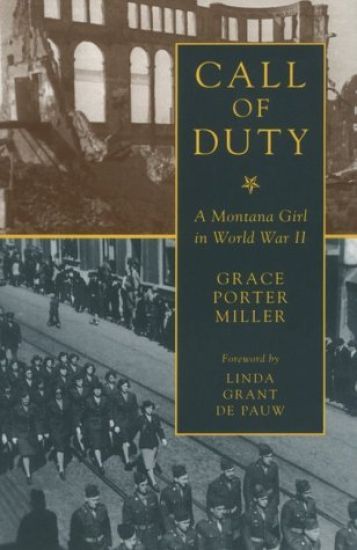
During World War II, more than twelve million American men served their country in combat and behind the lines. Although their numbers are fewer, and none were drafted, 300,000 American women also felt an overwhelming call of duty to help rid the world of the Nazi threat. As veterans age, many are recording their experiences for posterity. In this evocative memoir, we have the rare record of a woman soldier. Montana-born Grace Porter was teaching school in Iowa when, in 1942, she turned twenty-one and became eligible for service in the U.S. armed forces. Patriotic and adventurous, she volunteered to join the Women's Army Auxiliary Corps, later the Women's Army Corps (WAC). A tough basic-training course in which she underwent most of the same hardships as the men, including long marches and latrine duty, strengthened her for future experiences. When the opportunity arose during the blitz and buzz-bomb days, Porter volunteered to go overseas. She and thirty-nine other WACs, along with thousands of male soldiers, crossed the North Atlantic on the Queen Mary in February 1944. Stationed in London, Porter served as a cryptographic technician during the campaigns of Normandy, Northern France, Rhineland, Central Europe, and Air Offensive Europe. Soon after the battle of the Bulge began, she was sent to Belgium, where she continued to work in cryptographics near- and once, accidently, across- the front lines of combat. As Grace Porter Miller demonstrates in Call of Duty, being in the WAC during World War II afforded her many thrilling experiences. She encountered fascinating people, traveled throughout the United States and Europe, and participated in a dramatic chapter of history. But the price she paid to serve her country was high. Like many other military women, she endured prejudice and harassment, witnessed the vast suffering of European refugees, withstood the constant threat of danger, and long after returning home suffered from serious health problems and nightmares.Despite their outstanding qualifications and record of service, the ""girls"" of World War II continued to be treated like ""second-class soldiers"" after the war. Now, fifty years later, one of their number urges us to recognize the sacrifices and contributions these unsung heroes made for our country.After the war, Grace Porter Miller taught Navajo children in New Mexico, worked as an extension agent on the Fort Belknap reservation in northern Montana, and served as an editor for the Havre Daily News. A widow, she lives in Prescott, Arizona, near several of her children.
Be accountable and achieve success Personal accountability is the secret weapon of every successful sales professional. It is the secret weapon of Where Winners Live co-author Dave Porter, who became the owner and CEO of Baystate Financial Services at age 35 and grew it into a $100 million-a-year business over the next 15 years. It is the secret weapon of Where Winners Live co-author Linda Galindo, who transformed herself from the self-proclaimed Queen of Victims into an entrepreneur, business coach, consultant and speaker whose typical audience numbers 500 or more. Like all highly accountable professionals, these authors live Where Winners Live, an achievement they say is available to everyone. Written in a no-excuses tone and filled with personal stories and practical exercises, their book offers readers the non-negotiable, high-performance behaviors of the sales trade and tried-and-true best practices for success. Exposes the key difference between top-earning sales professionals and those who struggle to make their numbers every quarterOutlines the three critical characteristics of personal accountability: responsibility, self-empowerment, and ownership of results after the factExplores personal accountability from the perspective of both leaders and rank-and-file sales professionals Where Winners Live shows readers the most effective way to hold themselves and others accountable.