“The Meadows is a ‘keep the lights on and hide under the covers’ thriller that will have readers turning pages late into the night.” -InD’Tale Magazine Singer-songwriter Scarlett DeHaven is seeking a fresh start in the Shenandoah Valley, leaving behind a troubled past of drug addiction and rehab. But when she purchases an abandoned house with a dark history, she discovers that the horrors of the past are not easily forgotten. As she tries to transform the house into a luxury bed and breakfast, Scarlett experiences terrifying visions and hears haunting voices. Cryptic warnings from strangers and the discovery of a tunnel used for a local cult's rituals only intensify her fear. As violent spirits target Scarlett, she must fight back against an unknown and terrifying force. From the author of Wildfell comes a gripping supernatural thriller that blurs the lines between reality and nightmare. The Meadows will make readers believe that anything is possible and that no one is safe from the monsters that lurk within. Winner of the Gold Medal 2020 Independent Publishers Award for Horror.
The unfinished manuscript of literary and cultural theorist Lindon Barrett, this study offers a genealogy of how the development of racial blackness within the mercantile capitalist system of Euro-American colonial imperialism was constitutive of Western modernity. Masterfully connecting historical systems of racial slavery to post-Enlightenment modernity, this pathbreaking publication shows how Western modernity depended on a particular conception of racism contested by African American writers and intellectuals from the eighteenth century to the Harlem Renaissance.
The unfinished manuscript of literary and cultural theorist Lindon Barrett, this study offers a genealogy of how the development of racial blackness within the mercantile capitalist system of Euro-American colonial imperialism was constitutive of Western modernity. Masterfully connecting historical systems of racial slavery to post-Enlightenment modernity, this pathbreaking publication shows how Western modernity depended on a particular conception of racism contested by African American writers and intellectuals from the eighteenth century to the Harlem Renaissance.
Blackness and Value investigates the principles by which 'value' operates, and asks if it is useful to imagine that the concepts of racial blackness and whiteness in the United States operate in terms of these principles. Testing these concepts by exploring various theoretical approaches and their shortcomings, Lindon Barrett finds that the gulf between 'the street' (where race is acknowledged as a powerful enigma) and the literary academy (where until recently it has not been) can be understood as a symptom of racial violence. The book traces several interrelations between value and race, such as literate/illiterate, the signing/singing voice, time/space, civic/criminal, and academy/street, and offers relevant and fresh readings of two novels by Ann Petry. While approaches to race and value are commonly examined historically or sociologically, this intriguing study provides a new critical approach that speaks to theorists of race as well as gender and queer studies.
Blackness and Value investigates the principles by which 'value' operates, and asks if it is useful to imagine that the concepts of racial blackness and whiteness in the United States operate in terms of these principles. Testing these concepts by exploring various theoretical approaches and their shortcomings, Lindon Barrett finds that the gulf between 'the street' (where race is acknowledged as a powerful enigma) and the literary academy (where until recently it has not been) can be understood as a symptom of racial violence. The book traces several interrelations between value and race, such as literate/illiterate, the signing/singing voice, time/space, civic/criminal, and academy/street, and offers relevant and fresh readings of two novels by Ann Petry. While approaches to race and value are commonly examined historically or sociologically, this intriguing study provides a new critical approach that speaks to theorists of race as well as gender and queer studies.
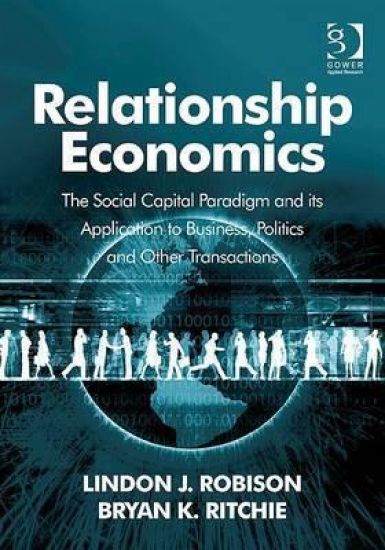
In a 24/7 world and a global economy, there is no doubt that relationships impact virtually every economic transaction. In Relationship Economics, Lindon Robison and Bryan Ritchie argue that what needs to be understood is not just whether relationships matter (which, of course, they do), but also, how much, and in what circumstances they should matter. Providing a rigorous and measurable definition of the way that relationships among individuals create a capital, social capital, that can be saved, spent, and used like other forms of capital, Robison and Ritchie use numerous examples and insightful analysis, to explain how social capital shapes our ability to reduce poverty, understand corruption, encourage democracy, facilitate income equality, and respond to globalization. The first part of the book explains how social capital can be manipulated, stored, expended, and invested. The second part explores how levels of social capital within relationships influence economic transactions both positively and negatively, which in turn shape poverty levels, economic efficiency, levels and types of political participation, and institutional structures.
This book draws together a large quantity of research that has been carried out on pulverised fuel ash (PFA) over the past 30 years. Fuel ash and fly ash are produced as waste from burining coal (or waste materials) and have many uses within the construction industry such as in concrete land reclamation, treating oil and sewage wastes, bricks and blocks and grouting voids in the ground. In addition to covering the potential uses of PFA it provides an overview of the benefits of use. Fly Ash: Properties and usage is the most up-to-date resource for the construction engineer, client, producer and the consulting engineer.
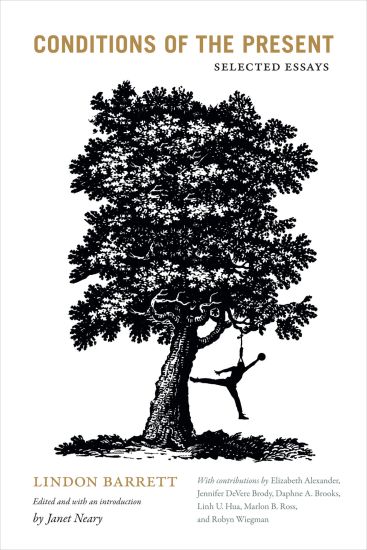
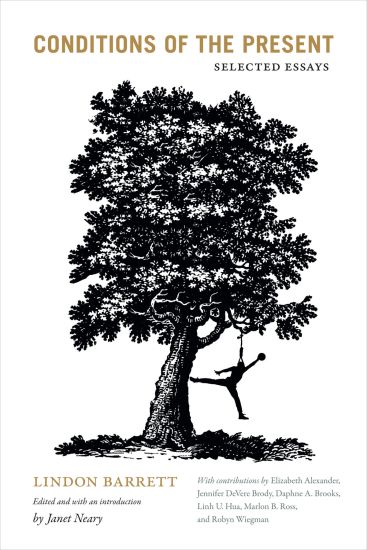
Conditions of the Present collects essays by the late Lindon Barrett, whose scholarship centers African American literature as a site from which to theorize race and liberation in the United States. Barrett confronts critical blind spots within both academic and popular discourse, offering readings of cultural and literary texts that transcend institutional divides and the gulf between academia and the street. Whether analyzing autobiographies by Lucy Delaney or Langston Hughes, hip-hop eulogies, or the formation of U.S. nationalist discourse, Barrett interrogates the mechanisms that shape social and subjective structures and that grant certain people power while withholding it from others. Deploying Marxist, psychoanalytic, feminist, and queer theories, Barrett explicates the interrelationship of desire and subjection to expose the violence and coercion embedded in narratives of "progress." Ultimately, this collection emphasizes Lindon Barrett's vital and enduring contribution to African American studies. Contributors. Elizabeth Alexander, Jennifer DeVere Brody, Daphne A. Brooks, Linh U. Hua, Janet Neary, Marlon B. Ross, Robyn Wiegman
Conditions of the Present collects essays by the late Lindon Barrett, whose scholarship centers African American literature as a site from which to theorize race and liberation in the United States. Barrett confronts critical blind spots within both academic and popular discourse, offering readings of cultural and literary texts that transcend institutional divides and the gulf between academia and the street. Whether analyzing autobiographies by Lucy Delaney or Langston Hughes, hip-hop eulogies, or the formation of U.S. nationalist discourse, Barrett interrogates the mechanisms that shape social and subjective structures and that grant certain people power while withholding it from others. Deploying Marxist, psychoanalytic, feminist, and queer theories, Barrett explicates the interrelationship of desire and subjection to expose the violence and coercion embedded in narratives of "progress." Ultimately, this collection emphasizes Lindon Barrett's vital and enduring contribution to African American studies. Contributors. Elizabeth Alexander, Jennifer DeVere Brody, Daphne A. Brooks, Linh U. Hua, Janet Neary, Marlon B. Ross, Robyn Wiegman


![Dame Perkins and Her Grey Mare; Or, the Mount for Market. [In Verse.] ... with Coloured Illustrations by Phiz [Pseud., i.e. H. K. Browne].](/covers/9781241189112.jpg)