Kirjahaku
Etsi kirjoja tekijän nimen, kirjan nimen tai ISBN:n perusteella.
1000 tulosta hakusanalla Lisa C. Krueger
Run Away to the Yard is a unique collection of poems that addresses personal identity within the contemporary culture. In parable-like vignettes and metaphor-dense portraits, Krueger’s poems challenge old notions of self, asking readers to reconsider what brings meaning to daily life. Through the lens of close observation—much like a photographer—Krueger examines the complexity of our responses to a convoluted world. Poems ask us to consider who we are when our lives become stripped of the ordinary and expected, whether that be material commodities, health, daily routines, relationships, even memory. Where, then, do we find meaning and purpose? These poems aim toward greater compassion—for other people and ultimately for ourselves.
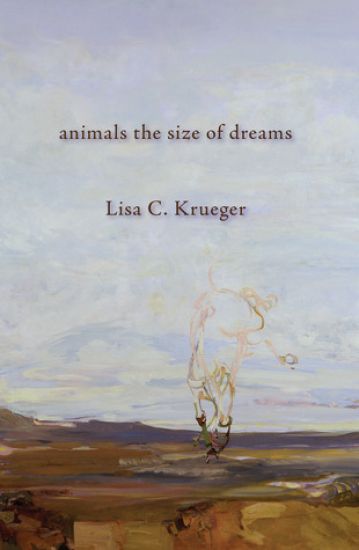
As a psychologist, Lisa C. Krueger is familiar with digging into what makes us human. The joys and celebrations or the pain of what cuts the skin—and what cuts deeper. In animals the size of dreams, Krueger looks into the dark corners and, instead of just shining a light, strips them down to their foundations, until all that’s left is life.
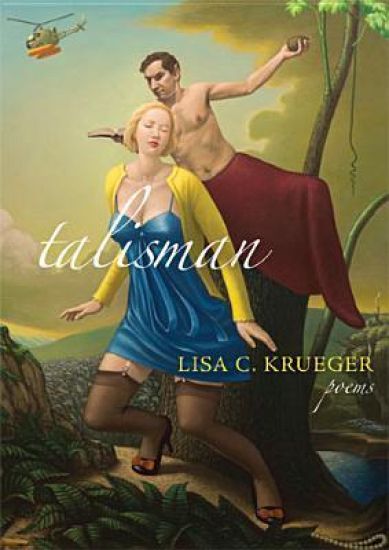
The poems in Lisa C. Krueger’s Talisman interrogate the everyday expression of complex human emotions. In psychological portraits stunning in their precision, Krueger brings her observational powers to bear on the domestic and its darknesses—childbirth, play, sex, and family picnics, as well as abuse, disability, adultery, and mental illness. We see how intimacy is laced with uncertainty, how the bonds between us can be a form of bondage. Life’s long arc is considered, from the early developmental stages of attachment and individuation to the existential dramas of purpose and meaning in middle and old age. What emerges is a study in the mystery of survival, in how we move beyond the broken places in ourselves. These poems magnify small, everyday redemptions as signs—talismans—of human potential, and ask us to think about our choices, to use language as a force to press against truth.
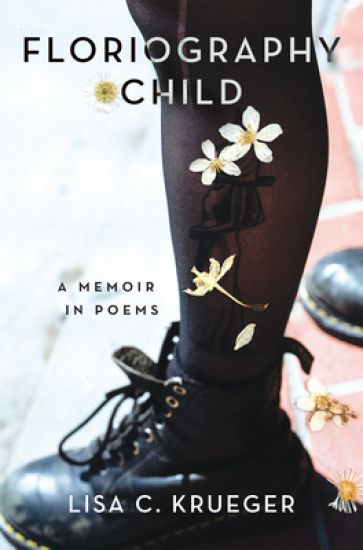
Floriography Child is a book about salvation: what gives people strength in the face of adversity, not just to endure, but to move through and beyond our myriad human sufferings. Through poems, micro-essays, and visual art, Floriography Child addresses fundamental questions about purpose, connection, and resilience. Written in memoir form, this book examines the mother-daughter relationship and its intimacies in the context of a daughter’s developing chronic illness. How to bear another’s suffering—how to find sustenance in a world fraught with uncertainty and pain—is addressed through the language of flowers and the natural world. Ultimately, this book asks us to consider how each of us, whatever our path, is connected.
“Lisa Krueger’s shimmering first collection of poems, Rebloom, is a hymn to the gifts and weight of daily life. Lisa Krueger weaves with stunning simplicity the love, loss, and longing of being, and of being wife, mother, sister, and daughter. She renders daily illuminations behind the veil of everyday routine, the miracles of joy and sorrow. In Rebloom, the final movement amazes us with the great comfort of nature, of the earth, where she seizes renewal of life in the presence of death. Flowers, stem, earth, she sees the whole, and the whole is what heals. By digging, Lisa Krueger aerates the soil of her life, of this our life.” —Maureen Reed
Reducing the Time Burdens of Army Company Leaders
Lisa Saum-Manning; Tracy C Krueger; Matthew W Lewis; Erin N Leidy; Tetsuhiro Yamada; Rick Eden; Andrew Lewis; Ada L Cotto; Ryan Haberman; Robert Dion; Stacy L Moore; Michael Shurkin; Michael Lerario
RAND
2020
nidottu
Company leaders in the U.S. Army have long been recognized as overworked, partly because of the number of requirements imposed on them by higher headquarters. This report is intended to help the Army identify ways to reduce and manage the time burdens on Active Component company leaders in garrison by addressing the challenges of reducing time burdens at both organizational and individual worker levels.
De La DÃ(c)mocratie En Suisse, Volume 2...
Antoine Ã?lisã(c)E Cherbuliez
Hutson Street Press
2025
sidottu
De La DÃ(c)mocratie En Suisse, Volume 2...
Antoine Ã?lisã(c)E Cherbuliez
Hutson Street Press
2025
pokkari
Music Lesson Plans for Social Justice
Lisa C. DeLorenzo; Marissa Silverman
OXFORD UNIVERSITY PRESS INC
2022
sidottu
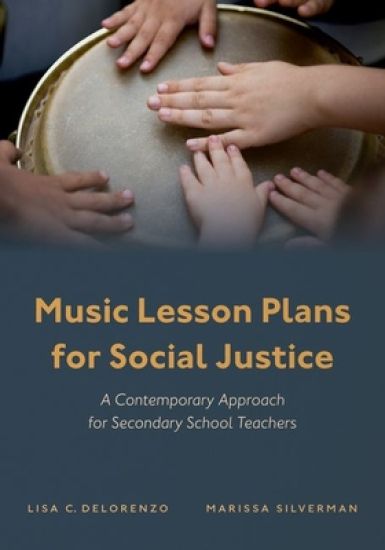
Teaching Music for Social Justice offers a fresh, innovative approach to teaching general music. This book is a timely collection of lesson plans and units that artfully blend music making with relevant issues of social justice. Particularly accessible to middle and high school classroom music teachers, it includes a companion website with links to all of the music listening and videos. Authors Lisa C. DeLorenzo and Marissa Silverman, accomplished music educators with extensive careers thinking about the relationship between music education and social justice, have composed student-centered lessons with thoughtful discussion prompts, experiences with diverse genres and styles of music, and technology-integrated music making projects that will activate students' creativity and empathy. Unit topics-ranging from “War” to “Climate Change”-include cross-disciplinary lessons with the arts playing a central role in developing understanding. Well-researched introductory materials as well as “how-to” guides for topics, such as “composing in the classroom,” make the text especially practical and approachable. This book is an essential resource, with ready-to-go lessons and classroom materials. Music teachers will now have a unique, new lens for engaging students in purposeful music making toward social justice.
Music Lesson Plans for Social Justice
Lisa C. DeLorenzo; Marissa Silverman
OXFORD UNIVERSITY PRESS INC
2022
nidottu
Teaching Music for Social Justice offers a fresh, innovative approach to teaching general music. This book is a timely collection of lesson plans and units that artfully blend music making with relevant issues of social justice. Particularly accessible to middle and high school classroom music teachers, it includes a companion website with links to all of the music listening and videos. Authors Lisa C. DeLorenzo and Marissa Silverman, accomplished music educators with extensive careers thinking about the relationship between music education and social justice, have composed student-centered lessons with thoughtful discussion prompts, experiences with diverse genres and styles of music, and technology-integrated music making projects that will activate students' creativity and empathy. Unit topics-ranging from “War” to “Climate Change”-include cross-disciplinary lessons with the arts playing a central role in developing understanding. Well-researched introductory materials as well as “how-to” guides for topics, such as “composing in the classroom,” make the text especially practical and approachable. This book is an essential resource, with ready-to-go lessons and classroom materials. Music teachers will now have a unique, new lens for engaging students in purposeful music making toward social justice.
An examination of the cultural values of working class Chicana adolescents with an emphasis on the social, political, and economic factors that shape these cultural values. This book addresses a gap in the literature on youth gangs and youth culture by examining the motivations and issues of gang affiliation, teen pregnancy, and academic failure from the point-of-view of teenage girls. Furthermore, the book emphasizes female participation in gangs as well as the impact that gangs have on non- participating adolescents. The author also discusses how current public policy is based on erroneous assumptions associated with the culture of poverty model.This book attempts to explain what appears to be self-defeating behavior of many Chicana adolescents. It explores the logic underlying their life choices and examines the connection between these choices and larger social processes. This book will be of interest to undergraduate and graduate students, as well as faculty in ethnic studies, multicultural studies, Hispanic Studies, Sociology, and Women's Studies. In addition social service professionals and related professionals will find it helpful.
From ancient Maya cities in Mexico and Central America to the Taj Mahal in India, cultural heritage sites around the world are being drawn into the wave of privatization that has already swept through such economic sectors as telecommunications, transportation, and utilities. As nation-states decide they can no longer afford to maintain cultural properties-or find it economically advantageous not to do so in the globalizing economy-private actors are stepping in to excavate, conserve, interpret, and represent archaeological and historical sites. But what are the ramifications when a multinational corporation, or even an indigenous village, owns a piece of national patrimony which holds cultural and perhaps sacred meaning for all the country's people, as well as for visitors from the rest of the world?In this ambitious book, Lisa Breglia investigates "heritage" as an arena in which a variety of private and public actors compete for the right to benefit, economically and otherwise, from controlling cultural patrimony. She presents ethnographic case studies of two archaeological sites in the YucatÁn Peninsula-ChichÉn ItzÁ and Chunchucmil and their surrounding modern communities-to demonstrate how indigenous landholders, foreign archaeologists, and the Mexican state use heritage properties to position themselves as legitimate "heirs" and beneficiaries of Mexican national patrimony. Breglia's research masterfully describes the "monumental ambivalence" that results when local residents, excavation laborers, site managers, and state agencies all enact their claims to cultural patrimony. Her findings make it clear that informal and partial privatizations-which go on quietly and continually-are as real a threat to a nation's heritage as the prospect of fast-food restaurants and shopping centers in the ruins of a sacred site.
For decades, Mexico has been one of the world’s top non-OPEC oil exporters, but since the 2004 peak and subsequent decline of the massive offshore oilfield-Cantarell-the prospects for the country have worsened. Living with Oil takes a unique look at the cultural and economic dilemmas in this locale, focusing on residents in the fishing community of Isla Aguada, Campeche, who experienced the long-term repercussions of a 1979 oil spill that at its height poured out 30,000 barrels a day, a blowout eerily similar to the 2010 Deepwater Horizon disaster.Tracing the interplay of the global energy market and the struggle it creates between citizens, the state, and multinational corporations, this study also provides lessons in the tug-of-war between environmentalism and the lure of profits. In Mexico, oil has held status as a symbol of nationalist pride as well as a key economic asset that supports the state’s everyday operations. Capturing these dilemmas in a country now facing a national security crisis at the hands of violent drug traffickers, cultural anthropologist Lisa Breglia covers issues of sovereignty, security, and stability in Mexico’s post-peak future.The first in-depth account of the local effects of peak oil in Mexico, emphasizing the everyday lives and livelihoods of coastal Campeche residents, Living with Oil demonstrates important aspects of the political economy of energy while showing vivid links between the global energy marketplace and the individual lives it affects.
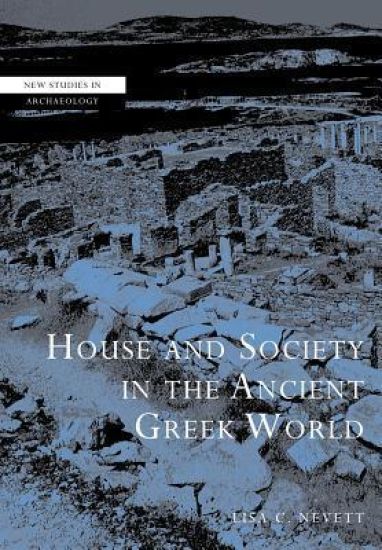
This book re-examines traditional assumptions about the nature of social relationships in Greek households during the Classical and Hellenistic periods. Through detailed exploration of archaeological evidence from individual houses, Lisa Nevett identifies a recognisable concept of the citizen household as a social unit, and suggests that this was present in numerous Greek cities. She argues that in such households relations between men and women, traditionally perceived as dominating the domestic environment, should be placed within the wider context of domestic activity. Although gender was an important cultural factor which helped to shape the organisation of the house, this was balanced against other influences, notably the relationship between household members and outsiders. At the same time the role of the household in relation to the wider social structures of the polis, or city state, changed rapidly through time, with the house itself coming to represent an important symbol of personal prestige.
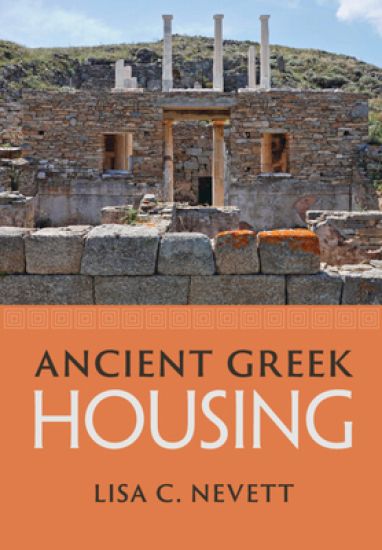
The temples and theatres of the ancient Greek world are widely known, but there is less familiarity with the houses in which people lived. In this book, Lisa Nevett provides an accessible introduction to the varied forms of housing found across the Greek world between c. 1000 and 200 BCE. Many houses adopted a courtyard structure which she sets within a broader chronological, geographical and socio-economic context. The book explores how housing shaped - and was shaped by – patterns of domestic life, at Athens and in other urban communities. It also points to a rapid change in the scale, elaboration and layout of the largest houses. This is associated with a shift away from expressing solidarity with peers in the local urban community towards advertising personal status and participation in a network of elite households which stretched across the Mediterranean. Instructors, students and general readers will welcome this stimulating volume.