Kirjahaku
Etsi kirjoja tekijän nimen, kirjan nimen tai ISBN:n perusteella.
1000 tulosta hakusanalla Livia Lang


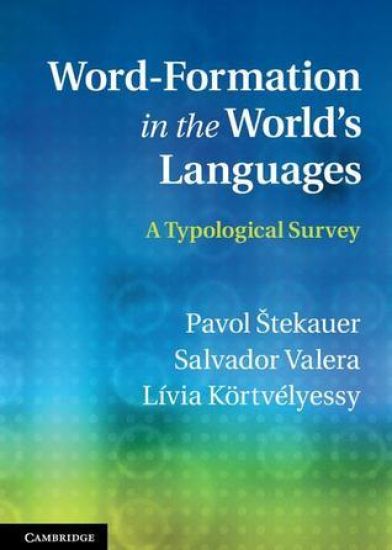
Word-Formation in the World's Languages
Pavol Štekauer; Salvador Valera; Lívia Kortvélyessy
Cambridge University Press
2012
sidottu
A pioneering book establishing the foundations for research into word-formation typology and tendencies. It fills a gap in cross-linguistic research by being the first systematic survey of the word-formation of the world's languages. Drawing on over 1500 examples from fifty-five languages, it provides a wider global representation than any other volume. This data, from twenty-eight language families and forty-five language genera, reveals associations between word-formation processes in genetically and geographically distinct languages. Data presentation from two complementary perspectives, semasiological and onomasiological, shows both the basic functions of individual word-formation processes and the ways of expressing selected cognitive categories. Language data was gathered by way of detailed questionnaires completed by over eighty leading experts on the languages discussed. The book is aimed at academic researchers and graduate students in language typology, linguistic fieldwork and morphology.
Word-Formation in the World's Languages
Pavol Štekauer; Salvador Valera; Lívia Kortvélyessy
Cambridge University Press
2015
pokkari
A pioneering book establishing the foundations for research into word-formation typology and tendencies. It fills a gap in cross-linguistic research by being the first systematic survey of the word-formation of the world's languages. Drawing on over 1500 examples from fifty-five languages, it provides a wider global representation than any other volume. This data, from twenty-eight language families and forty-five language genera, reveals associations between word-formation processes in genetically and geographically distinct languages. Data presentation from two complementary perspectives, semasiological and onomasiological, shows both the basic functions of individual word-formation processes and the ways of expressing selected cognitive categories. Language data was gathered by way of detailed questionnaires completed by over eighty leading experts on the languages discussed. The book is aimed at academic researchers and graduate students in language typology, linguistic fieldwork and morphology.

Tanaka explores the language used in Japanese parliamentary interactions to shed light on the use of language as a tool by politicians to convince, negotiate, persuade, as well as deliver aggression and criticism. By looking at the speech of politicians in the parliament of Japan, Tanaka demonstrates the unbreakable link between language and politics.Despite the association of Japan as a society in which linguistic politeness is paramount, Tanaka highlights the many examples of impoliteness in parliament and illustrates the idea that Japanese parliamentarians use language strategically to accomplish their political agenda. Analysis of questions and answers in committee meetings demonstrate that regardless of which party they belong to, those in opposition use the most antagonistic strategies. The book also shows the ways in which politicians deliver face-attacks and demonstrates that impoliteness can be delivered without insults or open aggression, using extremely polite language, honorifics, or sarcasm and irony.Lastly, the book also reveals that face-attacks are sent by members of both the government and opposition. As a book that explores the commonly overlooked phenomenon of impoliteness in Japan in the context of parliamentary interactions, it is a valuable resource for researchers and academics in the field of pragmatics and discourse analysis as well as a viable resource for undergraduate and graduate students.
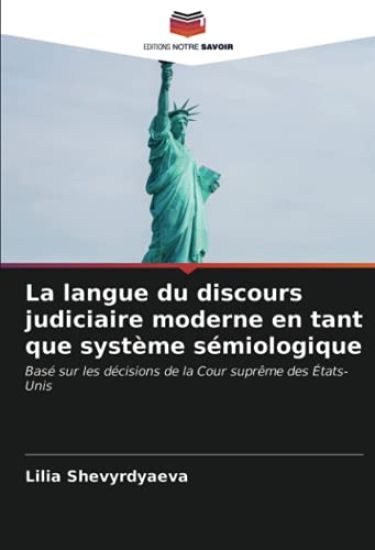
La langue du discours judiciaire moderne en tant que système sémiologique
Lilia Shevyrdyaeva
Editions Notre Savoir
2021
pokkari

The language of contemporary judicial discourse as a semiological system
Lilia Shevyrdyaeva
Our Knowledge Publishing
2021
nidottu
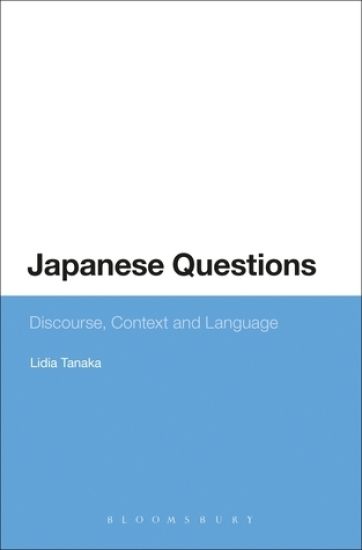
Questions and interrogatives in Japanese discourse have attracted considerable interest from grammarians, but the communicative aspect has received little attention. This book fills this gap. Through detailed analyses of formal and informal interactions, this book demonstrates that the inherent multi-functional and polysemous aspect of language can also be observed in the use of questions. What emerges is a sense of the considerable variety of question forms and also an understanding of how questions are used to perform a wide range of social actions.The importance of context is stressed throughout the book; both in guiding the speakers’ choices of question types and in helping to create the particular stance that characterizes those interactions.The data used in this book shows that speakers prefer questions that are not canonical. When speakers do use canonical questions, these are overwhelmingly accompanied by some mollifiers. This phenomenon suggests that in Japanese communication the illocutionary force of canonical questions is too strong. To soften the interaction, speakers tend to use other types of interrogative forms such as statements with rising intonation or, at least, to leave questions grammatically unfinished. The findings in this book contribute to the understanding of how Japanese speakers use questions in different communicative interactions and provide new evidence of the gap between prescriptive grammar and actual communication.

Questions and interrogatives in Japanese discourse have attracted considerable interest from grammarians, but the communicative aspect has received little attention. This book fills this gap. Through detailed analyses of formal and informal interactions, this book demonstrates that the inherent multi-functional and polysemous aspect of language can also be observed in the use of questions. What emerges is a sense of the considerable variety of question forms and also an understanding of how questions are used to perform a wide range of social actions.The importance of context is stressed throughout the book; both in guiding the speakers’ choices of question types and in helping to create the particular stance that characterizes those interactions.The data used in this book shows that speakers prefer questions that are not canonical. When speakers do use canonical questions, these are overwhelmingly accompanied by some mollifiers. This phenomenon suggests that in Japanese communication the illocutionary force of canonical questions is too strong. To soften the interaction, speakers tend to use other types of interrogative forms such as statements with rising intonation or, at least, to leave questions grammatically unfinished. The findings in this book contribute to the understanding of how Japanese speakers use questions in different communicative interactions and provide new evidence of the gap between prescriptive grammar and actual communication.

Possession in Languages of Europe and North and Central Asia
Lars (EDT) Johanson; Lidia Federica (EDT) Mazzitelli; Irina (EDT) Nevskaya
John Benjamins Pub Co
2019
sidottu
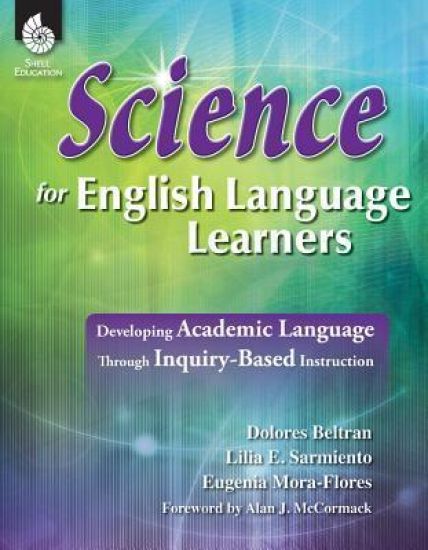
Science for English Language Learners
Dolores Beltran; Lilia Sarmiento; Eugenia Mora-Flores
Shell Educational Publishing
2012
pokkari
Effectively build students' language skills while developing their scientific understanding using the strategies in this resource. Science for English Language Learners uses the inquiry-based 5E model of instruction (Engage, Explore, Explain, Extend, and Evaluate) to offer valuable strategies for academic language development and gaining science content knowledge. With engaging stories and interactive activities examples suitable for all grade levels, teachers will learn how to assist their students to activate prior knowledge, build understanding, and question and explore crucial science themes, as well as explicitly develop their language abilities.

Livia—wife of the first Roman emperor, Caesar Augustus, and mother of the second, Tiberius— wielded extraordinary power at the center of Roman politics. In this biography of Livia, the first in English, Anthony Barrett sets aside the portrait of a cunning and sinister schemer to reveal Livia as a complex figure whose enduring political influence helped shape Roman government long after her death."An excellent biography of Livia-as appealing to the general reader as it is satisfying to the scholar."—Colin M. Wells, Trinity University, San Antonio"In reading Anthony Barrett’s biography of Livia, I not only learned about this remarkable woman, but also gained a meaningful appreciation of life and society in her time."—Howard Alper, President, The Royal Society of Canada "First-rate."—Mary Beard, Times Literary Supplement

A bold new portrait of Livia, ancient Rome’s first First Lady, who shaped the empire from behind the throne Livia was no ordinary Roman woman. As wife of Augustus and mother of Tiberius—the first and second Roman emperors—she stood at the heart of the first imperial dynasty, wielding extraordinary influence in a world that denied women formal power. In this vivid biography, Caitlin C. Gillespie reclaims Livia (58 BCE–29 CE) from centuries of scandal and rumored villainy, tracing her journey from elite birth and early traumatic exile through her rise to wealth and influence as the matriarch of the imperial household, the Domus Augusta. Drawing on literary and archaeological sources, Gillespie explores Livia’s inner life through her personal losses, including the death of her son Drusus; her political savvy; and her later life as Julia Augusta, high priestess of Augustus’s divine cult. Though she never held an official political position, Livia emerges as a complex figure whose story of ambition, resilience, and maternal power resonates over millennia, captivating audiences from antiquity through today.


Det har visst blivit lite fel här, sa fröken och pekade på det röda farsdagskortet på Livias bänk. Med stora svarta bokstäver hade Livia skrivit ”Till FARAN”. Inget mer. Inte en enda blomma och aldrig i livet några hjärtan. Det ska stå så där, sa Livia bestämt. På väg ut ur klassrummet knölade hon ner kortet i papperskorgen. LIVIA är en berättelse om hemligheter och utsatthet lika mycket som kärlek och integritet där Livia och Lilla Mamma gör allt för att dölja faderns missbruk. Även om romanen handlar om svåra upplevelser finns en ton av hopp och mänsklig styrka som en röd tråd. Är det Lilla Mamma som bär Livia, eller är det kanske tvärtom? Detta är första delen i en planerad trilogi.Detta är en fiktiv berättelse med verklighetsförankring. Boken är en blandning av verkliga händelser och fantasi.
This work has been selected by scholars as being culturally important and is part of the knowledge base of civilization as we know it.This work is in the public domain in the United States of America, and possibly other nations. Within the United States, you may freely copy and distribute this work, as no entity (individual or corporate) has a copyright on the body of the work.Scholars believe, and we concur, that this work is important enough to be preserved, reproduced, and made generally available to the public. To ensure a quality reading experience, this work has been proofread and republished using a format that seamlessly blends the original graphical elements with text in an easy-to-read typeface.We appreciate your support of the preservation process, and thank you for being an important part of keeping this knowledge alive and relevant.

Meet Livia. Livia is a powerful young lady who lives in Ancient Rome, and she is on a mission-to teach you about her world, and to inspire little leaders like herself. Follow Livia through her day, and let her show you what she is capable of. Latin learners, welcome to daily life in Rome; and young readers, prepare to meet your role model.