Kirjojen hintavertailu. Mukana 11 244 527 kirjaa ja 12 kauppaa.

Kirjahaku

Etsi kirjoja tekijän nimen, kirjan nimen tai ISBN:n perusteella.

1000 tulosta hakusanalla Lorenzo Frassinetti; Jan Scheffel

Vektoranalys

Vektoranalys

Lorenzo Frassinetti; Jan Scheffel

Liber
2019
nidottu
Fångar det centrala i vektoranalysenLäroböcker i vektoranalys är ofta kortfattade. Denna bok, som kan användas för såväl grundläggande som mer avancerade kurser, behandlar ämnet mer utförligt. Läroböcker i vektoranalys är ofta kortfattade. Denna bok, som kan användas för såväl grundläggande som mer avancerade kurser, behandlar ämnet mer utförligt.Bokens pedagogiska idé skiljer sig markant från liknande böcker. Återkommande inslag är tydligt formulerade problem som fångar det centrala i vektoranalysen. Syftet med problemen är dels att väcka intresse för den teori och de metoder som behandlas, dels att stimulera till aktivt lärande.Boken innehåller genomarbetade och lättillgängliga teoriavsnitt - som börjar med grundläggande vektoralgebra och slutar med kartesiska tensorer och en härledning av vektoranalysens huvudsats. Dessutom ingår ett stort antal konkreta exempel och många tillämpningar. Sist i varje kapitel finns en sammanfattning av den viktigaste teorin och övningsuppgifter med svar. Ledningar och fullständiga lösningar finns på Libers webbplats. Där finns även ett Appendix med tillämpningar.Om författarnaJan Scheffel är professor i teoretisk fusionsplasmafysik vid KTH i Stockholm. Han har lång erfarenhet av undervisning och pedagogisk utveckling. År 2014 tilldelades han KTH:s pedagogiska pris. Lorenzo Frassinetti är lektor i experimentell fusionsplasmafysik vid KTH och har mångårig erfarenhet av undervisning i vektoranalys på programmen Elektroteknik och Civilingenjör och lärare. År 2014 tilldelades han priset Årets lärare.

Lorenzo

Lorenzo

Loreto N Gonzales

Outskirts Press
2018
pokkari
Lorenzo, a Two-Act Play, is based on the life of Lorenzo Ruiz of Manila, a devoted man who struggles to overcome his guilt and shame for leaving his family in the Philippines, but makes a decisive choice to face his destiny in 17th century Japan. This play is set in Nagasaki during the Shimabara Rebellion in 1637, a rebellion protesting economic hardship and government oppression. It later took a religious front. About 27,000 people joined in the rebellion. The Japanese government of Shogun Iemitsu used fumi-e to identify christians and to force them to renounce their faith. If they refused, they were tortured and then executed.
LORENZO

LORENZO

Ben Targét

NICK HERN BOOKS
2023
pokkari
When Ben Targét was nominated for Best Newcomer at the 2012 Edinburgh Comedy Awards, he was set on the path to becoming a critically acclaimed, multi-award-winning performance artist. Eight years later, amidst a global pandemic, he gave it all up to become the live-in carer for his uncle: an irascible octogenarian prankster called Lorenzo Wong. LORENZO is their story, a show that confronts the messiness of ageing and dying through the medium of storytelling, servitude to the audience and live carpentry, a combination not seen on the world stage since Nazareth circa 30AD. This book is the full script of that life-affirming show, with illustrations by Targét himself. It was directed by Adam Brace, and was premiered at Summerhall, Edinburgh, during the 2023 Edinburgh Festival Fringe, where it was awarded a Fringe First. It subsequently transferred to Soho Theatre, London.
Lorenzo

Lorenzo

Martina Potucek-Palladino

Outskirts Press
2022
pokkari
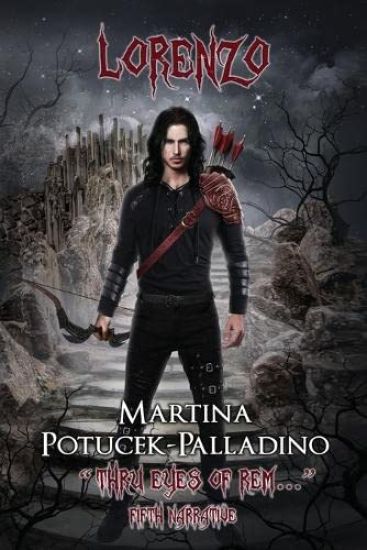
It all started with a dream... way back when. But it seems the magical mayhem keeps escalating. We ended T N T with not one, but three shockers back-to-back. So, let's start there. Lorenzo confronts the woman he called Mom, only her ally takes him away. While everyone else is bewildered by Derek's behavior, Demonica is attacked by her sister. Well, that sister quickly ran up the steps of the gazebo and a very unexpected switch took place. This switch became the catalyst for a possibly dangerous breach in that magical world. Memories are becoming unlocked through visions, and Tink visits a heavenly sanctuary. We travel to another realm where we encounter one surprise after another... from a sibling, who after a thousand years isn't dead, to a transformation no one saw coming. Amid all this chaos, the coronation still takes place. Yes, we finally pass the reigns to the eternal King and his Queen... and a third person is given what they've always wished for. Does that mean some dreams and aspirations have been fulfilled? You'd be inclined to think that, but... not entirely. Along with some good, comes more conflicting roadblocks. As this narrative comes to an end, we are left with assumptions, questions, and maybe even a bit of confidence believing we know where this story is going. Make no mistake, you've been guided down a predictable path, but the detours are unexpected. You should know better...
Lorenzo

Lorenzo

Martina Potucek-Palladino

Outskirts Press
2022
sidottu
It all started with a dream... way back when. But it seems the magical mayhem keeps escalating. We ended T N T with not one, but three shockers back-to-back. So, let's start there. Lorenzo confronts the woman he called Mom, only her ally takes him away. While everyone else is bewildered by Derek's behavior, Demonica is attacked by her sister. Well, that sister quickly ran up the steps of the gazebo and a very unexpected switch took place. This switch became the catalyst for a possibly dangerous breach in that magical world. Memories are becoming unlocked through visions, and Tink visits a heavenly sanctuary. We travel to another realm where we encounter one surprise after another... from a sibling, who after a thousand years isn't dead, to a transformation no one saw coming. Amid all this chaos, the coronation still takes place. Yes, we finally pass the reigns to the eternal King and his Queen... and a third person is given what they've always wished for. Does that mean some dreams and aspirations have been fulfilled? You'd be inclined to think that, but... not entirely. Along with some good, comes more conflicting roadblocks. As this narrative comes to an end, we are left with assumptions, questions, and maybe even a bit of confidence believing we know where this story is going. Make no mistake, you've been guided down a predictable path, but the detours are unexpected. You should know better...
Lorenzo e Genkin

Lorenzo e Genkin

Diego Scuola Primaria L Santucci

Lulu.com
2017
pokkari
Lorenzo e Genky sono amici per la pelle, ma hanno un problema: Nanetto, il bullo della scuola. Come riuscire a fargli capire che sbaglia? Ci penser Lorenzo, che su esempio della mamma si decider a scrivere... Indovinate voi Questo piccolo libro, scritto da un bambino davvero sorprendente Affronta un problema attuale con il sorriso di Lorenzo, il protagonista, che non abbandona la sua idea, finch non la vede realizzata
Lorenzo de’ Medici

Lorenzo de’ Medici

Pennsylvania State University Press
1991
sidottu
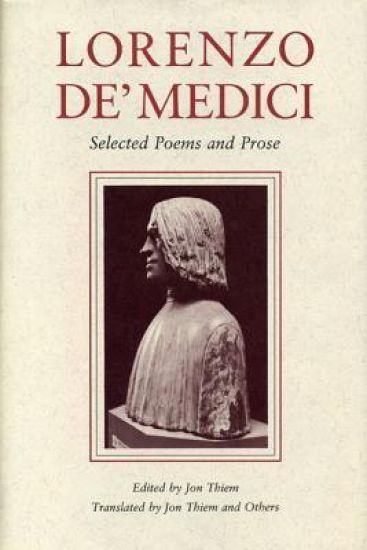
This is the first book-length collection in English of the literary works of Lorenzo de’Medici, the major poetic voice of the Florentine Resistance.Lorenzo de’Medici (1449-92) was the ruler of Florence and the principal statesman of his time. A contemporary of Columbus, Lorenzo is hardly known in the English-speaking world as a major Quattrocento writer, author of a large and varied body of poetry as well as an important literary treatise. His poetry and patronage were instrumental in renewing the vernacular literature of his age after a period of stagnation.That Lorenzo’s literary writings were for the most part never translated is a fascinating curiosity of history, attributable to the irreverent, bawdy subject matter of many of his poems, objections to his authoritarian politics, and the unconventional features of his poetic realism. Yet Lorenzo is now seen as the most interesting exponent of the cultural renaissance that he encouraged. His longer poems in particular reveal the central concerns, everyday activities, and favorite ideas of his day. No other Florentine writer succeeds in capturing as he does the beauty, seasonal changes, and rhythms of life of the Tuscan countryside. His poetic realism is that which sets him apart from his age, yet makes him such a vivid portrayer of it. The availability of his works in English will serve to modify and enlarge our conception of the Florentine Renaissance.
Lorenzo de’ Medici

Lorenzo de’ Medici

Pennsylvania State University Press
1991
pokkari
This is the first book-length collection in English of the literary works of Lorenzo de’Medici, the major poetic voice of the Florentine Resistance.Lorenzo de’Medici (1449-92) was the ruler of Florence and the principal statesman of his time. A contemporary of Columbus, Lorenzo is hardly known in the English-speaking world as a major Quattrocento writer, author of a large and varied body of poetry as well as an important literary treatise. His poetry and patronage were instrumental in renewing the vernacular literature of his age after a period of stagnation.That Lorenzo’s literary writings were for the most part never translated is a fascinating curiosity of history, attributable to the irreverent, bawdy subject matter of many of his poems, objections to his authoritarian politics, and the unconventional features of his poetic realism. Yet Lorenzo is now seen as the most interesting exponent of the cultural renaissance that he encouraged. His longer poems in particular reveal the central concerns, everyday activities, and favorite ideas of his day. No other Florentine writer succeeds in capturing as he does the beauty, seasonal changes, and rhythms of life of the Tuscan countryside. His poetic realism is that which sets him apart from his age, yet makes him such a vivid portrayer of it. The availability of his works in English will serve to modify and enlarge our conception of the Florentine Renaissance.
Lorenzo De'Medici at Home

Lorenzo De'Medici at Home

Richard (EDT) Stapleford

Pennsylvania State University Press
2013
sidottu
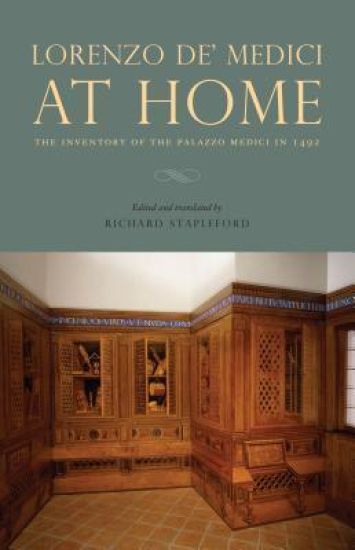
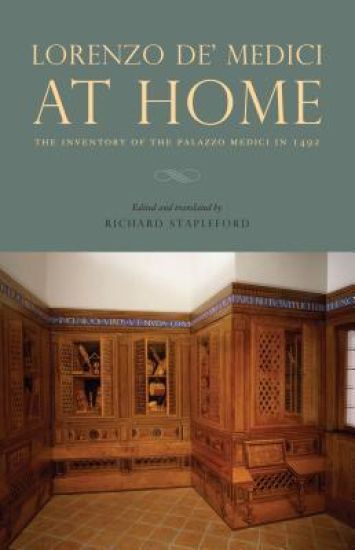
Lorenzo il Magnifico de' Medici was the head of the ruling political party at the apogee of the golden age of Quattrocento Florence. Born in 1449, his life was shaped by privilege and responsibility, and his deeds as a statesman were legendary even while he lived. At his death he was master of the largest and most famous private palace in Florence, a building crammed full of the household goods of four generations of Medici as well as the most extraordinary collections of art, antiquities, books, jewelry, coins, cameos, and rare vases in private hands. His heirs undertook an inventory of the estate, a usual procedure following the demise of an important head of family. An anonymous clerk, pen and paper in hand, walked through the palace from room to room, counting and recording the barrels of wine and the water urns; opening cabinets and chests; unfolding and examining clothes, fabrics, and tapestries; describing the paintings he saw on the walls; and unlocking jewel boxes and weighing and evaluating coins, medals, necklaces, brooches, rings, and cameos. The original document he produced has been lost, but a copy was made by another clerk in 1512.Richard Stapleford's critical translation of this document offers the reader a window onto the world of the Medici family, their palace, and the material culture that surrounded them.
Lorenzo de’ Medici at Home

Lorenzo de’ Medici at Home

Pennsylvania State University Press
2014
pokkari
Lorenzo il Magnifico de’ Medici was the head of the ruling political party at the apogee of the golden age of Quattrocento Florence. Born in 1449, his life was shaped by privilege and responsibility, and his deeds as a statesman were legendary even while he lived. At his death he was master of the largest and most famous private palace in Florence, a building crammed full of the household goods of four generations of Medici as well as the most extraordinary collections of art, antiquities, books, jewelry, coins, cameos, and rare vases in private hands. His heirs undertook an inventory of the estate, a usual procedure following the demise of an important head of family. An anonymous clerk, pen and paper in hand, walked through the palace from room to room, counting and recording the barrels of wine and the water urns; opening cabinets and chests; unfolding and examining clothes, fabrics, and tapestries; describing the paintings he saw on the walls; and unlocking jewel boxes and weighing and evaluating coins, medals, necklaces, brooches, rings, and cameos. The original document he produced has been lost, but a copy was made by another clerk in 1512. Richard Stapleford’s critical translation of this document offers the reader a window onto the world of the Medici family, their palace, and the material culture that surrounded them.
Lorenzo Da Ponte

Lorenzo Da Ponte

Sheila Hodges; H. C. Robbins Landon

University of Wisconsin Press
2002
nidottu
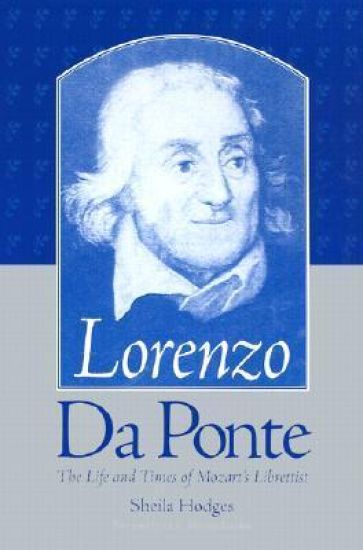
Three great operas - ""The Marriage of Figaro"", ""Don Giovanni"" and ""Cosi Fan Tutte"" - join the music of Wolfgang Amadeus Mozart with the perfectly matched libretti of Lorenzo Da Ponte. Da Ponte's own long life (1749-1838), however, was more fantastic than any opera plot. A poor Jew who became a Catholic priest; a priest who became a young gambler and rake; a teacher, poet and librettist who became a Pennsylvania greengrocer; an impoverished immigrant to America who became Professor of Italian at Columbia University - wherever Da Ponte went, he arrived a penniless fugitive and made a new and eventful life. Sheila Hodges follows him from the last glittering years of the Venetian Republic to the Vienna of Mozart and Salieri, and from George III's London to New York City.
Lorenzo de'Medici, Collector of Antiquities

Lorenzo de'Medici, Collector of Antiquities

Laurie Fusco; Gino Corti

Cambridge University Press
2006
sidottu
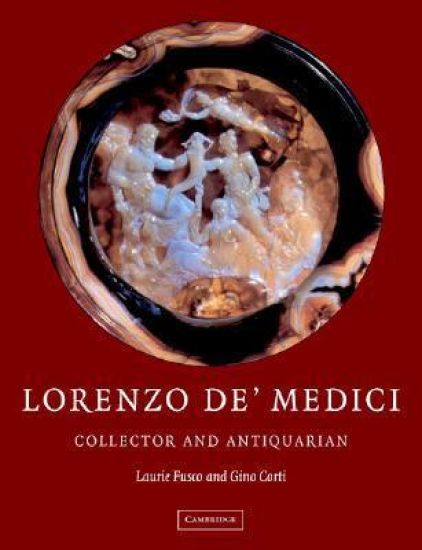
Lorenzo de' Medici was a key figure in the creation of the Renaissance. An important patron of the arts in fifteenth century Florence, he was also a passionate collector of objects from antiquity and the post-antique period. His activities as a collector are documented in a group of 173 letters, previously unknown and published here for the first time, which provide the most complete picture of a well-known and historically important collector. As revealed in these letters, Lorenzo acquired sculpture to embellish his palace, but his real predilection was for small objects: coins, hardstone vases, and gems. His main source was the Roman dealer Giovanni Ciampolini, whose scandalous behavior demonstrates the gamesmanship of the art market. This book reveals how objects were studied, where they were displayed, the criteria for their selection, and their monetary worth.