Charles-le-Hardi, surnomme le Temeraire, comte de Charolais: etude historique / par M. l'abbe Louis-M.-J. Chaumont, ...Date de l'edition originale: 1904Ce livre est la reproduction fidele d'une oeuvre publiee avant 1920 et fait partie d'une collection de livres reimprimes a la demande editee par Hachette Livre, dans le cadre d'un partenariat avec la Bibliotheque nationale de France, offrant l'opportunite d'acceder a des ouvrages anciens et souvent rares issus des fonds patrimoniaux de la BnF.Les oeuvres faisant partie de cette collection ont ete numerisees par la BnF et sont presentes sur Gallica, sa bibliotheque numerique.En entreprenant de redonner vie a ces ouvrages au travers d'une collection de livres reimprimes a la demande, nous leur donnons la possibilite de rencontrer un public elargi et participons a la transmission de connaissances et de savoirs parfois difficilement accessibles.Nous avons cherche a concilier la reproduction fidele d'un livre ancien a partir de sa version numerisee avec le souci d'un confort de lecture optimal. Nous esperons que les ouvrages de cette nouvelle collection vous apporteront entiere satisfaction.Pour plus d'informations, rendez-vous sur www.hachettebnf.fr
Panegyrique de Louis XVIII, par M. J******Date de l'edition originale: 1824Sujet de l'ouvrage: France (1814-1824, Louis XVIII)Ce livre est la reproduction fidele d'une oeuvre publiee avant 1920 et fait partie d'une collection de livres reimprimes a la demande editee par Hachette Livre, dans le cadre d'un partenariat avec la Bibliotheque nationale de France, offrant l'opportunite d'acceder a des ouvrages anciens et souvent rares issus des fonds patrimoniaux de la BnF.Les oeuvres faisant partie de cette collection ont ete numerisees par la BnF et sont presentes sur Gallica, sa bibliotheque numerique.En entreprenant de redonner vie a ces ouvrages au travers d'une collection de livres reimprimes a la demande, nous leur donnons la possibilite de rencontrer un public elargi et participons a la transmission de connaissances et de savoirs parfois difficilement accessibles.Nous avons cherche a concilier la reproduction fidele d'un livre ancien a partir de sa version numerisee avec le souci d'un confort de lecture optimal. Nous esperons que les ouvrages de cette nouvelle collection vous apporteront entiere satisfaction.Pour plus d'informations, rendez-vous sur www.hachettebnf.fr
Half of all insect species are dependent on living plant tissues, consuming about 10 per cent of plant annual production in natural habitats and an even greater percentage in agricultural systems, despite sophisticated control measures. Plants possess defences that are effective against almost all herbivorous insect species. Host-plant specialization, observed in over 80 percent of these animals, appears to be an effective adaptation to breach these defence systems. The mechanisms underlying plant defence to invading herbivores on the one side, and insect adaptations to utilize plants for nutrition, defence and shelter on the other, are the main subjects of this book. For plants exposed to insect herbivores, these mechanisms include the activation of defence systems and the emission of chemical signals which may attract natural enemies of the invading herbivores and may even be exploited by neighbouring plants to induce an early defence.
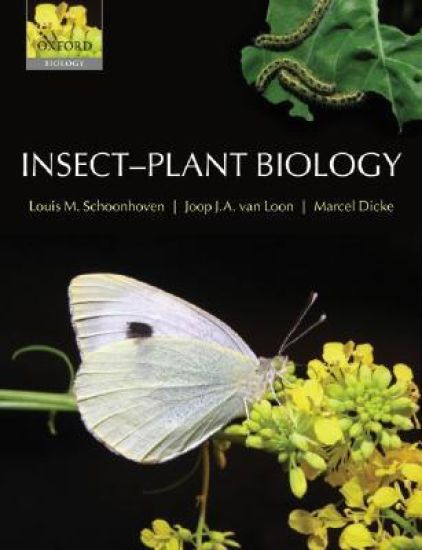
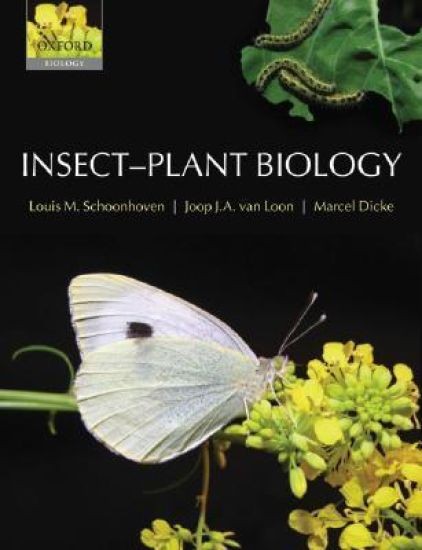
Half of all insect species are dependent on living plant tissues, consuming about 10% of plant annual production in natural habitats and an even greater percentage in agricultural systems, despite sophisticated control measures. Plants possess defences that are effective against almost all herbivorous insect species. Host-plant specialization, observed in over 80% of these animals, appears to be an effective adaptation to breach these defence systems. The mechanisms underlying plant defence to invading herbivores on the one side, and insect adaptations to utilize plants for nutrition, defence and shelter on the other, are the main subjects of this book. In the case of plants exposed to insect herbivores, they include the activation of defence systems in order to minimize damage, as well as the emission of chemical signals that may attract natural enemies of the invading herbivores and may be exploited by neighbouring plants that mount defences as well. For insects, they include complex bevioural adaptations and their underlying sensory systems (with their implications for learning and nutritional plasticity), as well as the endocrinological aspects of life cycle synchronization with host-plant phenology. Insect-Plant Biology discusses the operation of these mechanisms at the molecular and organismal levels and explicitly puts these in the context of both ecological interactions and evolutionary processes. In doing so, it uncovers the highly intricate antagonistic as well as mutualistic interactions that have evolved between plants and insects. The book concludes with a chapter on the application of our knowledge of insect-plant interactions to agricultural production. This multidisciplinary approach will appeal to students in biology, agricultural entomology, ecology, and indeed anyone interested in the principles underlying the relationships between the two largest groups of organisms on earth: plants and insects.
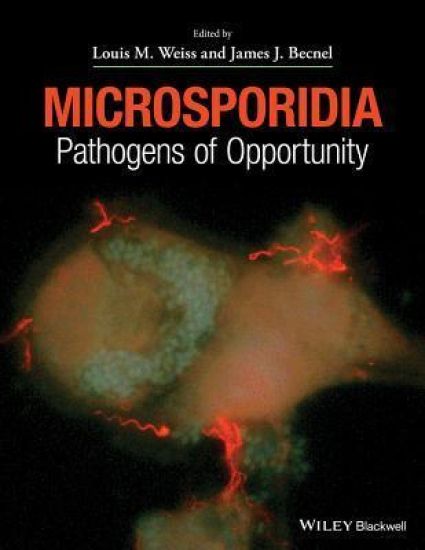
Microsporidia: Pathogens of Opportunity provides a systematic overview of the biology of microsporidia. Written by leading experts in the field, the book combines background and basic information on microsporidia with descriptive methods and resources for working with the pathogen. Newly revised and updated for its second edition, Microsporidia will continue to be the standard text reference for these pathogenic protists, and is an indispensable research resource for biologists, physicians and parasitologists. This new edition of this publication provides systematic reviews of the biology of this pathogen by leading experts in the field, and will be combined with descriptions of the methods and resources for working with this pathogen. • Provides a comprehensive summary of literature on microsporidia and microsporidiosis • The long-awaited update to the standard microsporidia reference text The Microsporidia and Microsporidiosis • Written by an international team of authors representing each of the main research groups working on microsporidia • Chapters provide comprehensive overviews of general methodology as well as special techniques related to these organisms
The plaintiff, Nita Fire and Casualty Company, brought this lawsuit to recover an amount paid to the defendant, Anthony J. Rubino, on a fire insurance policy on Rubino's business. Rubino was doing business as Rubino and Son, Dry Cleaners. A fire at the defendant's plant resulted in a total loss. The fire marshal determined that the fire was caused by spontaneous combustion. Relying on the report of the fire marshal, the plaintiff paid the defendant's claim in the amount of $300,000.00. After paying the claim, the plaintiff learned from a former employee of the defendant that the fire possibly was caused by arson. After it conducted an independent investigation, the plaintiff decided that the fire was set deliberately. Rubino has denied the allegation of arson.