
Kirjahaku
Etsi kirjoja tekijän nimen, kirjan nimen tai ISBN:n perusteella.
1000 tulosta hakusanalla Louise H. Archer
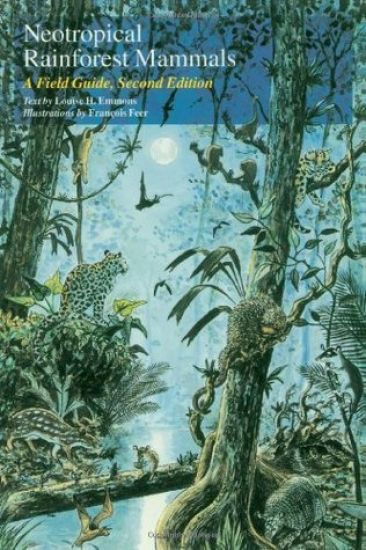
Neotropical Rainforest Mammals
Louise H. Emmons; Francois Feer
University of Chicago Press
1997
nidottu
A field guide to the marvellously diverse creatures of the rainforest, this book includes information on 226 species. It identifies characteristics, similar species, vocalization, behaviour and natural history, geographic range, conservation status, local names and literature references. All species accounts from the first edition have been updated to include the most recent research. All 195 maps showing the distribution and geographic range of each species have been revised to reflect current information. In addition, the colour plates illustrate more than 220 species (including significant colour variants between males and females or adults and young). The black and white plates contain more than 60 images of individual species, mainly bats.

Eighteenth-century drama is often dismissed as homogenous, aesthetically uninteresting, or politically complacent. This book reveals the incredibly intriguing and intricate nature of the period's history plays and their often messy dramatisaton of the complexities of patriotic rhetoric and national identification.
Engaging Classical Texts in the Contemporary World
Louise H. Pratt; C. Michael Sampson
The University of Michigan Press
2018
sidottu
Contemporary classicists often find themselves advocating for the value and relevance of Greco-Roman literature and culture, whether in the classroom, or social media, or newsprint and magazines. In this collection, twelve top scholars apply major critical approaches from other academic fields to open new channels for dialogue between ancient texts and the contemporary world. This volume considers perennial favorites of classical literature—the Iliad and Odyssey, Greek tragedy, Roman comedy, the Argonautica, and Ovid’s Metamorphoses—and their influence on popular entertainment from Shakespeare’s plays to Hollywood’s toga films. It also engages with unusual and intriguing texts across the centuries, including a curious group of epigrams by Artemidorus found on the island sanctuary of Thera, mysterious fragments of two Aeschylean tragedies, and modern-day North African novels. These essays engage an array of theoretical approaches from other fields—narratology, cognitive literary theory, feminist theory, New Historicist approaches to gender and sexuality, and politeness theory—without forsaking more traditional philological methods. A new look at hospitality in the Argonautica shows its roots in the changed historical circumstances of the Hellenistic world. The doubleness of Helen and her phantom in Euripides’ Helen is even more complex than previously noted. Particularly illuminating is the recurrent application of reception studies, yielding new takes on the ancient reception of Homer by Apollonius and of Aeschylus by Macrobius, the reception of Plautus by Shakespeare, and more contemporary examples from the worlds of cinema and literature. Students and scholars of classics will find much in these new interpretations and approaches to familiar texts that will expand their intellectual horizons. Specialists in other fields, particularly English, comparative literature, film studies, and gender and sexuality studies, will also find these essays directly relevant to their work.
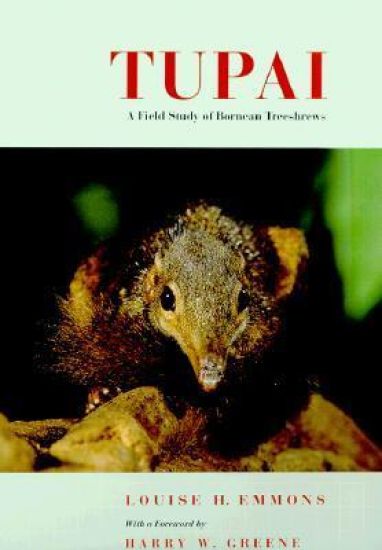
Treeshrews suffer from chronic mistaken identity: they are not shrews, and most are not found in trees. These squirrel-sized, brownish mammals with large, dark, lashless eyes were at one time thought to be primates. Even though most scientists now believe them to belong in their own mammalian order, Scandentia, they still are thought to resemble some of the earliest mammals, which lived alongside the dinosaurs. This book describes the results of the first comparative study of the ecology of treeshrews in the wild. Noted tropical mammalogist Louise H. Emmons conducted this pathbreaking study in the rainforests of Borneo as she tracked and observed six species of treeshrews. Emmons meticulously describes their habitat, diet, nesting habits, home range, activity patterns, social behavior, and many other facets of their lives. She also discusses a particularly interesting aspect of treeshrews: their enigmatic parental care system, which is unique among mammals.
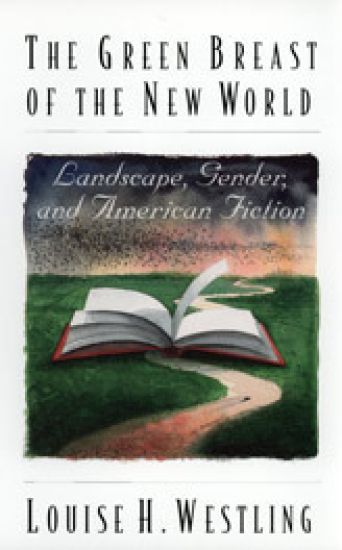
In searching American literary landscapes for what they can reveal about our attitudes toward nature and gender, The Green Breast of the New World considers symbolic landscapes in twentieth-century American fiction, the characters who inhabit those landscapes, and the gendered traditions that can influence the figuration of both of these fictional elements. In this century, says Louise H. Westling, American literary responses to landscape and nature have been characterized by a puzzling mix of eroticism and misogyny, celebration and mourning, and reverence and disregard. Focusing on problems of gender conflict and imperialist nostalgia, The Green Breast of the New World addresses this ambivalence. Westling begins with a "deep history" of literary landscapes, looking back to the archaic Mediterranean/Mesopotamian traditions that frame European and American symbolic figurations of humans in the land. Drawing on sources as ancient as the Sumerian Hymns to Innana and the Epic of Gilgamesh, she reveals a tradition of male heroic identity grounded in an antagonistic attitude toward the feminized earth and nature. This identity recently has been used to mask a violent destruction of wilderness and indigenous peoples in the fictions of progress that have shaped our culture. Examining the midwestern landscapes of Willa Cather's Jim Burden and Ernest Hemingway's Nick Adams, and the Mississippi Delta of William Faulkner's Thomas Sutpen and Isaac McCaslin and Eudora Welty's plantation families and small-town dwellers, Westling shows that these characters all participate in a cultural habit of gendering the landscape as female and then excusing their mistreatment of it by retreating into a nostalgia that erases their real motives, displaces responsibility, and takes refuge in attitudes of self-pitying adoration.
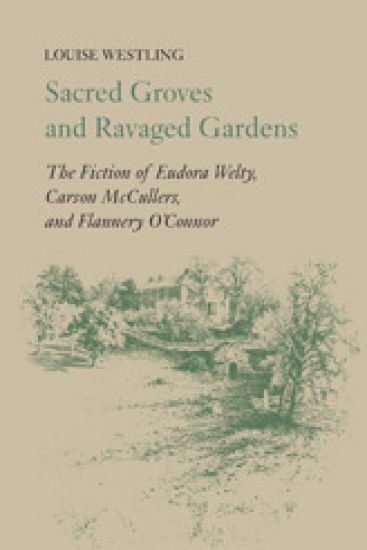
In Sacred Groves and Ravaged Gardens, Louise Westling explores how the complex, difficult roles of women in southern culture shaped the literary worlds of Eudora Welty, Carson McCullers, and Flannery O'Connor. Tracing the cultural heritage of the South, Westling shows how southern women reacted to the violent, false world created by their men—a world in which women came to be shrouded as icons of purity in atonement for the sins of men. Exposing the actual conditions of women's lives, creating assertive protagonists who resist or revise conventional roles, and exploring rich matriarchal traditions and connections to symbolic landscapes Welty, McCullers, and O'Connor created a body of fiction that enriches and complements the patriarchal version of southern life presented in the works of William Faulkner, John Crowe Ransom, Allen Tate, and William Styron.
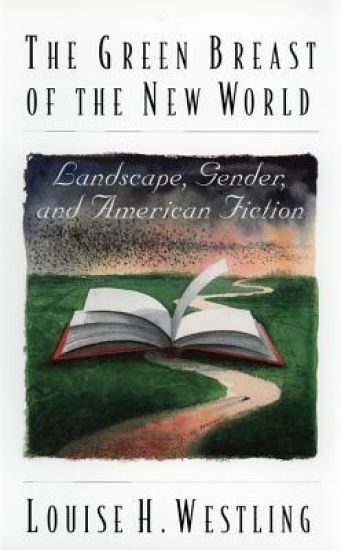
In searching American literary landscapes for what they can reveal about our attitudes toward nature and gender, The Green Breast of the New World considers symbolic landscapes in twentieth-century American fiction, the characters who inhabit those landscapes, and the gendered traditions that can influence the figuration of both of these fictional elements. In this century, says Louise H. Westling, American literary responses to landscape and nature have been characterized by a puzzling mix of eroticism and misogyny, celebration and mourning, and reverence and disregard. Focusing on problems of gender conflict and imperialist nostalgia, The Green Breast of the New World addresses this ambivalence. Westling begins with a "deep history" of literary landscapes, looking back to the archaic Mediterranean/Mesopotamian traditions that frame European and American symbolic figurations of humans in the land. Drawing on sources as ancient as the Sumerian Hymns to Innana and the Epic of Gilgamesh, she reveals a tradition of male heroic identity grounded in an antagonistic attitude toward the feminized earth and nature. This identity recently has been used to mask a violent destruction of wilderness and indigenous peoples in the fictions of progress that have shaped our culture. Examining the midwestern landscapes of Willa Cather's Jim Burden and Ernest Hemingway's Nick Adams, and the Mississippi Delta of William Faulkner's Thomas Sutpen and Isaac McCaslin and Eudora Welty's plantation families and small-town dwellers, Westling shows that these characters all participate in a cultural habit of gendering the landscape as female and then excusing their mistreatment of it by retreating into a nostalgia that erases their real motives, displaces responsibility, and takes refuge in attitudes of self-pitying adoration.
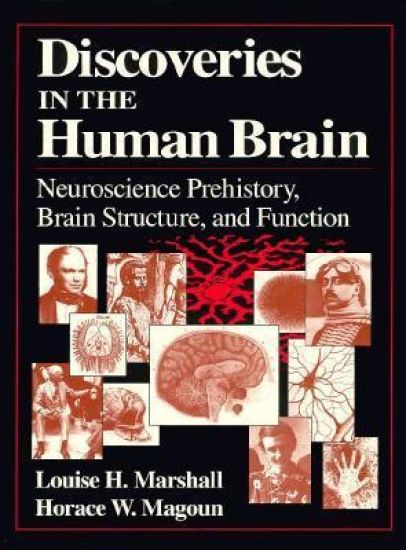
170u can climb back up a stream of radiance to the sky, and back through history up the stream of time. 1 -Robert Frost topics that he judged to be important in brain his From the last years of the second millennium, tory leading into the end of the century, and was we can look back on antecedent events in neuro undertaken in response to the enthusiasm gener science with amazement that so much of modern ated by exhibition at several national and interna biomedical science was anticipated, or even said or done, in an earlier time. That surprise can be tional meetings of a series oflarge posters for which matched by appreciation for what the pioneer Magoun wrote a 27-page brochure. The posters investigators, with no inkling that they were creat were viewed by a multitude of young neuroscien ing a discipline, contributed to its emergence as a tists who wanted more, as well as by mature inves productive force in human progress. In today's tigators who were warmly pleased to see familiar names and faces from the past. The acclaim was reductionist atmosphere, in which research at the molecular level is producing breathtaking new accompanied by a veritable deluge of requests for knowledge throughout biology, the student may an illustrated, expanded publication.
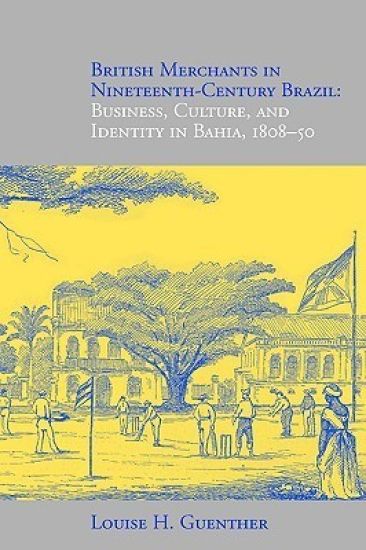
British Merchants in Nineteenth-century Brazil
Louise H. Guenther
Centre for Brazilian Studies
2004
nidottu

The Zynq Book
Louise H. Crockett; Ross A. Elliot; Martin A. Enderwitz; Robert W. Stewart
Strathclyde Academic Media
2014
nidottu

The Zynq Book (Chinese Version)
Louise H Crockett; Ross a Elliot; Martin a Enderwitz
Strathclyde Academic Media
2016
pokkari

Exploring Zynq MPSoC
Louise H Crockett; David Northcote; Craig Ramsay
Strathclyde Academic Media
2019
pokkari

Eighteenth-century drama is often dismissed as homogenous, aesthetically uninteresting, or politically complacent. This book reveals the incredibly intriguing and intricate nature of the period's history plays and their often messy dramatisaton of the complexities of patriotic rhetoric and national identification.
More than 50 million individuals will be forcibly displaced from their homes this year. Many will be resettled into other countries or cultures, including the United States. With specific regard to education, a growing sector of ELA instruction now caters to the unique needs of refugee and immigrant students. These “Newcomer” learners, as they are resettled into Westernized regions, require a tailored brand of education. The Newcomer Student is a field guide from the trenches. It is the product of one educational specialist’s experiences, observations, and research in the Newcomer ELA field. It is a tale of personal participation, linking grassroots to modern progressive protocol, a story of cultural exploration, stemming from Louise’s refugee teaching experiences, and an ongoing search to discover interpersonal peace and humanistic continuity.

More than 50 million individuals will be forcibly displaced from their homes this year. Many will be resettled into other countries or cultures, including the United States. With specific regard to education, a growing sector of ELA instruction now caters to the unique needs of refugee and immigrant students. These “Newcomer” learners, as they are resettled into Westernized regions, require a tailored brand of education. The Newcomer Student is a field guide from the trenches. It is the product of one educational specialist’s experiences, observations, and research in the Newcomer ELA field. It is a tale of personal participation, linking grassroots to modern progressive protocol, a story of cultural exploration, stemming from Louise’s refugee teaching experiences, and an ongoing search to discover interpersonal peace and humanistic continuity.


Love Letters From Father God to You His Child: A 365 day Devotional
Louise H. Carter
Createspace Independent Publishing Platform
2013
nidottu

170u can climb back up a stream of radiance to the sky, and back through history up the stream of time. 1 -Robert Frost topics that he judged to be important in brain his From the last years of the second millennium, tory leading into the end of the century, and was we can look back on antecedent events in neuro undertaken in response to the enthusiasm gener science with amazement that so much of modern ated by exhibition at several national and interna biomedical science was anticipated, or even said or done, in an earlier time. That surprise can be tional meetings of a series oflarge posters for which matched by appreciation for what the pioneer Magoun wrote a 27-page brochure. The posters investigators, with no inkling that they were creat were viewed by a multitude of young neuroscien ing a discipline, contributed to its emergence as a tists who wanted more, as well as by mature inves productive force in human progress. In today's tigators who were warmly pleased to see familiar names and faces from the past. The acclaim was reductionist atmosphere, in which research at the molecular level is producing breathtaking new accompanied by a veritable deluge of requests for knowledge throughout biology, the student may an illustrated, expanded publication.

A+ Guide to Great Grades
Louise H Colligan
Louise Colligan an Imprint of Telemachus Press
2011
pokkari