Kirjojen hintavertailu. Mukana 11 244 527 kirjaa ja 12 kauppaa.

Kirjahaku

Etsi kirjoja tekijän nimen, kirjan nimen tai ISBN:n perusteella.

1000 tulosta hakusanalla Lowe E. J.

Forms of Thought

Forms of Thought

Lowe E. J.

Cambridge University Press
2015
pokkari
Forms of thought are involved whenever we name, describe, or identify things, and whenever we distinguish between what is, might be, or must be the case. It appears to be a distinctive feature of human thought that we can have modal thoughts, about what might be possible or necessary, and conditional thoughts, about what would or might be the case if something else were the case. Even the simplest thoughts are structured like sentences, containing referential and predicative elements, and studying these structures is the main task of philosophical logic. This clear and accessible book investigates the forms of thought, drawing out and focusing on the central logical notions of reference, predication, identity, modality and conditionality. It will be useful to students and other interested readers in epistemology and metaphysics, philosophy of mind and language, and philosophical logic.
A Natural History of British Grasses

A Natural History of British Grasses

E J Lowe

Anatiposi Verlag
2023
pokkari
Reprint of the original, first published in 1858. The publishing house Anatiposi publishes historical books as reprints. Due to their age, these books may have missing pages or inferior quality. Our aim is to preserve these books and make them available to the public so that they do not get lost.
A Natural History of British Grasses

A Natural History of British Grasses

E J Lowe

Anatiposi Verlag
2023
sidottu
Reprint of the original, first published in 1858. The publishing house Anatiposi publishes historical books as reprints. Due to their age, these books may have missing pages or inferior quality. Our aim is to preserve these books and make them available to the public so that they do not get lost.
E.J. Lowe and Ontology

E.J. Lowe and Ontology

TAYLOR FRANCIS LTD
2022
sidottu
This volume collects fifteen original essays on E. J. Lowe’s work on metaphysics and ontology. The essays connect Lowe’s insights with contemporary issues in metaphysics.E. J. Lowe (1950–2014) was one of the most influential analytical philosophers of the twentieth and early twenty-first century. Drawing inspiration from Aristotle's thought, E. J. Lowe treated metaphysics as an autonomous discipline concerned with the fundamental structure of reality. The chapters in this volume reflect on his path-breaking work. They deal with a wide range of metaphysical issues including four-category ontology, the causal and non-causal aspects of agency, categorial fundamentality and non-fundamentality, the existence of relations, property dualism, powers and abilities, personal identity, predication, and topological ontology. Taken together, the chapters reflect the liveliness of contemporary debates in metaphysics and the enduring impact of Lowe’s thought on them.E. J. Lowe and Ontology will be of interest to researchers and advanced students working in metaphysics and philosophy of mind.
E.J. Lowe and Ontology

E.J. Lowe and Ontology

TAYLOR FRANCIS LTD
2024
nidottu
This volume collects fifteen original essays on E. J. Lowe’s work on metaphysics and ontology. The essays connect Lowe’s insights with contemporary issues in metaphysics.E. J. Lowe (1950–2014) was one of the most influential analytical philosophers of the twentieth and early twenty-first century. Drawing inspiration from Aristotle's thought, E. J. Lowe treated metaphysics as an autonomous discipline concerned with the fundamental structure of reality. The chapters in this volume reflect on his path-breaking work. They deal with a wide range of metaphysical issues including four-category ontology, the causal and non-causal aspects of agency, categorial fundamentality and non-fundamentality, the existence of relations, property dualism, powers and abilities, personal identity, predication, and topological ontology. Taken together, the chapters reflect the liveliness of contemporary debates in metaphysics and the enduring impact of Lowe’s thought on them.E. J. Lowe and Ontology will be of interest to researchers and advanced students working in metaphysics and philosophy of mind.
Studies in the Ontology of E.J. Lowe
With the death of Edward Jonathan Lowe (1950-2014), the analytical philosophy lost one of the most influential thinkers of the last thirty-five years. His contributions include (but are not limited to) philosophy of mind, John Locke's philosophy and metaphysics. In particular, concerning metaphysical studies, the most innovative part of Lowe's philosophical perspective is the four-category ontology that, according to the author, provides an exhaustive inventory of what there is and a powerful explanatory framework for a metaphysical foundation of natural science. Accordingly, the purpose of this volume is to collect some new essays from distinguished authorities in the field, critics and collaborators of Lowe in order to present some fundamental issues triggered by his ontological proposal.
The Possibility of Metaphysics

The Possibility of Metaphysics

E. J. Lowe

Clarendon Press
1998
sidottu
Jonathan Lowe argues that metaphysics should be restored to a central position in philosophy, as the most fundamental form of rational inquiry, whose findings underpin those of all other disciplines. He portrays metaphysics as charting the possibilities of existence, by identifying the categories of being and the relations of ontological dependency between entities of different categories. He proceeds to set out a unified and original metaphysical system: he defends a substance ontology, according to which the existence of the world as one world in time depends upon the existence of persisting things which retain their identity over time and through processes of qualitative change. And he contends that even necessary beings, such as the abstract objects of mathematics, depend ultimately for their existence upon there being a concrete world of enduring substances. Within his system of metaphysics Lowe seeks to answer many of the deepest and most challenging questions in philosophy.
A Survey of Metaphysics

A Survey of Metaphysics

E. J. Lowe

Oxford University Press
2002
nidottu
A Survey of Metaphysics provides a systematic overview of modern metaphysics, covering all of the most important topics likely to be encountered on a metaphysics course. The conception of metaphysics underlying the book is the fairly traditional and widely-shared one that metaphysics deals with the deepest questions that can be raised concerning the fundamental structure of reality as a whole. The book is divided into six main parts, each relatively self-contained, focusing in turn on the following major themes: identity and change, necessity and essence, causation, agency and events, space and time, and universals and particulars. In an introductory chapter, the conception of metaphysics underlying the book is explained and defended against the many and varied opponents of metaphysics those students are likely to encounter. While the book makes reference when necessary to the history of metaphysics, its emphasis is on contemporary views and issues. The author's approach is not narrowly partisan, but avoids bland neutrality in matters of controversy.
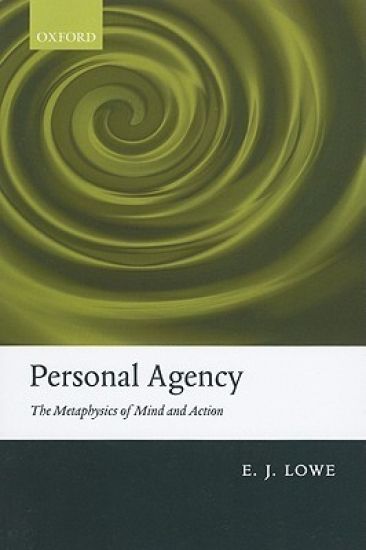
Personal Agency

Personal Agency

E. J. Lowe

Oxford University Press
2008
sidottu
Personal Agency consists of two parts. In Part II, a radically libertarian theory of action is defended which combines aspects of agent causalism and volitionism. This theory accords to volitions the status of basic mental actions, maintaining that these are spontaneous exercises of the will--a 'two-way' power which rational agents can freely exercise in the light of reason. Lowe contends that substances, not events, are the causal source of all change in the world--with rational, free agents like ourselves having a special place in the causal order as unmoved movers, or initiators of new causal chains. And he defends a thoroughgoing externalism regarding reasons for action, holding these to be mind-independent worldly entities rather than the beliefs and desires of agents. Part I prepares the ground for this theory by undermining the threat presented to it by physicalism. It does this by challenging the causal closure argument for physicalism in all of its forms and by showing that a dualistic philosophy of mind--one which holds that human mental states and their subjects cannot be identified with bodily states and human bodies respectively--is both metaphysically coherent and entirely consistent with known empirical facts.
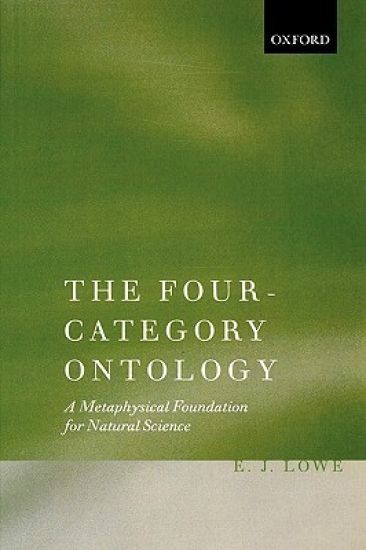
The Four-Category Ontology

The Four-Category Ontology

E. J. Lowe

Clarendon Press
2007
nidottu
E. J. Lowe sets out and defends his theory of what there is. His four-category ontology is a metaphysical system that recognizes two fundamental categorial distinctions which cut across each other to generate four fundamental ontological categories. The distinctions are between the particular and the universal and between the substantial and the non-substantial. The four categories thus generated are substantial particulars, non-substantial particulars, substantial universals and non-substantial universals. Non-substantial universals include properties and relations, conceived as universals. Non-substantial particulars include property-instances and relation-instances, otherwise known as non-relational and relational tropes or modes. Substantial particulars include propertied individuals, the paradigm examples of which are persisting, concrete objects. Substantial universals are otherwise known as substantial kinds and include as paradigm examples natural kinds of persisting objects. This ontology has a lengthy pedigree, many commentators attributing it to Aristotle on the basis of certain passages in his apparently early work, the Categories. At various times during the history of Western philosophy, it has been revived or rediscovered, but it has never found universal favour, perhaps on account of its apparent lack of parsimony as well as its commitment to universals. In pursuit of ontological economy, metaphysicians have generally preferred to recognize fewer than four fundamental ontological categories. However, Occam's razor stipulates only that we should not multiply entities beyond necessity; Lowe argues that the four-category ontology has an explanatory power unrivalled by more parsimonious systems, and that this counts decisively in its favour. He shows that it provides a powerful explanatory framework for a unified account of causation, dispositions, natural laws, natural necessity and many other related matters, such as the semantics of counterfactual conditionals and the character of the truthmaking relation. As such, it constitutes a thoroughgoing metaphysical foundation for natural science. Contents List
The Possibility of Metaphysics

The Possibility of Metaphysics

E. J. Lowe

Clarendon Press
2001
nidottu
Jonathan Lowe argues that metaphysics should be restored to a central position in philosophy, as the most fundamental form of rational inquiry, whose findings underpin those of all other disciplines. He portrays metaphysics as charting the possibilities of existence, by idetifying the categories of being and the relations of ontological dependency between entities of different categories. He proceeds to set out a unified and original metaphysical system: he defends a substance ontology, according to which the existence of the world s one world in time depends upon the existence of persisting things which retain their identity over time and through processes of qualitative change. And he contends that even necessary beings, such as the abstract objects of mathematics, depend ultimately for their existence upon there being a concrete world of enduring substances. Within his system of metaphysics Lowe seeks to answer many of the deepest and most challenging questions in philosophy.
The Four-Category Ontology

The Four-Category Ontology

E. J. Lowe

Clarendon Press
2005
sidottu
E. J. Lowe sets out and defends his theory of what there is. His four-category ontology is a metaphysical system that recognizes two fundamental categorial distinctions which cut across each other to generate four fundamental ontological categories. The distinctions are between the particular and the universal and between the substantial and the non-substantial. The four categories thus generated are substantial particulars, non-substantial particulars, substantial universals and non-substantial universals. Non-substantial universals include properties and relations, conceived as universals. Non-substantial particulars include property-instances and relation-instances, otherwise known as non-relational and relational tropes or modes. Substantial particulars include propertied individuals, the paradigm examples of which are persisting, concrete objects. Substantial universals are otherwise known as substantial kinds and include as paradigm examples natural kinds of persisting objects. This ontology has a lengthy pedigree, many commentators attributing it to Aristotle on the basis of certain passages in his apparently early work, the Categories. At various times during the history of Western philosophy, it has been revived or rediscovered, but it has never found universal favour, perhaps on account of its apparent lack of parsimony as well as its commitment to universals. In pursuit of ontological economy, metaphysicians have generally preferred to recognize fewer than four fundamental ontological categories. However, Occam's razor stipulates only that we should not multiply entities beyond necessity; Lowe argues that the four-category ontology has an explanatory power unrivalled by more parsimonious systems, and that this counts decisively in its favour. He shows that it provides a powerful explanatory framework for a unified account of causation, dispositions, natural laws, natural necessity and many other related matters, such as the semantics of counterfactual conditionals and the character of the truthmaking relation. As such, it constitutes a thoroughgoing metaphysical foundation for natural science.
Personal Agency

Personal Agency

E. J. Lowe

Oxford University Press
2010
nidottu
Personal Agency consists of two parts. In Part II, a radically libertarian theory of action is defended which combines aspects of agent causalism and volitionism. This theory accords to volitions the status of basic mental actions, maintaining that these are spontaneous exercises of the will--a 'two-way' power which rational agents can freely exercise in the light of reason. Lowe contends that substances, not events, are the causal source of all change in the world--with rational, free agents like ourselves having a special place in the causal order as unmoved movers, or initiators of new causal chains. And he defends a thoroughgoing externalism regarding reasons for action, holding these to be mind-independent worldly entities rather than the beliefs and desires of agents. Part I prepares the ground for this theory by undermining the threat presented to it by physicalism. It does this by challenging the causal closure argument for physicalism in all of its forms and by showing that a dualistic philosophy of mind--one which holds that human mental states and their subjects cannot be identified with bodily states and human bodies respectively--is both metaphysically coherent and entirely consistent with known empirical facts.