Kirjojen hintavertailu. Mukana 11 213 693 kirjaa ja 12 kauppaa.

Kirjahaku

Etsi kirjoja tekijän nimen, kirjan nimen tai ISBN:n perusteella.

1000 tulosta hakusanalla Luciano Chessa

Luigi Russolo, Futurist

Luigi Russolo, Futurist

Luciano Chessa

University of California Press
2012
sidottu
Luigi Russolo (1885-1947) - painter, composer, builder of musical instruments, and first-hour member of the Italian Futurist movement - was a crucial figure in the evolution of twentieth-century aesthetics. As creator of the first systematic poetics of noise and inventor of what has been considered the first mechanical sound synthesizer, Russolo looms large in the development of twentieth-century music. In the first English language study of Russolo, Luciano Chessa emphasizes the futurist's interest in the occult, showing it to be a leitmotif for his life and a foundation for his art of noises. Chessa shows that Russolo's aesthetics of noise, and the machines he called the intonarumori, were intended to boost practitioners into higher states of spiritual consciousness. His analysis reveals a multifaceted man in whom the drive to keep up with the latest scientific trends coexisted with an embrace of the irrational, and a critique of materialism and positivism.
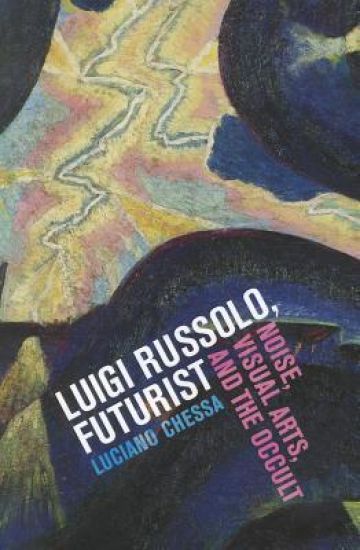
Luigi Russolo, Futurist

Luigi Russolo, Futurist

Luciano Chessa

University of California Press
2012
pokkari
Luigi Russolo (1885-1947) - painter, composer, builder of musical instruments, and first-hour member of the Italian Futurist movement - was a crucial figure in the evolution of twentieth-century aesthetics. As creator of the first systematic poetics of noise and inventor of what has been considered the first mechanical sound synthesizer, Russolo looms large in the development of twentieth-century music. In the first English language study of Russolo, Luciano Chessa emphasizes the futurist's interest in the occult, showing it to be a leitmotif for his life and a foundation for his art of noises. Chessa shows that Russolo's aesthetics of noise, and the machines he called the intonarumori, were intended to boost practitioners into higher states of spiritual consciousness. His analysis reveals a multifaceted man in whom the drive to keep up with the latest scientific trends coexisted with an embrace of the irrational, and a critique of materialism and positivism.
Luciano: An Immigrant's Journey of Rediscovery

Luciano: An Immigrant's Journey of Rediscovery

Luciano Sabatini

Createspace Independent Publishing Platform
2017
nidottu
Luciano Sabatini came to the United States when he was four years old. His parents had briefly lived in Argentina before making the move to Queens, and with them, they brought the many cultural aspects of their lives in Italy. As Sabatini grew up, he was teased for his strange name and for the way he struggled to learn his new language. He longed to shed his Italian roots and assimilate into American culture.Sabatini changed his name in order to better fit in and became ashamed of his heritage and his family. This caused him to build up severe feelings of inadequacy and inferiority, which plagued him all through his childhood. As a young man, his ego crumbled, and he had to rebuild his self-confidence through the slow process of psychotherapy. Over the course of his life, he learned to become a more self-assured individual, and finally, he was able to embrace his identity by relearning Italian, reconnecting with family members, and reviving his old customs.In Luciano: An Immigrant's Journey of Rediscovery, readers can follow Sabatini through his entire life as he finally comes to understand and embrace the importance of his heritage.
Luciano Fabro

Luciano Fabro

Margit Rowell

Monacelli Press
2024
sidottu
The definitive monograph on the work of sculptor, theorist, and Arte Povera pioneer Luciano Fabro Luciano Fabro (1936–2007) was an original member of Arte Povera, the materials- and experience-based art movement that emerged in Italy in the late 1960s. He went on to be exhibited internationally, becoming the first artist from the group to receive a major US retrospective, at the San Francisco Museum of Modern Art in 1992. Fabro’s work is elusive, yet he remains a critical favorite: in 2018, the leading art publication The Brooklyn Rail dedicated an entire issue to Fabro, wherein Dia Art Foundation director Jessica Morgan commented that Fabro’s oeuvre presented ‘a marriage of the modern and the antique […] as surprising and compelling today as at its moment of production.’ Written by esteemed critic and curator Margit Rowell, who collaborated with Fabro repeatedly in his later years, this comprehensive, heavily illustrated monograph is the first complete overview of Fabro’s career, published with the full support and participation of the artist’s estate and international galleries.
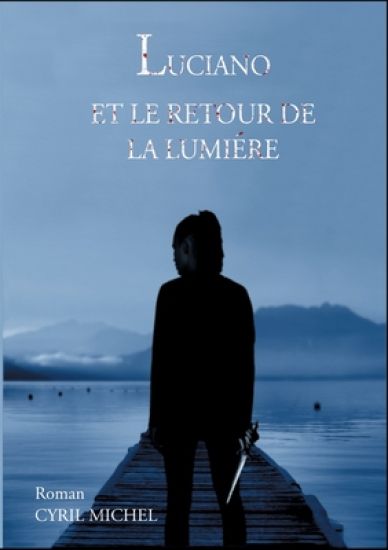
Luciano et le retour de la lumière

Luciano et le retour de la lumière

Cyril Michel

BoD - Books on Demand
2021
pokkari
La vie de Julie bascule la nuit o elle rencontre un myst rieux gar on, Will. Il n'est pas comme les autres. Porteur de messages sot riques et cologiques, poss dant des facult s hors du commun, il va apprendre Julie le sens de sa vie. Aussi, il est recherch par les services secrets europ ens. Mais, Will cache un lourd secret. Ou plut t une vidence: Le monde est condamn . Et une traque qui dure depuis de nombreuses ann es va enfin prendre fin.
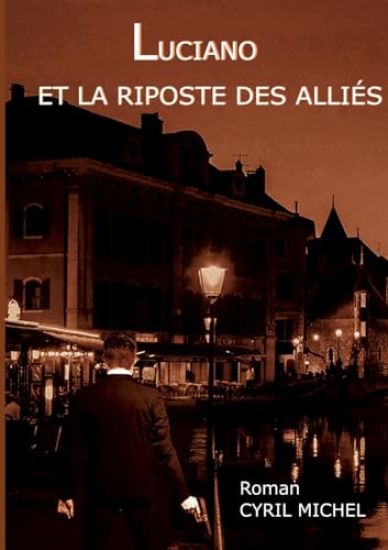
Luciano et la riposte des Alliés

Luciano et la riposte des Alliés

Cyril Michel

BoD - Books on Demand
2023
pokkari
Luciano est en danger. Les Alli s, ainsi que les proches de Julie, doivent se pr parer la riposte et tenter de contrer les agents. Pris dans ce combat qui n'est pas le sien, Chris devra infiltrer l'ennemi pour sauver sa famille de la guerre qui menace d' clater.
Luciano di Samosata, "Timone o il misantropo"
Within Lucian’s works, Timon is referable to the writer’s maturity and it is considered to be one of the best and most typical dialogues written by the author from Samosata. This study traces the story of the fascinating and enigmatical character of the Athenian Timon, a archetype of a misanthrop, in his literary development up to his crucial meeting with Lucian of Samosata. The work offers, for the first time, an analytical commentary on Lucian’s Timon. The reader will find in the book an introduction, which is divided in four different sections: the first contains some general notes on the Second Sophistic and Lucian; the second restores the literary development of the misanthrope Timon from his origins in the Attic comedy to the II century a.D.; the third part offers an analysis of the relationship between Lucian’s Timon and the literary tradition, and, afterwards, an investigation into the dialogue’s fortune from the II century to the XX century; the last section gives short but exhaustive details about the literary style and the language used in the work. To facilitate the consultation, the analytical commentary is again divided into sections - each one with a short individual introduction - and follows the Greek text and the translation.
Luciano di Samosata, ›La nave o Le preghiere‹
The volume provides readers with an extensive introduction, a new translation, and a full literary and philological updated commentary of Lucian’s The Ship or The Whishes. In the introduction there's an explanation of the structure and the dating of the dialogue, of the author's poetics and the peculiar features of the work: the relationship with the literary traditions, the connection with contemporary reality, the psychological characterisation of characters, the stylistic and lexical features. The comment offers a systematic dissertation on linguistic, historical, artistic and sociocultural aspects of the text, in order to provide a complete undestanding of the work and of its author's personality.