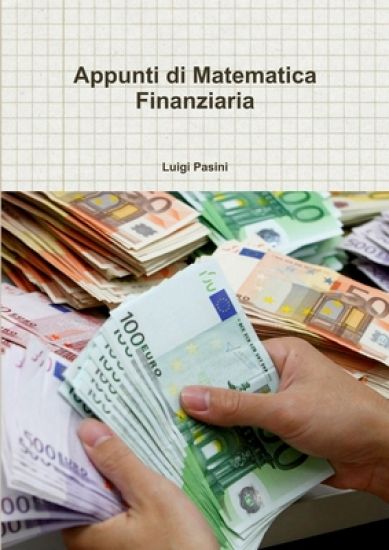
Il testo raccoglie i principali argomenti di Matematica finanziaria utili sia per gli studenti delle superiori sia per gli studenti universitari che devono preparare l'esame di Matematica finanziaria senza aver avuto opportune basi dalle scuole superiori. Sono presenti numerosi esercizi e test di verifica finale al termine delle varie unit?. Sono, inoltre, presenti applicazioni informatiche con il foglio elettronico relative ai vari argomenti di matematica finanziaria trattati. Il testo costituisce un valido supporto per lo studio e il ripasso di argomenti da molti studenti ritenuti piuttosto ostici.
Lonely Planet’s Friuli Venezia Giulia is our most comprehensive guide that extensively covers all the region has to offer, with recommendations for both popular and lesser-known experiences. Indulge in coffee and cuisine of Trieste, hit the slopes of Giulie Alps or laze away on the beaches of the southern coast ; all with your trusted travel companion. Inside Lonely Planet’s Friuli Venezia Giulia Travel Guide: What’s NEW in this edition? NEW top experiences feature - a visually inspiring collection of Friuli Venezia Giulia’s best experiences and where to have them What's NEW feature taps into cultural trends and helps you find fresh ideas and cool new areas NEW Accommodation feature gathers all the information you need to plan your accommodation Highlights and itineraries help you tailor your trip to your personal needs and interestsEating & drinking in Friuli, Venezia and Giulia - we reveal the dishes and drinks you have to tryColour maps and images throughoutInsider tips to save time and money and get around like a local, avoiding crowds and trouble spotsHonest reviews for all budgets - eating, sleeping, sightseeing, going out, shopping, hidden gems that most guidebooks missCultural insights give you a richer, more rewarding travel experience - history, people, music, landscapes, wildlife, politicsOver 30 maps Covers Trieste, Carso, Friuli coast, Gorizia and the Collio, Udine, Pordenone and Western Friuli, and the mountains: the Friulian Dolomites, Carnia and the Julian Alps The Perfect Choice: Lonely Planet’s Friuli Venezia Giulia, our most comprehensive guide to the region, is perfect for both exploring top sights and taking roads less travelled. information for every kind of traveller since 1973. Over the past four decades, we've printed over 145 million guidebooks and phrasebooks for 120 languages, and grown a dedicated, passionate global community of travellers. You'll also find our content online, and in mobile apps, videos, 14 languages, armchair and lifestyle books, ebooks, and more, enabling you to explore every day. 'Lonely Planet guides are, quite simply, like no other.' – New York Times 'Lonely Planet. It's on everyone's bookshelves; it's in every traveller's hands. It's on mobile phones. It's on the Internet. It's everywhere, and it's telling entire generations of people how to travel the world.' – Fairfax Media (Australia)
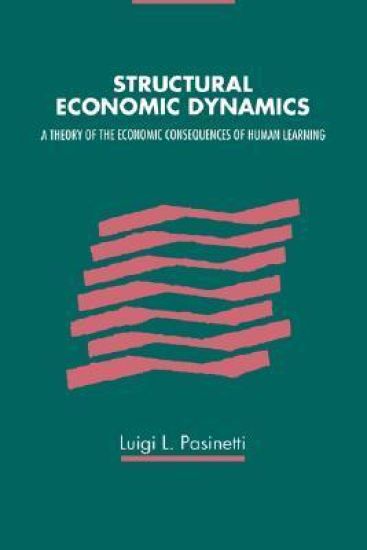
This book is a theoretical investigation of the influence of human learning on the development through time of a 'pure labour' economy. The theory proposed is a simple one, but aims to grasp the essential features of all industrial economies. Economists have long known that two basic phenomena lie at the root of long-term economic movements in industrial societies: capital accumulation and technical progress. Attention has been concentrated on the former. In this book, by contrast, technical progress is assigned the central role. Within a multi-sector framework, the author examines the structural dynamics of prices, production and employment (implied by differentiated rates of productivity growth and expansion of demand) against a background of 'natural' relations. He also considers a number of institutional problems. Institutional and social learning, know-how, and the diffusion of knowledge emerge as the decisive factors accounting for the success and failure of industrial societies.
This book is a theoretical investigation of the influence of human learning on the development through time of a 'pure labour' economy. The theory proposed is a simple one, but aims to grasp the essential features of all industrial economies. Economists have long known that two basic phenomena lie at the root of long-term economic movements in industrial societies: capital accumulation and technical progress. Attention has been concentrated on the former. In this book, by contrast, technical progress is assigned the central role. Within a multi-sector framework, the author examines the structural dynamics of prices, production and employment (implied by differentiated rates of productivity growth and expansion of demand) against a background of 'natural' relations. He also considers a number of institutional problems. Institutional and social learning, know-how, and the diffusion of knowledge emerge as the decisive factors accounting for the success and failure of industrial societies.
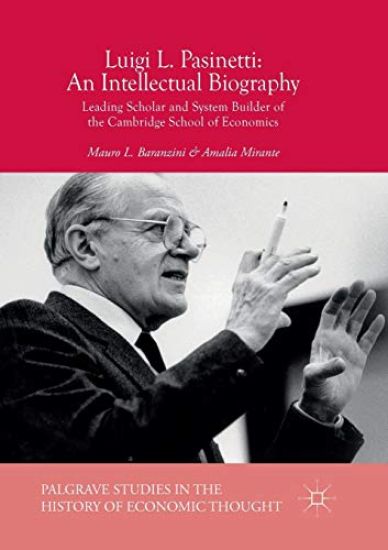
Luigi L. Pasinetti (born 1930) is arguably the most influential of the second generation of the Cambridge Keynesian School of Economics, both because of his achievements and his early involvement with the direct pupils of John Maynard Keynes. This comprehensive intellectual biography traces his research from his early groundbreaking contribution in the field of structural economic dynamics to the ‘Pasinetti Theorem’. With scientific outputs spanning more than six decades (1955–2017), Baranzini and Mirante analyse the impact of his research work and roles at Cambridge, the Catholic University of Milan and at the new University of Lugano. Pasinetti’s whole scientific life has been driven by the desire to provide new frameworks to explain the mechanisms of modern economic systems, and this book assesses how far this has been achieved.
Luigi L. Pasinetti (born 1930) is arguably the most influential of the second generation of the Cambridge Keynesian School of Economics, both because of his achievements and his early involvement with the direct pupils of John Maynard Keynes. This comprehensive intellectual biography traces his research from his early groundbreaking contribution in the field of structural economic dynamics to the ‘Pasinetti Theorem’. With scientific outputs spanning more than six decades (1955–2017), Baranzini and Mirante analyse the impact of his research work and roles at Cambridge, the Catholic University of Milan and at the new University of Lugano. Pasinetti’s whole scientific life has been driven by the desire to provide new frameworks to explain the mechanisms of modern economic systems, and this book assesses how far this has been achieved.
What was the Keynesian revolution in economics? Why did it not succeed to the extent that Keynes and his close pupils had hoped for? Keynes and the Cambridge Keynesians addresses these and other questions by tracing the historical development of Keynesian economics. The book is split into three parts. Part I contains the author's Caffè Lectures on Keynes's 'unaccomplished revolution'. Part II is a series of biographical essays where the author, himself a witness and participant of the group on which he writes, presents the successful and unsuccessful endeavours of Keynes's most important pupils: Richard Kahn, Joan Robinson, Nicholas Kaldor, Pierro Sraffa and Richard Goodwin. Part III of the book looks to the future by developing a conceptual analytical framework that makes sense of Keynes's 'revolution in economics', discussing the many ways in which the Keynesian way of doing economics is incompatible with the neoclassical tradition.
First published in 1981 this book presents an original theoretical treatment of the problems of maintaining full employment in a multisector economic system with a growing population and different rates of technical progress in different sectors. The conditions for full employment and full capacity utilisation are examined when prices are stable and when there is inflation. This approach is carried out, not in terms of input-output relations, as has become customary in multisector models, but rather in terms of vertically integrated sectors. This makes it possible to analyse the economic growth process in terms of the structural dynamics of production, of prices and of employment. Remarkable implications are drawn for a surprisingly large number of theoretical problems, which have been under discussion since Adam Smith: from price theory to the theory of rates of profit and the rates of interest; from production theory to the theories of fluctuating growth, ever-changing composition of output, choice of technique and international trade.
This 1974 collection of six essays in economic theory represents a major contribution to the field. The first contains the formulation of the Ricardian system, whilst the next two contain, respectively, the author's synthetic treatment of the complex problems of fluctuations and economic growth, and his well-known theorem that in the long run the rate of profit and income distribution are independent of the propensities to save of the working class. The essays that follow provide the missing links: a coherent picture of the macroeconomic theories that have originated in Cambridge and a discussion of their deep foundations in classical economic analysis. Finally, the author evaluates some economic controversies and draws his conclusions on the basic forces determining rate of profit in the process of economic growth. Although the arguments are highly theoretical, they require no knowledge of mathematics beyond elementary calculus and algebra.
What was the Keynesian revolution in economics? Why did it not succeed to the extent that Keynes and his close pupils had hoped for? Keynes and the Cambridge Keynesians addresses these and other questions by tracing the historical development of Keynesian economics. The book is split into three parts. Part I contains the author's Caffè Lectures on Keynes's 'unaccomplished revolution'. Part II is a series of biographical essays where the author, himself a witness and participant of the group on which he writes, presents the successful and unsuccessful endeavours of Keynes's most important pupils: Richard Kahn, Joan Robinson, Nicholas Kaldor, Pierro Sraffa and Richard Goodwin. Part III of the book looks to the future by developing a conceptual analytical framework that makes sense of Keynes's 'revolution in economics', discussing the many ways in which the Keynesian way of doing economics is incompatible with the neoclassical tradition.
In 1943, following the Armistice in Italy, many Prisoners of War were released by their guards but found themselves fugitives in a country over-run by the Germans. One such prisoner was known in Italy as Luigi. Realising that the Allies were not yet in his part of the country, he decided to walk from Padua in the north to reach the front-line in the south. During the course of his arduous journey through the backwaters of Italy he was hidden and given sanctuary by two Italian farming families. In 1949 he took his fiancée to meet them. Sadly, having survived the war he died in 1959 leaving his Italian friends unaware of his tragic death.
Luigi Russolo (1885-1947) - painter, composer, builder of musical instruments, and first-hour member of the Italian Futurist movement - was a crucial figure in the evolution of twentieth-century aesthetics. As creator of the first systematic poetics of noise and inventor of what has been considered the first mechanical sound synthesizer, Russolo looms large in the development of twentieth-century music. In the first English language study of Russolo, Luciano Chessa emphasizes the futurist's interest in the occult, showing it to be a leitmotif for his life and a foundation for his art of noises. Chessa shows that Russolo's aesthetics of noise, and the machines he called the intonarumori, were intended to boost practitioners into higher states of spiritual consciousness. His analysis reveals a multifaceted man in whom the drive to keep up with the latest scientific trends coexisted with an embrace of the irrational, and a critique of materialism and positivism.
Luigi Russolo (1885-1947) - painter, composer, builder of musical instruments, and first-hour member of the Italian Futurist movement - was a crucial figure in the evolution of twentieth-century aesthetics. As creator of the first systematic poetics of noise and inventor of what has been considered the first mechanical sound synthesizer, Russolo looms large in the development of twentieth-century music. In the first English language study of Russolo, Luciano Chessa emphasizes the futurist's interest in the occult, showing it to be a leitmotif for his life and a foundation for his art of noises. Chessa shows that Russolo's aesthetics of noise, and the machines he called the intonarumori, were intended to boost practitioners into higher states of spiritual consciousness. His analysis reveals a multifaceted man in whom the drive to keep up with the latest scientific trends coexisted with an embrace of the irrational, and a critique of materialism and positivism.
This title is part of UC Press's Voices Revived program, which commemorates University of California Press’s mission to seek out and cultivate the brightest minds and give them voice, reach, and impact. Drawing on a backlist dating to 1893, Voices Revived makes high-quality, peer-reviewed scholarship accessible once again using print-on-demand technology. This title was originally published in 1965.
This title is part of UC Press's Voices Revived program, which commemorates University of California Press’s mission to seek out and cultivate the brightest minds and give them voice, reach, and impact. Drawing on a backlist dating to 1893, Voices Revived makes high-quality, peer-reviewed scholarship accessible once again using print-on-demand technology. This title was originally published in 1965.
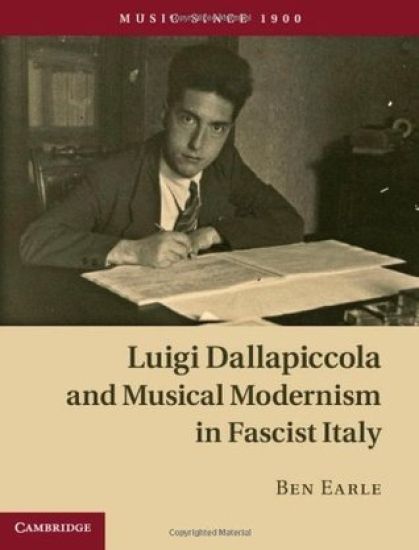
Luigi Dallapiccola is widely considered a defining figure in twentieth-century Italian musical modernism, whose compositions bear passionate witness to the historical period through which he lived. In this book, Ben Earle focuses on three major works by the composer: the one-act operas Volo di notte ('Night Flight') and Il prigioniero ('The Prisoner'), and the choral Canti di prigionia ('Songs of Imprisonment'), setting them in the context of contemporary politics to trace their complex path from fascism to resistance. Earle also considers the wider relationship between musical modernism and Italian fascism, exploring the origins of musical modernism and investigating its place in the institutional structures created by Mussolini's regime. In doing so, he sheds new light on Dallapiccola's work and on the cultural politics of the early twentieth century to provide a history of musical modernism in Italy from the fin de siècle to the early Cold War.
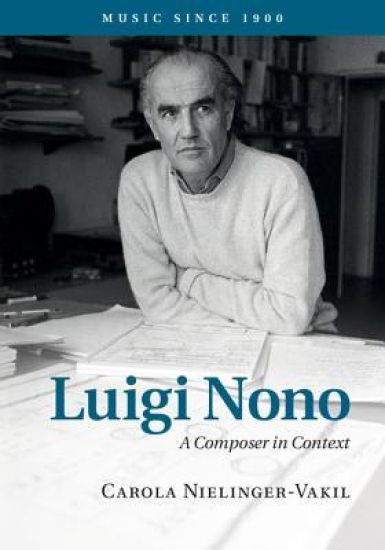
The anti-fascist cantata Il canto sospeso, the string quartet Fragmente - Stille, an Diotima and the 'Tragedy of Listening' Prometeo cemented Luigi Nono's place in music history. In this study, Carola Nielinger-Vakil examines these major works in the context of Nono's amalgamation of avant-garde composition with Communist political engagement. Part I discusses Il canto sospeso in the context of all of Nono's anti-fascist pieces, from the unfinished Fucik project (1951) to Ricorda cosa ti hanno fatto in Auschwitz (1966). Nielinger-Vakil explores Nono's position at the Darmstadt Music Courses, the evolution of his compositional technique, his penchant for music theatre and his use of spatial and electronic techniques to set the composer and his works against the diverging circumstances in Italy and Germany after 1945. Part II further examines these concerns and shows how they live on in Nono's work after 1975, culminating in a thorough analysis of Prometeo.