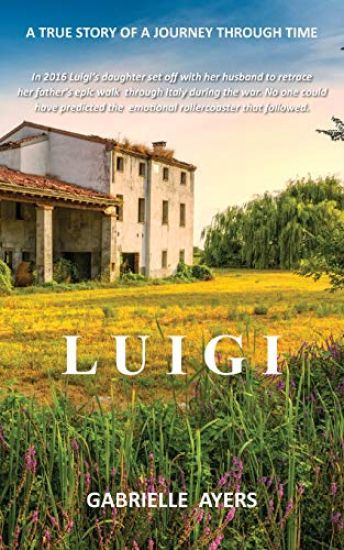
In 1943, following the Armistice in Italy, many Prisoners of War were released by their guards but found themselves fugitives in a country over-run by the Germans. One such prisoner was known in Italy as Luigi. Realising that the Allies were not yet in his part of the country, he decided to walk from Padua in the north to reach the front-line in the south. During the course of his arduous journey through the backwaters of Italy he was hidden and given sanctuary by two Italian farming families. In 1949 he took his fiancée to meet them. Sadly, having survived the war he died in 1959 leaving his Italian friends unaware of his tragic death.
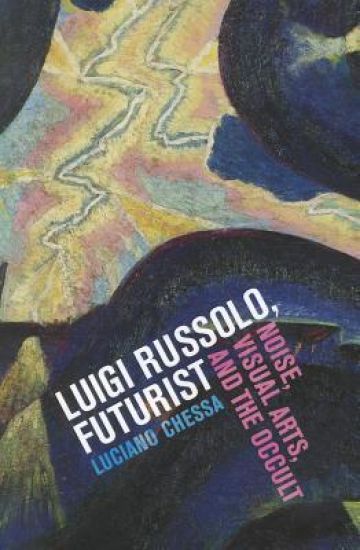
Luigi Russolo (1885-1947) - painter, composer, builder of musical instruments, and first-hour member of the Italian Futurist movement - was a crucial figure in the evolution of twentieth-century aesthetics. As creator of the first systematic poetics of noise and inventor of what has been considered the first mechanical sound synthesizer, Russolo looms large in the development of twentieth-century music. In the first English language study of Russolo, Luciano Chessa emphasizes the futurist's interest in the occult, showing it to be a leitmotif for his life and a foundation for his art of noises. Chessa shows that Russolo's aesthetics of noise, and the machines he called the intonarumori, were intended to boost practitioners into higher states of spiritual consciousness. His analysis reveals a multifaceted man in whom the drive to keep up with the latest scientific trends coexisted with an embrace of the irrational, and a critique of materialism and positivism.
Luigi Russolo (1885-1947) - painter, composer, builder of musical instruments, and first-hour member of the Italian Futurist movement - was a crucial figure in the evolution of twentieth-century aesthetics. As creator of the first systematic poetics of noise and inventor of what has been considered the first mechanical sound synthesizer, Russolo looms large in the development of twentieth-century music. In the first English language study of Russolo, Luciano Chessa emphasizes the futurist's interest in the occult, showing it to be a leitmotif for his life and a foundation for his art of noises. Chessa shows that Russolo's aesthetics of noise, and the machines he called the intonarumori, were intended to boost practitioners into higher states of spiritual consciousness. His analysis reveals a multifaceted man in whom the drive to keep up with the latest scientific trends coexisted with an embrace of the irrational, and a critique of materialism and positivism.
This title is part of UC Press's Voices Revived program, which commemorates University of California Press’s mission to seek out and cultivate the brightest minds and give them voice, reach, and impact. Drawing on a backlist dating to 1893, Voices Revived makes high-quality, peer-reviewed scholarship accessible once again using print-on-demand technology. This title was originally published in 1965.
This title is part of UC Press's Voices Revived program, which commemorates University of California Press’s mission to seek out and cultivate the brightest minds and give them voice, reach, and impact. Drawing on a backlist dating to 1893, Voices Revived makes high-quality, peer-reviewed scholarship accessible once again using print-on-demand technology. This title was originally published in 1965.
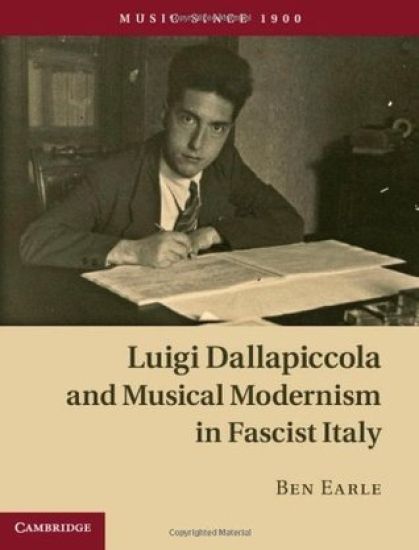
Luigi Dallapiccola is widely considered a defining figure in twentieth-century Italian musical modernism, whose compositions bear passionate witness to the historical period through which he lived. In this book, Ben Earle focuses on three major works by the composer: the one-act operas Volo di notte ('Night Flight') and Il prigioniero ('The Prisoner'), and the choral Canti di prigionia ('Songs of Imprisonment'), setting them in the context of contemporary politics to trace their complex path from fascism to resistance. Earle also considers the wider relationship between musical modernism and Italian fascism, exploring the origins of musical modernism and investigating its place in the institutional structures created by Mussolini's regime. In doing so, he sheds new light on Dallapiccola's work and on the cultural politics of the early twentieth century to provide a history of musical modernism in Italy from the fin de siècle to the early Cold War.
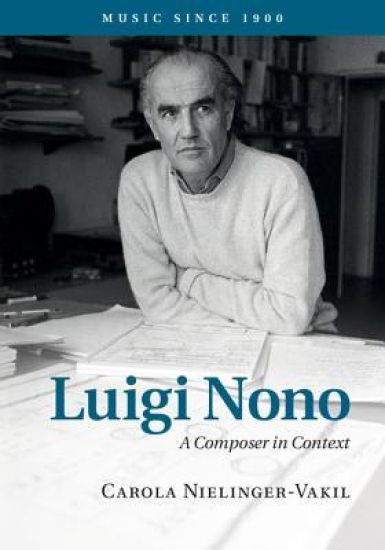
The anti-fascist cantata Il canto sospeso, the string quartet Fragmente - Stille, an Diotima and the 'Tragedy of Listening' Prometeo cemented Luigi Nono's place in music history. In this study, Carola Nielinger-Vakil examines these major works in the context of Nono's amalgamation of avant-garde composition with Communist political engagement. Part I discusses Il canto sospeso in the context of all of Nono's anti-fascist pieces, from the unfinished Fucik project (1951) to Ricorda cosa ti hanno fatto in Auschwitz (1966). Nielinger-Vakil explores Nono's position at the Darmstadt Music Courses, the evolution of his compositional technique, his penchant for music theatre and his use of spatial and electronic techniques to set the composer and his works against the diverging circumstances in Italy and Germany after 1945. Part II further examines these concerns and shows how they live on in Nono's work after 1975, culminating in a thorough analysis of Prometeo.
The texts of Luigi Pirandello, one of the literary giants of this century, have been subject to widely different readings by successive generations of critics. These essays present an up-to-date re-evaluation of Pirandello's works, which include poetry, novels, short stories, plays, essays, letters, and memoirs. Arranged in four sections - Introduction, Structures, Meanings, and Innovations - the volume presents a variety of provocative viewpoints and offers an accurate picture of the network of issues inhabiting the author's oeuvre. In the introductory section the editors provide an informative overview of the status of Pirandellian studies today. The book examines the recent upsurge of interest in Pirandello and offers outstanding material for courses in Italian studies, comparative studies, theatre, and the humanities.
This first comprehensive survey of the life and work of Luigi Lucioni (1900 1988) places him in the context of fellow Regionalist painters Grant Wood, Charles Sheeler, and Maxfield Parrish. Lucioni is known for meticulously rendered still lifes, landscapes, and arresting portraits drawn from his close-knit circle of queer New York artists and cultural figures, including Paul Cadmus, Jared French, George Platt Lynes, and Lincoln Kirstein. In the early 1930s, Lucioni discovered Vermont, whose landscapes reminded him of northern Italy. It was there that he met Electra Havemeyer Webb, who was to become his single most important patron. For more than 50 years, the New York City based artist spent every summer painting landscapes of trees, barns, and buildings in Vermont with sharply observed realism and a cool, precise style. Key scholars examine Lucioni s oeuvre, materials, techniques, and his role in American modernism.