Kirjojen hintavertailu. Mukana 11 244 527 kirjaa ja 12 kauppaa.

Kirjahaku

Etsi kirjoja tekijän nimen, kirjan nimen tai ISBN:n perusteella.

1000 tulosta hakusanalla Luis Chonati

Juan

Juan

Luis Chonati

Independently Published
2019
pokkari
El autor ha sabido combinar fantas a, realidad, historia, religi n, de una manera armoniosa, hermosa, realmente es un libro que leer a muuuuchas veces... (Lector de Amazon.com)... los primeros amigos, los primeros amores, el paso de la vida...y la lucha contra el mal. (Lector de Amazon.es)...es un libro lleno de sorpresas, que divierte, que fluye veloz y a la vez hace reflexionar. (Lector de Amazon.it)SINOPSISLa historia narra las vivencias de una joven familia que tiene que emigrar a una peque a ciudad donde los chicos se integran en un grupo de adolescentes con quienes comparten aventuras, romances y algunos hechos sobrenaturales debido a que Juan comienza a percibir una extra a luz y a experimentar ciertos dones que le permiten curar enfermedades y expulsar demonios.En la segunda parte, Juan, con la ayuda de sus amigos, publica un peri dico escolar para difundir un importante mensaje, mientras su hermana Marisol, convertida en una bella estudiante de medicina, abre un consultorio en el barrio m s peligroso de la ciudad en medio de delincuentes y vendedores de drogas.Emociones sin fin e historias de amor que se entrelazan en el tiempo, narradas con una nota de misterio que te mantendr n atrapado en sus p ginas desde el principio hasta su sorprendente final.
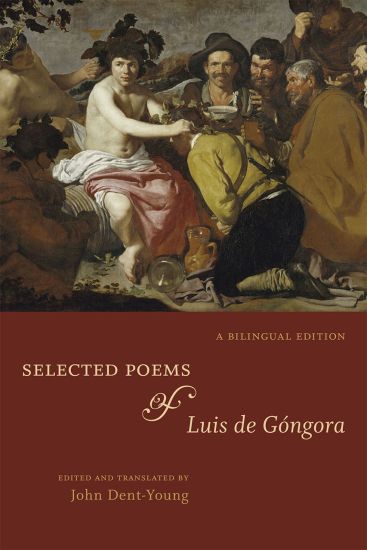
Selected Poems of Luis de Góngora

Selected Poems of Luis de Góngora

Luis de Gongora

University of Chicago Press
2016
nidottu
Making Luis de Góngora’s work available to contemporary English-language readers without denying his historical context, Selected Poems of Luis de Góngora presents him as not only one of the greatest and most complex poets of his time, but also the funniest and most charismatic. From longer works, such as “The Fable of Polyphemus and Galatea,” to shorter ballads, songs, and sonnets, John Dent-Young’s free translations capture Góngora’s intensely musical voice and transmit the individuality and self-assuredness of the poet. Substantial introductions and extensive notes provide personal and historical context, explain the ubiquitous puns and erotic innuendo, and discuss translation choices. A significant edition of this seminal and challenging poet, Selected Poems of Luis de Góngora will find an eager audience among students of poetry and scholars studying the history and literature of Spain.
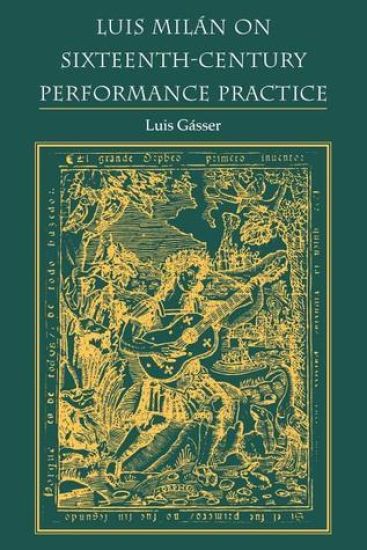
Luis Milán on Sixteenth-Century Performance Practice

Luis Milán on Sixteenth-Century Performance Practice

Luis Gasser

Indiana University Press
1996
pokkari
". . . valuable . . . impressive . . ." —The Times Literary Supplement "For anyone interested in Milán's music, this is an excellent source of information." —Renaissance Quarterly Luis Milán (1536-1561) was a lutenist, singer, composer, and poet. His collection of lute tablatures, El Maestro, is the first book of instrumental music known to have been printed in Spain. Luis Gásser discusses Milán's attention to modality, his use of meter, and the ornamentation in his songs and fantasías.
Luis Leal

Luis Leal

Mario T. García

University of Texas Press
2000
pokkari
Professor Luis Leal is one of the most outstanding scholars of Mexican, Latin American, and Chicano literatures and the dean of Mexican American intellectuals in the United States. He was one of the first senior scholars to recognize the viability and importance of Chicano literature, and, through his perceptive literary criticism, helped to legitimize it as a worthy field of study. His contributions to humanistic learning have brought him many honors, including Mexico's Aquila Azteca and the United States' National Humanities Medal. In this testimonio or oral history, Luis Leal reflects upon his early life in Mexico, his intellectual formation at Northwestern University and the University of Chicago, and his work and publications as a scholar at the Universities of Illinois and California, Santa Barbara. Through insightful questions, Mario García draws out the connections between literature and history that have been a primary focus of Leal's work. He also elicits Leal's assessment of many of the prominent writers he has known and studied, including Mariano Azuela, William Faulkner, Octavio Paz, Carlos Fuentes, Juan Rulfo, Gabriel García Márquez, Jorge Luis Borges, Tomás Rivera, Rolando Hinojosa, Rudolfo Anaya, Elena Poniatowska, Sandra Cisneros, Richard Rodríguez, and Ana Castillo.
Luis Bunuel

Luis Bunuel

Roman Gubern

University of Wisconsin Press
2011
nidottu
The turbulent years of the 1930s were of profound importance in the life of Spanish film director Luis Buñuel (1900–1983). He joined the Surrealist movement in 1929 but by 1932 had renounced it and embraced Communism. During the Spanish Civil War (1936–39), he played an integral role in disseminating film propaganda in Paris for the Spanish Republican cause.
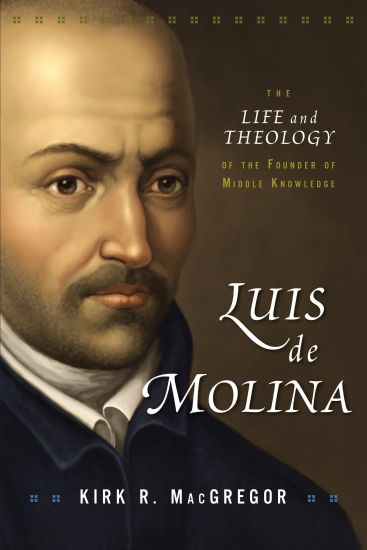
Luis de Molina

Luis de Molina

Kirk R. MacGregor

Zondervan
2019
nidottu
When Luis de Molina died in Madrid in 1600, he had every reason to believe he was about to be anathametized by Pope Clement VIII. The Protestant Reformation was splitting Europe, tribunals of the Inquisition met regularly in a dozen Spanish cities, and the Pope had launched a commission two years earlier to investigate Molina’s writings.Molina was eventually vindicated, though the decision came seven years after his death. In the centuries that followed Molina was relegated to relatively minor status in the history of theology until a renaissance of interest in recent years. His doctrine of God’s “middle knowledge,” in particular, has been appropriated by a number of current philosophers and theologians, with apologist William Lane Craig calling it “one of the most fruitful theological ideas ever conceived.”In Luis de Molina: The Life and Theology of the Founder of Middle Knowledge, author Kirk R. MacGregor outlines the main contours of Molina’s subtle and far-reaching philosophical theology, covering his views on God’s foreknowledge, salvation and predestination, poverty and obedience, and social justice. Drawing on writings of Molina never translated into English, MacGregor also provides insight into the experiences that shaped Molina, recounting the events of a life fully as dramatic as any of the Protestant Reformers.With implications for topics as wide-ranging as biblical inerrancy, creation and evolution, the relationship between Christianity and world religions, the problem of evil, and quantum indeterminacy, Molina’s thought remains as fresh and relevant as ever. Most significantly, perhaps, it continues to offer the possibility of a rapprochement between Calvinism and Arminianism, a view of salvation that fully upholds both God’s predestination and human free will.As the first full-length work ever published on Molina, Kirk MacGregor’s Luis de Molina provides an accessible and insightful introduction for scholars, students, and armchair theologians alike.
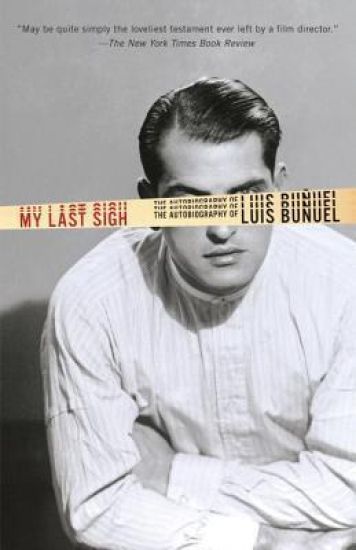
My Last Sigh: The Autobiography of Luis Bunuel
ONE OF THE HOLLYWOOD REPORTER'S 100 GREATEST FILM BOOKS OF ALL TIME - A provocative memoir from Luis Bu uel, the Academy Award winning creator of some of modern cinema's most important films, from Un Chien Andalou to The Discreet Charm of the Bourgeoisie. Luis Bu uel's films have the power to shock, inspire, and reinvent our world. Now, in a memoir that carries all the surrealism and subversion of his cinema, Bu uel turns his artistic gaze inward. In swift and generous prose, Bu uel traces the surprising contours of his life, from the Good Friday drumbeats of his childhood to the dreams that inspired his most famous films to his turbulent friendships with Federico Garc a Lorca and Salvador Dal . His personal narratives also encompass the pressing political issues of his time, many of which still haunt us today--the specter of fascism, the culture wars, the nuclear bomb. Filled with film trivia, framed by Bu uel's intellect and wit, this is essential reading for fans of cinema and for anyone who has ever wanted to see the world through a surrealist's eyes.
Luis Miguel

Luis Miguel

Hal Leonard Corporation
2001
nidottu
(PVG Personality). A collection of 19 sensuous songs from three albums by this wildly popular, Grammy-winning Mexican artist, including: Besame Mucho (Kiss Me Much) * Contigo En La Distancia * El Reloj * Historia De Un Amor * Inolvidable * La Barca * La Puerta * Mucho Corazon * Noche De Ronda (Be Mine Tonight) * Nosotros * Sin Ti * Todo Y Nada * Uno * Usted * Voy a Apagar La Luz/Contigo Aprendi * You Belong to My Heart * and more.
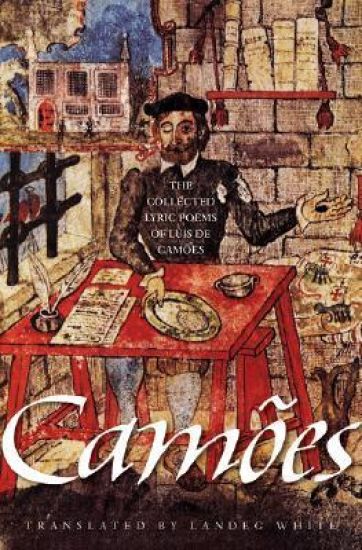
The Collected Lyric Poems of Luís de Camões

The Collected Lyric Poems of Luís de Camões

Luís de Camões

Princeton University Press
2008
pokkari
Luis de Camoes is world famous as the author of the great Renaissance epic The Lusiads, but his large and equally great body of lyric poetry is still almost completely unknown outside his native Portugal. In The Collected Lyric Poems of Luis de Camoes, the award-winning translator of The Lusiads gives English readers the first comprehensive collection of Camoes's sonnets, songs, elegies, hymns, odes, eclogues, and other poems--more than 280 lyrics altogether, all rendered in engaging verse. Camoes (1524-1580) was the first great European artist to cross into the Southern Hemisphere, and his poetry bears the marks of nearly two decades spent in north and east Africa, the Persian Gulf, India, and Macau. From an elegy set in Morocco, to a hymn written at Cape Guardafui on the northern tip of Somalia, to the first modern European love poems for a non-European woman, these lyrics reflect Camoes's encounters with radically unfamiliar peoples and places. Translator Landeg White has arranged the poems to follow the order of Camoes's travels, making the book read like a journey. The work of one of the first European cosmopolitans, these poems demonstrate that Camoes would deserve his place among the great poets even if he had never written his epic.
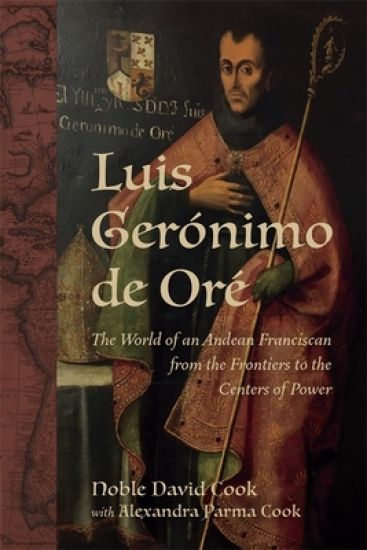
Luis Gerónimo de Oré

Luis Gerónimo de Oré

Alexandra Parma Cook; Noble David Cook

LOUISIANA STATE UNIVERSITY PRESS
2023
sidottu
Born in a provincial city in the Peruvian Andes, the Franciscan linguist and theologian Luis Gerónimo de Oré (1554–1630) lived during a critical period in the formation of the modern world, as the global empire of Spain engaged in a nearly continuous struggle over resources and religion.In the first full-length biography of Oré, Noble David Cook and Alexandra Parma Cook reconstruct the friar's life and the communities in which he circulated, tracing the career of this first-generation Creole from his roots in Huamanga to his work in Andean missions, his activities at the royal courts of Spain and throughout Spanish America, until his final years as bishop of Concepción, Chile. While serving in Peru's Colca Valley, Oré composed multilingual texts, translating doctrinal concepts into the indigenous languages Quechua and Aymara, alongside Latin and Spanish, which missionaries and secular clergy frequently used in their conversion efforts. As commissioner to Cuba and La Florida, he inspected the frontier missions along the coast of what became the southeastern United States and wrote an influential history of these outposts and their environment. After Philip III dispatched him to Concepción, Oré spent his last years working in the southernmost end of the Americas, where he continued his advocacy for indigenous justice and engaged in heated arguments with the governor over defensive war, royal patronage, and Indian enslavement.Drawn from research conducted in Spain and Latin America over several decades, this consequential biography recovers from obscurity a colonial friar whose legacy continues in the Andean world today.
Luis de Lucena Repetición de Amores

Luis de Lucena Repetición de Amores

The University of North Carolina Press
1954
nidottu
Luis de Lucena (1465-1530) was a Spanish writer whose Repeticion de Amores y Arte de Ajedrez con 101 Juegos de Partido is the oldest surviving book on the game of chess. Jacob Ornstein provides an annotated introduction in two parts that gives a general overview of the text and its author, and discusses the work in relation to the Feminist debates.
Luis Antonio Tagle

Luis Antonio Tagle

Cindy Wooden

Liturgical Press
2015
pokkari
Cardinal Luis Antonio Tagle has been called “the Asian Pope Francis,” because of his humility, his connectedness to the lives of everyday Catholics, and his insistence on the church’s duty to care for the poor and the marginalized. In Luis Antonio Tagle: Leading by Listening, veteran Catholic journalist Cindy Wooden offers a poignant look at this archbishop of Manila who has impressed Catholics around the world. At the world Synod of Bishops on Evangelization in 2012, he told his fellow bishops, “The church must discover the power of silence. Confronted with the sorrows, doubts and uncertainties of people she cannot pretend to give easy solutions. In Jesus, silence becomes the way of attentive listening, compassion and prayer. It is the way to truth.” While not afraid to speak the truth to power, Cardinal Tagle also is not afraid to listen to the poor, the confused and the searching.Wooden shares much insight into this man of deep faith and compassion, a pastor driven both to bring Christ to the people and to listen to the people in whom Christ lives and through whom he speaks. People of God is a series of inspiring biographies for the general reader. Each volume offers a compelling and honest narrative of the life of an important twentieth or twenty-first century Catholic. Some living and some now deceased, each of these women and men has known challenges and weaknesses familiar to most of us but responded to them in ways that call us to our own forms of heroism. Each offers a credible and concrete witness of faith, hope, and love to people of our own day.
Palau: La Autobiografía de Luis Palau Con Paul J. Pastor
Esta es la impactante historia de Luis Palau, el evangelista de fama mundial, a menudo visto como el sucesor de Billy Graham.Desde sus humildes comienzos en las calles de Buenos Aires, Argentina, hasta hablar con jefes de estado y l deres de todo el mundo sobre el amor de Jes s, Palau ha influenciado a millones de personas con su historia, su predicaci n y su vida.En esta ocasi n, acompa ando el lanzamiento de la pel cula del mismo t tulo, presentamos la biograf a autorizada y confiable de uno de los predicadores y evangelistas cristianos m s respetados en la actualidad. Luis Palau tiene una fascinante trayectoria llena de aventura, riesgo, visi n, fe y perseverancia.Luis perdi a su padre a una edad temprana y se convirti en el jefe de su hogar, con cuatro hermanas menores y su madre. Escuch por primera vez a Billy Graham en una emisi n de radio a los diecis is a os y supo desde ese momento que quer a trabajar con l y seguir sus pasos. Fue el mismo Graham quien lo estimul y apoy econ micamente al principio para que comenzara su propio ministerio.La vida singular que Dios le ha confiado a Palau es un verdadero testamento de c mo una persona dispuesta, cuyo coraz n est entregado a Dios, puede ser utilizada para realizar grandes proezas, mucho m s de lo que nadie podr a pensar o imaginar.
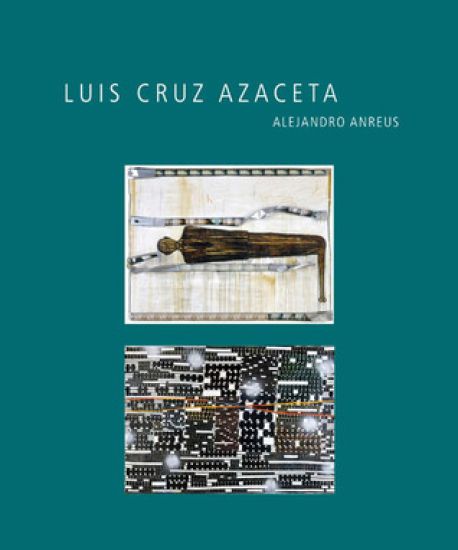
Luis Cruz Azaceta

Luis Cruz Azaceta

Alejandro Anreus

UCLA Chicano Studies Research Center Press
2014
nidottu
Cuban American artist Luis Cruz Azaceta addresses what author Alejandro Anreus calls the “wounds and screams” of the human condition. Although Cruz Azaceta’s work is extensively exhibited and widely collected, this is the first book on the artist’s life and creations.Anreus traces Cruz Azaceta’s career and explores the themes that are the focus of his singular art. Anreus discusses how the Cuban diaspora, above all, has shaped the artist and how the experience of exile has found expression through starkly forceful self-portraiture in many of his works. Anreus also examines the artist’s ongoing concern with current events. Cruz Azaceta has responded to national crises, such as the AIDS epidemic, the Oklahoma City bombing, and the devastation of New Orleans by Hurricane Katrina, with graphically powerful paintings, mixed-media pieces, and installations.Over the past four decades Cruz Azaceta has experimented with his visual vocabulary, moving from the flat, pop style of his early canvases, through neo-Expressionism, and into the abstraction of more-current work. His commentary on humanity, however, has not changed. His art continues to remind us that there are no easy solutions to the presence of violence and cruelty, exile and dislocation, and solitude and isolation.
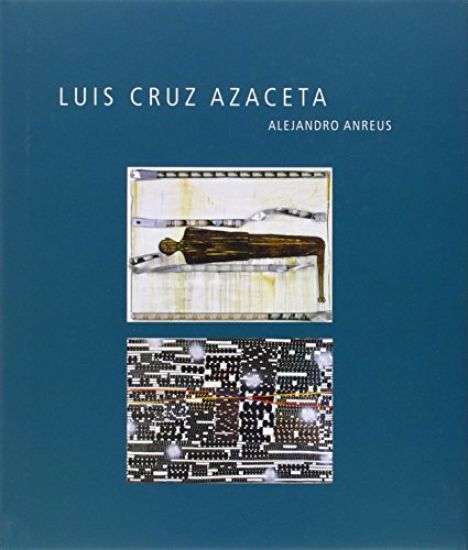
Luis Cruz Azaceta

Luis Cruz Azaceta

Anreus Alejandro

UCLA Chicano Studies Research Center Press
2014
sidottu
Cuban American artist Luis Cruz Azaceta addresses what author Alejandro Anreus calls the “wounds and screams” of the human condition. Although Cruz Azaceta’s work is extensively exhibited and widely collected, this is the first book on the artist’s life and creations.Anreus traces Cruz Azaceta’s career and explores the themes that are the focus of his singular art. Anreus discusses how the Cuban diaspora, above all, has shaped the artist and how the experience of exile has found expression through starkly forceful self-portraiture in many of his works. Anreus also examines the artist’s ongoing concern with current events. Cruz Azaceta has responded to national crises, such as the AIDS epidemic, the Oklahoma City bombing, and the devastation of New Orleans by Hurricane Katrina, with graphically powerful paintings, mixed-media pieces, and installations.Over the past four decades Cruz Azaceta has experimented with his visual vocabulary, moving from the flat, pop style of his early canvases, through neo-Expressionism, and into the abstraction of more-current work. His commentary on humanity, however, has not changed. His art continues to remind us that there are no easy solutions to the presence of violence and cruelty, exile and dislocation, and solitude and isolation.
Luis Camnitzer in Conversation with Alexander Alberro
The Fundación Cisneros’ Conversaciones/Conversations series publishes firsthand testimonies of leading artists and intellectuals from Latin America. German-born Uruguayan Luis Camnitzer (born 1937) has been an influential artist, theorist, teacher and curator for nearly five decades. He was at the vanguard of 1960s Conceptualism, working in printmaking, sculpture installation and other media. Camnitzer’s work challenges our perception of reality and the status quo and is often characterized by its humorous, often politically charged use of language to underscore issues of power and commodification. In this eighth volume from the Conversaciones series, Camnitzer continues to explore his unique approach to Conceptualism and art as pedagogy with Latin American art scholar Alexander Alberro.