Kirjojen hintavertailu. Mukana 11 244 527 kirjaa ja 12 kauppaa.

Kirjahaku

Etsi kirjoja tekijän nimen, kirjan nimen tai ISBN:n perusteella.

1000 tulosta hakusanalla Lynda Mugglestone

Samuel Johnson and the Journey into Words

Samuel Johnson and the Journey into Words

Lynda Mugglestone

Oxford University Press
2018
nidottu
Popular readings of Johnson as a dictionary-maker often see him as a writer who both laments and attempts to control the state of the language. Lynda Mugglestone looks at the range of Johnson's writings on, and the complexity of his thinking about, language and lexicography. She shows how these reveal him probing problems not just of meaning and use but what he considered the related issues of control, obedience, and justice, as well as the difficulties of power when exerted over the 'sea of words'. She examines his attitudes to language change, loan words, spelling, history, and authority, describing, too, the evolution of his ideas about the nature, purpose, and methods of lexicography, and shows how these reflect his own wider thinking about politics, culture, and society. The book offers a careful reassessment of Johnson's lexicographical practice, examining in detail his commitment to evidence, and the uses to which this might be put. Dictionary-making, for Johnson, came to be seen as a long and difficult voyage round the world of the English language. While such images play their own role in lexicographical tradition, Johnson would, as this volume explores, also make them very much his own in a range of distinctive, and illuminating, ways. Johnson's metaphors invite us to consider-and reconsider-the processes by which a dictionary might be made and the kind of destination it might seek, as well as the state of language that might be reached by such endeavours. For Johnson, where the dictionary-maker might go, and what should be accomplished along the way, can often seem to raise pertinent and perhaps troubling questions. Lynda Mugglestone's generous, wide-ranging account casts new light on Johnson's life in language and provides an engaging reassessment of his impact on English culture, the making of dictionaries, and their role in a nation's identity.
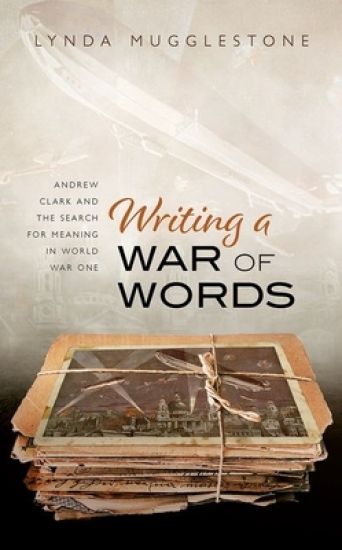
Writing a War of Words

Writing a War of Words

Lynda Mugglestone

Oxford University Press
2021
sidottu
Writing a War of Words is the first exploration of the war-time quest by Andrew Clark - a writer, historian, and volunteer on the first edition of the Oxford English Dictionary - to document changes in the English language from the start of the First World War up to 1919. Clark's unique series of lexical scrapbooks, replete with clippings, annotations, and real-time definitions, reveals a desire to put living language history to the fore, and to create a record of often fleeting popular use. The rise of trench warfare, the Zeppelinophobia of total war, and descriptions of shellshock (and raid shock on the Home Front) all drew his attentive gaze. The archive includes examples from a range of sources, such as advertising, newspapers, and letters from the Front, as well as documenting social issues such as the shifting forms of representation as women 'did their bit' on the Home Front. Lynda's Mugglestone's fascinating investigation of this valuable archive reassesses the conventional accounts of language history during this period, recuperates Clark himself as another 'forgotten lexicographer', challenges the received wisdom on the inexpressibilities of war, and examines the role of language as an interdisciplinary lens on history.
Talking Proper

Talking Proper

Lynda Mugglestone

Oxford University Press
2003
sidottu
Talking Proper is a history of the rise and fall of the English accent as a badge of cultural, social, and class identity. Lynda Mugglestone traces the origins of the phenomenon in late eighteenth-century London, follows its history through the nineteenth and twentieth centuries, and charts its downfall during the era of New Labour. This is a witty, readable account of a fascinating subject, liberally spiced with quotations from English speech and writing over the past 250 years.
Talking Proper

Talking Proper

Lynda Mugglestone

Oxford University Press
2007
nidottu
Talking Proper is a history of the rise and fall of the English accent as a badge of cultural, social, and class identity. Lynda Mugglestone traces the origins of the phenomenon in late eighteenth-century London, follows its history through the nineteenth and twentieth centuries, and charts its downfall during the era of New Labour. This is a witty, readable account of a fascinating subject, liberally spiced with quotations from English speech and writing over the past 250 years.
Dictionaries

Dictionaries

Lynda Mugglestone

Oxford University Press
2011
nidottu
Do, or should, dictionaries control language? How do they treat language change, both now and in the past? Which words do dictionaries leave out - and on what grounds? Dictionaries are far more than works which list the words and meanings of a language. In this Very Short Introduction Lynda Mugglestone shows that all dictionaries are partial and all are selective. They are human products, reflecting the dominant social and cultural assumptions of the time in which they were written. Dictionaries exist then not only as works which seek to document language, but also as cultural documents that are connected to the world in which they were produced. Exploring common beliefs about dictionaries, providing glimpses of behind the scenes dictionary makers at work, and confronting the problems of how a word is to be defined, Mugglestone shows that dictionaries are always, and inevitably, more than the crafting of a simple list of words. Concluding with a look at the range of modern dictionaries and transformations, from online dictionaries such as urbandictionary.com or wictionary to txt-spk and slang, she reveals the controversial nature of the debates about communication and language, showing that only in written and spoken English does the language of dictionaries exist in full. ABOUT THE SERIES: The Very Short Introductions series from Oxford University Press contains hundreds of titles in almost every subject area. These pocket-sized books are the perfect way to get ahead in a new subject quickly. Our expert authors combine facts, analysis, perspective, new ideas, and enthusiasm to make interesting and challenging topics highly readable.
Samuel Johnson and the Journey into Words

Samuel Johnson and the Journey into Words

Lynda Mugglestone

Oxford University Press
2015
sidottu
Popular readings of Johnson as a dictionary-maker often see him as a writer who both laments and attempts to control the state of the language. Lynda Mugglestone looks at the range of Johnson's writings on, and the complexity of his thinking about, language and lexicography. She shows how these reveal him probing problems not just of meaning and use but what he considered the related issues of control, obedience, and justice, as well as the difficulties of power when exerted over the 'sea of words'. She examines his attitudes to language change, loan words, spelling, history, and authority, describing, too, the evolution of his ideas about the nature, purpose, and methods of lexicography, and shows how these reflect his own and others' thinking about politics, culture, and society. The book offers a careful reassessment of Johnson's prescriptive practice, examining in detail his commitment to evidence, and the uses to which this might be put. Dictionary-making, for Johnson, came to be seen as a long and difficult voyage round the world of the English language. While such images play their own role in lexicographical tradition, Johnson would, as this volume explores, also make them very much his own in a range of distinctive, and illuminating, ways. Johnson's metaphors invite us to consider-and reconsider-the processes by which a dictionary might be made and the kind of destination it might seek, as well as the state of language that might be reached by such endeavours. For Johnson, where the dictionary-maker might go, and what should be accomplished along the way, can often seem to raise pertinent and perhaps troubling questions. Lynda Mugglestone's generous, wide-ranging account casts new light on Johnson's life in language and provides a convincing reassessment of his impact on English culture, the making of dictionaries, and their role in a nation's identity. She ends by considering the power of Johnson's legacy and the degree to which his work continues to guide our attitudes to language and what we variously expect dictionaries to be and do.
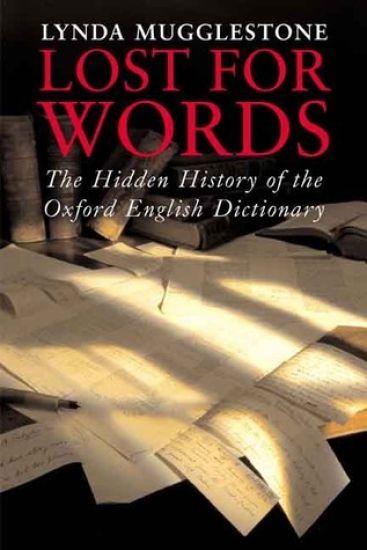
Lost for Words

Lost for Words

Lynda Mugglestone

Yale University Press
2005
sidottu
The untold story of the complex word battles fought by the creators of the first Oxford English Dictionary. The Oxford English Dictionary (OED) holds a cherished position in English literary culture. The story behind the creation of what is indisputably the greatest dictionary in the language has become a popular fascination. This book looks at the history of the great first edition of 1928, and at the men (and occasionally women) who distilled words and usages from centuries of English writing and “through an act of intellectual alchemy captured the spirit of a civilization.” The task of the dictionary was to bear full and impartial witness to the language it recorded. But behind the immaculate typography of the finished text, the proofs tell a very different story. This vast archive, unexamined until now, reveals the arguments and controversies over meanings, definitions, and pronunciation, and which words and senses were acceptable—and which were not.Lost for Words examinesthe hidden history by which the great dictionary came into being, tracing—through letters and archives—the personal battles involved in charting a constantly changing language. Then as now, lexicographers reveal themselves vulnerable to the prejudices of their own linguistic preferences and to the influence of contemporary social history.
Some Careers Are Noisier Than Others: Strange Stories by Lynda Fayle Gilmartin
First collection of Lynda Fayle Gilmartin's original works of short fiction, spanning the mystery, fantasy and science fiction genres for decades. Warm family tales, wild flights of fancy and dark psychological thrillers fill these pages. Here, you find diabolical typewriters, and flying houses; android offspring, and impossible pets; shifting realities, and dreams made flesh. Her how-to/DIY guide for aspiring fiction writers rounds out this volume.
Lynda La Plante

Lynda La Plante

Julia Hallam

Manchester University Press
2011
nidottu
Lynda La Plante is Britain’s most successful and well known screenwriter and the first woman to win the prestigious Dennis Potter writer’s award. Attracting millions of viewers, the popular and critical success of La Plante’s work is central to understanding changes that shook the UK television industry in the late twentieth century. This critical introduction, the first account of her work, focuses on three innovative serials: Widows (ITV, 1983), Prime Suspect (ITV 1991) and Trial and Retribution (ITV 1997). In each chapter questions of gender and genre, acting and stardom and authorship and value are mapped against the changing relationship between women and the television industry. The final chapter traces La Plante’s metamorphosis from ‘just a writer for hire’ to the astute businesswoman she has become through a focus on the trans-national appeal of dramas such as Killer Net (C4 1997) and Bella Mafia (CBS 1997).
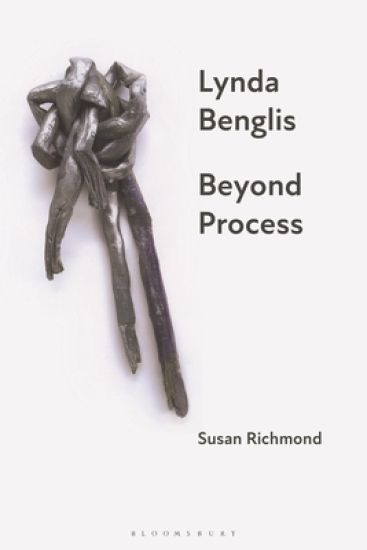
Lynda Benglis

Lynda Benglis

Susan Richmond

BLOOMSBURY PUBLISHING PLC
2021
nidottu
In four decades of abstract art practice, Lynda Benglis has not merely challenged the status quo. She has tied it in knots, melted it down and poured it across the floor, cast it in glass, clay and bronze. Daring and sometimes outrageous, her intense and provocative practice has produced some of the most iconic pieces of art from the late twentieth century. Richmond gives serious critical attention to work often dismissed as trivial and rootless, recovering the themes that link the different phases of the artist's quest to capture the 'frozen gesture'. Whether challenging popular tastes and definitions of art with her 1970s abstract knotwork or mocking puritanical aesthetics of gender with her colourful latex pourings and their allusions to corporeal topographies, Benglis never failed to provoke. Her sculptures commemorate and celebrate the processes of creation themselves, combining architectonic abstraction and feminized sensuality in a haunting, visceral theme of the strangeness of the body that runs through all her experiments in glass, video, metals, ceramics, gold leaf, paper and plastics.Lynda Benglis: Beyond Process examines in depth the work and critical neglect of an artist who, perhaps more than any of her contemporaries, changed the face of American art in the 1960s and 1970s, and continues to fetishise, provoke and demand your attention.
Lynda Barry

Lynda Barry

Maaheen Ahmed

BLOOMSBURY PUBLISHING PLC
2026
nidottu
A complete introduction to the comics and graphic narratives of Lynda Barry, this book maps her historical and biographical contexts, key texts, the critical themes and debates surrounding her publications and the lasting impact of her work on the comics medium. With a distinctive body of work that unfolded during key moments in comics history from the much touted and criticised ‘coming-of-age’ comics to the rise of underground and alternative comics and the establishment of graphic novels, Barry’s comics reflect the changing status of comics, while unpacking the very constituents of the medium and testing its limits.Comprehensive and conveying specialist knowledge but highly readable, Lynda Barry: A Critical Guide covers:- comics history from an alternative perspective, focusing on issues of intersectionality and representation- her major works including One Hundred Demons, What It Is, Making Comics, Syllabus, Cruddy and her comic strip Ernie Pook's Comeek- Barry’s materialities and her use of collage and art brut practices - how Barry's prompts to creativity and connection highlight the collaborative and accessible dimension of comics- broad and salient themes in Barry’s work including memory, girlhood/womanhood, childhood, art pedagogy, creativity, overcoming creative anxieties, visual paper culture and the possibilities of drawing and collagingCombining rich insights from comics studies, literary theory and visual culture, this is the ultimate guide to Lynda Barry and her oeuvre. Illustrated throughout, this critical guide exemplifies the diverse ways of approaching comics, combining existing methodologies with novel possibilities inspired from the originality of Barry’s work.
Lynda Barry

Lynda Barry

Maaheen Ahmed

BLOOMSBURY PUBLISHING PLC
2026
sidottu
A complete introduction to the comics and graphic narratives of Lynda Barry, this book maps her historical and biographical contexts, key texts, the critical themes and debates surrounding her publications and the lasting impact of her work on the comics medium. With a distinctive body of work that unfolded during key moments in comics history from the much touted and criticised ‘coming-of-age’ comics to the rise of underground and alternative comics and the establishment of graphic novels, Barry’s comics reflect the changing status of comics, while unpacking the very constituents of the medium and testing its limits.Comprehensive and conveying specialist knowledge but highly readable, Lynda Barry: A Critical Guide covers:- comics history from an alternative perspective, focusing on issues of intersectionality and representation- her major works including One Hundred Demons, What It Is, Making Comics, Syllabus, Cruddy and her comic strip Ernie Pook's Comeek- Barry’s materialities and her use of collage and art brut practices - how Barry's prompts to creativity and connection highlight the collaborative and accessible dimension of comics- broad and salient themes in Barry’s work including memory, girlhood/womanhood, childhood, art pedagogy, creativity, overcoming creative anxieties, visual paper culture and the possibilities of drawing and collagingCombining rich insights from comics studies, literary theory and visual culture, this is the ultimate guide to Lynda Barry and her oeuvre. Illustrated throughout, this critical guide exemplifies the diverse ways of approaching comics, combining existing methodologies with novel possibilities inspired from the originality of Barry’s work.
Lynda Barry

Lynda Barry

Susan E. Kirtley

University Press of Mississippi
2012
sidottu
Best known for her long-running comic strip Ernie Pook's Comeek, illustrated fiction (Cruddy, The Good Times Are Killing Me), and graphic novels (One! Hundred! Demons!), the art of Lynda Barry (b. 1956) has branched out to incorporate plays, paintings, radio commentary, and lectures. With a combination of simple, raw drawings and mature, eloquent text, Barry's oeuvre blurs the boundaries between fiction and memoir, comics and literary fiction, and fantasy and reality. Her recent volumes What It Is (2008) and Picture This (2010) fuse autobiography, teaching guide, sketchbook, and cartooning into coherent visions.In Lynda Barry: Girlhood through the Looking Glass, author Susan E. Kirtley examines the artist's career and contributions to the field of comic art and beyond. The study specifically concentrates on Barry's recurring focus on figures of young girls, in a variety of mediums and genres. Barry follows the image of the girl through several lenses--from text-based novels to the hybrid blending of text and image in comic art, to art shows and coloring books. In tracing Barry's aesthetic and intellectual development, Kirtley reveals Barry's work to be groundbreaking in its understanding of femininity and feminism.
Lynda Barry

Lynda Barry

Susan E. Kirtley

University Press of Mississippi
2012
nidottu
Best known for her long-running comic strip Ernie Pook's Comeek, illustrated fiction (Cruddy, The Good Times Are Killing Me), and graphic novels (One! Hundred! Demons!), the art of Lynda Barry (b. 1956) has branched out to incorporate plays, paintings, radio commentary, and lectures. With a combination of simple, raw drawings and mature, eloquent text, Barry's oeuvre blurs the boundaries between fiction and memoir, comics and literary fiction, and fantasy and reality. Her recent volumes What It Is (2008) and Picture This (2010) fuse autobiography, teaching guide, sketchbook, and cartooning into coherent visions.In Lynda Barry: Girlhood through the Looking Glass, author Susan E. Kirtley examines the artist's career and contributions to the field of comic art and beyond. The study specifically concentrates on Barry's recurring focus on figures of young girls, in a variety of mediums and genres. Barry follows the image of the girl through several lenses--from text-based novels to the hybrid blending of text and image in comic art, to art shows and coloring books. In tracing Barry's aesthetic and intellectual development, Kirtley reveals Barry's work to be groundbreaking in its understanding of femininity and feminism.