Kirjojen hintavertailu. Mukana 11 383 584 kirjaa ja 12 kauppaa.

Kirjahaku

Etsi kirjoja tekijän nimen, kirjan nimen tai ISBN:n perusteella.

1000 tulosta hakusanalla Lynda V. Mapes

Witness Tree

Witness Tree

Lynda V. Mapes

UNIVERSITY OF WASHINGTON PRESS
2019
pokkari
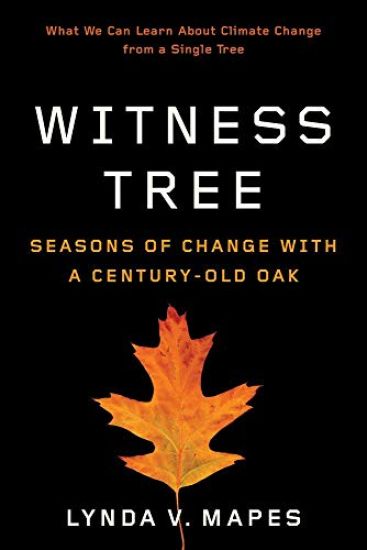
Seasonal changes in nature are among the most readily observable clues to the biological effects of climate change. "It came to me," writes acclaimed environment reporter Lynda Mapes, "You could tell the story of climate change—and more—through a single, beloved, living thing: a tree." Mapes chronicles her yearlong quest to understand a wizened witness to our world: a red oak, over one hundred years old, in the Harvard Forest. A tree that has seen it all, from our changing relationship with nature in our industrialized and digitized lives to the altered clockwork of nature.Mapes evokes the wonder and joy of forests, and the poetics and botany of trees, living intimately with her oak through four seasons. She dives deeply into the world of self-described "tree geeks" and becomes one herself, exploring her tree from roots to crown. She also offers a clear-eyed assessment of what the tree tells us about climate change, from the heartwood at its core to the photosynthetic cycle deep in its leaves.Mixing storytelling, tree lore, and cutting-edge science, Mapes offers a new approach to thinking about how we might live together into the far future on a planet we have changed in ways we never intended—and how trees help show us the way.
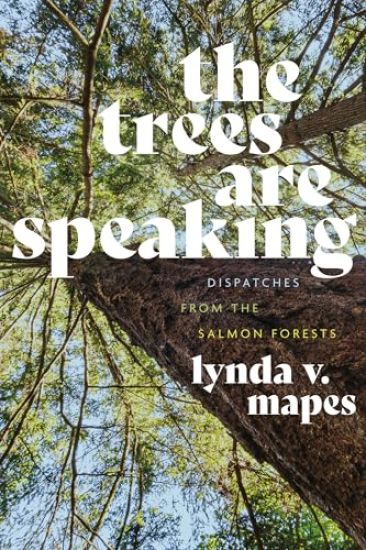
The Trees Are Speaking

The Trees Are Speaking

Lynda V. Mapes

UNIVERSITY OF WASHINGTON PRESS
2025
sidottu
A call to rethink our relationship with forestsAncient and carbon-rich, old-growth forests play an irreplaceable role in the environment. Their complex ecosystems clean the air, purify the water, cool the planet, and teem with life. In a time of climate catastrophe, old-growth and other natural forests face existential threats caused by humans—and their survival is crucial to ours.In a bicoastal journey, environmental journalist Lynda V. Mapes connects the present and future of Pacific Northwest forests to the hard-logged legacy forests of the northeastern United States. Beginning in Oregon and Washington, where old growth supports, and is supported by, the region's salmon, we meet Jerry Franklin, who led scientists in recognizing and studying the distinctiveness of these majestic spaces. From there, we journey to Vancouver Island, where Indigenous activists and scientists strive to preserve the health of Nuu-chah-nulth traditional homelands amid continued clearcutting. On the East Coast, we see the corduroy patterns of lands that have been logged for generations, leaving industrial carnage along formerly life-filled waterways. Mapes interviews Penobscot elders and scientists whose new practices are restoring the fish runs, as well as loggers using new technologies to harvest more sustainably.With vibrant storytelling supported by science and traditional ecological knowledge, Mapes invites readers to understand the world where trees are kin, not commodities. The Trees Are Speaking is essential reading for those with a deep interest in environmental stewardship, Indigenous land rights, and the urgent challenges posed by climate change.
Witness Tree

Witness Tree

Lynda V. Mapes

Bloomsbury USA
2017
sidottu
An intimate look at one majestic hundred-year-old oak tree through four seasons--and the reality of global climate change it reveals. In the life of this one grand oak, we can see for ourselves the results of one hundred years of rapid environmental change. It's leafing out earlier, and dropping its leaves later as the climate warms. Even the inner workings of individual leaves have changed to accommodate more CO2 in our atmosphere. Climate science can seem dense, remote, and abstract. But through the lens of this one tree, it becomes immediate and intimate. In Witness Tree, environmental reporter Lynda V. Mapes takes us through her year living with one red oak at the Harvard Forest. We learn about carbon cycles and leaf physiology, but also experience the seasons as people have for centuries, watching for each new bud, and listening for each new bird and frog call in spring. We savor the cadence of falling autumn leaves, and glory of snow and starry winter nights. Lynda takes us along as she climbs high into the oak's swaying boughs, and scientists core deep into the oak's heartwood, dig into its roots and probe the teeming life of the soil. She brings us eye-level with garter snakes and newts, and alongside the squirrels and jays devouring the oak's acorns. Season by season she reveals the secrets of trees, how they work, and sustain a vast community of lives, including our own. The oak is a living timeline and witness to climate change. While stark in its implications, Witness Tree is a beautiful and lyrical read, rich in detail, sweeps of weather, history, people, and animals. It is a story rooted in hope, beauty, wonder, and the possibility of renewal in people's connection to nature.
Breaking Ground

Breaking Ground

Lynda V. Mapes; Frances Charles

University of Washington Press
2009
pokkari
In 2003, a backhoe operator hired by the state of Washington to work on the Port Angeles waterfront discovered what a larger world would soon learn. The place chosen to dig a massive dry dock was atop one of the largest and oldest Indian village sites ever found in the region. Yet the state continued its project, disturbing hundreds of burials and unearthing more than 10,000 artifacts at Tse-whit-zen village, the heart of the long-buried homeland of the Klallam people.Excitement at the archaeological find of a generation gave way to anguish as tribal members working alongside state construction workers encountered more and more human remains, including many intact burials. Finally, tribal members said the words that stopped the project: "Enough is enough."Soon after, Lower Elwha Klallam Tribe chairwoman Frances Charles asked the state to walk away from more than $70 million in public money already spent on the project and find a new site. The state, in an unprecedented and controversial decision that reverberated around the nation, agreed.In search of the story behind the story, Seattle Times reporter Lynda V. Mapes spent more than a year interviewing tribal members, archaeologists, historians, city and state officials, and local residents and business leaders. Her account begins with the history of Tse-whit-zen village, and the nineteenth- and twentieth-century impacts of contact, forced assimilation, and industrialization. She then engages all the voices involved in the dry dock controversy to explore how the site was chosen, and how the decisions were made first to proceed and then to abandon the project, as well as the aftermath and implications of those controversial choices.This beautifully crafted and compassionate account, illustrated with nearly 100 photographs, illuminates the collective amnesia that led to the choice of the Port Angeles construction site. "You have to know your past in order to build your future," Charles says, recounting the words of tribal elders. Breaking Ground takes that teaching to heart, demonstrating that the lessons of Tse-whit-zen are teachings from which we all may benefit.A Capell Family Book
Breaking Ground

Breaking Ground

Lynda V. Mapes; Frances Charles

University of Washington Press
2015
sidottu
In 2003, a backhoe operator hired by the state of Washington to work on the Port Angeles waterfront discovered what a larger world would soon learn. The place chosen to dig a massive dry dock was atop one of the largest and oldest Indian village sites ever found in the region. Yet the state continued its project, disturbing hundreds of burials and unearthing more than 10,000 artifacts at Tse-whit-zen village, the heart of the long-buried homeland of the Klallam people.Excitement at the archaeological find of a generation gave way to anguish as tribal members working alongside state construction workers encountered more and more human remains, including many intact burials. Finally, tribal members said the words that stopped the project: "Enough is enough."Soon after, Lower Elwha Klallam Tribe chairwoman Frances Charles asked the state to walk away from more than $70 million in public money already spent on the project and find a new site. The state, in an unprecedented and controversial decision that reverberated around the nation, agreed.In search of the story behind the story, Seattle Times reporter Lynda V. Mapes spent more than a year interviewing tribal members, archaeologists, historians, city and state officials, and local residents and business leaders. Her account begins with the history of Tse-whit-zen village, and the nineteenth- and twentieth-century impacts of contact, forced assimilation, and industrialization. She then engages all the voices involved in the dry dock controversy to explore how the site was chosen, and how the decisions were made first to proceed and then to abandon the project, as well as the aftermath and implications of those controversial choices.This beautifully crafted and compassionate account, illustrated with nearly 100 photographs, illuminates the collective amnesia that led to the choice of the Port Angeles construction site. "You have to know your past in order to build your future," Charles says, recounting the words of tribal elders. Breaking Ground takes that teaching to heart, demonstrating that the lessons of Tse-whit-zen are teachings from which we all may benefit.A Capell Family Book
Elizabeth Packard

Elizabeth Packard

Linda V. Carlisle

University of Illinois Press
2010
sidottu
Elizabeth Packard's story is one of courage and accomplishment in the face of injustice and heartbreak. In 1860, her husband, a strong-willed Calvinist minister, committed her to an Illinois insane asylum in an effort to protect their six children and his church from what he considered her heretical religious ideas. Upon her release three years later (as her husband sought to return her to an asylum), Packard obtained a jury trial and was declared sane. Before the trial ended, however, her husband sold their home and left for Massachusetts with their young children and her personal property. His actions were perfectly legal under Illinois and Massachusetts law; Packard had no legal recourse by which to recover her children and property. This experience in the legal system, along with her experience as an asylum patient, launched Packard into a career as an advocate for the civil rights of married women and the mentally ill. She wrote numerous books and lobbied legislatures literally from coast to coast advocating more stringent commitment laws, protections for the rights of asylum patients, and laws to give married women equal rights in matters of child custody, property, and earnings. Despite strong opposition from the psychiatric community, Packard's laws were passed in state after state, with lasting impact on commitment and care of the mentally ill in the United States. Packard's life demonstrates how dissonant streams of American social and intellectual history led to conflict between the freethinking Packard, her Calvinist husband, her asylum doctor, and America's fledgling psychiatric profession. It is this conflict--along with her personal battle to transcend the stigma of insanity and regain custody of her children--that makes Elizabeth Packard's story both forceful and compelling.
Teaching for the Two-Sided Mind

Teaching for the Two-Sided Mind

Linda V Williams

Touchstone
1986
pokkari
In Teaching for the Two-Sided Mind Linda VerLee Williams explores the application of this important research to the classroom, summarizing current knowledge, discussing its implications, and providing practical teaching techniques that draw upon the right side of the brain.Teachers, parents and all those interested in education will find Teaching for the Two-Sided Mind a fascinating exploration of how the most recent psychological findings can be put to use in the classroom
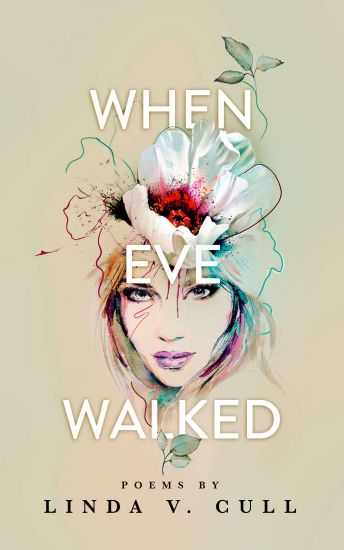
When Eve Walked

When Eve Walked

Linda V Cull

Wilara Press
2020
pokkari
WOMAN. HIDDEN. RISING. RISEN.In the inspirational memoir, Where The Light Lives, visionary artist Linda Cull shared her remarkable spiritual awakening journey-giving us hope and healing.When Eve Walked continues Linda's offering. A beautifully intimate collection inspired by her powerful spirituality. Through pain and joy, and a life lived deeply, her poems celebrate the many facets of womanhood and self-discovery. It will nourish you."All the poems contained in this collection were written in my early twenties when I had many spiritually transformative experiences. It has been my direct-lived experience that creativity inspires a union with the ultimate power and is an effect of that union. Then, I was unfolding my womanhood. These poems, therefore, speak of the divine feminine; hidden, rising - then risen." -LVCTired days, shut lids, climbing through the night sky to collect my solitary p i e c e s, to have them meet after all this time.
Train my hands for war!

Train my hands for war!

Linda V Casimir

Independently Published
2019
pokkari
Blessed be the LORD, my rock, Who trains my hands for war, And my fingers for battle - Psalm 144:1 I have had many conversations with others, especially women who have come to me when they get to the point of giving up on the constant battles that we all deal with daily. I also talk with those who are experiencing some deep spiritual warfare situations that they don't understand how to fight on their own, nor have they been equipped with the knowledge to understand who it is that they are really coming up against This book is written to help shine a light on the strategically planned schemes of Satan and the demonic realms he rules over. To try and at least level the ground on which they stand.
The Yamas and Niyamas

The Yamas and Niyamas

Linda V Yelton

Balboa Press
2021
pokkari
Practicing Yoga means more than just posing. Yoga has eight limbs that begin with ethical principles called the Yamas, and practices of conduct called the Niyamas. This book takes a profound look at each Yama and Niyama, relative to our 21st century lifestyle, and offers the reader a meaningful understanding of how and why to practice the Yamas and Niyamas. When practiced in our daily life, the Yamas and Niyamas help us to calm our mind and lead us into a state of meditation where we meet our higher self, join with the source of infinite possibilities, and manifest our intentions.
Leadership for a Living Planet: Strategies for Integrating Sustainability and Profit
In "Leadership for a Living Planet," Linda V. Scott challenges traditional notions of corporate success, arguing for a profound integration of sustainability and profitability within business leadership. This enlightening guide provides a roadmap for leaders who seek to harmonize business objectives with environmental stewardship. Through compelling narratives, practical strategies, and real-world examples, Scott illustrates how sustainable practices can drive innovation, foster resilience, and create lasting value. Structured around the core principles of sustainable leadership, the book delves into: The Imperative of Sustainability: Exploring the urgency and necessity of embedding sustainability at the heart of business models. Strategies for Integration: Offering actionable insights on how to intertwine sustainability with profit, enhancing both organizational growth and environmental conservation. Leadership in Action: Showcasing leaders who have successfully navigated the path toward sustainability, providing inspiration and guidance for others to follow. Scott's vision extends beyond mere theory, presenting a practical approach that empowers leaders to act decisively and responsibly. "Leadership for a Living Planet" is not just a book; it's a manifesto for a new era of leadership where profit and planet are inextricably linked. It's an essential read for anyone committed to forging a sustainable future, proving that business success and environmental sustainability can, and indeed must, go hand in hand.