Kirjojen hintavertailu. Mukana 11 244 527 kirjaa ja 12 kauppaa.

Kirjahaku

Etsi kirjoja tekijän nimen, kirjan nimen tai ISBN:n perusteella.

1000 tulosta hakusanalla Lyndal Roper

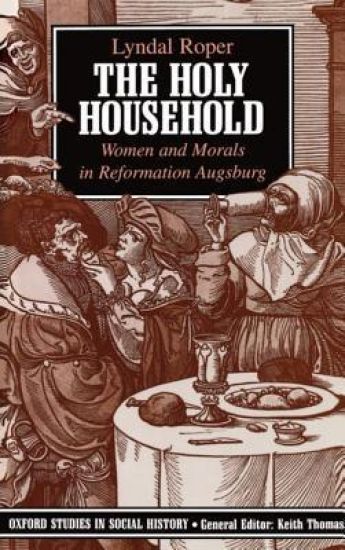
The Holy Household

The Holy Household

Lyndal Roper

Clarendon Press
1991
nidottu
This is a fascinating study of the impact of the Reformation idea of `civic righteousness' on the position of women in Augsburg. Lyndal Roper argues that its development, both as a religious credo and as a social movement, must be understood in terms of gender. Until now the effects of the Reformation on women have been regarded as largely beneficial: this book argues that such a view of the Reformation's legacy is a profound misreading, and that the status of women was, in fact, worsened. The Holy Household is the first scholarly account of how the Reformation affected half of society. It greatly advances our understanding of the Reformation, of feminist history, and of the place of women in European society.
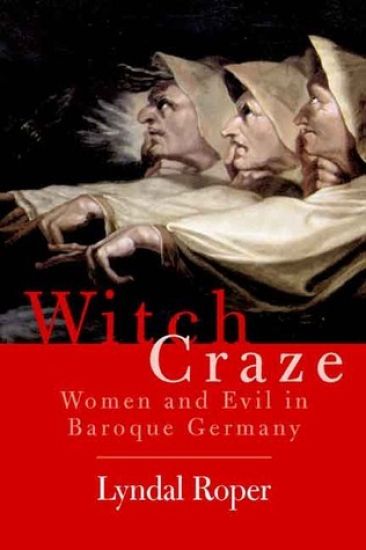
Witch Craze

Witch Craze

Lyndal Roper

Yale University Press
2006
pokkari
A powerful account of witches, crones, and the societies that make them From the gruesome ogress in Hansel and Gretel to the hags at the sabbath in Faust, the witch has been a powerful figure of the Western imagination. In the sixteenth and seventeenth centuries thousands of women confessed to being witches—of making pacts with the Devil, causing babies to sicken, and killing animals and crops—and were put to death. This book is a gripping account of the pursuit, interrogation, torture, and burning of witches during this period and beyond. Drawing on hundreds of original trial transcripts and other rare sources in four areas of Southern Germany, where most of the witches were executed, Lyndal Roper paints a vivid picture of their lives, families, and tribulations. She also explores the psychology of witch-hunting, explaining why it was mostly older women that were the victims of witch crazes, why they confessed to crimes, and how the depiction of witches in art and literature has influenced the characterization of elderly women in our own culture.
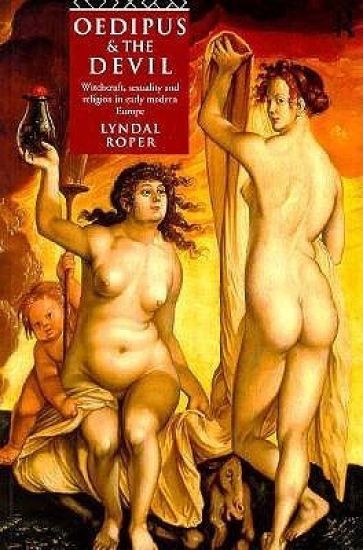
Oedipus and the Devil

Oedipus and the Devil

Lyndal Roper

Routledge
1994
nidottu
This bold and imaginative book marks out a different route towards understanding the body, and its relationship to culture and subjectivity. Amongst other subjects, Lyndal Roper deals with the nature of masculinity and feminity.
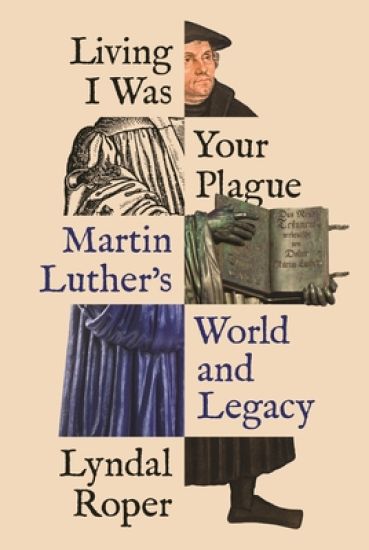
Living I Was Your Plague

Living I Was Your Plague

Lyndal Roper

PRINCETON UNIVERSITY PRESS
2021
sidottu
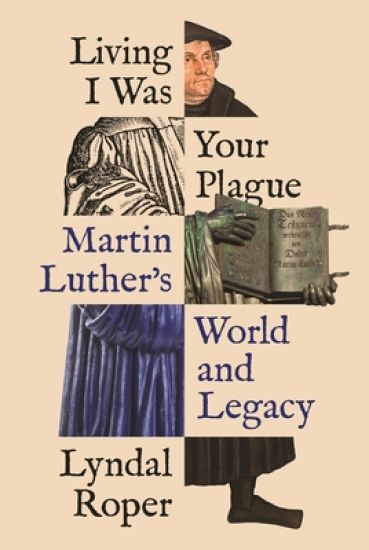
From the author of the acclaimed biography Martin Luther: Renegade and Prophet, new perspectives on how Luther and others crafted his larger-than-life imageMartin Luther was a controversial figure during his lifetime, eliciting strong emotions in friends and enemies alike, and his outsized persona has left an indelible mark on the world today. Living I Was Your Plague explores how Luther carefully crafted his own image and how he has been portrayed in his own times and ours, painting a unique portrait of the man who set in motion a revolution that sundered Western Christendom.Renowned Luther biographer Lyndal Roper examines how the painter Lucas Cranach produced images that made the reformer an instantly recognizable character whose biography became part of Lutheran devotional culture. She reveals what Luther's dreams have to say about his relationships and discusses how his masculinity was on the line in his devastatingly crude and often funny polemical attacks. Roper shows how Luther's hostility to the papacy was unshaken to the day he died, how his deep-rooted anti-Semitism infused his theology, and how his memorialization has given rise to a remarkable flood of kitsch, from "Here I Stand" socks to Playmobil Luther.Lavishly illustrated, Living I Was Your Plague is a splendid work of cultural history that sheds new light on the complex and enduring legacy of Luther and his image.
Living I Was Your Plague

Living I Was Your Plague

Lyndal Roper

PRINCETON UNIVERSITY PRESS
2023
pokkari
From the author of the acclaimed biography Martin Luther: Renegade and Prophet, new perspectives on how Luther and others crafted his larger-than-life imageMartin Luther was a controversial figure during his lifetime, eliciting strong emotions in friends and enemies alike, and his outsized persona has left an indelible mark on the world today. Living I Was Your Plague explores how Luther carefully crafted his own image and how he has been portrayed in his own times and ours, painting a unique portrait of the man who set in motion a revolution that sundered Western Christendom.Renowned Luther biographer Lyndal Roper examines how the painter Lucas Cranach produced images that made the reformer an instantly recognizable character whose biography became part of Lutheran devotional culture. She reveals what Luther's dreams have to say about his relationships and discusses how his masculinity was on the line in his devastatingly crude and often funny polemical attacks. Roper shows how Luther's hostility to the papacy was unshaken to the day he died, how his deep-rooted anti-Semitism infused his theology, and how his memorialization has given rise to a remarkable flood of kitsch, from "Here I Stand" socks to Playmobil Luther.Lavishly illustrated, Living I Was Your Plague is a splendid work of cultural history that sheds new light on the complex and enduring legacy of Luther and his image.
Martin Luther: Renegade and Prophet

Martin Luther: Renegade and Prophet

Lyndal Roper

Random House Trade
2018
nidottu
From "one of the best of the new Martin Luther] biographers" (The New Yorker), a portrait of the complicated founding father of the Protestant Reformation, whose intellectual assault on Catholicism transformed Christianity and changed the course of world history. "Magnificent."--The Wall Street Journal "Penetrating."--The New York Times Book Review "Smart, accessible, authoritative."--Hilary Mantel On October 31, 1517, so the story goes, a shy monk named Martin Luther nailed a piece of paper to the door of the Castle Church in the university town of Wittenberg. The ideas contained in these Ninety-five Theses, which boldly challenged the Catholic Church, spread like wildfire. Within two months, they were known all over Germany. So powerful were Martin Luther's broadsides against papal authority that they polarized a continent and tore apart the very foundation of Western Christendom. Luther's ideas inspired upheavals whose consequences we live with today. But who was the man behind the Ninety-five Theses? Lyndal Roper's magisterial new biography goes beyond Luther's theology to investigate the inner life of the religious reformer who has been called "the last medieval man and the first modern one." Here is a full-blooded portrait of a revolutionary thinker who was, at his core, deeply flawed and full of contradictions. Luther was a brilliant writer whose biblical translations had a lasting impact on the German language. Yet he was also a strident fundamentalist whose scathing rhetorical attacks threatened to alienate those he might persuade. He had a colorful, even impish personality, and when he left the monastery to get married ("to spite the Devil," he explained), he wooed and wed an ex-nun. But he had an ugly side too. When German peasants rose up against the nobility, Luther urged the aristocracy to slaughter them. He was a ferocious anti-Semite and a virulent misogynist, even as he argued for liberated human sexuality within marriage. A distinguished historian of early modern Europe, Lyndal Roper looks deep inside the heart of this singularly complex figure. The force of Luther's personality, she argues, had enormous historical effects--both good and ill. By bringing us closer than ever to the man himself, she opens up a new vision of the Reformation and the world it created and draws a fully three-dimensional portrait of its founder.
The Witch in the Western Imagination

The Witch in the Western Imagination

Lyndal Roper

UNIVERSITY OF VIRGINIA PRESS
2026
pokkari
In an exciting new approach to witchcraft studies, The Witch in the Western Imagination examines the visual representation of witches in early modern Europe. With vibrant and lucid prose, Lyndal Roper moves away from the typical witchcraft studies on trials, beliefs, and communal dynamics and instead considers the witch as a symbolic and malleable figure through a broad sweep of topics and time periods. Employing a wide selection of archival, literary, and visual materials, Roper presents a series of thematic studies that range from the role of emotions in Renaissance culture to demonology as entertainment, and from witchcraft as female embodiment to the clash of cultures on the brink of the Enlightenment. Rather than providing a vast synthesis or survey, this book is questioning and exploratory in nature and illuminates our understanding of the mental and psychic worlds of people in premodern Europe. Roper’s spectrum of theoretical interests will engage readers interested in cultural history, psychoanalytic theory, feminist theory, art history, and early modern European studies. These essays, three of which appear here for the first time in print, are complemented by more than forty images, from iconic paintings to marginal drawings on murals or picture frames. In her unique focus on the imagery of witchcraft, Lyndal Roper has succeeded in adding a compelling new dimension to the study of witchcraft in early modern Europe.
Summer of Fire and Blood

Summer of Fire and Blood

Lyndal Roper

John Murray Press
2025
sidottu
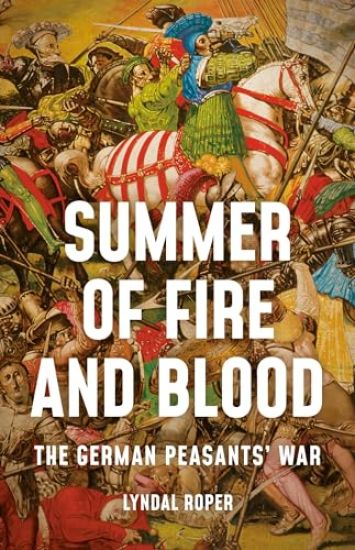
The definitive history of the sixteenth-century uprising that revolutionized Europe.The German Peasants' War was the greatest popular uprising in Western Europe before the French Revolution. In 1524 and 1525, it swept across Germany with astonishing speed as thousands of people massed in armed bands to demand a new and more egalitarian order. The peasants took control of vast areas of southern and middle Germany, torching and plundering the monasteries, convents, and castles that stood in their way. But they would prove no match for the forces of the lords, who put down the revolt by slaying somewhere between seventy and a hundred thousand peasants in just over two months. In Summer of Fire and Blood, the first history of the German Peasants' War in a generation, leading historian Lyndal Roper uncovers the far-reaching ramifications of this doomed rebellion. Though the victors portrayed the uprising as naive and chaotic, Roper's deeply researched account reveals instead a coherent mass movement inspired by the radical principles of the Protestant Reformation. Told through the voices of and beliefs of the people themselves, this is the thrilling, tragic story of the peasants' fight to change the world.
Summer of Fire and Blood

Summer of Fire and Blood

Lyndal Roper

John Murray Press
2026
pokkari
The definitive history of the sixteenth-century uprising that revolutionized Europe.The German Peasants' War was the greatest popular uprising in Western Europe before the French Revolution. In 1524 and 1525, it swept across Germany with astonishing speed as thousands of people massed in armed bands to demand a new and more egalitarian order. The peasants took control of vast areas of southern and middle Germany, torching and plundering the monasteries, convents, and castles that stood in their way. But they would prove no match for the forces of the lords, who put down the revolt by slaying somewhere between seventy and a hundred thousand peasants in just over two months.In Summer of Fire and Blood, the first history of the German Peasants' War in a generation, leading historian Lyndal Roper uncovers the far-reaching ramifications of this doomed rebellion. Though the victors portrayed the uprising as naive and chaotic, Roper's deeply researched account reveals instead a coherent mass movement inspired by the radical principles of the Protestant Reformation. Told through the voices of and beliefs of the people themselves, this is the thrilling, tragic story of the peasants' fight to change the world.
Summer of Fire and Blood: The German Peasants' War
In this "extraordinary and brilliant book" (Helen Castor, author of She-Wolves), a prize-winning historian offers the definitive account of the sixteenth-century uprising that revolutionized Europe The German Peasants' War was the greatest popular uprising in Western Europe before the French Revolution. In 1524 and 1525, it swept across Germany with astonishing speed as well over a hundred thousand people massed in armed bands to demand a new and more egalitarian order. The peasants took control of vast areas of southern and middle Germany, torching and plundering the monasteries, convents, and castles that stood in their way. But they proved no match for the forces of the lords, who put down the revolt by slaying somewhere between seventy and a hundred thousand peasants in just over two months. In Summer of Fire and Blood, the first history of the German Peasants' War in a generation, historian Lyndal Roper exposes the far-reaching ramifications of this rebellion. Though the war's victors portrayed the uprising as naive and inchoate, Roper reveals a mass movement that sought to make good on the radical potential of the Protestant Reformation. By recovering what the people themselves felt and believed, Summer of Fire and Blood reconstructs the thrilling, tragic story of the peasants' fight to change the world.
Martin Luther

Martin Luther

Lyndal Roper

Vintage Publishing
2017
pokkari
She reveals the often contradictory psychological forces that drove Luther forward and the dynamics they unleashed, which turned a small act of protest into a battle against the power of the Church. A New Statesman, Spectator, History Today, Guardian and Sunday Times Book of the Year
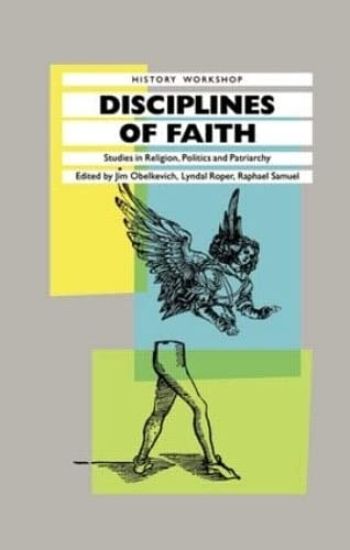
Disciplines of Faith

Disciplines of Faith

James Obelkevich; Lyndal Roper

Routledge
1987
sidottu
First Published in 1987. This volume has its remote origins in the 'Religion and Society' group - one of the feeders for 'History Workshop' - which began meeting at Nuffield College Oxford in 1965. The Group, which contained a number of people who were to become 'History Workshop' editors and contributors, began from a radical dissatisfaction at the exclusion of religion, as a central subject for enquiry, from the Oxford history course. The Workshop from which this volume is drawn covered three days and involved a vast range of papers, only a fraction of which are included here.