Kirjojen hintavertailu. Mukana 11 244 527 kirjaa ja 12 kauppaa.

Kirjahaku

Etsi kirjoja tekijän nimen, kirjan nimen tai ISBN:n perusteella.

1000 tulosta hakusanalla Lynne Pearce

The Rhetorics of Feminism

The Rhetorics of Feminism

Lynne Pearce

Routledge
2003
sidottu
Is it possible that changes in rhetorical practice could alter not just how thought is expressed, but also how it is made? Through a close stylistic and rhetorical analysis of contemporary feminist writing - from the cultural theory of Judith Butler to the popular journalism of Naomi Wolf and Germaine Greer - Lynne Pearce demonstrates how feminist thought is created as well as communicated through the frameworks in which it is presented. By linking rhetorical innovation with feminist epistemology in such a direct way, this is a book that will be of immense methodological as well as theoretical interest to readers, providing valuable insight into the often mysterious processes of conception and composition.
The Rhetorics of Feminism

The Rhetorics of Feminism

Lynne Pearce

Routledge
2003
nidottu
Is it possible that changes in rhetorical practice could alter not just how thought is expressed, but also how it is made? Through a close stylistic and rhetorical analysis of contemporary feminist writing - from the cultural theory of Judith Butler to the popular journalism of Naomi Wolf and Germaine Greer - Lynne Pearce demonstrates how feminist thought is created as well as communicated through the frameworks in which it is presented. By linking rhetorical innovation with feminist epistemology in such a direct way, this is a book that will be of immense methodological as well as theoretical interest to readers, providing valuable insight into the often mysterious processes of conception and composition.
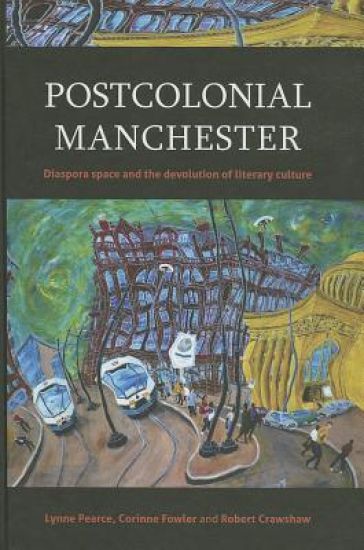
Postcolonial Manchester

Postcolonial Manchester

Lynne Pearce

Manchester University Press
2013
sidottu
Postcolonial Manchester offers a radical new perspective on Britain’s devolved literary cultures by focusing on Manchester’s vibrant, multicultural literary scene. Referencing Avtar Brah’s concept of ‘diaspora space’, the authors argue that Manchester is, and always has been, a quintessentially migrant city to which workers of all nationalities and cultures have been drawn since its origins in the cotton trade and the expansion of the British Empire. This colonial legacy – and the inequalities upon which it turns – is a recurrent motif in the texts and poetry performances of the contemporary Mancunian writers featured here, many of them members of the city’s long-established African, African-Caribbean, Asian, Chinese, Irish and Jewish diasporic communities. By turning the spotlight on Manchester’s rich, yet under-represented, literary tradition in this way, Postcolonial Manchester also argues for the devolution of the canon of English Literature and, in particular, recognition for contemporary black and Asian literary culture outside of London.
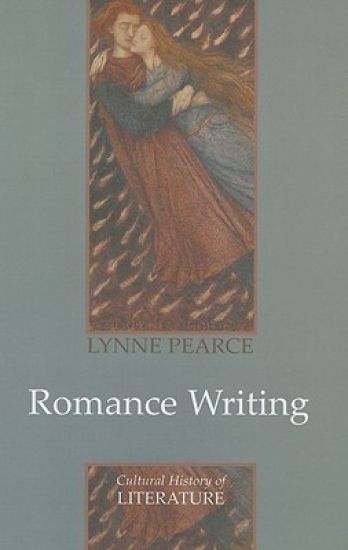
Romance Writing

Romance Writing

Lynne Pearce

Polity Press
2006
sidottu
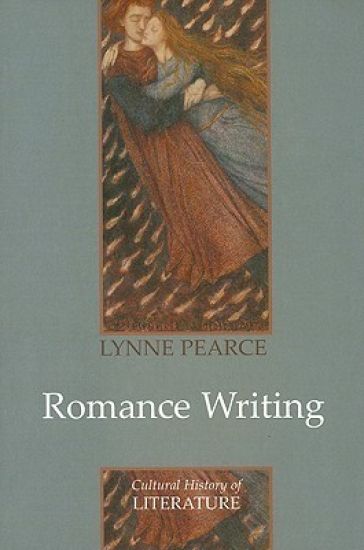
Romance Writing explores the changing nature of both the romance genre and the discourse of romantic love from the seventeenth century to the present day. Indeed, it is one of the first studies to approach romantic love as both genre and discourse in more than sixty years. Faced with the challenge of writing a cultural history for what is commonly understood to be one of lifes most universal, a-historical and cross-cultural phenomena, Lynne Pearce has invoked the concept of the gift to calculate loves added value at different cultural/historical moments. Building upon those philosophical traditions which have argued for the powerfully transformative nature of romantic love, Pearce shows how in the history of literature lovers have utilized its spark to change not only themselves, but also their worlds, through acts of creativity and heroism. The gift of love ranges from the simple gift of a name in the seventeenth century, through notions of immortality, self-sacrifice and selfhood in the nineteenth and twentieth centuries, through to the liberating temporal and spatial dislocations of the postmodern age. The opening chapter, The Alchemy of Love, also undertakes an in-depth engagement of the changing nature, and meaning, of romantic love. Providing a judicious blend of close reading and cultural history, Romance Writing will be essential reading for undergraduate students as well as postgraduates and scholars working in the field, while also offering much of interest to the general reader.
Romance Writing

Romance Writing

Lynne Pearce

Polity Press
2006
nidottu
Romance Writing explores the changing nature of both the romance genre and the discourse of romantic love from the seventeenth century to the present day. Indeed, it is one of the first studies to approach romantic love as both genre and discourse in more than sixty years. Faced with the challenge of writing a cultural history for what is commonly understood to be one of lifes most universal, a-historical and cross-cultural phenomena, Lynne Pearce has invoked the concept of the gift to calculate loves added value at different cultural/historical moments. Building upon those philosophical traditions which have argued for the powerfully transformative nature of romantic love, Pearce shows how in the history of literature lovers have utilized its spark to change not only themselves, but also their worlds, through acts of creativity and heroism. The gift of love ranges from the simple gift of a name in the seventeenth century, through notions of immortality, self-sacrifice and selfhood in the nineteenth and twentieth centuries, through to the liberating temporal and spatial dislocations of the postmodern age. The opening chapter, The Alchemy of Love, also undertakes an in-depth engagement of the changing nature, and meaning, of romantic love. Providing a judicious blend of close reading and cultural history, Romance Writing will be essential reading for undergraduate students as well as postgraduates and scholars working in the field, while also offering much of interest to the general reader.
Drivetime

Drivetime

Lynne Pearce

Edinburgh University Press
2016
sidottu
Engages literary texts in order to theorise the distinctive cognitive and affective experiences of drivingWhat sorts of things do we think about when we're driving or being driven in a car? Drivetime seeks to answer this question by drawing upon a rich archive of British and American texts from 'the motoring century' (1900-2000), paying particular attention to the way in which the practice of driving shapes and structures our thinking. While recent sociological and psychological research has helped explain how drivers are able to think about 'other things' while performing such a complex task, little attention has, as yet, been paid to the form these cognitive and affective journeys take. Pearce uses her close readings of literary texts ranging from early twentieth-century motoring periodicals, Modernist and inter-war fiction , American 'road-trip' classics , and autobiography in order to model different types of 'driving-event' and, by extension, the car's use as a means of phenomenological encounter, escape from memory, meditation, problem-solving and daydreaming.Key FeaturesBrings Humanities-based perspectives to bear upon topical debates in automobilitiesresearch Introduces a new concept for understanding our journeys made my car by focusing on the driver's automotive consciousness rather than utility/function Makes use of auto-ethnography to explore and theorise automotive consciousnessDraws upon a rich archive of literary texts from across the twentieth-century including original research into unknown writers featured in the early twentieth-century texts/motoring periodicals
Britain’s Changing Roadscapes

Britain’s Changing Roadscapes

Lynne Pearce

TAYLOR FRANCIS LTD
2026
sidottu
Through a creative juxtaposition of autoethnography and theoretical enquiry, this book documents how Britain’s roads and roadscapes have changed over the past thirty-five years via a route that runs from Scotland to Cornwall. As well as documenting change, the book is also concerned with how it makes its presence felt to road-users and to what effect. The book addresses long-standing geographical debates on place, place-attachment and kin/aesthetics as well the unique spatial-temporal properties of ‘journeying’. Drawing upon the author’s road-diaries and photographic archive dating back to the 1990s, the analysis centres on a route that runs from Scotland to Cornwall and which incorporates motorways, A-roads and unclassified country lanes. As well as seeking to capture material evidence of change across a wide variety of road features and driving-events - many of them transient, incidental and mundane - the book is also concerned with how change makes its presence known to the observer. This includes the question of how, and why, road-users sometimes develop powerful attachments for particular routes and roadside landmarks. To this end, the analysis is in conversation with recent debates in contemporary archaeology, the aesthetics of the everyday and geographical research on dis/orientation, as well as Henri Bergson’s foundational work on the phenomenology of perception and memory. And yet, it is the restless, teeming life of the British roads featured in the case studies - the A30, the A82 the M5, the M6, the M74 and Cornwall’s narrow, winding lanes - that makes this book memorable, especially given that, post-millennium, many of the changes to which it bears witness are epic in consequence. Congestion, electrification, automation, the arrival of SMART motorway and extreme weather events arising from climate change all feature here, alongside the disappearance of the roadside cafes, filling stations, phone boxes, lay-bys and snack bars associated with twentieth-century motoring. This interdisciplinary exploration of Britain’s changing roads and roadscapes will appeal to academics and students working in, and across, the fields of social and cultural geography, mobilities studies, cultural history, literary and cultural theory, and contemporary archaeology. Its autoethnographic case studies, historical route descriptions, photographic archive and general accessibility means that it may also be of interest to road enthusiasts and the general reader.
Drivetime

Drivetime

Lynne Pearce

Edinburgh University Press
2018
nidottu
What sorts of things do we think about when we're driving or being driven in a car? Drivetime seeks to answer this question by drawing upon a rich archive of British and American texts from 'the motoring century' (1900-2000), paying particular attention to the way in which the practice of driving shapes and structures our thinking. While recent sociological and psychological research has helped explain how drivers are able to think about 'other things' while performing such a complex task, little attention has, as yet, been paid to the form these cognitive and affective journeys take. Pearce uses her close readings of literary texts ranging from early twentieth-century motoring periodicals, Modernist and inter-war fiction , American 'road-trip' classics , and autobiography in order to model different types of 'driving-event' and, by extension, the car's use as a means of phenomenological encounter, escape from memory, meditation, problem-solving and daydreaming.
Postcolonial Manchester

Postcolonial Manchester

Lynne Pearce

Manchester University Press
2017
nidottu
Postcolonial Manchester offers a radical new perspective on Britain’s devolved literary cultures by focusing on Manchester’s vibrant, multicultural literary scene. Referencing Avtar Brah’s concept of ‘diaspora space’, the authors argue that Manchester is, and always has been, a quintessentially migrant city to which workers of all nationalities and cultures have been drawn since its origins in the cotton trade and expansion of the British Empire. This colonial legacy – and the inequalities upon which it turns – is a recurrent motif in the texts and poetry performances of the contemporary Mancunian writers featured, many of them members of the city’s long-established African, African-Caribbean, Asian, Chinese, Irish and Jewish diasporic communities. By turning the spotlight on Manchester’s rich, yet under-represented, literary tradition, this book also argues for the devolution of the canon of English Literature and recognition for contemporary black and Asian literary culture.
Mobility, Memory and the Lifecourse in Twentieth-Century Literature and Culture
This book explores the formative role of mobilities in the production of our close relationships, proposing that the tracks—both literal and figurative— we lay down in the process play a crucial role in generating and sustaining intimacy. Working with diaries, journals and literary texts from the mid- to late-twentieth century, the book pursues this thesis through three phases of the lifecourse: courtship (broadly defined), the middle years of long-term relationships and bereavement. Building upon the author’s recent research on automobility, the text’s case studies reveal the crucial role played by many different types of transport—including walking—in defining our most enduring relationships. Conceptually, the book draws upon the writings of the philosopher, Henri Bergson, the anthropologist, Tim Ingold and the geographer, David Seamon, engaging with topical debates in cultural and emotional geography (especially work on landscape, memory and mourning), mobilities studies and critical love studies.
Mobility, Memory and the Lifecourse in Twentieth-Century Literature and Culture
This book explores the formative role of mobilities in the production of our close relationships, proposing that the tracks—both literal and figurative— we lay down in the process play a crucial role in generating and sustaining intimacy. Working with diaries, journals and literary texts from the mid- to late-twentieth century, the book pursues this thesis through three phases of the lifecourse: courtship (broadly defined), the middle years of long-term relationships and bereavement. Building upon the author’s recent research on automobility, the text’s case studies reveal the crucial role played by many different types of transport—including walking—in defining our most enduring relationships. Conceptually, the book draws upon the writings of the philosopher, Henri Bergson, the anthropologist, Tim Ingold and the geographer, David Seamon, engaging with topical debates in cultural and emotional geography (especially work on landscape, memory and mourning), mobilities studies and critical love studies.
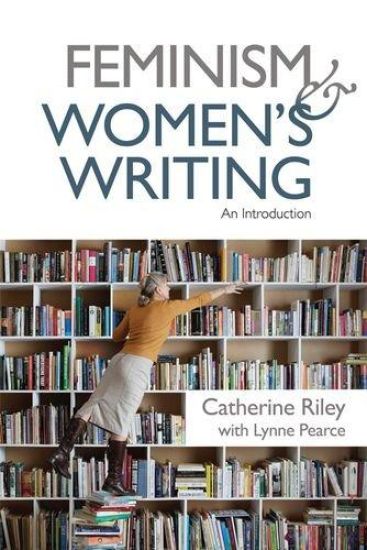
Feminism and Women's Writing

Feminism and Women's Writing

Catherine Riley; Lynne Pearce

Edinburgh University Press
2018
sidottu
Outlines the key feminist debates on British women's fiction since the 'second wave' and grounds them in examples of women's writingThis book introduces you clearly and succinctly to the ways in which feminist ideas have transformed the form and content of British women's fiction and non-fiction writing. The Introduction sets out the critical background and the main feminist critical approaches to literature. This is followed by 5 chapters which outline feminist engagements with the canon, gender, the body, sexual difference and ethnicity to demonstrate the ways in which feminist ideas have affected the 'content' of women's literature. The next 5 chapters examine types of fiction writing: romance, crime, science fiction, life-writing and historical fiction, to show the effect of feminist ideas on the 'form' of women's literature.The text also provides a wide range of illuminating case studies which include: Virago Modern Classics, The Women Prize for Fiction, Charlotte Perkins Gilman's 'Herland', Angela Carter's 'The Passion of New Eve', Margaret Attwood's 'The Edible Woman', Lucy Ellmann's 'Sweet Desserts', Barbie dolls, French feminism and sexuality, trans identities, feminist publishing and ethnicity, black and minority ethnic women's writing, Zadie Smith's novels, Toni Morrison's 'Beloved', Eimear McBride's 'A Girl is a Half Formed Thing', Val McDermid and lesbian crime writing, Ruth Rendell and the invention of the 'whydunit', Margaret Atwood's 'Maddaddam' sci fi trilogy, Jeanette Winterson's 'Oranges Are Not The Only Fruit' and 'The Passion', Pat Barker's 'Regeneration' trilogy and Hilary Mantel's 'Wolf Hall' and 'Bring Up The Bodies'. Each chapter ends with a list of primary texts and recommended further reading.Key FeaturesProvides a clear overview of changing feminist debates and terms in the 20th and 21st centuriesShows the changing form of women's fiction and non-fiction during this periodAssesses the ways in which literary, political and mainstream cultures, as well as the book industry, have impacted on the work and ideas of female writersIncludes a wide range of case studies as well as recommended further reading and a list of primary texts with each chapter
Feminism and Women's Writing

Feminism and Women's Writing

Catherine Riley; Lynne Pearce

Edinburgh University Press
2018
nidottu
Outlines the key feminist debates on British women's fiction since the 'second wave' and grounds them in examples of women's writingThis book introduces you clearly and succinctly to the ways in which feminist ideas have transformed the form and content of British women's fiction and non-fiction writing. The Introduction sets out the critical background and the main feminist critical approaches to literature. This is followed by 5 chapters which outline feminist engagements with the canon, gender, the body, sexual difference and ethnicity to demonstrate the ways in which feminist ideas have affected the 'content' of women's literature. The next 5 chapters examine types of fiction writing: romance, crime, science fiction, life-writing and historical fiction, to show the effect of feminist ideas on the 'form' of women's literature.The text also provides a wide range of illuminating case studies which include: Virago Modern Classics, The Women Prize for Fiction, Charlotte Perkins Gilman's 'Herland', Angela Carter's 'The Passion of New Eve', Margaret Attwood's 'The Edible Woman', Lucy Ellmann's 'Sweet Desserts', Barbie dolls, French feminism and sexuality, trans identities, feminist publishing and ethnicity, black and minority ethnic women's writing, Zadie Smith's novels, Toni Morrison's 'Beloved', Eimear McBride's 'A Girl is a Half Formed Thing', Val McDermid and lesbian crime writing, Ruth Rendell and the invention of the 'whydunit', Margaret Atwood's 'Maddaddam' sci fi trilogy, Jeanette Winterson's 'Oranges Are Not The Only Fruit' and 'The Passion', Pat Barker's 'Regeneration' trilogy and Hilary Mantel's 'Wolf Hall' and 'Bring Up The Bodies'. Each chapter ends with a list of primary texts and recommended further reading.Key FeaturesProvides a clear overview of changing feminist debates and terms in the 20th and 21st centuriesShows the changing form of women's fiction and non-fiction during this periodAssesses the ways in which literary, political and mainstream cultures, as well as the book industry, have impacted on the work and ideas of female writersIncludes a wide range of case studies as well as recommended further reading and a list of primary texts with each chapter
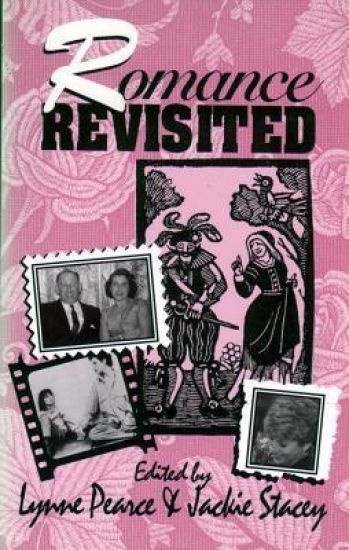
Romance Revisited

Romance Revisited

Lynne (EDT) Pearce; Jackie (EDT) Stacey

New York University Press
1995
sidottu
After decades of feminism and deconstruction, romance remains firmly in place as a central preoccupation in the lives of most women. Divorce rates skyrocket, the traditional family is challenged from all sides, and yet romance seems indestructible. In terms of its cultural representation, the popularity of romance also appears unchallenged. Popular fiction, Hollywood cinema, television soap-operas, and the media in general all display a seemingly bottomless appetite for romantic subjects. The trappings of classic romance--white weddings, love songs, Valentine's Day--are as commercially viable as ever. In this anthology of original essays, romance is revisited from a wide spectrum of perspectives, not just in fiction and film but in a whole range of cultural phenomena. Essays range over such issues as Valentine's Day, interracial relationships, medieval erotic visions and modern romance fiction, the relationship between the lesbian poet H.D. and Bryher, the pervasive whiteness of romantic desire, lesbian erotica in the age of AIDS, and the public romance of Charles and Diana.
Romance Revisited

Romance Revisited

Lynne (EDT) Pearce; Jackie (EDT) Stacey

New York University Press
1995
pokkari
After decades of feminism and deconstruction, romance remains firmly in place as a central preoccupation in the lives of most women. Divorce rates skyrocket, the traditional family is challenged from all sides, and yet romance seems indestructible. In terms of its cultural representation, the popularity of romance also appears unchallenged. Popular fiction, Hollywood cinema, television soap-operas, and the media in general all display a seemingly bottomless appetite for romantic subjects. The trappings of classic romance--white weddings, love songs, Valentine's Day--are as commercially viable as ever. In this anthology of original essays, romance is revisited from a wide spectrum of perspectives, not just in fiction and film but in a whole range of cultural phenomena. Essays range over such issues as Valentine's Day, interracial relationships, medieval erotic visions and modern romance fiction, the relationship between the lesbian poet H.D. and Bryher, the pervasive whiteness of romantic desire, lesbian erotica in the age of AIDS, and the public romance of Charles and Diana.
Business Functions

Business Functions

Jim Pearce; Lynne Butel; Jacqueline McIntyre; Tony Curtis; David Smith; Stephen Rainbow; Christine Swales

JOHN WILEY AND SONS LTD
1998
nidottu
This introduction to Business Functions delivers the knowledge and skills required to understand the key characteristics of business organisations and the core functions that contribute to their operations.
Dreaming Of Dragons

Dreaming Of Dragons

Callum Pearce; Lynne Phillips; Brian MacDonald

House of Loki
2025
pokkari
In The year of the dragon 2024, Eleven authors from around the world have come together to bring you magical tales and beautiful artwork. These have been collected from the wonderful worlds where Dragons still soar in the skies or stride across the landscape.Join us for fun, adventure and lots of giggles as we celebrate our favourite fabulous beasts.We've traveled far and wide to share these exciting adventures and strange artifacts with you all. Or perhaps we were just Dreaming of Dragons
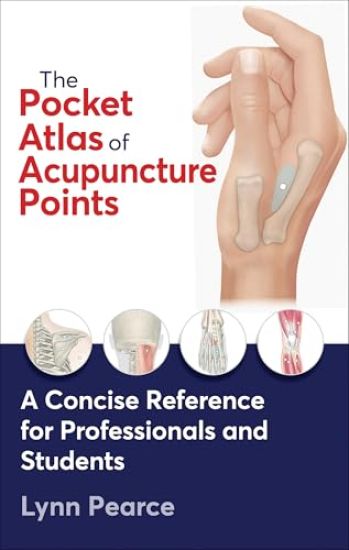
The Pocket Atlas of Acupuncture Points

The Pocket Atlas of Acupuncture Points

Lynn Pearce

Human Kinetics Publishers
2025
pokkari
A comprehensive tool for acupuncture practitioners. Acupuncture is used to treat physical symptoms as well as emotional or mental symptoms. It is believed by many to stimulate the immune system and encourage the body to seek balance. With over 290 illustrations, The Pocket Atlas of Acupuncture Points is a concise guide that provides information about indications, location, needling, and actions for more than 280 acupuncture points. Inside, you'll find a clear explanation of organ functions (Zang Fu) and how symptom patterns can guide treatment; tools for accurate point location, including the cun measurement system; insight into how acupuncture points are grouped for specific therapeutic effects; detailed descriptions of the meridians and meridian points, with anatomically accurate illustrations; myotome and dermatome information for every point, which is essential for segmental acupuncture; and a comprehensive appendix that maps nerve supply to muscles and skin, supporting Western-style neuroanatomical practice. The Pocket Atlas of Acupuncture Points offers licensed acupuncturists and students a quick reference for acupuncture points used in daily practice.