
Kirjahaku
Etsi kirjoja tekijän nimen, kirjan nimen tai ISBN:n perusteella.
1000 tulosta hakusanalla Lynnette Porter; David Lavery; Hillary Robson
Most criticism of The Lord of the Rings trilogy emphasizes the most likely heroes in the tales: Aragorn, Frodo, Gandalf, and even Sam. From popular to scholarly literature, the women and smaller characters often go overlooked. But our notions of what makes a hero have altered since September 11, and sometimes the most unlikely people can come to embody all that we look up to and admire in a person. Here, Lynnette Porter examines what we mean when we talk about heroes, and for the first time illustrates the heroic qualities that can be found in the women and other beloved, though less-celebrated, characters in the The Lord of the Rings books and movies. She takes a critical look at the importance of literary and cinematic heroes in general, emphasizing the roles of Merry, Pippin, Galadriel, Eowyn, Arwen, Legolas, and Gimli, who can all be considered heroes despite their relatively smaller roles. She shows, ultimately, that our attraction to and celebration of heroes does not have to be limited to the leading man, but rather that women and youth often display essential characteristics of true heroes. Bringing together a discussion of both the books and the movies, Porter reveals for readers the heroic nature of several characters in The Lord of the Rings who have been ignored in terms of their status as heroes. Nevertheless, these female and youthful characters have received incredible popular acclaim and illustrate the shift in the way the Western movie-going public identifies and glorifies heroes. While other stars may have outshone the likes of Merry and Pippin, Arwen and Galadriel, Porter redirects the spotlight on these favorites of the books and movies to show us how the roles they play, the actions they take, and the behaviors they display are worthy of our praise and admiration. This unique and refreshing perspective adds dimension to our understanding of The Lord of the Rings phenomenon.
Tarnished Heroes, Charming Villains and Modern Monsters
Lynnette Porter
McFarland Co Inc
2010
pokkari
The heroes, villains, and monsters portrayed in such popular science fiction television series as Heroes, Lost, Battlestar Galactica, Caprica, Doctor Who, and Torchwood, as well as Joss Whedon's many series, illustrate a shift from traditional, clearly defined characterizations toward much murkier definitions. Traditional heroes give way to "gray" heroes who must become more like the villains or monsters they face if they are going to successfully save society. This book examines the ambiguous heroes and villains, focusing on these characters' different perspectives on morality and their roles within society. Appendices include production details for each series, descriptions and summaries of pivotal episodes, and a list of selected texts for classroom use. Instructors considering this book for use in a course may request an examination copy here.
As Doctor Who nears its 50th anniversary, it is very much a part of British popular culture, and the Doctor has become a British icon. Nevertheless, thanks to BBC America and BBC Worldwide's marketing strategy, as well as the Doctor's and his companions' recent in-person visits to the U.S., the venerable series is becoming more susceptible to an "American influence," including the possibility of becoming "Americanized." Doctor Who and recent spinoffs Torchwood and The Sarah Jane Adventures offer American audiences very different insights into the Whoniverse and have met with varying degrees of success. Whereas Torchwood became a U.S.-U.K. co-production, The Sarah Jane Adventures was largely mismarketed. To complicate matters, the interrelationships that keep the Doctor Who franchise alive through radio dramas, audiobooks, comics, novels, etc., during hiatuses in television broadcasts, may give U.S. and U.K. audiences different understandings of the lead characters--the Doctor, Captain Jack Harkness, and Sarah Jane Smith. Although the past decade has been an exciting time in the Whoniverse, the Doctor--and the franchise--are poised for yet another regeneration.
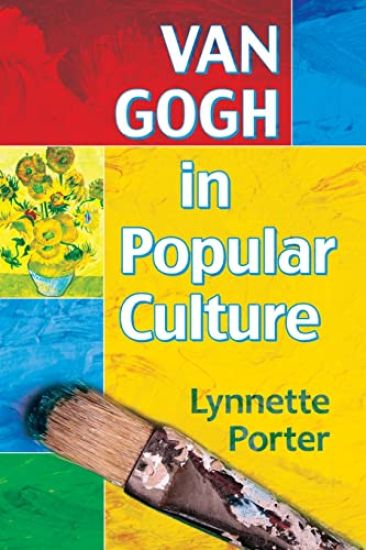
Vincent van Gogh continues to fascinate more than a century after his death in 1890. Yet how much of what is commonly known about this world-renowned artist is accurate? Though he left thousands of works and a trove of letters, the definitive Van Gogh remains elusive. Was he a madman who painted his greatest pieces in a passionate fury or a lifelong student of art, literature and science who carefully planned each composition? Was he a loner dedicated only to his craft or an active collaborator with his contemporaries? Why is he best known for self-mutilation and "The Starry Night"? This book has biographers, scriptwriters, lyricists, actors, museum curators and tour guides, among others, presenting diverse interpretations of his life and work, creating a mythic persona that may, in fact, help us in the search for the real Van Gogh.
"Perhaps I should have realized that cancer runs in my family. After all, three grandparents and my father and brother perished from this disease. Yet, when I received my colorectal cancer diagnosis, I was surprised. I never expected to be primarily identified as a cancer patient. Following a typical combination of chemotherapy, radiation, surgery, and more chemo, I was presumably cancer-free when my post-treatment scans looked clean. Nonetheless, within a year I received a terminal diagnosis; cancer had metastasized in my lungs. Thus began my year as a dead woman--a time of chaotic emotions, new priorities, and rapid-fire plans and changes. Expecting the unexpected became a theme in my life, but the things that turned out to be most shocking are social, familial, and even my expectations about what is realistic for a dead woman to be or do." Preconceptions about a terminal cancer diagnosis frequently are based on popular culture depictions of cancer and dying, which can be misleading as a guide for knowing what to expect when you're expecting to die. This memoir provides one woman's often-irreverent, pop culture-illustrated guide to life that deconstructs some common preconceptions about living with a terminal diagnosis.
Travelers are buzzing about apitourism--or "bee tourism"--as an opportunity to get close to bees and learn about the ecology and industry they support. Apitours invite visitors to see what takes place inside a hive, taste fresh honey and observe its journey from comb to bottle. Apitourists explore "bee culture" through diverse activities--watching films, creating art, building "bee hotels," sampling mead, learning to plant pollinator gardens and documenting species in the wild. This guide presents an educational overview of apitourism, with an exploration of the fascinating world of bees and the sometimes controversial issues surrounding them.
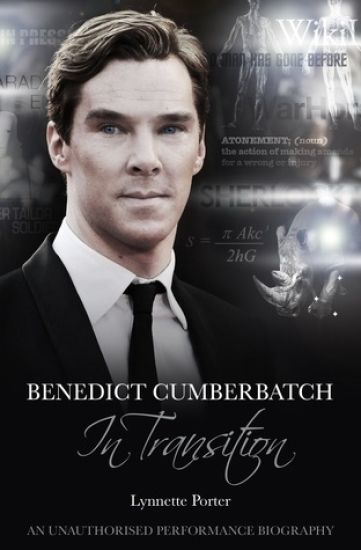
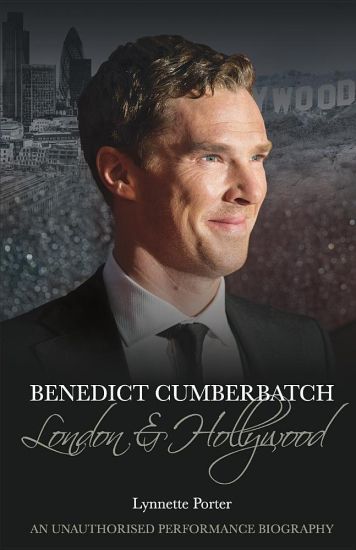
Benedict Cumberbatch, An Actor in Transition: An Unauthorised Performance Biography
Lynnette Porter
MX Publishing
2013
pokkari
Tinker Tailor Soldier Spy, War Horse, Star Trek: Into Darkness, The Hobbit trilogy, Twelve Years a Slave, August: Osage County, The Fifth Estate; Hedda Gabler, After the Dance, Frankenstein; Hawking, To the Ends of the Earth, The Last Enemy, Parade's End, and, of course, Sherlock. For most actors, these stellar cinematic, theatrical, and television events would be the highlights of a lifetime's work. On Benedict Cumberbatch's resume they are only a few of many entries. Especially since 2010, his performances have garnered a plethora of best actor awards, both in the theatre (Evening Standard Theatre Award, Critics Circle Theatre Award, and Olivier Award), by playing the dual roles of Victor Frankenstein and the Creature in the National Theatre's Frankenstein, and on television (Broadcasting Press Guild Award, Critics Choice Television Award, Crime Thriller Award, and TV Choice Award), by starring as the titular Holmes in the BBC's Sherlock. Add these and other recent accolades to nearly a decade s nominations and awards (such as the Golden Nymph as best actor in Hawking), and it's easy to see why Benedict Cumberbatch is often hailed as the actor of his generation. Cumberbatch's body of work further includes indie films, radio plays and series, television documentaries, live dramatic readings, multimedia advertisements, and even the occasional stint as a fashion model. He often shares an intriguing perspective on his profession, as evidenced in sometimes controversial interviews. He has become so much in demand that online box offices crash when tickets for his performances go on sale, and, before a Cheltenham Literature Festival Q&A session, fans overwhelmed Twitter when so many responded immediately to a call for questions. Cumberbatch consistently is a top name on lists ranging from sex appeal to global influence. In 2012 he beat David Beckham in the former and U.S. President Barack Obama in the latter. Increasingly, part of Cumberbatch's job involves the role of celebrity. Benedict Cumberbatch is at a pivotal point in his profession, and his career trajectory especially as documented in entertainment media permits a closer examination of just what it means to be a celebrity or star in Britain or the U.S. and how an actor may be perceived very differently in London or Hollywood. This performance biography is an analysis of a man in transition from working actor to multimedia star, as well as the balance between actor and celebrity. It looks at what makes this actor so well suited to play one of popular culture's iconic characters, Sherlock Holmes, and how Sherlock is so well suited to propel Cumberbatch toward greater global fame.
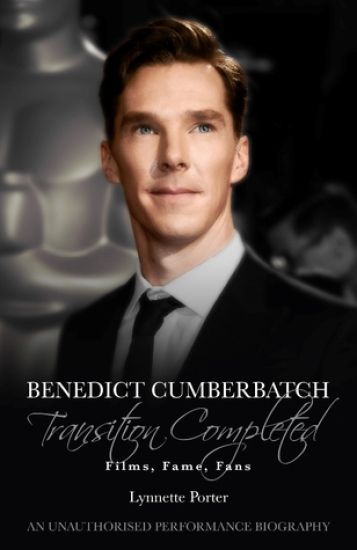
Benedict Cumberbatch, Transition Completed: Films, Fame, Fans
Lynnette Porter
MX Publishing
2014
nidottu
Star Trek: Into Darkness, The Fifth Estate, 12 Years a Slave, August: Osage County, The Hobbit: The Desolation of Smaug - these would be milestones in most actors' entire career. For Benedict Cumberbatch, roles in these films are merely a year's additions to his already-vast resume. 2013 proved to be the final step in Cumberbatch's transition from respected working actor to bona fide worldwide celebrity and recipient of BAFTA Los Angeles' Britannia Award for British Artist of the Year. Like its predecessor, Benedict Cumberbatch, In Transition (MX Publishing, 2013), Benedict Cumberbatch, Transition Completed: Films, Fame, Fans explores the nature of Cumberbatch's fame and fandom while analysing his most recent roles. This in-depth performance biography does more than critique the actor's radio, stage, film, and television performances - especially his star turn in the long-awaited yet controversial third series of Sherlock. It also analyses how and why the actor's work is so memorable in each role, a perspective unique to this performance biography.Cumberbatch's role in popular culture, as much as his acting in multiple media, is well worth such scrutiny to illustrate that Benedict Cumberbatch represents both the best of acting and of the power of celebrity.
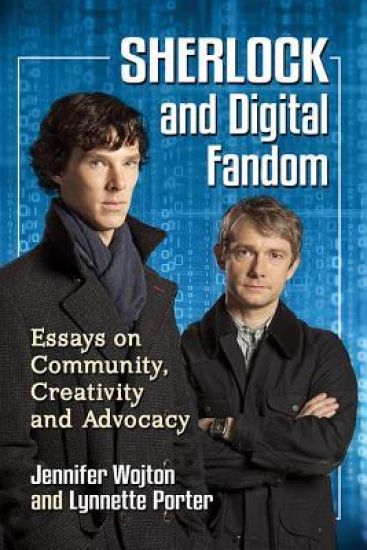
When the BBC's Sherlock debuted in summer 2010--and appeared in the U.S. on PBS a few months later--no one knew it would become an international phenomenon. The series has since gathered a diverse and enthusiastic fandom. Like their hero, Sherlock fans scrutinize clues about the show's deeper meaning, as well as happenings off screen. They postulate theories and readings of the characters and their relationships. They have tweeted with "The Powers That Be," mobilized to filming locations via #Setlock, and become advocates for LGBTQIA communities. Sherlock's digital communities have changed the way that fans and series creators interact in person and online, as each publicly takes "ownership" of beloved television characters who represent far more than entertainment to fans.
This acts as a guidebook for teachers and administrators as they look for support with their online education programs. It offers teaching suggestions for everything from course development to time management and community building. The book is designed to provide information to help teachers work more effectively with online tools, develop course materials for existing online courses, work with the internet as a medium of education and complete daily activities - such as evaluating assignments, lecturing and communicating with students more easily. Administrators are also given support in their efforts to recruit, train, and retain online teachers, allocate resources for online education and evaluate online materials for promotion and tenure.
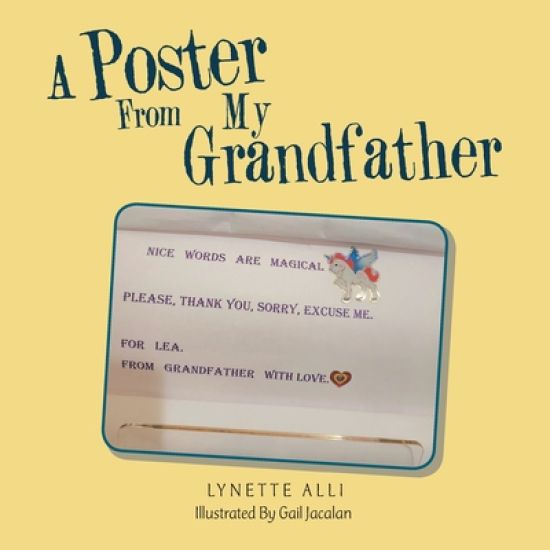
This book has simple words which can make a child or adult an honest, wise, happy, and law-abiding citizen. Parents and grandparents are role models for children. ALL CHILDREN ARE BEAUTIFUL.
Activating God's Power in Lynnette: Overcome and be transformed by accessing God's power.
Michelle Leslie
Michelle Leslie Publishing
2016
nidottu
Boom! Comics by Lynnette: A What Happens Next Comic Book for Budding Illustrators and Story Tellers
Bokkaku Dojinshi
Createspace Independent Publishing Platform
2018
nidottu
Grab This Deal For The Comics Artist In Your Life For Less Than $10See that girl always doodling and dreaming up stories and plots? She's gonna LOVE the What Happens Next Comic Book For Budding Artists edition, created especially for young artists between 9 and 14 years of age.Bokkaku Dojinshi has created this book as a 6 by 9 inch, perfect pocket book form. Plenty of different templates to explore as well as loads of room to keep track of plot ideas.There is even space for special expression studies of the main characters so the budding artist hits the right emotion in her images every single time.This book is perfect for: mangagraphic novelsSunday funniesanimefan fictionParents and teachers love What Happens Next Comics series for these reasons: helps speech developmentincreases literacydevelops a sense of sequencecreates confidencedevelops an appreciation for artboots creativityOnce you get this book, notice how handy it is - perfect pocket book size means no bulky bags on summer trips or lazy afternoons under a willow tree. All you need is your pencil and ink pen Can't wait to see what you make of your And then... comic book
Arnold J. Hopkins, Director, Division of Parole and Probation, Maryland Department of Public Safety and Correctional Services, Petitioner, V. Virginia Lynnette Fabritz. U.S. Supreme Court Transcript of Record with Supporting Pleadings
Francis B Burch; Stephen H Sachs
Gale Ecco, U.S. Supreme Court Records
2011
pokkari
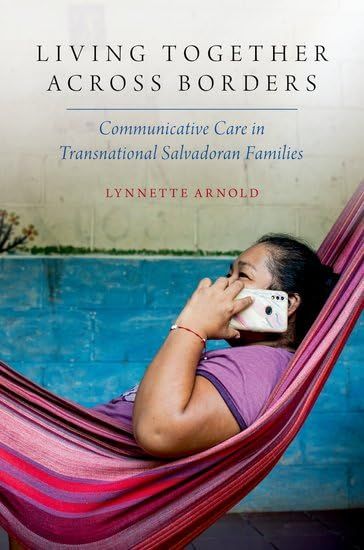
In Living Together Across Borders, author Lynnette Arnold tells the stories of extended families living stretched between a rural Salvadoran village and the urban locations in the United States where their migrant relatives live. In this multi-sited ethnography, Arnold examines seemingly mundane conversational practices-such as sending greetings, negotiating remittances, and reminiscing together-that are central to family life across borders. Arnold underscores the consequentiality of these linguistic practices by tracing how they are shaped by and re-shape gendered and generational norms of family care, as well as how they are tied to Salvadoran histories of migration, violence, and poverty, which are powerfully influenced by U.S. economic and foreign policy. This book demonstrates that these communicative practices bring inequities between the global North and South into family life by continually reproducing distinctions between relatives in El Salvador and those living in the United States. Conversely, she examines seemingly mundane interactions including greetings, remittance negotiations, and reminiscing together. Although these relational moments of cross-border connection are fleeting, their impacts endure, laying the foundation for the ongoing material and economic provisioning necessary to family survival. Through cross-border conversations, families nurture intergenerational relations that sustain the family and convivencia (living-together) over the years despite ongoing separation.
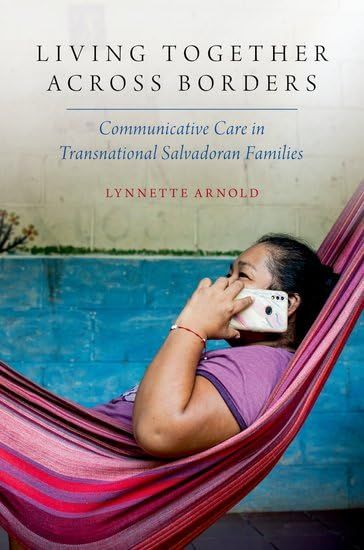
In Living Together Across Borders, author Lynnette Arnold tells the stories of extended families living stretched between a rural Salvadoran village and the urban locations in the United States where their migrant relatives live. In this multi-sited ethnography, Arnold examines seemingly mundane conversational practices-such as sending greetings, negotiating remittances, and reminiscing together-that are central to family life across borders. Arnold underscores the consequentiality of these linguistic practices by tracing how they are shaped by and re-shape gendered and generational norms of family care, as well as how they are tied to Salvadoran histories of migration, violence, and poverty, which are powerfully influenced by U.S. economic and foreign policy. This book demonstrates that these communicative practices bring inequities between the global North and South into family life by continually reproducing distinctions between relatives in El Salvador and those living in the United States. Conversely, she examines seemingly mundane interactions including greetings, remittance negotiations, and reminiscing together. Although these relational moments of cross-border connection are fleeting, their impacts endure, laying the foundation for the ongoing material and economic provisioning necessary to family survival. Through cross-border conversations, families nurture intergenerational relations that sustain the family and convivencia (living-together) over the years despite ongoing separation.
Islam has permeated Chinese civilization as a religion and lifestyle for centuries. This volume offers a summary of key developments concerning scholarship on Islam in China and presents a record of research on this topic. The first part of the book is a narrative introduction to the history of Islam in China, the coexistence of Chinese and Muslim cultures, and contemporary issues. The second part of the work is a listing of more than four hundred sources of information on the topic. Entries are grouped in ten categories, and each entry includes a descriptive annotation. An appendix lists journals devoted to research in this field, and the volume concludes with author, title, and subject indexes.
In this book, author, Lynnette Clement, talks about the ?why? of cheating and offers up suggestions on how to stop or never start cheating in any relationship. Lynnette explores beyond the surface level of cheating and the impact that cheating has on all parties involved. This book is intended to help to uncover your why, so that you can begin to work on healthy coping skills, lifestyle changes, and develop better decision making skills.