
Kirjahaku
Etsi kirjoja tekijän nimen, kirjan nimen tai ISBN:n perusteella.
1000 tulosta hakusanalla Mélanie Prévost



Melanie Miller never planned to lose her entire life at age seventeen. But when her parents die in a tragic accident, Melanie realizes her life is not hers to control anymore. Just days after the accident, Melanie is placed in a group home with strangers. While she struggles to accept the turn her life has suddenly taken, Melanie must grieve the loss of her parents while attempting to convince herself that life will go on, especially after her uncle rejects the idea of becoming her guardian. Now as Melanie's journey leads her to a new family, she faces more emotional turmoil than she ever imagined as anger, sadness, and confusion bubble to the surface. As Melanie is forced to confront some harsh realizations, she must look within for the answers as her future-and her purpose-wait. Melanie shares the poignant tale of a teenager's challenges after her parents are killed in a car accident and she is left to find her way in an uncertain world.


After the death of his mother, the future First Family embraces the twelve-year old Buck as their own and happily provides all the love and care their old friend, the Virginia senator's son requires. Soon after his departure for Westpoint, Buck abruptly & inexplicably terminates contact with his ersatz family. The sexually matured young man falls hopelessly in love with Melanie, the future First Lady, and subjects himself to deliberate exile. As his father begs him to attend Trent and Melanie's inauguration as First Family, however, his secret is revealed to her. Melanie's task now is to master the circumstances without hurting any of the affected parties even as she discovers Buck's feelings are not without resonance in her heart. A European-style romance in the tradition of Bovary and Karenina, set in the American White House, this would-be adultery novel offers a return to the big moral questions concerning the passions and the battle between sacred duty and neighborly love. The novel revisits the grand narratives of the age of innocence as it updates them with reflections on the moral quandaries of contemporary existence.

Sind Sie auf der Suche nach einem g nstigen Geschenk f r ihre Tochter, Freundin oder eine Sch lerin, die gerne Notizen schreibt? Dieses linierte Blanko Notebook ist perfekt Es ist ein perfektes Geschenk f r den Schuljahresbeginn, besondere Anl sse oder Geburtstage Das Schreibheft hat ein 120 linierte A5 Seiten, so dass Sie nicht nur schreiben, sondern auch malen und zeichnen k nnen. Abgerundet wird das ganze durch einen sch nen farbigen Umschlag mit matten und cremefarbenen Seiten. Lass deiner Kreativit t freien Lauf. Schauen Sie sich auch unsere anderen B cher an, Sie werden sicher ein weiteres finden, welches Ihnen auch gefallen wird

Sind Sie auf der Suche nach einem g nstigen Geschenk f r ihre Tochter, Freundin oder eine Sch lerin, die gerne Notizen schreibt? Dieses personalisierte linierte Blanko Notebook ist perfekt Es ist ein perfektes Geschenk f r den Schuljahresbeginn, besondere Anl sse oder Geburtstage Das Schreibheft hat ein 120 linierte A5 Seiten, so dass Sie nicht nur schreiben, sondern auch malen und zeichnen k nnen. Abgerundet wird das ganze durch einen sch nen farbigen Umschlag mit matten und cremefarbenen Seiten. Lass deiner Kreativit t freien Lauf. Schauen Sie sich auch unsere anderen B cher an, Sie werden sicher ein weiteres finden, welches Ihnen auch gefallen wird


Gathers writings by the Viennese psychoanalyst concerning infant analysis, Oedipal conflicts, anxiety situations, symbol formation, and envy

Melanie is a brave little girl with a head full of curls. She is faced with the challenge of loving herself more than feeling scared or sad about what others think of her. Melanie is a little girl that loves her melanin, and, most importantly, is not afraid to tell the world about how special she is.Join Melanie as she teaches about her melanin and the powers that she has because of it. Allow her wisdom to increase the self love in your home.

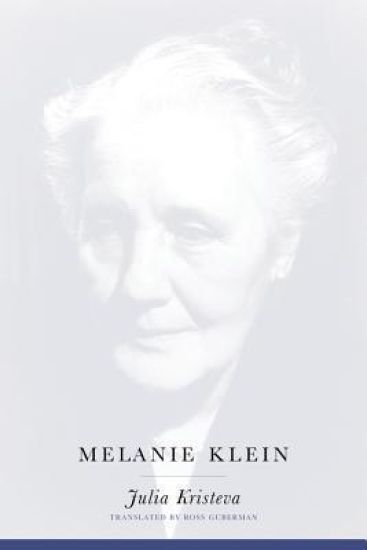
To the renowned psychoanalyst, philosopher, and linguist Julia Kristeva, Melanie Klein (1882-1960) was the most original innovator, male or female, in the psychoanalytic arena. Klein pioneered psychoanalytic practice with children and made major contributions to our understanding of both psychosis and autism. Along the way, she successfully introduced a new approach to the theory of the unconscious without abandoning the principles set forth by Freud. In her first biography of a fellow psychoanalyst, the prolific Kristeva considers Klein's life and intellectual development, weaving a narrative that covers the history of psychoanalysis and illuminates Kristeva's own life and work. Kristeva tells the remarkable story of Klein's life: an unhappy wife and mother who underwent analysis, and-without a medical or other advanced degree-became an analyst herself at the age of 40. In examining her work, Kristeva proposes that Klein's "break" with Freud was really an attempt to complete his theory of the unconscious. Kristeva addresses Klein's numerous critics, and, in doing so, bridges the wide gulf between the clinical and theoretical worlds of psychoanalysis. Klein is celebrated here as the first person to see the mother as the source of not only creativity, but of thought itself, and the first to consider the place of matricide in psychic development. As such, Klein is a seminal figure in the evolution of the provocative ideas about motherhood and the psyche for which Kristeva is most famous. Klein is thus, in a sense, a mother to Kristeva, making this book an account of the development of Kristeva's own thought as well as Klein's.
To the renowned psychoanalyst, philosopher, and linguist Julia Kristeva, Melanie Klein (1882-1960) was the most original innovator, male or female, in the psychoanalytic arena. Klein pioneered psychoanalytic practice with children and made major contributions to our understanding of both psychosis and autism. Along the way, she successfully introduced a new approach to the theory of the unconscious without abandoning the principles set forth by Freud. In her first biography of a fellow psychoanalyst, the prolific Kristeva considers Klein's life and intellectual development, weaving a narrative that covers the history of psychoanalysis and illuminates Kristeva's own life and work. Kristeva tells the remarkable story of Klein's life: an unhappy wife and mother who underwent analysis, and-without a medical or other advanced degree-became an analyst herself at the age of 40. In examining her work, Kristeva proposes that Klein's "break" with Freud was really an attempt to complete his theory of the unconscious. Kristeva addresses Klein's numerous critics, and, in doing so, bridges the wide gulf between the clinical and theoretical worlds of psychoanalysis. Klein is celebrated here as the first person to see the mother as the source of not only creativity, but of thought itself, and the first to consider the place of matricide in psychic development. As such, Klein is a seminal figure in the evolution of the provocative ideas about motherhood and the psyche for which Kristeva is most famous. Klein is thus, in a sense, a mother to Kristeva, making this book an account of the development of Kristeva's own thought as well as Klein's.
In this thoughtful and lucid book, C. Fred Alford shows how the psychoanalytic theory of Melanie Klein can be extended to groups and culture and thus can illuminate issues of social theory and moral philosophy of the sort considered by the Frankfurt School. He then applies this expanded theory to the politics of large groups, the appeal of works of art, and the psychological sources of reason.
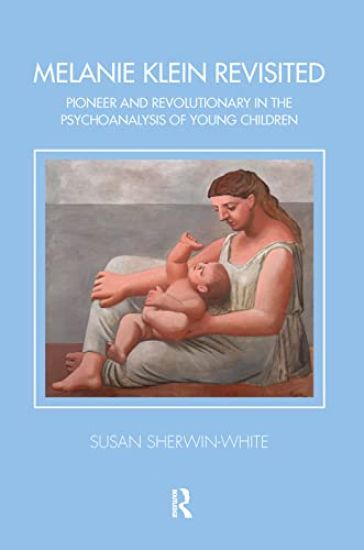
While much writing has been devoted, predominantly by contemporary Kleinian adult psychoanalysts, to the Kleinian and post Kleinian development of Klein's work, comparatively little has recently been written about the ongoing importance and character of Klein's clinical work for contemporary psychoanalytic psychotherapy or analysis with very small children (2 - 6 year olds). Little attention now seems to be paid to the revolutionary character of her work from the start (in the early 1920s) with this age group and its challenges, still relevant today, or to her recognition of the importance of mother-infant relations in the period long before World War II brought investigation into and understanding of problems of attachment, separation and loss. This book addresses these issues and re-explores Klein's work in these (and other) areas. This book is concerned primarily with Klein's work with pre-latency children and aims to give these small children more of the voice today that Melanie Klein herself discovered.

This book is a bibliography of Melanie Klein's writings together with other books, articles, and papers, dealing with her life, ideas and work. It is of immense potential use for clinicians, students, and researchers.

Melanie Klein Today, Volume 1: Mainly Theory
Routledge
1988
nidottu
Melanie Klein Today, Volume 1 is the first of two volumes of collected essays devoted to developments in psychoanalysis based on the work of Melanie Klein.The papers are arranged into four groups: the analysis of psychotic patients, projective identification, on thinking, and pathalogical organisation.
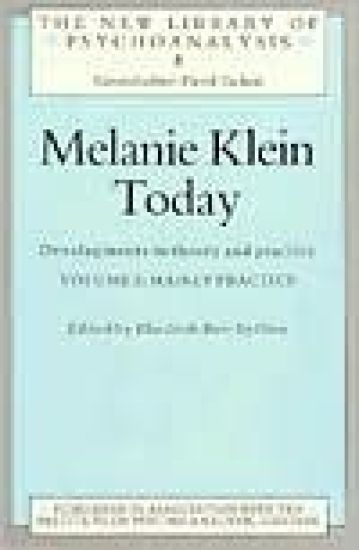
Melanie Klein Today, Volume 2: Mainly Practice
Routledge
1988
nidottu
This book should be of interest to psychotherapists and psychoanalysts.

In this book Claudia Frank discusses how Melanie Klein began to develop her psychoanalysis of children. Melanie Klein in Berlin: Her First Psychoanalyses of Children offers a detailed comparative analysis of both published and unpublished material from the Melanie Klein Archives.By using previously unpublished studies, Frank demonstrates how Klein enriched the concept of negative transference and laid the basis for the innovations on both technique and theory that eventually led not only to changes in child analysis, but also to changes in the analysis of adults. Frank also uncovers the influence that this had on Klein's later theories of the paranoid-schizoid and depressive positions, and on her understanding of psychotic anxieties.The first seven chapters in the book provide an explanation of the essence of Klein's approach to child psychoanalysis covering topics including:the inevitability and usefulness of negative transferencedevelopment of playearly conscious and unconscious phantasies. Part two provides a translation of Klein's unpublished notes on the treatments of four of the children she analysed in Berlin: 7-year-old Grete, 2-year-old Rita, 7-year-old Inge and 6-year-old Erna.Melanie Klein in Berlin is the first text to make extensive use of Klein's unpublished papers, clinical notes, diaries and manuscripts. It will appeal to anyone involved in child psychoanalysis and the development of Melanie Klein's thinking.

In this book Claudia Frank discusses how Melanie Klein began to develop her psychoanalysis of children. Melanie Klein in Berlin: Her First Psychoanalyses of Children offers a detailed comparative analysis of both published and unpublished material from the Melanie Klein Archives.By using previously unpublished studies, Frank demonstrates how Klein enriched the concept of negative transference and laid the basis for the innovations on both technique and theory that eventually led not only to changes in child analysis, but also to changes in the analysis of adults. Frank also uncovers the influence that this had on Klein's later theories of the paranoid-schizoid and depressive positions, and on her understanding of psychotic anxieties.The first seven chapters in the book provide an explanation of the essence of Klein's approach to child psychoanalysis covering topics including:the inevitability and usefulness of negative transferencedevelopment of playearly conscious and unconscious phantasies. Part two provides a translation of Klein's unpublished notes on the treatments of four of the children she analysed in Berlin: 7-year-old Grete, 2-year-old Rita, 7-year-old Inge and 6-year-old Erna.Melanie Klein in Berlin is the first text to make extensive use of Klein's unpublished papers, clinical notes, diaries and manuscripts. It will appeal to anyone involved in child psychoanalysis and the development of Melanie Klein's thinking.