Kirjojen hintavertailu. Mukana 11 717 486 kirjaa ja 12 kauppaa.

Kirjahaku

Etsi kirjoja tekijän nimen, kirjan nimen tai ISBN:n perusteella.

1000 tulosta hakusanalla M. Allain Louisfert

Anna Ivanova, Un Destin Rar Intalnit

Anna Ivanova, Un Destin Rar Intalnit

M. Allain Louisfert

Createspace Independent Publishing Platform
2016
nidottu
n timpul si dupa Campania din Rusia, n vremea tarului Alexandru I, descoperim modul n care Anna Ivanova, care facea parte din nobilimea rusa, se ngrijeste de soarta serbilor sai. Casatorita cu generalul-conte Ivanov, aceasta se va marita, mai t rziu, cu prietenul sau din copilarie, prusac, dar si inamic ( n plan politic), deoarece el a luptat alaturi de mparatul francezilor.
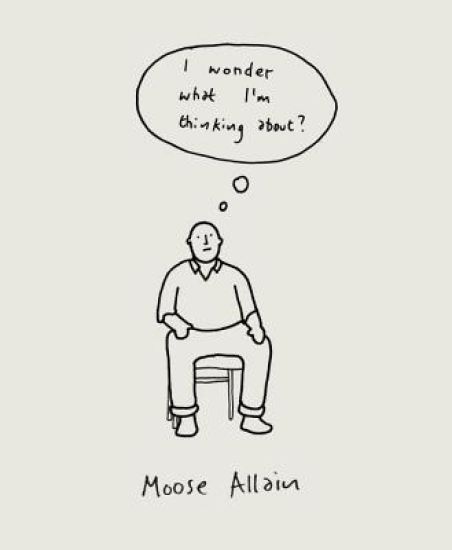
I Wonder What I’m Thinking About?
I Wonder What I’m Thinking About brings artist and illustrator Moose Allain’s best creations together in one place, in a colourful, amusing and sometimes confusing collector’s item. Moose draws cartoons, comic strips, book illustrations, doodles, diagrams, maps and guides. He uses Twitter, Instagram, Facebook, Vine and Photoshop. He makes photographs, captions, logos, web graphics, animations and films. He paints and he draws and he doodles. He writes short stories, puns, riddles, essays, to-do lists and to-don’t lists. He draws ducks, bees, Vikings, eggs, sheep, umbrellas and flowers. If you’ve ever wondered what he’s thinking about… this is it. This book is filled to the brim with the best of his work, and at the heart of it Moose tries to work out just what it is that unites his amalgam of unique, funny and distinctly varied work.
Imperial College Lectures In Petroleum Engineering, The - Volume 4: Drilling And Reservoir Appraisal

Imperial College Lectures In Petroleum Engineering, The - Volume 4: Drilling And Reservoir Appraisal

M Olivier Allain; Michael Dyson; Xudong Jing; Christopher Pentland; Marcel Polikar; Vural Sander Suicmez

World Scientific Europe Ltd
2018
sidottu
This book covers the fundamentals of drilling and reservoir appraisal for petroleum. Split into three sections, the first looks at the basic principles of well engineering in terms of planning, design and construction. It then goes on to describe well safety, costs and operations management. The second section is focussed on drilling and core analysis, and the laboratory measurement of the physico-chemical properties of samples. It is clear that efficient development of hydrocarbon reservoirs is highly dependent on understanding these key properties, and the data can only be gathered through a carefully conducted core-analysis program, as described. Finally, in the third section we look at production logging, an essential part of reservoir appraisal, which describes the nature and the behaviour of fluids in or around the borehole. It describes how to know, at a given time, phase by phase, and zone by zone, how much fluid is coming out of or going into the formation.As part of the Imperial College Lectures in Petroleum Engineering, and based on a lecture series on the same topic, Drilling and Reservoir Appraisal provides the introductory information needed for students of the earth sciences, petroleum engineering, engineering and geoscience.
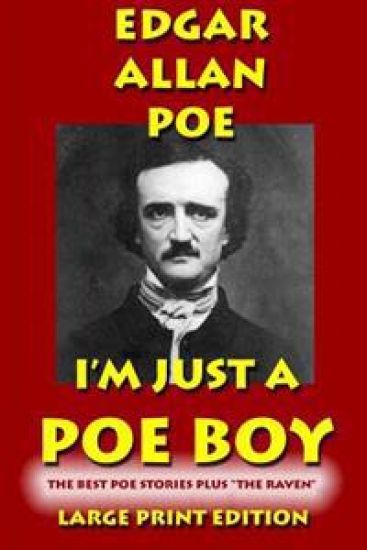
I'm Just a Poe Boy - Edgar Allan Poe Large Print Edtition: The Best Poe Stories Plus "The Raven"
This is the Large Print Edition presented in 16 point type for easy reading The Tell-Tale Heart A Cask of Amontillado The Fall of the House of Usher The Masque of the Red Death The Murders in the Rue Morgue The Mystery of Marie Roget The Purloined Letter The Black Cat The Oblong Box The Gold-Bug and more Also includes the classic poem, "The Raven" Buy this book, and you can enjoy Poe without being poor
Ma Première Au Corinthien, Ou Réponse de M. de Saint Allais Au Grec Raxis
Ma premiere au Corinthien, ou Reponse de M. de Saint Allais au Grec Raxis, se disant Comte de FlassanDate de l'edition originale: 1836Ce livre est la reproduction fidele d'une oeuvre publiee avant 1920 et fait partie d'une collection de livres reimprimes a la demande editee par Hachette Livre, dans le cadre d'un partenariat avec la Bibliotheque nationale de France, offrant l'opportunite d'acceder a des ouvrages anciens et souvent rares issus des fonds patrimoniaux de la BnF.Les oeuvres faisant partie de cette collection ont ete numerisees par la BnF et sont presentes sur Gallica, sa bibliotheque numerique.En entreprenant de redonner vie a ces ouvrages au travers d'une collection de livres reimprimes a la demande, nous leur donnons la possibilite de rencontrer un public elargi et participons a la transmission de connaissances et de savoirs parfois difficilement accessibles.Nous avons cherche a concilier la reproduction fidele d'un livre ancien a partir de sa version numerisee avec le souci d'un confort de lecture optimal. Nous esperons que les ouvrages de cette nouvelle collection vous apporteront entiere satisfaction.Pour plus d'informations, rendez-vous sur www.hachettebnf.fr
The House Of Fear Presents: Ghost Stories Vol.1: "Morella" by Edgar Allan Poe; "The Mezzotint" by M.R.James; "The Monkey's Paw" by J.J. Jacobs; "R
Welcome to the House Of Fear Here you will find scripts originally created for the THEATRE OF IMAGINATION...or, LIVE AUDIO THEATRE stage productions as presented by the NYC Performance Group RADIOTHEATRE. Now, RadioTheatre offers these easy-to-read, easy-to-produce scripts to others who want to produce a unique style of Theatre presentation...as well as, unique content found in the genres of HORROR, SCIENCE FICTION and WEIRD fiction. However, these specially formatted scripts may also be produced as RECORDED WORKS, RADIO BROADCASTS ...or, they may even be used as the basis for FILM and TV presentations. Though most of these scripts have been created to blend both story-telling and cinematic styles requiring recorded SOUND DESIGN, MUSIC CUES and voices on MICROPHONES...in which there are no props, no sets, no costumes...some stories may be adapted to fit TRADITIONAL PLAY format.These are stories containing characters, plots and action you won't find in traditional theatre: mad scientists, giant man eating plants, werewolves, vampires, ghosts and intergalactic invasions....King Kong smashing Radio City Music Hall and climbing the Empire State Building...from the battlefields of war to the internal voice of a man going insane...from a poignant story of a woman waiting for her husband to die...to a screaming skull haunting the new resident of a haunted house Turn the lights down low and turn on your imaginations to fill in the visuals. Many of the longer stories are classic works of world fiction: THE INVISIBLE MAN, THE WAR OF THE WORLDS, DRACULA, FRANKENSTEIN, THE TIME MACHINE, THE ISLAND OF DR.MOREAU, KING KONG, as well as, famous short works from an earlier time by H.G.Wells, Bram Stoker, H.P.Lovecraft, Edgar Allan Poe, Ambrose Bierce, Robert E.Howard...or, not so famous works by long ignored giants of macabre literature, such as, Algernon Blackwood, Edith Nesbit, F.Marion Crawford, etc. Basically, these are tales to be told in near darkness. The scripts require not just great actors, but, great STORY TELLERS. This role is often listed in a cast as NARRATOR. Sometimes, it may be left to the Director's discretion to cast the NARRATOR as either male or female. The story may also require actors to play multiple characters...or, a Director may choose to cast many actors to play these roles. Minor roles may also be recast as either sex. All scripts are expertly crafted for presentation by DAN BIANCHI, Artistic Director and Founder of NYC's award-winning, critically acclaimed Radiotheatre. He has worked over 40 years as writer/director in stage and film media, and, to date, he's the most produced stage writer in NYC. In most cases, the archaic language of 19th Century works has been updated, but, Mr.Bianchi has tried to retain the author's original artistic intention and creation. Characters' names, locations, etc. may be changed. Plots may be condensed, endings may be changed, etc. Remember...the original story was intended to be read as literature and not intended to be presented in a different medium using 21st Century technology. In every case, it is Mr.Bianchi's primary goal to deliver a great story filled with optimal sound design as a most important part of the production. SOUND DESIGN: Sound effects and dramatic music is an integral part of these stories, as necessary as the actors. Scripts contain some, but, not all, printed sound/music cues necessary to make easier reading. Directors may wish to add or change cues. If you do NOT wish to create your own sound design, but, instead wish to purchase pre-recorded cues and music, please contact [email protected].
Crist ym mreichiau'r credadyn, wedi ei osod allan mewn pregeth ar Luc ii.28. Gan y parch. Ebenezer Erskine, M.A. At ba un y chwanegwyd, pregeth arall, a elwir, dadl ffydd ar air a chyfammod Duw, Salm LXXIV.20. gan y parch
The 18th century was a wealth of knowledge, exploration and rapidly growing technology and expanding record-keeping made possible by advances in the printing press. In its determination to preserve the century of revolution, Gale initiated a revolution of its own: digitization of epic proportions to preserve these invaluable works in the largest archive of its kind. Now for the first time these high-quality digital copies of original 18th century manuscripts are available in print, making them highly accessible to libraries, undergraduate students, and independent scholars.The Age of Enlightenment profoundly enriched religious and philosophical understanding and continues to influence present-day thinking. Works collected here include masterpieces by David Hume, Immanuel Kant, and Jean-Jacques Rousseau, as well as religious sermons and moral debates on the issues of the day, such as the slave trade. The Age of Reason saw conflict between Protestantism and Catholicism transformed into one between faith and logic -- a debate that continues in the twenty-first century.++++The below data was compiled from various identification fields in the bibliographic record of this title. This data is provided as an additional tool in helping to insure edition identification: ++++British LibraryT084335Caerfyrddin: argraphwyd gan J. Ross tros y cyfieithydd, ac ar werth yn yr argraph-dy yn Heol-Awst, 1744. iv,92p.; 12
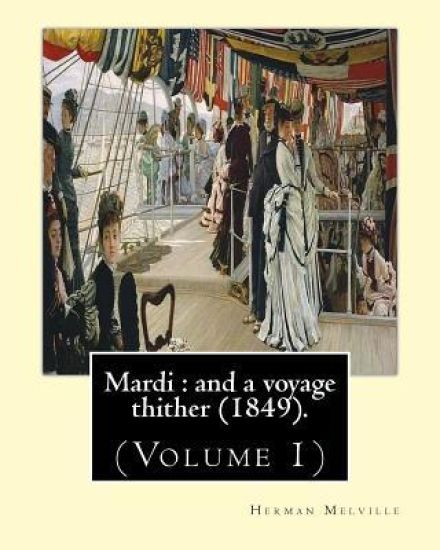
Mardi: and a voyage thither (1849). By: Herman Melville, dedicated By: Allan Melville (Volume 1): In two volumes (Volume 1).M
Mardi, and a Voyage Thither is the third book by American writer Herman Melville, first published in London in 1849. Beginning as a travelogue in the vein of the author's two previous efforts, the adventure story gives way to a romance story, which in its turn gives way to a philosophical quest.Mardi is Melville's first pure fiction work (while featuring fictional narrators; his previous novels were heavily autobiographical). It details (much like Typee and Omoo) the travelings of an American sailor who abandons his whaling vessel to explore the South Pacific. Unlike the first two, however, Mardi is highly philosophical and said to be the first work to show Melville's true potential. The tale begins as a simple narrative, but quickly focuses upon discourse between the main characters and their interactions with the different symbolic countries they encounter. While not as cohesive or lengthy as Moby-Dick, it shares a similar writing style as well as many of the same themes. As a preface to Mardi, Melville wrote somewhat ironically that his first two books were nonfiction but disbelieved; by the same pattern he hoped the fiction book would be accepted as fact. The voyage from island to island echoes Rabelais's Gargantua and Pantagruel, especially the last two books. According to scholar Newton Arvin, "The praise of eating and drinking is highly Rabelaisian in intention, and so in general is all the satire on bigotry, dogmatism, and pedantry. Taji and his friends wandering about on the island of Maramma, which stands for ecclesiastical tyranny and dogmatism, are bound to recall Pantagruel and his companions wandering among the superstitious inhabitants of Papimany; and the pedantic, pseudo-philosophi of Melville's Doxodox is surely, for a reader of Rabelais, an echo of the style of Master Janotus de Bragmardo holding forth polysyllabically to Gargantua in Book I." 1] Arvin also recognizes the influence of Gulliver's Travels by Jonathan Swift, "there is something very Swiftian in Melville's Hooloomooloo, the Isle of Cripples, the inhabitants of which are all twisted and deformed, and whose shapeless king is horrified at the straight, strong figures of his visitors from over sea.". Herman Melville (August 1, 1819 - September 28, 1891) was an American novelist, short story writer, and poet of the American Renaissance period. His best known works include Typee (1846), a romantic account of his experiences in Polynesian life, and his whaling novel Moby-Dick (1851). His work was almost forgotten during his last thirty years. His writing draws on his experience at sea as a common sailor, exploration of literature and philosophy, and engagement in the contradictions of American society in a period of rapid change. He developed a complex, baroque style: the vocabulary is rich and original, a strong sense of rhythm infuses the elaborate sentences, the imagery is often mystical or ironic, and the abundance of allusion extends to Scripture, myth, philosophy, literature, and the visual arts. Born in New York City as the third child of a merchant in French dry goods, Melville's formal education ended abruptly after his father died in 1832, leaving the family in financial straits. Melville briefly became a schoolteacher before he took to sea in 1839 as a common sailor on a merchant ship. In 1840 he signed aboard the whaler Acushnet for his first whaling voyage, but jumped ship in the Marquesas Islands. After further adventures, he returned to Boston in 1844. His first book, Typee (1845), a highly romanticized account of his life among Polynesians, became such a best-seller that he worked up a sequel, Omoo (1847). These successes encouraged him to marry Elizabeth Shaw, of a prominent Boston family, but were hard to sustain. His first novel not based on his own experiences, Mardi (1849), is a sea narrative that develops into a philosophical allegory, but was not well received.
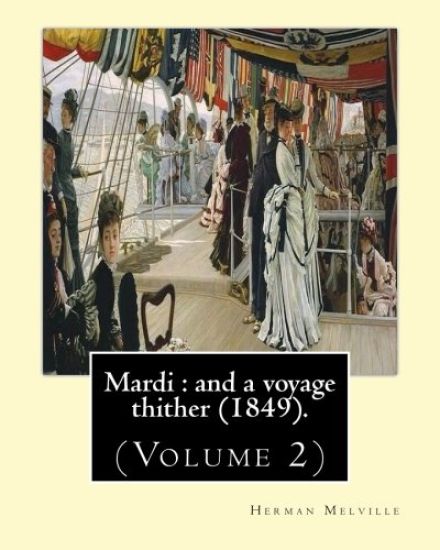
Mardi: and a voyage thither (1849). By: Herman Melville, dedicated By: Allan Melville (Volume 2): In two volumes (Volume 2).M
Mardi, and a Voyage Thither is the third book by American writer Herman Melville, first published in London in 1849. Beginning as a travelogue in the vein of the author's two previous efforts, the adventure story gives way to a romance story, which in its turn gives way to a philosophical quest.Mardi is Melville's first pure fiction work (while featuring fictional narrators; his previous novels were heavily autobiographical). It details (much like Typee and Omoo) the travelings of an American sailor who abandons his whaling vessel to explore the South Pacific. Unlike the first two, however, Mardi is highly philosophical and said to be the first work to show Melville's true potential. The tale begins as a simple narrative, but quickly focuses upon discourse between the main characters and their interactions with the different symbolic countries they encounter. While not as cohesive or lengthy as Moby-Dick, it shares a similar writing style as well as many of the same themes. As a preface to Mardi, Melville wrote somewhat ironically that his first two books were nonfiction but disbelieved; by the same pattern he hoped the fiction book would be accepted as fact. The voyage from island to island echoes Rabelais's Gargantua and Pantagruel, especially the last two books. According to scholar Newton Arvin, "The praise of eating and drinking is highly Rabelaisian in intention, and so in general is all the satire on bigotry, dogmatism, and pedantry. Taji and his friends wandering about on the island of Maramma, which stands for ecclesiastical tyranny and dogmatism, are bound to recall Pantagruel and his companions wandering among the superstitious inhabitants of Papimany; and the pedantic, pseudo-philosophi of Melville's Doxodox is surely, for a reader of Rabelais, an echo of the style of Master Janotus de Bragmardo holding forth polysyllabically to Gargantua in Book I." 1] Arvin also recognizes the influence of Gulliver's Travels by Jonathan Swift, "there is something very Swiftian in Melville's Hooloomooloo, the Isle of Cripples, the inhabitants of which are all twisted and deformed, and whose shapeless king is horrified at the straight, strong figures of his visitors from over sea."... Herman Melville (August 1, 1819 - September 28, 1891) was an American novelist, short story writer, and poet of the American Renaissance period. His best known works include Typee (1846), a romantic account of his experiences in Polynesian life, and his whaling novel Moby-Dick (1851). His work was almost forgotten during his last thirty years. His writing draws on his experience at sea as a common sailor, exploration of literature and philosophy, and engagement in the contradictions of American society in a period of rapid change. He developed a complex, baroque style: the vocabulary is rich and original, a strong sense of rhythm infuses the elaborate sentences, the imagery is often mystical or ironic, and the abundance of allusion extends to Scripture, myth, philosophy, literature, and the visual arts. Born in New York City as the third child of a merchant in French dry goods, Melville's formal education ended abruptly after his father died in 1832, leaving the family in financial straits. Melville briefly became a schoolteacher before he took to sea in 1839 as a common sailor on a merchant ship. In 1840 he signed aboard the whaler Acushnet for his first whaling voyage, but jumped ship in the Marquesas Islands. After further adventures, he returned to Boston in 1844. His first book, Typee (1845), a highly romanticized account of his life among Polynesians, became such a best-seller that he worked up a sequel, Omoo (1847). These successes encouraged him to marry Elizabeth Shaw, of a prominent Boston family, but were hard to sustain. His first novel not based on his own experiences, Mardi (1849), is a sea narrative that develops into a philosophical allegory, but was not well received.