Kirjojen hintavertailu. Mukana 11 244 527 kirjaa ja 12 kauppaa.

Kirjahaku

Etsi kirjoja tekijän nimen, kirjan nimen tai ISBN:n perusteella.

1000 tulosta hakusanalla M. David Litwa

Desiring Divinity

Desiring Divinity

M. David Litwa

Oxford University Press Inc
2016
sidottu
Perhaps no declaration incites more theological and moral outrage than a human's claim to be divine. Those who make this claim in ancient Jewish and Christian mythology are typically represented as the most hubristic and dangerous tyrants. Their horrible punishments are predictable and still serve as morality tales in religious communities today. But not all self-deifiers are saddled with pride and fated to fall. Some who claimed divinity stated a simple and direct truth. Though reviled on earth, misunderstood, and even killed, they received vindication and rose to the stars. This book tells the stories of six self-deifiers in their historical, social, and ideological contexts. In the history of interpretation, the initial three figures have been demonized as cosmic rebels: the first human Adam, Lucifer (later identified with Satan), and Yaldabaoth in gnostic mythology. By contrast, the final three have served as positive models for deification and divine favor: Jesus in the gospel of John, Simon of Samaria, and Allogenes in the Nag Hammadi library. In the end, the line separating demonization from deification is dangerously thin, drawn as it is by the unsteady hand of human valuation.
The Evil Creator

The Evil Creator

M. David Litwa

Oxford University Press Inc
2021
sidottu
This book examines the origins of the evil creator idea chiefly in light of early Christian biblical interpretations. It is divided into two parts. In Part I, the focus is on the interpretations of Exodus and John. Firstly, ancient Egyptian assimilation of the Jewish god to the evil deity Seth-Typhon is studied to understand its reapplication by Phibionite and Sethian Christians to the Judeo-catholic creator. Secondly, the Christian reception of John 8:44 (understood to refer to the devil's father) is shown to implicate the Judeo-catholic creator in murdering Christ. Part II focuses on Marcionite Christian biblical interpretations. It begins with Marcionite interpretations of the creator's character in the Christian "Old Testament," analyzes 2 Corinthians 4:4 (in which "the god of this world" blinds people from Christ's glory), examines Christ's so-called destruction of the Law (Eph 2:15) and the Lawgiver, and shows how Christ finally succumbs to the "curse of the Law" inflicted by the creator (Gal 3:13). A concluding chapter shows how still today readers of the Christian Bible have concluded that the creator manifests an evil character.
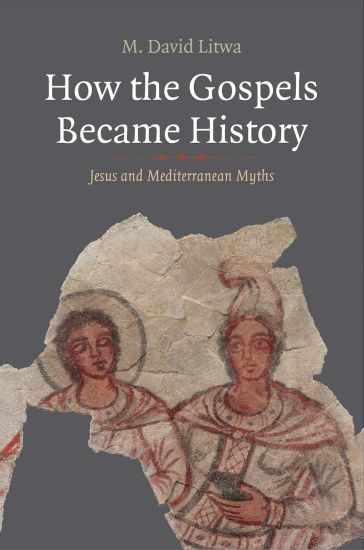
How the Gospels Became History

How the Gospels Became History

M. David Litwa

Yale University Press
2019
sidottu
A compelling comparison of the gospels and Greco-Roman mythology which shows that the gospels were not perceived as myths, but as historical records Did the early Christians believe their myths? Like most ancient—and modern—people, early Christians made efforts to present their myths in the most believable ways. In this eye-opening work, M. David Litwa explores how and why what later became the four canonical gospels take on a historical cast that remains vitally important for many Christians today. Offering an in-depth comparison with other Greco-Roman stories that have been shaped to seem like history, Litwa shows how the evangelists responded to the pressures of Greco-Roman literary culture by using well-known historiographical tropes such as the mention of famous rulers and kings, geographical notices, the introduction of eyewitnesses, vivid presentation, alternative reports, and so on. In this way, the evangelists deliberately shaped myths about Jesus into historical discourse to maximize their believability for ancient audiences.
Found Christianities

Found Christianities

M. David Litwa

BLOOMSBURY PUBLISHING PLC
2022
nidottu
M. David Litwa tells the stories of the early Christians whose religious identity was either challenged or outright denied. In the second century many different groups and sects claimed to be the only Orthodox or authentic version of Christianity, and Litwa shows how those groups and figures on the side of developing Christian Orthodoxy often dismissed other versions of Christianity by refusing to call them “Christian”. However, the writings and treatises against these groups contain fascinating hints of what they believed, and why they called themselves Christian.Litwa outlines these different groups and the controversies that surrounded them, presenting readers with an overview of the vast tapestry of beliefs that made up second century Christianity. By moving beyond notions of “gnostic”, “heretical” and “orthodox” Litwa allows these “lost Christianities” to speak for themselves. He also questions the notion of some Christian identities “surviving” or “perishing”, arguing that all second century "Catholic" groups look very different to any form of modern Roman Catholicism. Litwa shows that countless discourses, ideas, and practices are continually recycled and adapted throughout time in the building of Christian identities, and indeed that the influence of so-called “lost” Christianities can still be felt today.
Found Christianities

Found Christianities

M. David Litwa

BLOOMSBURY PUBLISHING PLC
2022
sidottu
M. David Litwa tells the stories of the early Christians whose religious identity was either challenged or outright denied. In the second century many different groups and sects claimed to be the only Orthodox or authentic version of Christianity, and Litwa shows how those groups and figures on the side of developing Christian Orthodoxy often dismissed other versions of Christianity by refusing to call them “Christian”. However, the writings and treatises against these groups contain fascinating hints of what they believed, and why they called themselves Christian.Litwa outlines these different groups and the controversies that surrounded them, presenting readers with an overview of the vast tapestry of beliefs that made up second century Christianity. By moving beyond notions of “gnostic”, “heretical” and “orthodox” Litwa allows these “lost Christianities” to speak for themselves. He also questions the notion of some Christian identities “surviving” or “perishing”, arguing that all second century "Catholic" groups look very different to any form of modern Roman Catholicism. Litwa shows that countless discourses, ideas, and practices are continually recycled and adapted throughout time in the building of Christian identities, and indeed that the influence of so-called “lost” Christianities can still be felt today.
Simon of Samaria and the Simonians

Simon of Samaria and the Simonians

M. David Litwa

BLOOMSBURY PUBLISHING PLC
2024
sidottu
Who were the Simonians? Beginning in the mid-second century CE, heresiologists depicted them as licentious followers of the first “gnostic,” a supposedly Samarian self-deifier called Simon, who was thought to practice “magic” and became known as the father of all heresies.Litwa examines the Simonians in their own literature and in the literature used to refute and describe them. He begins with Simonian primary sources, namely The Declaration of Great Power (embedded in the anonymous Refutation of All Heresies) and The Concept of Our Great Power (Nag Hammadi codex VI,4). Litwa argues that both are early second-century products of Simonian authors writing in Alexandria or Egypt. Litwa then moves on to examine the heresiological sources related to the Simonians (Justin, the book of Acts, Irenaeus, the author of the Refutation of All Heresies, Pseudo-Tertullian, Epiphanius, and Filaster). He shows how closely connected Justin’s report is to the portrait of Simon in Acts, and offers an extensive exegesis and analysis of Simonian theology and practice based on the reports of Irenaeus and the Refutator. Finally, Litwa examines Simonianism in novelistic sources, namely the Acts of Peter and the Pseudo-Clementines. By the time these sources were written, Simon had become the father of all heresies. Accordingly, virtually any heresy could be attributed to Simon. As a result—despite their alluring portraits of Simon—these sources are mostly unusable for the historical study of the Simonian Christian movement. Litwa concludes with a historical profile of the Simonian movement in the second and third centuries.The book features appendices which contain Litwa’s own translations of primary Simonian texts.
Simon of Samaria and the Simonians

Simon of Samaria and the Simonians

M. David Litwa

BLOOMSBURY PUBLISHING PLC
2025
nidottu
Who were the Simonians? Beginning in the mid-second century CE, heresiologists depicted them as licentious followers of the first “gnostic,” a supposedly Samarian self-deifier called Simon, who was thought to practice “magic” and became known as the father of all heresies.Litwa examines the Simonians in their own literature and in the literature used to refute and describe them. He begins with Simonian primary sources, namely The Declaration of Great Power (embedded in the anonymous Refutation of All Heresies) and The Concept of Our Great Power (Nag Hammadi codex VI,4). Litwa argues that both are early second-century products of Simonian authors writing in Alexandria or Egypt. Litwa then moves on to examine the heresiological sources related to the Simonians (Justin, the book of Acts, Irenaeus, the author of the Refutation of All Heresies, Pseudo-Tertullian, Epiphanius, and Filaster). He shows how closely connected Justin’s report is to the portrait of Simon in Acts, and offers an extensive exegesis and analysis of Simonian theology and practice based on the reports of Irenaeus and the Refutator. Finally, Litwa examines Simonianism in novelistic sources, namely the Acts of Peter and the Pseudo-Clementines. By the time these sources were written, Simon had become the father of all heresies. Accordingly, virtually any heresy could be attributed to Simon. As a result—despite their alluring portraits of Simon—these sources are mostly unusable for the historical study of the Simonian Christian movement. Litwa concludes with a historical profile of the Simonian movement in the second and third centuries.The book features appendices which contain Litwa’s own translations of primary Simonian texts.
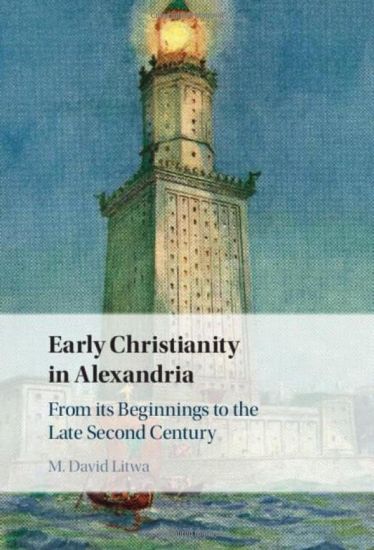
Early Christianity in Alexandria

Early Christianity in Alexandria

M. David Litwa

Cambridge University Press
2023
sidottu
Alexandria was the epicenter of Hellenic learning in the ancient Mediterranean world, yet little is known about how Christianity arrived and developed in the city during the late first and early second century CE. In this volume, M. David Litwa employs underused data from the Nag Hammadi codices and early Christian writings to open up new vistas on the creative theologians who invented Christianities in Alexandria prior to Origen and the catechetical school of the third century. With clarity and precision, he traces the surprising theological continuities that connect Philo and later figures, including Basilides, Carpocrates, Prodicus, and Julius Cassianus, among others. Litwa demonstrates how the earliest followers of Jesus navigated Jewish theology and tradition, while simultaneously rejecting many Jewish customs and identity markers before and after the Diaspora Revolt. His book shows how Christianity in Alexandria developed distinctive traits and seeded the world with ideas that still resonate today.
The Secret Book of John

The Secret Book of John

M. David Litwa

Cambridge University Press
2025
sidottu
In this volume, David Litwa offers a fresh introduction to the 'gnostic Bible,' arguably the most significant and widely read of all gnostic Christian texts ever written. Providing a fresh introduction to a particular version of the Secret Book of John, namely the shorter version that is found in Nag Hammadi Codex III, his study includes a new translation of this text and an extensive commentary in which he introduces the notable features of this codex and interrogates whether the Secret Book emerged from an actual gnostic community. Litwa also posits solutions to many questions related to this text, notably: its date and find spot, its relationship to the treatise known and summarized by Irenaeus in the late second century, its interpretation and re-creation of the book of Genesis for Christian readers, its novel interpretation of Greco-Roman philosophy, its foundations in apostolic authority, and the reception of the Secret Book of John in late antiquity, well into the fifth century CE.
The Secret Book of John

The Secret Book of John

M. David Litwa

Cambridge University Press
2025
pokkari
In this volume, David Litwa offers a fresh introduction to the 'gnostic Bible,' arguably the most significant and widely read of all gnostic Christian texts ever written. Providing a fresh introduction to a particular version of the Secret Book of John, namely the shorter version that is found in Nag Hammadi Codex III, his study includes a new translation of this text and an extensive commentary in which he introduces the notable features of this codex and interrogates whether the Secret Book emerged from an actual gnostic community. Litwa also posits solutions to many questions related to this text, notably: its date and find spot, its relationship to the treatise known and summarized by Irenaeus in the late second century, its interpretation and re-creation of the book of Genesis for Christian readers, its novel interpretation of Greco-Roman philosophy, its foundations in apostolic authority, and the reception of the Secret Book of John in late antiquity, well into the fifth century CE.
Carpocrates, Marcellina, and Epiphanes

Carpocrates, Marcellina, and Epiphanes

M. David Litwa

TAYLOR FRANCIS LTD
2022
sidottu
Carpocrates, Marcellina, and Epiphanes is the definitive study of the early Christian theologian Carpocrates, his son Epiphanes, and the leader of the Carpocratian movement in Rome, Marcellina.It contains the first full-length study of and commentary on the fragments of Epiphanes, the earliest reports on Carpocrates and Marcellina, as well as the Epistle to Theodore (containing the so-called Secret Gospel of Mark). Readers also encounter an up-to-date history of research on the Carpocratian movement, and three full profiles of all we can know from the earliest Carpocratian leaders. Written in an accessible style, but based on the most careful historical and linguistic research, this volume is a landmark, helping to redefine the field of early Christian history.Carpocrates, Marcellina, and Epiphanes is a welcome addition to the libraries of all students of early Christian theology, researchers investigating early Christian diversity, and scholars of Gnostic, Nag Hammadi and related materials.
Carpocrates, Marcellina, and Epiphanes

Carpocrates, Marcellina, and Epiphanes

M. David Litwa

TAYLOR FRANCIS LTD
2024
nidottu
Carpocrates, Marcellina, and Epiphanes is the definitive study of the early Christian theologian Carpocrates, his son Epiphanes, and the leader of the Carpocratian movement in Rome, Marcellina.It contains the first full-length study of and commentary on the fragments of Epiphanes, the earliest reports on Carpocrates and Marcellina, as well as the Epistle to Theodore (containing the so-called Secret Gospel of Mark). Readers also encounter an up-to-date history of research on the Carpocratian movement, and three full profiles of all we can know from the earliest Carpocratian leaders. Written in an accessible style, but based on the most careful historical and linguistic research, this volume is a landmark, helping to redefine the field of early Christian history.Carpocrates, Marcellina, and Epiphanes is a welcome addition to the libraries of all students of early Christian theology, researchers investigating early Christian diversity, and scholars of Gnostic, Nag Hammadi and related materials.
The Naassenes

The Naassenes

M. David Litwa

TAYLOR FRANCIS LTD
2023
sidottu
This volume offers an accessible investigation of the Naassene discourse embedded in the anonymous Refutation of All Heresies (completed about 222 CE), in order to understand the theology and ritual life of the Naassene Christian movement in the late second and early third centuries CE.The work provides basic data on the date, genre, and provenance of the Naassene discourse as summarized by the author of the Refutation (or Refutator). It also offers an analysis of the Refutator’s sources and working methods, an analysis which allows for a full reconstruction of the original Naassene discourse. The book then turns to major aspects of Naassene Christianity: its intense engagement with Hellenic myth and “mysteries,” its biblical sources, its cosmopolitan hermeneutics, its snake symbology, as well as its distinctive approach to baptism, hymns, and celibacy. A concluding chapter outlines all we can securely reconstruct about the Naassene Christian movement in terms of its social identity and place in the larger field of early Christianity and ancient Mediterranean religions more broadly.The Naassenes: Exploring an Early Christian Identity is suitable for students, scholars, and general readers interested in Early Christianity, Gnostic and Nag Hammadi Studies, Classics, and Ancient Philosophy, as well as hermeneutical issues like allegory and intertextuality.
The Naassenes

The Naassenes

M. David Litwa

TAYLOR FRANCIS LTD
2023
nidottu
This volume offers an accessible investigation of the Naassene discourse embedded in the anonymous Refutation of All Heresies (completed about 222 CE), in order to understand the theology and ritual life of the Naassene Christian movement in the late second and early third centuries CE.The work provides basic data on the date, genre, and provenance of the Naassene discourse as summarized by the author of the Refutation (or Refutator). It also offers an analysis of the Refutator’s sources and working methods, an analysis which allows for a full reconstruction of the original Naassene discourse. The book then turns to major aspects of Naassene Christianity: its intense engagement with Hellenic myth and “mysteries,” its biblical sources, its cosmopolitan hermeneutics, its snake symbology, as well as its distinctive approach to baptism, hymns, and celibacy. A concluding chapter outlines all we can securely reconstruct about the Naassene Christian movement in terms of its social identity and place in the larger field of early Christianity and ancient Mediterranean religions more broadly.The Naassenes: Exploring an Early Christian Identity is suitable for students, scholars, and general readers interested in Early Christianity, Gnostic and Nag Hammadi Studies, Classics, and Ancient Philosophy, as well as hermeneutical issues like allegory and intertextuality.
Posthuman Transformation in Ancient Mediterranean Thought

Posthuman Transformation in Ancient Mediterranean Thought

M. David Litwa

Cambridge University Press
2021
sidottu
There is not just a desire but a profound human need for enhancement - the irrepressible yearning to become better than ourselves. Today, enhancement is often conceived of in terms of biotechnical intervention: genetic modification, prostheses, implants, drug therapy - even mind uploading. The theme of this book is an ancient form of enhancement: a physical upgrade that involves ethical practices of self-realization. It has been called 'angelification' - a transformation by which people become angels. The parallel process is 'daimonification', or becoming daimones. Ranging in time from Hesiod and Empedocles through Plato and Origen to Plotinus and Christian gnostics, this book explores not only how these two forms of posthuman transformation are related, but also how they connect and chasten modern visions of transhumanist enhancement which generally lack a robust account of moral improvement.
Posthuman Transformation in Ancient Mediterranean Thought

Posthuman Transformation in Ancient Mediterranean Thought

M. David Litwa

Cambridge University Press
2022
pokkari
There is not just a desire but a profound human need for enhancement - the irrepressible yearning to become better than ourselves. Today, enhancement is often conceived of in terms of biotechnical intervention: genetic modification, prostheses, implants, drug therapy - even mind uploading. The theme of this book is an ancient form of enhancement: a physical upgrade that involves ethical practices of self-realization. It has been called 'angelification' - a transformation by which people become angels. The parallel process is 'daimonification', or becoming daimones. Ranging in time from Hesiod and Empedocles through Plato and Origen to Plotinus and Christian gnostics, this book explores not only how these two forms of posthuman transformation are related, but also how they connect and chasten modern visions of transhumanist enhancement which generally lack a robust account of moral improvement.
Iesus Deus

Iesus Deus

M. David Litwa

Fortress Press,U.S.
2014
pokkari
What does it mean for Jesus to be "deified" in early Christian literature? Although the divinity of Jesus was a topic of profound and contested discussion in Christianity's early centuries, believers did not simply assert that Jesus was divine; in their literature, they depicted Jesus with the specific and widely-recognized traits of Mediterranean deities. Relying on the methods of the history of religions school and ranging judiciously across Hellenistic literature, M. David Litwa shows that at each stage in their depiction of Jesus' life and ministry, early Christian writings from the beginning relied on categories drawn not from Judaism alone, but on a wide, pan-Mediterranean understanding of deity: how gods were born, how they acted to manifest power, even how they died-and, after death, how they were taken up into heaven and pronounced divine. Litwa's samples take us beyond the realm of abstract theology to dwell in the second- and third-century imagination of what it meant to be a god and shows that the Christian depiction of Christ was quite at home there.
We Are Being Transformed

We Are Being Transformed

M. David Litwa

De Gruyter
2012
sidottu
Can Pauline soteriology be categorized as a form of deification? This book attempts to answer this question by keen attention to the Greco-Roman world. It provides the first full-scale history of research on the topic. It is also the first work to fully treat the basic historical questions relating to deification. Namely, what is deity in the Greco-Roman world? What are the types of deification in the Greco-Roman world? Are there Jewish antecedents to deification? Does Paul consider Christ to be a divine being? If so, according to what logic? How is Pauline deification possible in light of ancient Jewish "monotheism"? How is deification possible with a strong notion of creation? Although a rigorously historical study, no attempt is made to avoid theological issues in their historical context. Deification, it is argued, provides a new historical category of perception with which to deepen our knowledge of the Apostle's religious thought in its own time. This book is intended for an academic audience. The range of topics discussed here should interest a wide-array of scholars in the fields of Hebrew Bible, New Testament, Classics, and Patristics.