Kirjojen hintavertailu. Mukana 11 241 044 kirjaa ja 12 kauppaa.

Kirjahaku

Etsi kirjoja tekijän nimen, kirjan nimen tai ISBN:n perusteella.

1000 tulosta hakusanalla M. Keith Booker

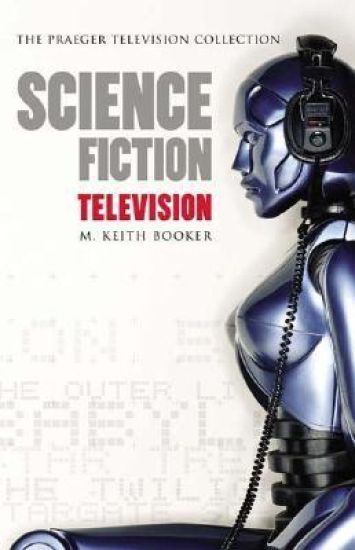
Science Fiction Television

Science Fiction Television

M. Keith Booker

Praeger Publishers Inc
2004
sidottu
Science fiction series have remained a staple of American television from its inception: classic programs such as The Twilight Zone, The Outer Limits, and Star Trek, along with recent and current series including Babylon 5 and Stargate SG-1, have been some of the most enduring and influential of all television shows. In this chronological survey, author M. Keith Booker examines this phenomenon and provides in-depth studies of the most important of these series. Science Fiction Television traces the development of the genre as a distinct cultural phenomenon within the context of broader developments in American culture as a whole.In the process, it offers a unique and informative guide for television fans and science fiction fans alike, one whose coverage is unprecedented in its scope and breadth. A must-read for anyone interested in its subject or in American popular culture, Science Fiction Television is a perceptive and entertaining history of one of television's most lasting forms of entertainment.
Alternate Americas

Alternate Americas

M. Keith Booker

Praeger Publishers Inc
2006
sidottu
For more than 50 years, science fiction films have been among the most important and successful products of American cinema, and are worthy of study for that reason alone. On a deeper level, the genre has reflected important themes, concerns and developments in American society, so that a history of science fiction film also serves as a cultural history of America over the past half century. M. Keith Booker has selected fifteen of the most successful and innovative science fiction films of all time, and examined each of them at length—from cultural, technical and cinematic perspectives—to see where they came from and what they meant for the future of cinema and for America at large. From Invasion of the Body Snatchers to Star Wars, from Blade Runner to The Matrix, these landmark films have expressed our fears and dreams, our abilities and our deficiencies. In this deep-seeking investigation, we can all find something of ourselves that we recognize, as well as something that we've never recognized before. The focus on a fairly small number of landmark films allows detailed attention to genuinely original movies, including: Forbidden Planet, Invasion of the Body Snatchers, 2001: A Space Odyssey, Planet of the Apes, Star Wars, Close Encounters of the Third Kind, Alien, E.T. the Extra-Terrestrial, Blade Runner, The Terminator, Robocop, The Abyss, Independence Day, and The Matrix. This book is ideal for general readers interested in science fiction and film.
Drawn to Television

Drawn to Television

M. Keith Booker

Praeger Publishers Inc
2006
sidottu
Since late evening cartoons first aired in 1960, prime-time animated series have had a profound effect on American television and American culture at large. The characters and motifs from such shows as The Flintstones and The Simpsons are among the best-known images in world popular culture; and tellingly, even series that have not done well in prime time—series like The Jetsons, for instance—have yielded similarly iconic images. The advent of cable and several new channels devoted exclusively to animated programming have brought old series back to life in syndication, while also providing new markets for additional, often more experimental animated series. Even on the conventional networks, programs such as The Flintstonesand The Simpsons, not to mention Family Guy and King of the Hill, have consistently shown a smartness and a satirical punch that goes well beyond the norm in network programming. Drawn to Television traces the history of prime-time animation from The Flintstones initial extension of Saturday mornings to Family Guy and South Park's late-night appeal in the 21st century. In the process, it sheds a surprising light on just how much the kid inside us all still has to say. Drawn to Television describes the content and style of all the major prime-time animated series, while also placing these series within their political and cultural contexts. It also tackles a number of important questions about animated programming, such as: how animated series differ from conventional series; why animated programming tends to be so effective as a vehicle for social and political satire; what makes animated characters so readily convertible into icons; and what the likely effects of new technologies (such as digital animation) will be on this genre in the future.
From Box Office to Ballot Box

From Box Office to Ballot Box

M. Keith Booker

Praeger Publishers Inc
2007
sidottu
Given the complexity and expense of making and distributing a film, the process of filmmaking is by its very nature a political process. Moreover, given the power and persuasiveness of the cinema as a medium, film can be a powerful political tool. It should thus come as no surprise that film has had a long and extensive engagement with a variety of political topics, ranging from the actual mechanics of governance to electoral politics, to any number of specific political issues. Through a film-by-film examination of the movies explicitly concerned with American politics and American political issues, From Box Office to Ballot Box provides valuable new insights into our culture's perceptions of various political environments and serves as a witness to the cinema's own complex contribution to the media's coverage of, and relationship to, American politics at large.From Box Office to Ballot Box takes as its subject films exploring the electoral process, the process of governing, and the involvement of the media in both. Separate chapters also deal with films related to specific political issues or phenomena that are particularly relevant to the above three categories, including labor and class, the Cold War, the Vietnam War, and the other recent conflicts in which the media has played such a large role. Specific films discussed include: Citizen Kane, All the King's Men, The Manchurian Candidate, All the Presidents' Men, The Front, M*A*S*H*, JFK, Nixon, Wag the Dog, Three Kings, Black Hawk Down, The Quiet American, The Contender, and many more.
May Contain Graphic Material

May Contain Graphic Material

M. Keith Booker

Praeger Publishers Inc
2007
sidottu
Since the first Superman film came to the screen in 1978, films adapted from comics have become increasingly important as a film form. But 1978 was also important because it was the year of release for Will Eisner's A Contract with God, and Other Stories, generally credited as the first long-form comic book to label itself a graphic novel. Since that time, advances in computer-generated special effects have significantly improved the ability of film to capture the style and action of comics, producing such hugely successful films as X-Men (2000) and Spider-Man (2002). Meanwhile, the genre of the graphic novel has greatly evolved as a form—especially through the works of people like Frank Miller and Alan Moore—taking comics in dramatically new and different directions, generally darker and more serious than conventional comics. Graphic novels have also formed the basis for less visually spectacular, but intelligent and thoughtful films such as Ghost World (2001) and American Splendor (2002). Booker surveys this important development in film history, tracking the movement to a more mature style in comics, and then a more mature style in films about comics. He focuses on detailed discussions of 15 major films or franchises, but also considers the general impact of graphic novels on the style and content of American film in general. The Batman franchise, especially in the 1989 film and in 2005's Batman Begins, has provided adaptations of a classic comic-book motif inflected through the Dark Knight graphic novels of Frank Miller. The marriage of new film technology and the development of the genre of the graphic novel has produced a number of important innovations in film, including such breakthrough efforts in visual art as The Crow (1994), and Sin City (2005). Films such as Road to Perdition (2002) and A History of Violence (2005) have provided interesting adaptations of noirish graphic novels that rely somewhat less on visual style to achieve their effects.
Postmodern Hollywood

Postmodern Hollywood

M. Keith Booker

Praeger Publishers Inc
2007
sidottu
Postmodernism is essential to American culture today. We can see its manifestations on billboards and on television; we can hear its tone on the radio and in everyday conversation; and we can even sense its outlook in how we live our lives. This volume presents an accessible and brief summary of postmodernism, especially as it pertains to American cinema-one of the central players and leading lights in the development of this cultural attitude. Four distinct sections investigate postmodernist fragmentation, musical use, and pastiches of previous television shows and cinematic genres in such films as Quentin Tarantino's Pulp Fiction, David Lynch's Mulholland Drive, and Sofia Coppola's Marie Antoinette.Discussions of the phenomenon of postmodernism have established certain characteristics that are typical of postmodernist culture. These characteristics include formal fragmentation, a tendency toward a particular kind of nostalgia, and the use of materials and styles borrowed from previous films and other cultural products. This volume presents a brief summary of the characteristics that have typically been associated with postmodernism, especially as they pertain to film. It illustrates those characteristics with discussions of a wide variety of American films of the past thirty years, noting how those films participate in the phenomenon of postmodernism. Emphasis is on popular, commercial films, rather than the more esoteric, experimental products that have sometimes been associated with postmodern film.Booker's work contains detailed discussions of a wide variety of American films—including classics like Sullivan's Travels and The Last Picture Show, and recent successes such as Scream, Natural Born Killers, Memento, Moulin Rouge, and Fight Club—noting how these films participate in the phenomenon of postmodernism, and how they have helped to shape its current form.
The Dystopian Impulse in Modern Literature

The Dystopian Impulse in Modern Literature

M. Keith Booker

Praeger Publishers Inc
1994
sidottu
While literary utopias depict an ideal society and reflect an optimistic belief in the triumph of humanity and government, dystopias present a society marked by suffering caused by human and political evils. This book offers a detailed study of several literary dystopias and analyzes them as social criticism. The volume begins with a discussion of utopias, dystopias, and social criticism. By drawing upon the theories of Freud, Nietzsche, and others, Booker sets a firm theoretical foundation for the literary explorations that follow. The chapters that come next discuss Zamyatin's We, Huxley's Brave New World, and Orwell's 1984 as social criticism of totalitarianism, Stalinism, the dangers of capitalism, and fascism. Later chapters consider dystopias after World War II, contemporary communist dystopias, and postmodernist dystopias in the West.
Dystopian Literature

Dystopian Literature

M. Keith Booker

Greenwood Press
1994
sidottu
Dystopian literature is a potent vehicle for criticizing existing social conditions and political systems. While utopian literature portrays ideal worlds, dystopian literature depicts the flaws and failures of imaginative societies. Often these societies are related to utopias, and the dystopian writers have chosen to reveal shortcomings of those social systems previously considered ideal. This reference overviews dystopian theory and summarizes and analyzes numerous dystopian works. By reviewing the critical thought of particular dystopian theorists, the beginning of the volume provides a theoretical context for the remainder of the book. Because dystopian literature is so closely related to utopian writing, the reference profiles and discusses eight important utopian works. The rest of the book includes entries for numerous dystopian novels, plays, and films. Each entry summarizes the work and discusses dystopian themes. The entries include short bibliographies, with full bibliographic information provided at the end of the volume. This comprehensive guide covers the full period from Thomas More's Utopia to the present day.
The Modern British Novel of the Left

The Modern British Novel of the Left

M. Keith Booker

Greenwood Press
1998
sidottu
The use of the spatial metaphor of a left vs. right opposition originated in the tendency of 19th century European legislatures to seat more radical members to the left of the presiding official. For nearly five decades, the left has come to be identified with totalitarianism and with Marxism and Communism, the most successful leftist movements of the 20th century. Many 20th century British novels reflect values antithetical to capitalism, explore the plight of the working class, and challenge the traditional socioeconomic and political views of the right. The British novel of the left represents a long and rich cultural tradition that includes a large number of important works. These novels are best understood as part of a cultural phenomenon that reacts against the mainstream tradition of British literature but also establishes and draws upon traditions of its own. British leftist novels have been produced in a number of modes and subgenres, including realism, modernism, historical novels, detective novels, and science fiction. This reference book provides students and scholars interested in pursuing research into modern British leftist and working-class culture with a convenient starting place that provides extensive coverage of British leftist and working-class novels of the past century.Through an introductory essay, the volume provides a brief historical survey of the development of this important cultural phenomenon from the Chartist period of the early 19th century to recent working class novels by such contemporary authors as Pat Barker and James Kelman. This survey is followed by an introductory discussion of Marxist literary theory, which is used throughout the book to illuminate individual novels within a theoretical framework consistent with that of most of the novels themselves. The second major part of the book is a guide to selected critical and historical works that presents brief descriptions of a variety of studies useful as background to any study of the British novel of the left. The bulk of the book consists of discussions of more than 130 individual novels of the left in a variety of modes and subgenres. This section includes late 19th century works by authors such as Margaret Harkness and George Bernard Shaw, important early 20th century works such as Robert Tressell's The Ragged-Trousered Philanthropists, a wide variety of works from the 1930s, when leftist cultural production was at its peak, and post World War II novels by writers such as Alan Sillitoe and John Berger. The book then ends with a discussion of a number of postcolonial novels of the left that help to illuminate issues relevant to British leftist culture as well.
The Modern American Novel of the Left

The Modern American Novel of the Left

M. Keith Booker

Greenwood Press
1999
sidottu
Unique in its scope of coverage, this reference work provides students and scholars interested in researching modern American leftist and working-class culture with a convenient starting place for examining American leftist and working-class novels of the past century. The book begins with a brief historical survey of the development of this cultural phenomenon. It then offers brief descriptions of selected critical, historical, and theoretical works that are a useful background to the novels. The bulk of the book comprises detailed alphabetically arranged discussions of more than 170 modern American novels of the Left, along with brief considerations of more than 240 other works.The novels discussed in detail include a number of works by major American authors, including John Dos Passos, John Steinbeck, Ernest Hemingway, Theodore Dreiser, and Upton Sinclair. Also covered are works by a number of other writers in the rich but neglected tradition of American leftist literature. These writers naturally include 1930s proletarian novelists such as Mike Gold, Agnes Smedley, Myra Page, Josephine Herbst, Tillie Olsen, Meridel Le Sueur, Jack Conroy, and Thomas Bell. But they also include figures ranging from early twentieth-century socialists such as I. K. Friedman and Leroy Scott, to African American novelists such as Richard Wright and Toni Morrison, to Chicano writers such as Alejandro Morales and Americo Paredes.
Film and the American Left

Film and the American Left

M. Keith Booker

Greenwood Press
1999
sidottu
The American Left has produced a rich and varied cultural tradition that was largely suppressed during the Cold War but whose influence on the larger society has always been significant. Much of this tradition found its expression in film and despite the suppression of overtly leftist content in most Hollywood films, there is still a substantial amount of leftist material in American movies. Booker's study gives the attention to the films of the American Left that they have long deserved by examining the full range of their history. Such well known directors as Charlie Chaplin, Orson Welles, William Wellman, Fritz Lang, John Huston, Stanley Kubrick, Oliver Stone, and John Sayles often showed leftist inclinations in their work. Other films associated with the American Left have been produced in a number of modes and subgenres, including war films, historical films, detective films, and science fiction. Some of these directors have offered overt criticisms of capitalism in films dealing with labor and business. This reference book thoroughly explores leftist elements in American films.The book begins with a brief historical survey of the development of this important cultural phenomenon. It then provides detailed entries for more than 260 films associated with the American Left. The entries are arranged chronologically, so that the reader may trace the cinematic representation of the American Left across time. The entries include not only plot summaries, but also critical examinations of the political content and implications of the films. Included are discussions of such classic works as Citizen Kane and The Grapes of Wrath, along with considerations of more recent films, such as Apocalypse Now, Taxi Driver, and Men with Guns. Two appendixes and index provide alphabetical access to the entries. The individual entries provide brief bibliographical citations, while the volume closes with a bibliography.
Ulysses, Capitalism, and Colonialism

Ulysses, Capitalism, and Colonialism

M. Keith Booker

Praeger Publishers Inc
2000
sidottu
The work of James Joyce, especially Ulysses, can be fully understood only when the colonial and postcolonial context of Joyce's Ireland is taken into account. Reading Joyce as a postcolonial writer produces valuable new insights into his work, though comparisons of Joyce's work with that of African and Caribbean postcolonial writers provides reminders that Joyce, regardless of his postcolonial status, remains a fundamentally European writer whose perspective differs substantially from that of most other postcolonial writers. In addition to exploring Joyce's writings in light of recent developments in postcolonial theory, Booker employs a Marxist critical approach to assess the political implications of Joyce's work and examines the influence of Cold War anticommunism on previous readings of Joyce in the West. Focusing on Karl Radek's criticisms of Joyce, the volume begins with a detailed discussion of the rejection of Joyce's writings by many leftist critics. It then examines those aspects of Ulysses that can be taken as a diagnosis and criticism of the social ills brought to Ireland by British capitalism. The following chapters explore Joyce's language as part of his critique of capitalism, the role of history in his works, the failure of Joyce to represent the lower classes of colonial Dublin, and the political implications of Joyce's writings.
Monsters, Mushroom Clouds, and the Cold War

Monsters, Mushroom Clouds, and the Cold War

M. Keith Booker

Praeger Publishers Inc
2001
sidottu
The 1950s are widely regarded as the golden age of American science fiction. This book surveys a wide range of major science fiction novels and films from the long 1950s--the period from 1946 to 1964--when the tensions of the Cold War were at their peak. The American science fiction novels and films of this period clearly reflect Cold War anxieties and tensions through their focus on such themes as alien invasion and nuclear holocaust. In this sense, they resemble the observations of social and cultural critics during the same period.Meanwhile, American science fiction of the long 1950s also engages its historical and political contexts through an interrogation of phenomena, such as alienation and routinization, that can be seen as consequences of the development of American capitalism during this period. This economic trend is part of the rise of the global phenomenon that Marxist theorists have called late capitalism. Thus, American science fiction during this period reflects the rise of late capitalism and participates in the beginnings of postmodernism, described by Frederic Jameson as the cultural logic of late capitalism.
The Post-Utopian Imagination

The Post-Utopian Imagination

M. Keith Booker

Praeger Publishers Inc
2002
sidottu
In America, the long 1950s were marked by an intense skepticism toward utopian alternatives to the existing capitalist order. This skepticism was closely related to the climate of the Cold War, in which the demonization of socialism contributed to a dismissal of all alternatives to capitalism. This book studies how American novels and films of the long 1950s reflect the loss of the utopian imagination and mirror the growing concern that capitalism brought routinization, alienation, and other dehumanizing consequences. The volume relates the decline of the utopian vision to the rise of late capitalism, with its expanding globalization and consumerism, and to the beginnings of postmodernism.In addition to well-known literary novels, such as Nabokov's Lolita, Booker explores a large body of leftist fiction, popular novels, and the films of Alfred Hitchcock and Walt Disney. The book argues that while the canonical novels of the period employ a utopian aesthetic, that aesthetic tends to be very weak and is not reinforced by content. The leftist novels, on the other hand, employ a realist aesthetic but are utopian in their exploration of alternatives to capitalism. The study concludes that the utopian energies in cultural productions of the long 1950s are very weak, and that these works tend to dismiss utopian thinking as na^Dive or even sinister. The weak utopianism in these works tends to be reflected in characteristics associated with postmodernism.
Strange TV

Strange TV

M. Keith Booker

Praeger Publishers Inc
2002
sidottu
In the years since World War II, commercial television has become the most powerful force in American culture. It is also the quintessential example of postmodernist culture. This book studies how The Twilight Zone, The Prisoner, Twin Peaks, and The X-Files display many of the central characteristics that critics and theorists have associated with postmodernism, including fragmentation of narratives and characters, multiplicity in style and genre, and the collapse of traditional categorical boundaries of all kinds. The author labels these series strange TV since they challenge the conventions of television programming, thus producing a form of cognitive estrangement that potentially encourages audiences to question received ideas.Despite their challenges to the conventions of commercial television, however, these series pose no real threat to the capitalist order. In fact, the very characteristics that identify these series as postmodern are also central characteristics of capitalism itself, especially in its late consumerist phase. An examination of these series within the context of postmodernism thus confirms Fredric Jameson's thesis that postmodernism is a reflection of the cultural logic of late capitalism. At the same time, these series do point toward the potential of television as a genuinely innovative medium that promises to produce genuinely new forms of cultural expression in the future.
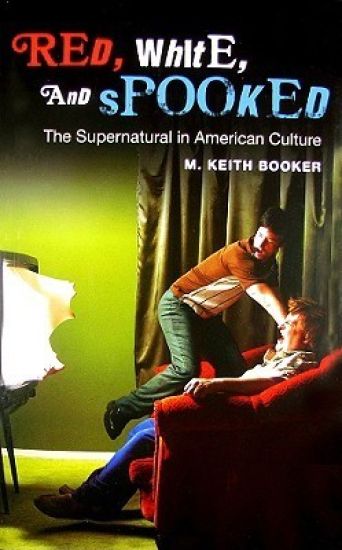
Red, White, and Spooked

Red, White, and Spooked

M. Keith Booker

Praeger Publishers Inc
2008
sidottu
America has always attempted to define itself through a network of invented myths and national narratives. Historically, this national mythmaking has focused on the building of the nation itself as a sort of grand adventure, as in the notion of manifest destiny, or the taming of the western frontier. This project has also naturally led to a focus on individual heroes, often playing the role of savior and redeemer in ways with clear religious resonances: Christ and Shane and Superman, for instance, all share key characteristics. At the same time, these superheroes have often been adolescents, designed to appeal to younger audiences as well. Other hero myths have been more down-to-earth, focusing on heroes who fight against evil, but in a more modest way, as in the case of the hardboiled detective. Red, White, and Spooked details the development of our national myths in an effort to try and see what these fantasies can reveal about what it means to be American today, and what we want it to mean.Beginning with John Winthrop's city upon a hill sermon in 1630, American culture has been informed by a sense of its own exceptional nature. The notion of the Western hemisphere as a new world, a place filled with possibility and even magic, goes back to the initial voyages of Columbus, while the American Revolution gave even more impetus to the idea that the United States was a special place with a unique mission. As a result, America has always attempted to define itself through a network of invented myths and national narratives. Red, White, and Spooked details the development of our national myths which can be seen underlying the genres of country and film noir, the characters of Superman, Batman, and Spiderman, television hits like Deadwood and NYPD Blue, and the Pirates of the Caribbean and Lord of the Rings franchises as well.This culture-spanning investigation begins with a historical survey of supernatural and superhuman themes in American culture, concluding with the recent upsurge that began in the 1990s. It then turns to a number of thematic chapters that discuss various works of recent popular culture with supernatural and superhuman themes - such as The X-Files, Smallville, The 4400, Medium, Heroes, Lost, and The Dead Zone - organized according to the desires to which these works commonly respond. The object here is to try and see what these fantasies can reveal about what it means to be American today, and what we still want it to mean.
Disney, Pixar, and the Hidden Messages of Children's Films
This work is a wide-ranging survey of American children's film that provides detailed analysis of the political implications of these films, as well as a discussion of how movies intended for children have come to be so persistently charged with meaning. Disney, Pixar, and the Hidden Messages of Children's Films provides wide-ranging scrutiny of one of the most lucrative American entertainment genres. Beyond entertaining children—and parents—and ringing up merchandise sales, are these films attempting to shape the political views of young viewers? M. Keith Booker examines this question with a close reading of dozens of films from Disney, Pixar, Dreamworks, and other studios, debunking some out-there claims—The Ant Bully communist propaganda?—while seriously considering the political content of each film. Disney, Pixar, and the Hidden Messages of Children's Films recaps the entire history of movies for young viewers—from Snow White and the Seven Dwarfs to this year's Up—then focuses on the extraordinary output of children's films in the last two decades. What Booker finds is that by and large, their lessons are decidedly, comfortably mainstream and any political subtext more often than not is inadvertent. Booker also offers some advice to parents for helping children read films in a more sophisticated way.
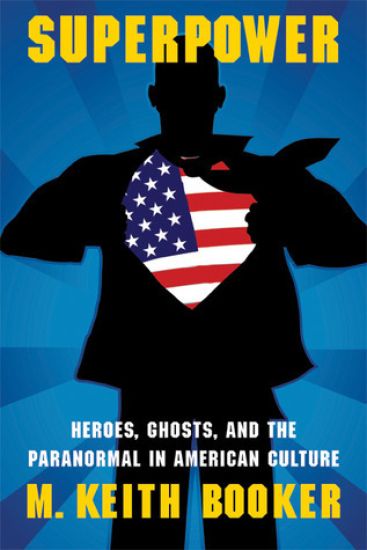
Superpower

Superpower

M. Keith Booker

Bison Books
2010
pokkari
Supernatural and superhuman elements have been prominent in American culture from the time of the New England Puritans' intense emphasis on religion. Superpower surveys the appearance of supernatural and superhuman elements in American culture, focusing on the American fascination with narratives involving supernatural adventure, superhuman heroes, and vast conspiracies driven by supernatural evil. In particular, M. Keith Booker suggests that the popularity of such themes indicates a deep-seated dissatisfaction with the rationalized world of contemporary American society. Booker details the development of the national myths underlying the characters of Superman, Batman, and Spiderman; television hits from Star Trek to Lost; and the franchises of Pirates of the Caribbean and The Lord of the Rings. This culture-spanning investigation begins with a historical survey of supernatural and superhuman themes in American culture and concludes with the recent upsurge that began in the 1990s. It then turns to various works of recent popular culture with supernatural and superhuman themes such as Twin Peaks, The X-Files, and Buffy the Vampire Slayer, organized according to the desires to which these works respond. What do these fantasies reveal about what it means to be American today—and what we want it to mean?