This book illustrates the importance of feedback using a simple fable in which a beleaguered manager recognizes the enormous impact feedback can have in his organization…by experiencing firsthand what it feels like to go without it.Tell Me How I’m Doing provides step-by-step guidance for how you can improve your own ability to relate to the people around you and become more effective in every sphere of your life. This guide helps you take a personal inventory of your own feedback style, and introduces you to the four distinct types of feedback -- supportive, corrective, abusive, and insignificant -- and clarifies when to use the first two, and how to avoid the others.You'll also learn about the ten essential dimensions of feedback, including how to:Use a Plan -- Give your feedback some preparatory thought, and then deliver it with a clear solution in mind.Be Specific -- Get your point across by citing particular examples of the behavior you’re discussing.Focus on Behaviors -- Target the factors that can be seen or measured, rather than concentrating on personalities, attitudes, or labels.Determine Time and Place -- Know when and where to give feedback for maximum effect.Give Balanced Feedback -- Provide the right mix of supportive and corrective feedback.By understanding how to interact more constructively with your peers, you can create a positive, productive, and dynamic culture that serves everyone well. Tell Me How I’m Doing is an engaging story and an essential guidebook for understanding how to use feedback to communicate goals, improve performance, and achieve greater success in every aspect of your life.
"Why I'm Souled Out" reveals several personal experiences that detail God's persistent calling on my life. You may find my response to each not only surprising but also enlightening. Life challenging and threatening occurrences can demand one's attention and motivate a change in lifestyle. However, for me, it wasn't until I developed a closer relationship with God that I understood - His persistence is greater than my resistance. That's when I fully grasped how, even in the midst of my defiance, He was still providing His grace and mercy. God uses various methods in calling us to ministry, but the motive is the same. I have become more vigilant in my observations and better able to draw inferences from my experiences. For those of you who are running from or avoiding your calling, it is my hope that after reading this book, you will develop the perseverance and commitment to be Souled Out in your Purpose, Calling, and Relationship with God. My objective is to honor our Lord's commands at Mark 12:30-31. First of all, "You must Love the Lord your God with all your heart, with all your soul, with your entire mind, and with all your strength. The second is: Love your neighbor as yourself. There is no other command greater than these."
This book describes a situation in which a child is stealing in school. As an elementary school counselor, I dealt with this issue numerous times. Using the method outlined within, we were successful in every situation without embarrassing the student. Included at the end of this book is information on why children steal and, more importantly, what action to take as a solution.
Marauders from a renegade planet attack an Earth colony ship forcing landing parties to split into two groups in a desperate attempt to escape. The attackers are killed, but the colonists pay a terrible price. Their vessels are destroyed stranding them without their technology on either side of an imposing mountain range on the planet Verde Grande. Descendants of a mysterious Seer now protect their people but become the bane of the hunter society on the other side of the mountain. All attempts to scale the mountain are thwarted for two centuries by the powerful Seers who want to preserve their religion and way of life no matter the cost.One day, a party of hunters sets out to climb the mountain. To their dismay, the Seers cannot control a strange unreachable young woman who finds the passage to their protected valley. The reunion triggers a decades-long conflict between the Seers and the children of the "lost ones"-a struggle that forever changes the people of Verde Grande.
This work has been selected by scholars as being culturally important, and is part of the knowledge base of civilization as we know it. This work was reproduced from the original artifact, and remains as true to the original work as possible. Therefore, you will see the original copyright references, library stamps (as most of these works have been housed in our most important libraries around the world), and other notations in the work.This work is in the public domain in the United States of America, and possibly other nations. Within the United States, you may freely copy and distribute this work, as no entity (individual or corporate) has a copyright on the body of the work.As a reproduction of a historical artifact, this work may contain missing or blurred pages, poor pictures, errant marks, etc. Scholars believe, and we concur, that this work is important enough to be preserved, reproduced, and made generally available to the public. We appreciate your support of the preservation process, and thank you for being an important part of keeping this knowledge alive and relevant.
The second edition of Hair Transplant 360: Volume 4 – Follicular Unit Extraction (FUE) is an illustrated guide to this minimally invasive procedure, involving the grafting of hair follicles that are genetically resistant to balding, onto a bald scalp. This book is edited by Samuel M Lam, from the Lam Institute for Hair Restoration, Texas, and Kenneth L Williams Jr from Orange County Hair Restoration, California. With the advent of hybrid-punch technology for follicular unit excision (FUE) in 2017, the first edition of this book became outdated and required a major revision. The new edition more than doubles the scope of the prior edition from 25 chapters in a single book, to 60 chapters in two hardcover volumes. The first volume updates and expands on the previous edition’s sections and is divided into the following: Basics, Operative Fundamentals, Practice Considerations, and Devices. The second volume is entirely new and is sectioned into Concepts, Techniques, Adjunctive Measures, Regional and Ethnic, Complications and Repair, and How I Do It and Special Topics. This unique, comprehensive text provides practical, up to date knowledge on FUE and incorporates over 100 videos that cover a range of subjects showcasing operative technique, interviews, video lectures and much more, all easily accessed via a QR code embedded in each chapter. In addition, full digital access is available on a mobile responsive web-browser.
La Queste del Saint Graal is one of the best-known and most important of the medieval Grail Romances, being the first text to portray the character of Galahad the perfect knight, and the earliest extant version of the tale to attempt to fuse the dual tradition associated with the Grail: pseudo-Celtic and Christian. However, it is often considered a difficult text, containing passages of dense metaphor and a seemingly disjointed plot. This study explains the link between metaphor and structure within the text, by means of detailed analysis of certain key sections of the narrative, showing how the author has carefully constructed a hierarchy of characters. What also emerges is that the author places the reader in a position analogous to that of the questing knights, struggling to understand the adventures with which they are presented, and able to do so insofar as they have grasped the symbolic significance of earlier events in the story. The literary technique of structuring a text by means of metaphor is employed not only in La Queste del Saint Graal, but is characteristic of much medieval narrative: thus this analysis has implications for the interpretation of other examples of the genre.
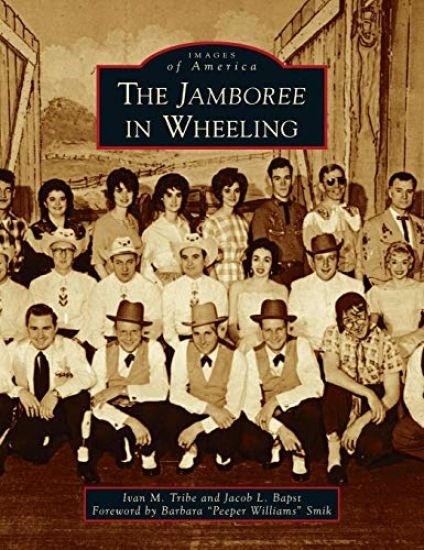
Beginning in the mid-1920s, radio stations that catered to rural audiences sponsored programs featuring country music, generically termed barn dances. Ranking second in terms of longevity and perhaps in significance to the Grand Ole Opry from WSM Nashville came the Jamboree in Wheeling, West Virginia. It became the springboard for such country stars as Wilma Lee and Stoney Cooper, Hawkshaw Hawkins, the Osborne Brothers, Doc and Chickie Williams, Lee Moore, Big Slim the Lone Cowboy, and most recently, Brad Paisley. Under slightly varying names, the Jamboree flourished from 1933 through 2005 over the airwaves of 50,000-watt WWVA 1170 AM and now airs on WWOV 101.1 FM.
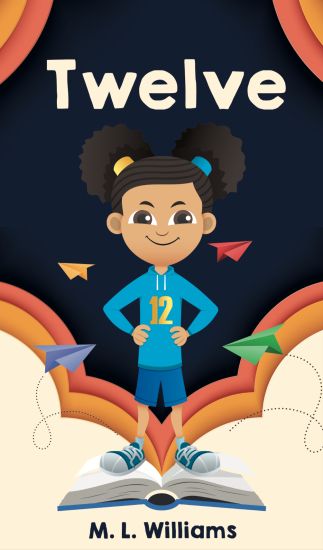
Junior High can be filled with uncertainty and self-doubt. As Marley Waters finds herself waking up in life, she questions friendships, relationships, and her sexuality.Twelve is a fiction novel about finding out who we are as we come of age and learning that it's okay to stray from the stereotypical preteen and be our own person.Girls will not only enjoy this story, but they will learn that middle school can be a time of confusion and turmoil, but it's also a time of self-exploration and discovery.
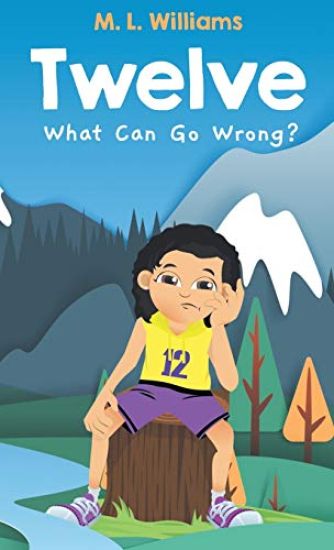
Marley and the gang are back But this time with more action-packed fun, food, games and gossip - and some totally weird friend drama - on the freshman class trip to Camp Faye.This energetic trip of self-discovery comes just days before the start of one of the most exciting and nerve-racking times in any teen's life: the first day of high school.Marley realizes the bumpy ride to camp is only just getting started once she's off the bus. Caught in a drama storm - while discovering a new and unexpected crush - Marley's most intense and exhausting Camp Faye activity is one she never signs up for...jealousy.Emotions run even deeper in this second installment of Twelve. Will Marley and the gang survive the four-day trip into the wilderness or will the trip destroy everything? What could possibly go wrong in a camp full of teenagers?Twelve: What Can Go Wrong? is M. L. Williams' second book in her debut series Twelve. In this story, Williams brings to life her own memories and experiences to tackle a series of poignant teenage challenges, all while keeping it fun, engaging and relatable through a classic high school camping trip.
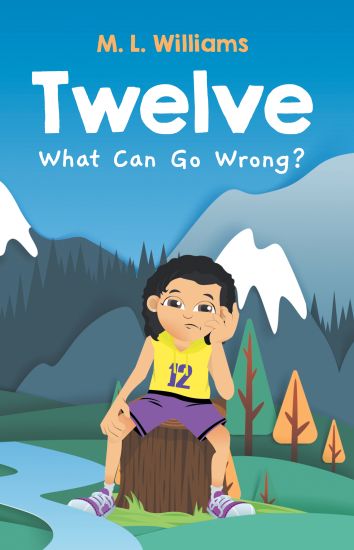
Marley and the gang are back But this time with more action-packed fun, food, games and gossip - and some totally weird friend drama - on the freshman class trip to Camp Faye.This energetic trip of self-discovery comes just days before the start of one of the most exciting and nerve-racking times in any teen's life: the first day of high school.Marley realizes the bumpy ride to camp is only just getting started once she's off the bus. Caught in a drama storm - while discovering a new and unexpected crush - Marley's most intense and exhausting Camp Faye activity is one she never signs up for...jealousy.Emotions run even deeper in this second installment of Twelve. Will Marley and the gang survive the four-day trip into the wilderness or will the trip destroy everything? What could possibly go wrong in a camp full of teenagers?Twelve: What Can Go Wrong? is M. L. Williams' second book in her debut series Twelve. In this story, Williams brings to life her own memories and experiences to tackle a series of poignant teenage challenges, all while keeping it fun, engaging and relatable through a classic high school camping trip.
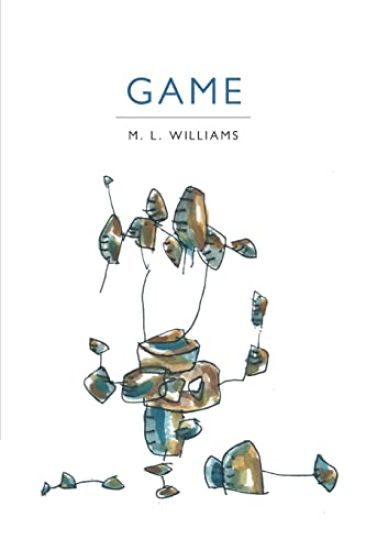
Underpinning the emotional territory of Game is the shared experience-mine and Ludwig Wittgenstein's-of losing brothers to suicide; hence every poem is an act of survivor's guilt, of speech against the abyss of unspeakable silence. The poems skirt the catastrophe of language in call-and-response interplay between poems and Wittgenstein's Philosophical Investigations, set in diverse spaces-rooms, dining tables, thresholds, picture frames, deserts, swamps and creeks, urban streets, seashores, a spider's web, cafes, playgrounds, a backyard, porches in the rain-all places where the multiform gods dwell, love, play, ignore, and destroy.