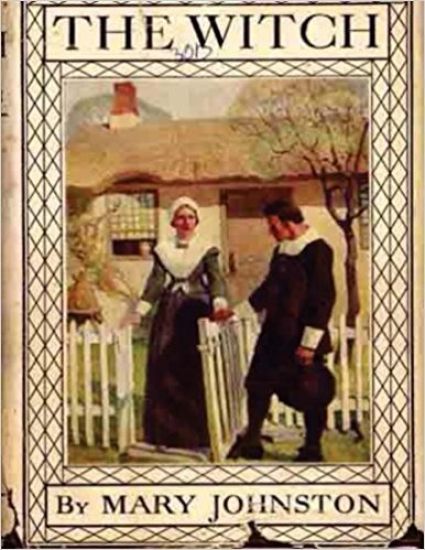
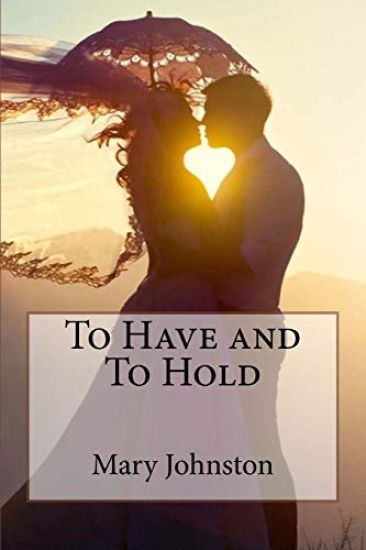
This was the best-selling novel in the United States in 1900, made into movies several times in subsequent years. It is set in colonial North America, beginning in the year 1621. A new movie adapted from the book was filmed in 2011. The dialog is Early Modern English, somewhat similar to Shakespeare's writings, not contemporary English but similar enough to be understood. The narration is almost modern English, easily understood. An English soldier, Ralph Percy, turned Virginian explorer in Jamestown colony, buys a wife -- a girl named Jocelyn Leigh -- not knowing that she is the escaped ward of King James I, fleeing a forced marriage to Lord Carnal. Jocelyn has no love for Ralph at first; she even seems to abhor him and explains she only married to have refuge after she fled from England, under an assumed name. Lord Carnal, Jocelyn's husband-to-be, eventually comes to Jamestown to find his promised bride, not knowing that Ralph Percy and Jocelyn Leigh are already man and wife.
Mary Johnston (November 21, 1870 - May 9, 1936) was an American novelist and women's rights advocate from Virginia. She was one of America's best selling authors during her writing career and had three silent films adapted from her novels. Early life: Mary Johnston was born in the small town of Buchanan, Virginia, the eldest child of John William Johnston, an American Civil War veteran, and Elizabeth Dixon Alexander Johnston. Due to frequent illness, she was educated at home by family and tutors. She grew up with a love of books and was financially independent enough to devote herself to writing. Career as novelist Johnston wrote historical books and novels that often combined romance with history. Her first book, Prisoners of Hope (1898), dealt with colonial times in Virginia as did her second novel, To Have and to Hold (1900), and later, Sir Mortimer (1904). The Goddess of Reason (1907) uses the theme of the French Revolution, and in Lewis Rand (1908) the author portrayed political life at the dawn of the 19th century. To Have and to Hold was serialized in The Atlantic Monthly in 1899 and published in book form 1900, by Houghton Mifflin. The book proved enormously popular and was the bestselling novel in the United States in 1900. Johnston's next work, titled Audrey, was the fifth bestselling book in the U.S. in 1902, and Sir Mortimer, serialized in Harper's Monthly magazine from November 1903 through April 1904, was published in 1904. Her best-selling 1911 novel on the American Civil War, The Long Roll, brought Johnston into open conflict with Stonewall Jackson's widow, Mary Anna Jackson. Beyond her native America, Johnston's novels were also very popular in Canada and in England. During her long career Johnston wrote, in addition to 23 novels, numerous short stories, two long narrative poems, and one play. She used her fame to advocate for women's rights and strongly supported the women's suffrage movement. Her book titled Hagar (1913), considered to be one of the first feminist novels as well as somewhat autobiographical, captures the early days of women's rights. Johnston's deep focus on female suffrage in the United States is documented by her letters and correspondence with women working for the right to vote. But Hagar created a controversy among men and tradition-minded women, who were upset by the book's progressive ideas. Many refused to purchase it and subsequent Johnston novels. During her life, Johnston was close friends with Gone with the Wind author Margaret Mitchell, who once commented: "I hesitate to write about the South after having read Mary Johnston. Johnston died in 1936, at the age of 65, at her home in Warm Springs, Virginia. She was interred in Hollywood Cemetery in Richmond. Three Hills, her house at Warm Springs, was added to the National Register of Historic Places in 2013. Her Richmond home on Linden Row was listed in 1971
Mary Johnston (November 21, 1870 - May 9, 1936) was an American novelist and women's rights advocate from Virginia. She was one of America's best selling authors during her writing career and had three silent films adapted from her novels. Early life: Mary Johnston was born in the small town of Buchanan, Virginia, the eldest child of John William Johnston, an American Civil War veteran, and Elizabeth Dixon Alexander Johnston. Due to frequent illness, she was educated at home by family and tutors. She grew up with a love of books and was financially independent enough to devote herself to writing. Career as novelist Johnston wrote historical books and novels that often combined romance with history. Her first book, Prisoners of Hope (1898), dealt with colonial times in Virginia as did her second novel, To Have and to Hold (1900), and later, Sir Mortimer (1904). The Goddess of Reason (1907) uses the theme of the French Revolution, and in Lewis Rand (1908) the author portrayed political life at the dawn of the 19th century. To Have and to Hold was serialized in The Atlantic Monthly in 1899 and published in book form 1900, by Houghton Mifflin. The book proved enormously popular and was the bestselling novel in the United States in 1900. Johnston's next work, titled Audrey, was the fifth bestselling book in the U.S. in 1902, and Sir Mortimer, serialized in Harper's Monthly magazine from November 1903 through April 1904, was published in 1904. Her best-selling 1911 novel on the American Civil War, The Long Roll, brought Johnston into open conflict with Stonewall Jackson's widow, Mary Anna Jackson. Beyond her native America, Johnston's novels were also very popular in Canada and in England. During her long career Johnston wrote, in addition to 23 novels, numerous short stories, two long narrative poems, and one play. She used her fame to advocate for women's rights and strongly supported the women's suffrage movement. Her book titled Hagar (1913), considered to be one of the first feminist novels as well as somewhat autobiographical, captures the early days of women's rights. Johnston's deep focus on female suffrage in the United States is documented by her letters and correspondence with women working for the right to vote. But Hagar created a controversy among men and tradition-minded women, who were upset by the book's progressive ideas. Many refused to purchase it and subsequent Johnston novels. During her life, Johnston was close friends with Gone with the Wind author Margaret Mitchell, who once commented: "I hesitate to write about the South after having read Mary Johnston. Johnston died in 1936, at the age of 65, at her home in Warm Springs, Virginia. She was interred in Hollywood Cemetery in Richmond. Three Hills, her house at Warm Springs, was added to the National Register of Historic Places in 2013. Her Richmond home on Linden Row was listed in 1971..........................
In the 15th century, a fabulous journey awaited those who could unlock the secrets of the Earth's geography. Beautifully written and emotionally compelling, 1492: Admiral of the Ocean-Sea tells of the famous adventures of Columbus and his men, who sailed into the almost mythical seas beyond the horizon in search of the "New World," in the hopes of attaining vast wealth and power. This brilliant book, by best-selling author Mary Johnston, traces the long route taken by explorers hoping to locate Asia. Based on their limited means and understanding of navigation, they struggle to find their position, while at the same time encountering many natural wonders and exotic peoples. Tensions build as they appear to become increasingly lost. Columbus and his crew begin to lose hope, until they finally receive the vindication of their bold vision. 1492: Admiral of the Ocean-Sea pays special attention to the conditions of the late 15th century period. It describes the competition between classes and ethnic groups in Spain, as well as the clashes that occurred when people from two very different cultures, native American and European, interact. These issues are not merely abstract, since we see them vividly through the eyes of a disenfranchised individual: a Christian sailor of Jewish background, who has been compelled to lead a secretive and solitary existence. The incidents of his life are brought to us in a handsome, elegant language, uncommon in the books of our day., .............. Mary Johnston (November 21, 1870 - May 9, 1936) was an American novelist and women's rights advocate from Virginia. She was one of America's best selling authors during her writing career and had three silent films adapted from her novels. Early life: Mary Johnston was born in the small town of Buchanan, Virginia, the eldest child of John William Johnston, an American Civil War veteran, and Elizabeth Dixon Alexander Johnston. Due to frequent illness, she was educated at home by family and tutors. She grew up with a love of books and was financially independent enough to devote herself to writing. Career as novelist Johnston wrote historical books and novels that often combined romance with history. Her first book, Prisoners of Hope (1898), dealt with colonial times in Virginia as did her second novel, To Have and to Hold (1900), and later, Sir Mortimer (1904). The Goddess of Reason (1907) uses the theme of the French Revolution, and in Lewis Rand (1908) the author portrayed political life at the dawn of the 19th century. To Have and to Hold was serialized in The Atlantic Monthly in 1899 and published in book form 1900, by Houghton Mifflin. The book proved enormously popular and was the bestselling novel in the United States in 1900. Johnston's next work, titled Audrey, was the fifth bestselling book in the U.S. in 1902, and Sir Mortimer, serialized in Harper's Monthly magazine from November 1903 through April 1904, was published in 1904. Her best-selling 1911 novel on the American Civil War, The Long Roll, brought Johnston into open conflict with Stonewall Jackson's widow, Mary Anna Jackson. Beyond her native America, Johnston's novels were also very popular in Canada and in England. During her long career Johnston wrote, in addition to 23 novels, numerous short stories, two long narrative poems, and one play. She used her fame to advocate for women's rights and strongly supported the women's suffrage movement. Her book titled Hagar (1913), considered to be one of the first feminist novels as well as somewhat autobiographical, captures the early days of women's rights. Johnston's deep focus on female suffrage in the United States is documented by her letters and correspondence with women working for the right to vote. But Hagar created a controversy among men and tradition-minded women, who were upset by the book's progressive ideas. Many refused to purchase it and subsequent Johnston novels..........
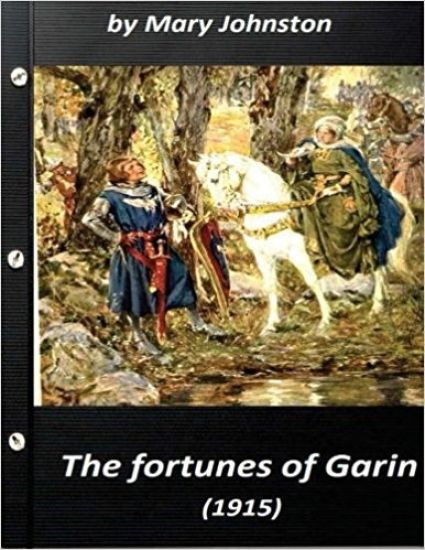
Mary Johnston (November 21, 1870 - May 9, 1936) was an American novelist and women's rights advocate from Virginia. She was one of America's best selling authors during her writing career and had three silent films adapted from her novels. Early life: Mary Johnston was born in the small town of Buchanan, Virginia, the eldest child of John William Johnston, an American Civil War veteran, and Elizabeth Dixon Alexander Johnston. Due to frequent illness, she was educated at home by family and tutors. She grew up with a love of books and was financially independent enough to devote herself to writing. Career as novelist Johnston wrote historical books and novels that often combined romance with history. Her first book, Prisoners of Hope (1898), dealt with colonial times in Virginia as did her second novel, To Have and to Hold (1900), and later, Sir Mortimer (1904). The Goddess of Reason (1907) uses the theme of the French Revolution, and in Lewis Rand (1908) the author portrayed political life at the dawn of the 19th century. To Have and to Hold was serialized in The Atlantic Monthly in 1899 and published in book form 1900, by Houghton Mifflin. The book proved enormously popular and was the bestselling novel in the United States in 1900. Johnston's next work, titled Audrey, was the fifth bestselling book in the U.S. in 1902, and Sir Mortimer, serialized in Harper's Monthly magazine from November 1903 through April 1904, was published in 1904. Her best-selling 1911 novel on the American Civil War, The Long Roll, brought Johnston into open conflict with Stonewall Jackson's widow, Mary Anna Jackson. Beyond her native America, Johnston's novels were also very popular in Canada and in England. During her long career Johnston wrote, in addition to 23 novels, numerous short stories, two long narrative poems, and one play. She used her fame to advocate for women's rights and strongly supported the women's suffrage movement. Her book titled Hagar (1913), considered to be one of the first feminist novels as well as somewhat autobiographical, captures the early days of women's rights. Johnston's deep focus on female suffrage in the United States is documented by her letters and correspondence with women working for the right to vote. But Hagar created a controversy among men and tradition-minded women, who were upset by the book's progressive ideas. Many refused to purchase it and subsequent Johnston novels. During her life, Johnston was close friends with Gone with the Wind author Margaret Mitchell, who once commented: "I hesitate to write about the South after having read Mary Johnston. Johnston died in 1936, at the age of 65, at her home in Warm Springs, Virginia. She was interred in Hollywood Cemetery in Richmond. Three Hills, her house at Warm Springs, was added to the National Register of Historic Places in 2013. Her Richmond home on Linden Row was listed in 1971......................Frederick Coffay Yohn (February 8, 1875 - June 6, 1933), often recognized only by his initials, F. C. Yohn, was an artist and magazine illustrator
The river ran several thousand miles, from a land of snow and fir trees and brief summers to a land of long, long summers, cane and orange. The river was wide. It dealt in loops and a tortuous course, and for the most part it was yellow and turbid and strong of current. There were sandbars in the river, there were jewelled islands; there were parallel swamps, lakes, and bayous. From the border of these, and out of the water, rose tall trees, starred over, in their season, with satiny cups or disks, flowers of their own or vast flowering vines, networks of languid bloom. The Spanish moss, too, swayed from the trees, and about their knees shivered the canebrakes. Of a remarkable personality throughout, in its last thousand miles the river grew unique. Now it ran between bluffs of coloured clay, and now it flowed above the level of the surrounding country. You did not go down to the river: you went up to the river, the river caged like a tiger behind the levees. Time of flood was the tiger's time. Down went the levee-widened in an instant the ragged crevasse-out came the beast -..... Mary Johnston (November 21, 1870 - May 9, 1936) was an American novelist and women's rights advocate from Virginia. She was one of America's best selling authors during her writing career and had three silent films adapted from her novels. Early life: Mary Johnston was born in the small town of Buchanan, Virginia, the eldest child of John William Johnston, an American Civil War veteran, and Elizabeth Dixon Alexander Johnston. Due to frequent illness, she was educated at home by family and tutors. She grew up with a love of books and was financially independent enough to devote herself to writing. Career as novelist Johnston wrote historical books and novels that often combined romance with history. Her first book, Prisoners of Hope (1898), dealt with colonial times in Virginia as did her second novel, To Have and to Hold (1900), and later, Sir Mortimer (1904). The Goddess of Reason (1907) uses the theme of the French Revolution, and in Lewis Rand (1908) the author portrayed political life at the dawn of the 19th century. To Have and to Hold was serialized in The Atlantic Monthly in 1899 and published in book form 1900, by Houghton Mifflin. The book proved enormously popular and was the bestselling novel in the United States in 1900. Johnston's next work, titled Audrey, was the fifth bestselling book in the U.S. in 1902, and Sir Mortimer, serialized in Harper's Monthly magazine from November 1903 through April 1904, was published in 1904. Her best-selling 1911 novel on the American Civil War, The Long Roll, brought Johnston into open conflict with Stonewall Jackson's widow, Mary Anna Jackson. Beyond her native America, Johnston's novels were also very popular in Canada and in England. During her long career Johnston wrote, in addition to 23 novels, numerous short stories, two long narrative poems, and one play. She used her fame to advocate for women's rights and strongly supported the women's suffrage movement. Her book titled Hagar (1913), considered to be one of the first feminist novels as well as somewhat autobiographical, captures the early days of women's rights. Johnston's deep focus on female suffrage in the United States is documented by her letters and correspondence with women working for the right to vote. But Hagar created a controversy among men and tradition-minded women, who were upset by the book's progressive ideas. Many refused to purchase it and subsequent Johnston novels.. Newell Convers Wyeth (October 22, 1882 - October 19, 1945), known as N. C. Wyeth, was an American artist and illustrator. He was the pupil of artist Howard Pyle and became one of America's greatest illustrators............