Kirjojen hintavertailu. Mukana 11 213 693 kirjaa ja 12 kauppaa.

Kirjahaku

Etsi kirjoja tekijän nimen, kirjan nimen tai ISBN:n perusteella.

1000 tulosta hakusanalla Machado De Assis

Machado de Assis

Machado de Assis

G. Reginald Daniel

Pennsylvania State University Press
2012
sidottu
Joaquim Maria Machado de Assis (1839–1908) was Brazil’s foremost novelist of the late nineteenth and early twentieth centuries. As a mulatto, Machado experienced the ambiguity of racial identity throughout his life. Literary critics first interpreted Machado as an embittered misanthrope uninterested in the plight of his fellow African Brazilians. By midcentury, however, a new generation of critics asserted that Machado’s writings did reveal his interest in slavery, race, and other contemporary social issues, but their interpretations went too far in the other direction. G. Reginald Daniel, an expert on Brazilian race relations, takes a fresh look at how Machado’s writings were inflected by his life—especially his experience of his own racial identity. The result is a new interpretation that sees Machado as endeavoring to transcend his racial origins by universalizing the experience of racial ambiguity and duality into a fundamental mode of human existence.
Machado de Assis

Machado de Assis

G. Reginald Daniel

Pennsylvania State University Press
2012
pokkari
Joaquim Maria Machado de Assis (1839–1908) was Brazil’s foremost novelist of the late nineteenth and early twentieth centuries. As a mulatto, Machado experienced the ambiguity of racial identity throughout his life. Literary critics first interpreted Machado as an embittered misanthrope uninterested in the plight of his fellow African Brazilians. By midcentury, however, a new generation of critics asserted that Machado’s writings did reveal his interest in slavery, race, and other contemporary social issues, but their interpretations went too far in the other direction. G. Reginald Daniel, an expert on Brazilian race relations, takes a fresh look at how Machado’s writings were inflected by his life—especially his experience of his own racial identity. The result is a new interpretation that sees Machado as endeavoring to transcend his racial origins by universalizing the experience of racial ambiguity and duality into a fundamental mode of human existence.
Machado de Assis

Machado de Assis

University of Texas Press
1999
nidottu
Joaquim Maria Machado de Assis (1839-1908) never left Brazil and rarely traveled outside his native city of Rio de Janeiro, yet he is widely acknowledged by those who have read him as one of the major authors of the nineteenth century. His works are full of subtle irony, relentless psychological insights, and brilliant literary innovations. Yet, because he wrote in Portuguese, a language outside the mainstream of Western culture, those with access to his writings are relatively few. This book is designed not only to call new attention to this master but also to raise questions about the nature of literature itself and current alternative views on how it can be approached. Four essays address the question of Machado's "realism" in the five masterpiece novels of his maturity, especially Dom Casmurro. The noted contributors include John Gledson (University of Liverpool), João Adolfo Hansen (Universidade de São Paulo), Sidney Chalhoub (Universidade de Campinas), and Daphne Patai (University of Massachusetts at Amherst). Dain Borges of the University of California at San Diego says, "[This is the] only collection explicitly debating the question that polarizes contemporary Brazilian criticism of Machado de Assis: was he a sophisticated late realist, or was he a pioneering anti-realist, even a postmodernist? The [essayists] marshal their evidence and argument with virtuosity and arrive at sharply opposing conclusions."
Machado de Assis

Machado de Assis

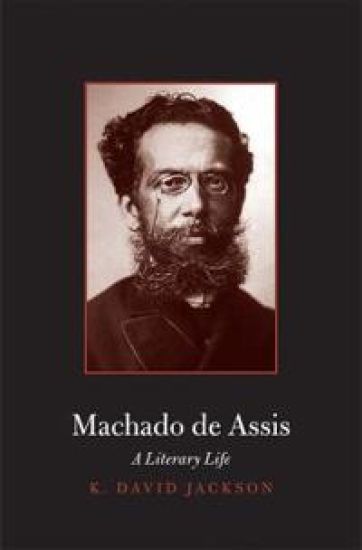
K. David Jackson

Yale University Press
2015
sidottu
Novelist, poet, playwright, and short story writer Joaquim Maria Machado de Assis (1839–1908) is widely regarded as Brazil’s greatest writer, although his work is still too little read outside his native country. In this first comprehensive English-language examination of Machado since Helen Caldwell’s seminal 1970 study, K. David Jackson reveals Machado de Assis as an important world author, one of the inventors of literary modernism whose writings profoundly influenced some of the most celebrated authors of the twentieth century, including José Saramago, Carlos Fuentes, and Donald Barthelme. Jackson introduces a hitherto unknown Machado de Assis to readers, illuminating the remarkable life, work, and legacy of the genius whom Susan Sontag called “the greatest writer ever produced in Latin America” and whom Allen Ginsberg hailed as “another Kafka.” Philip Roth has said of him that “like Beckett, he is ironic about suffering.” And Harold Bloom has remarked of Machado that “he’s funny as hell.”
Machado De Assis

Machado De Assis

Helen Caldwell

University of California Press
2022
pokkari
Machado de Assis is among the most original creative minds in Brazil's rich, four-century-long literary tradition. Caldwell's critical and biographical study explores Machado's purpose, meaning, and artistic method in each of his nine novels, published between 1872 and 1908. She traces the ideas and recurrent themes, and identifies his affinities with other authors. In tracing Machado's experimentation with narrative techniques, Caldwell reveals the increasingly subtle use he made of point of view, sometimes indirect or reflected, sometimes multiple and "nested" like Chinese boxes. Caldwell shows the increasing sureness with which he individualized his characters, and how, in advance of his time, he developed action, not by realistic detail, but by the boldest use of allusion and symbol. Each novel is shown to be an artistic venture, and not in any sense a regurgitation from a sick soul as some critics have argued. IN searching out the unity of his novels, Caldwell explores the other aspects of Machado's intellectual life--as poet,journalist, playwright, conversationalist, and academician. Of particular interest is her attention to his shift away from the social criticism of his early novels into the labyrinth of individual psychology in the last five--all of which rank among the world literature. But this perceptive account never loses sight of the one element present in every piece of Machado's fiction, in eery one of his personages; that is, superlative comedy, in its whole range: wit, irony, satire, parody, burlesque, humor. Altogether, Caldwell reveals to us a writer, in essence a poet, who is still the altus prosator of Brazilian letters. This title is part of UC Press's Voices Revived program, which commemorates University of California Press's mission to seek out and cultivate the brightest minds and give them voice, reach, and impact. Drawing on a backlist dating to 1893, Voices Revived makes high-quality, peer-reviewed scholarship accessible once again using print-on-demand technology. This title was originally published in 1970.
Machado De Assis

Machado De Assis

Helen Caldwell

University of California Press
2022
sidottu
Machado de Assis is among the most original creative minds in Brazil's rich, four-century-long literary tradition. Caldwell's critical and biographical study explores Machado's purpose, meaning, and artistic method in each of his nine novels, published between 1872 and 1908. She traces the ideas and recurrent themes, and identifies his affinities with other authors. In tracing Machado's experimentation with narrative techniques, Caldwell reveals the increasingly subtle use he made of point of view, sometimes indirect or reflected, sometimes multiple and "nested" like Chinese boxes. Caldwell shows the increasing sureness with which he individualized his characters, and how, in advance of his time, he developed action, not by realistic detail, but by the boldest use of allusion and symbol. Each novel is shown to be an artistic venture, and not in any sense a regurgitation from a sick soul as some critics have argued. IN searching out the unity of his novels, Caldwell explores the other aspects of Machado's intellectual life--as poet,journalist, playwright, conversationalist, and academician. Of particular interest is her attention to his shift away from the social criticism of his early novels into the labyrinth of individual psychology in the last five--all of which rank among the world literature. But this perceptive account never loses sight of the one element present in every piece of Machado's fiction, in eery one of his personages; that is, superlative comedy, in its whole range: wit, irony, satire, parody, burlesque, humor. Altogether, Caldwell reveals to us a writer, in essence a poet, who is still the altus prosator of Brazilian letters. This title is part of UC Press's Voices Revived program, which commemorates University of California Press's mission to seek out and cultivate the brightest minds and give them voice, reach, and impact. Drawing on a backlist dating to 1893, Voices Revived makes high-quality, peer-reviewed scholarship accessible once again using print-on-demand technology. This title was originally published in 1970.
Machado de Assis

Machado de Assis

João Cezar de Castro Rocha

Michigan State University Press
2015
nidottu
This book offers an alternative explanation for one of the core dilemmas of Brazilian literary criticism: the “midlife crisis” Machado de Assis underwent from 1878 to 1880, the result of which was the writing of The Posthumous Memoirs of Brás Cubas, as well as the remarkable production of his mature years—with an emphasis on his masterpiece, Dom Casmurro. At the center of this alternative explanation, Castro Rocha situates the fallout from the success enjoyed by Eça de Queirós with the publication of Cousin Basílio and Machado’s two long texts condemning the author and his work. Literary and aesthetic rivalries come to the fore, allowing for a new theoretical framework based on a literary appropriation of “thick description,” the method proposed by anthropologist Clifford Geertz. From this method, Castro Rocha derives his key hypothesis: an unforeseen consequence of Machado’s reaction to Eça’s novel was a return to the classical notion of aemulatio, which led Machado to develop a “poetics of emulation.”
Machado de Assis

Machado de Assis

Joaquim Maria Machado de Assis; Michael Wood

Liveright Publishing Corporation
2019
nidottu
Acclaimed as “the greatest writer ever produced in Latin America” by Susan Sontag, as well as “another Kafka” by Allen Ginsberg, Machado de Assis (1839-1908) was famous in his time for his psychologically probing tales of fin-de-siecle Rio de Janeiro. Margaret Jull Costa and Robin Patterson, “the accomplished duo” (The Wall Street Journal) behind the “landmark...heroically translated” volume (The New Yorker) of The Collected Stories of Machado de Assis (ISBN 978 0 87140 496 1), include twenty-six chronologically ordered stories, Machado de Assis affirms Machado’s status as a literary giant who must finally be fully integrated into the world literary canon.
Machado de Assis

Machado de Assis

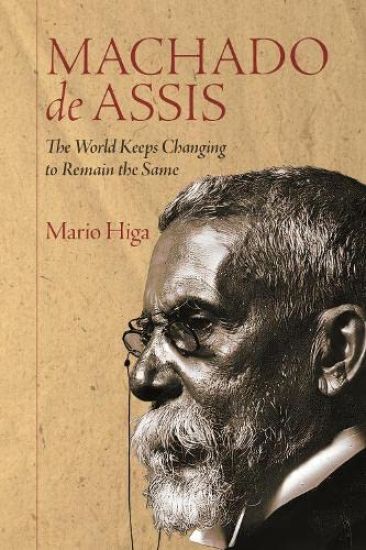
Mario Higa

BOYDELL BREWER LTD
2022
sidottu
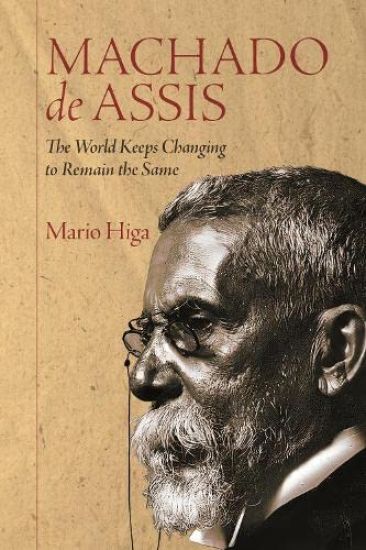
A lively and accessible introduction to Machado de Assis and his work Machado de Assis (1839-1908) is a world-class writer and arguably the greatest of Brazilian literature. Susan Sontag deemed him "the greatest writer ever produced in Latin America," and Harold Bloom, "the supreme black literary artist to date." John Updike called him a "master," and Carlos Fuentes, a "miracle." This book guides the reader through Machado's biography, times, and critical reception and examines his various personas - the translator, poet, playwright, critic, cronista, short story writer, and novelist - paying particular attention to his fictional prose, which most clearly conveys his acerbic criticism of Brazilian society and his deft view of the human condition. The book closes with an updated list of Machado's works available in English translation and a selection of further critical studies.
Machado de Assis

Machado de Assis

Mario Higa

BOYDELL BREWER LTD
2025
pokkari
A lively and accessible introduction to Machado de Assis and his work Machado de Assis (1839-1908) is a world-class writer and arguably the greatest of Brazilian literature. Susan Sontag deemed him "the greatest writer ever produced in Latin America," and Harold Bloom, "the supreme black literary artist to date." John Updike called him a "master," and Carlos Fuentes, a "miracle." This book guides the reader through Machado's biography, times, and critical reception and examines his various personas - the translator, poet, playwright, critic, cronista, short story writer, and novelist - paying particular attention to his fictional prose, which most clearly conveys his acerbic criticism of Brazilian society and his deft view of the human condition. The book closes with an updated list of Machado's works available in English translation and a selection of further critical studies.
Machado de Assis, Son Oeuvre Littéraire

Machado de Assis, Son Oeuvre Littéraire

Machado de Assis

Hachette Livre - BNF
2016
pokkari
Machado de Assis, son oeuvre litteraire / avant-propos d'Anatole France, ...Date de l'edition originale: 1917Ce livre est la reproduction fidele d'une oeuvre publiee avant 1920 et fait partie d'une collection de livres reimprimes a la demande editee par Hachette Livre, dans le cadre d'un partenariat avec la Bibliotheque nationale de France, offrant l'opportunite d'acceder a des ouvrages anciens et souvent rares issus des fonds patrimoniaux de la BnF.Les oeuvres faisant partie de cette collection ont ete numerisees par la BnF et sont presentes sur Gallica, sa bibliotheque numerique.En entreprenant de redonner vie a ces ouvrages au travers d'une collection de livres reimprimes a la demande, nous leur donnons la possibilite de rencontrer un public elargi et participons a la transmission de connaissances et de savoirs parfois difficilement accessibles.Nous avons cherche a concilier la reproduction fidele d'un livre ancien a partir de sa version numerisee avec le souci d'un confort de lecture optimal. Nous esperons que les ouvrages de cette nouvelle collection vous apporteront entiere satisfaction.Pour plus d'informations, rendez-vous sur www.hachettebnf.fr
The Collected Stories of Machado de Assis

The Collected Stories of Machado de Assis

Machado de Assis

Jollyjoy Books
2025
pokkari
The Collected Stories by Machado de Assis showcases the brilliant and satirical works of one of Brazil's most esteemed literary figures. This collection brings together some of Machado de Assis's best short stories, blending wit, irony, and profound social commentary. Through his sharp portrayal of Brazilian society, he delves into themes of class, morality, and the complexities of human nature. Known for his clever use of narrative and innovative style, Machado de Assis captures the nuances of human relationships and the subtleties of daily life. This anthology is an essential read for anyone seeking to understand the depth and mastery of this literary pioneer.
The Collected Stories of Machado de Assis

The Collected Stories of Machado de Assis

Machado de Assis

Jollyjoy Books
2025
sidottu
The Collected Stories by Machado de Assis showcases the brilliant and satirical works of one of Brazil's most esteemed literary figures. This collection brings together some of Machado de Assis's best short stories, blending wit, irony, and profound social commentary. Through his sharp portrayal of Brazilian society, he delves into themes of class, morality, and the complexities of human nature. Known for his clever use of narrative and innovative style, Machado de Assis captures the nuances of human relationships and the subtleties of daily life. This anthology is an essential read for anyone seeking to understand the depth and mastery of this literary pioneer.
Machado De Assis's Philosopher or Dog?

Machado De Assis's Philosopher or Dog?

Suriani da Silva

Routledge
2020
nidottu
This book reinforces Franco Moretti's findings, by examining whether they apply to the relationship that Machado de Assis maintained with the serial novel, as a genre and format of publication of fiction invented in Europe, and with the means of literary production available in Rio de Janeiro.
Machado de Assis, Blackness, and the Americas

Machado de Assis, Blackness, and the Americas

STATE UNIVERSITY OF NEW YORK PRESS
2024
sidottu
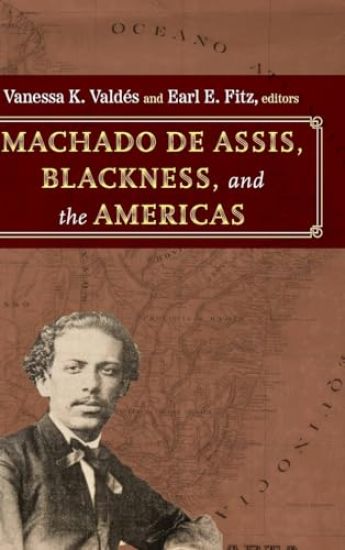
Examines the reception of Brazil's most-canonized writer in the United States to shed light on questions of Blackness and hemispheric American experience.Considered a genius in his own lifetime, Joaquim Maria Machado de Assis (1839–1908) is Brazil's most canonized writer. Yet, he remains a contested and even enigmatic figure to readers in Brazil and abroad, his relative silence on slavery leaving him vulnerable to charges of aspirations to whiteness. Machado de Assis, Blackness, and the Americas reconsiders this issue by exploring how his prose fiction has been received in the United States. In seven original essays, contributors re-examine his novels and short stories, as well as photographs of the writer, in order to better understand the strategies he employed to navigate Brazil's literary scene as a man of African descent. Framed by a contextualizing introduction and an afterword in the form of a conversation between the editors, the volume speaks to and with our own historical moment and the realities of Black lives in the Americas over the course of the last two centuries.
Machado de Assis, Blackness, and the Americas

Machado de Assis, Blackness, and the Americas

STATE UNIVERSITY OF NEW YORK PRESS
2025
pokkari
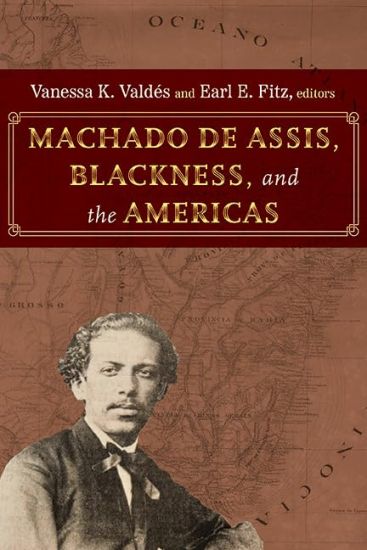
Examines the reception of Brazil's most-canonized writer in the United States to shed light on questions of Blackness and hemispheric American experience.Considered a genius in his own lifetime, Joaquim Maria Machado de Assis (1839–1908) is Brazil's most canonized writer. Yet, he remains a contested and even enigmatic figure to readers in Brazil and abroad, his relative silence on slavery leaving him vulnerable to charges of aspirations to whiteness. Machado de Assis, Blackness, and the Americas reconsiders this issue by exploring how his prose fiction has been received in the United States. In seven original essays, contributors re-examine his novels and short stories, as well as photographs of the writer, in order to better understand the strategies he employed to navigate Brazil's literary scene as a man of African descent. Framed by a contextualizing introduction and an afterword in the form of a conversation between the editors, the volume speaks to and with our own historical moment and the realities of Black lives in the Americas over the course of the last two centuries.
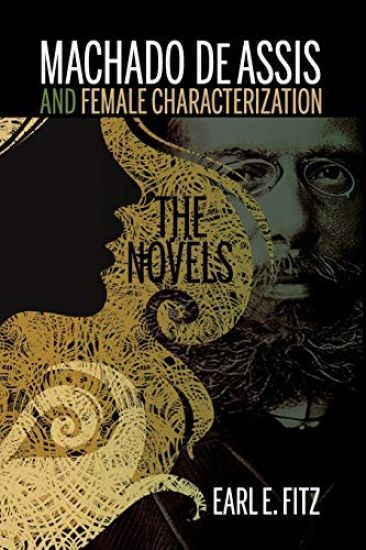
Machado de Assis and Female Characterization

Machado de Assis and Female Characterization

Earl E. Fitz

Bucknell University Press
2014
sidottu
This book examines the nature and function of the main female characters in the nine novels of Machado de Assis. The basic argument is that Machado had a particular interest in female characterization and that his fictional women became increasingly sophisticated and complex as he matured and developed as a writer and social commentator. This book argues that Machado developed, especially after 1880 (and what is usually considered the beginning of his “mature” period), a kind of anti-realistic, “new narrative,” one that presents itself as self-referential fictional artifice but one that also cultivates a keen social consciousness. The book also contends that Machado increasingly uses his female characterizations to convey this social consciousness and to show that the new Brazil that is emerging both before and after the establishment of the Brazilian Republic (1889) requires not only the emancipation of the black slaves but the emancipation of its women as well.
Machado de Assis and Female Characterization

Machado de Assis and Female Characterization

Earl E. Fitz

Bucknell University Press
2016
nidottu
This book examines the nature and function of the main female characters in the nine novels of Machado de Assis. The basic argument is that Machado had a particular interest in female characterization and that his fictional women became increasingly sophisticated and complex as he matured and developed as a writer and social commentator. This book argues that Machado developed, especially after 1880 (and what is usually considered the beginning of his “mature” period), a kind of anti-realistic, “new narrative,” one that presents itself as self-referential fictional artifice but one that also cultivates a keen social consciousness. The book also contends that Machado increasingly uses his female characterizations to convey this social consciousness and to show that the new Brazil that is emerging both before and after the establishment of the Brazilian Republic (1889) requires not only the emancipation of the black slaves but the emancipation of its women as well.
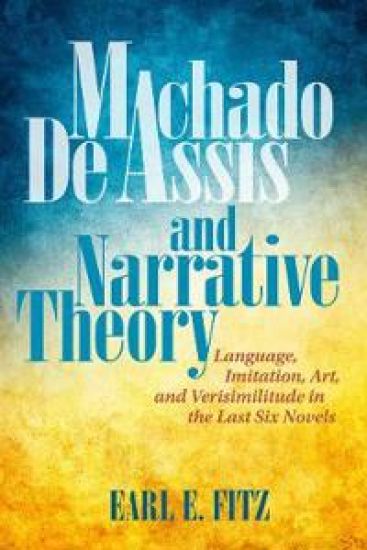
Machado de Assis and Narrative Theory

Machado de Assis and Narrative Theory

Earl E. Fitz

Rutgers University Press
2019
nidottu
This book makes the argument that Machado de Assis, hailed as one of Latin American literature’s greatest writers, was also a major theoretician of the modern novel form. Steeped in the works of Western literature and an imaginative reader of French Symbolist poetry, Machado creates, between 1880 and 1908, a “new narrative,” one that will presage the groundbreaking theories of Swiss linguist Ferdinand de Saussure by showing how even the language of narrative cannot escape being elusive and ambiguous in terms of meaning. It is from this discovery about the nature of language as a self-referential semiotic system that Machado crafts his “new narrative.” Long celebrated in Brazil as a dazzlingly original writer, Machado has struggled to gain respect and attention outside the Luso-Brazilian ken. He is the epitome of the “outsider” or “marginal,” the iconoclastic and wildly innovative genius who hails from a culture rarely studied in the Western literary hierarchy and so consigned to the status of “eccentric.” Had the Brazilian master written not in Portuguese but English, French, or German, he would today be regarded as one of the true exemplars of the modern novel, in expression as well as in theory. Published by Bucknell University Press. Distributed worldwide by Rutgers University Press.