Kirjojen hintavertailu. Mukana 11 244 527 kirjaa ja 12 kauppaa.

Kirjahaku

Etsi kirjoja tekijän nimen, kirjan nimen tai ISBN:n perusteella.

723 tulosta hakusanalla Madhavi Sunder

From Goods to a Good Life

From Goods to a Good Life

Madhavi Sunder

Yale University Press
2012
sidottu
Most scholarship on intellectual property considers this law from the standpoint of law and economics. Under this conventional wisdom, intellectual property is simply a tool for promoting innovative products, from iPods to R2D2. In this highly original book Madhavi Sunder calls for a richer understanding of intellectual property law’s effects on social and cultural life. Intellectual property does more than incentivize the production of more goods. This law fundamentally affects the ability of citizens to live a good life. Intellectual property law governs the abilities of human beings to make and share culture, and to profit from this enterprise in a global Knowledge economy. This book turns to social and cultural theory to more fully explore the deep connections between cultural production and human freedom.

Madhavi

Madhavi

Bhishm Sahni

Rajkamal Prakashan Pvt. Ltd
2018
pokkari
Reading books is a kind of enjoyment. Reading books is a good habit. We bring you a different kinds of books. You can carry this book where ever you want. It is easy to carry. It can be an ideal gift to yourself and to your loved ones. Care instruction keep away from fire.
????? (Madhavi)

????? (Madhavi)

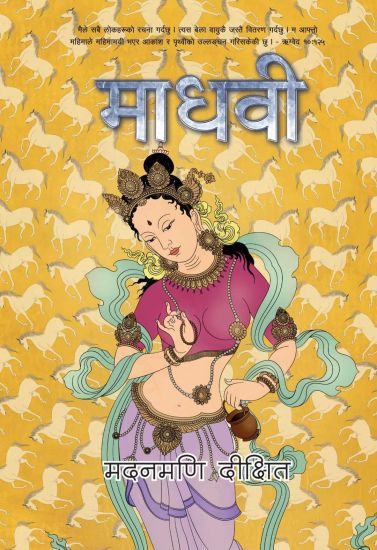
Madanmani Dixit

Book Hill
2021
pokkari
महाभारतको उद्योग पर्वमा भएको गालव र माधवीको कथा नै यस उपन्यासको मूल विषय हो। विश्वमित्रसँग गुरूदक्षिणाका लागि गालवले हठ गरेपछि आजित भएर उनले काला कान भएका चारवटा सेता घोडा ल्याउन आदेश दिन्छन् । श्यामकर्ण घोडा नभएका अहिछत्रका राजा ययातीले आफ्नी पुत्री माधवी नै गालवलाई सुम्पिन्छन् ।श्यामकर्ण घोडा भएका राजासँग सम्भोग गरी तेजस्वी सम्राट-पुत्र जन्माउने र गालवलाई चारवटा श्यामकर्ण घोडा दिलाउने जिम्मा माधवीको हुन्छ । विराट सेटिङमा लेखिएको यस शक्तिशाली उपन्यासमा तीन हजार वर्ष पहिलेको उत्तरभारतीय समाजका पाँच राज्य र १९ गणका ऑर्थिक, सामाजिक र राजनीतिक अवस्थाको चित्रण गरिएको छ। पूर्वीय समाजबाट दासप्रथा कसरी उन्मूलन भयो भन्ने देखाउनु नै यस उपन्यासको मूल उद्देश्य हो।
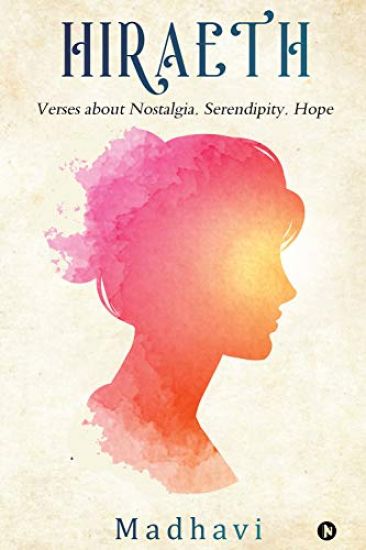
Hiraeth: Verses about Nostalgia. Serendipity. Hope
There is more to a woman than just an identity, a name or even a relation. There are layers and layers of her personality buried under the rubble of the demands of home, career and family. She is afraid to show the world her real self for fear of being bullied, judged and more importantly misunderstood. So she hides it from everyone around her. It takes too much effort to explain her real feelings, which are most of the times brushed aside as silly, until someone comes along and peels off her layers one by one, touching the pulse of who she really is, to reveal her raw, authentic and beautiful soul.Hiraeth is a compilation of verses, of a romance, of a connection, of hope, of a journey, of finding love, of twin flames, of being alive, of living in the moment, of seeing everything around with rose coloured glasses. Because why not?
Virtual Homelands

Virtual Homelands

Madhavi Mallapragada

University of Illinois Press
2013
sidottu
The internet has transformed the idea of home for Indians and Indian Americans. In Virtual Homelands: Indian Immigrants and Online Cultures in the United States, Madhavi Mallapragada analyzes home pages and other online communities organized by diasporic and immigrant Indians from the late 1990s through the social media period. Engaging the shifting aspects of belonging, immigrant politics, and cultural citizenship by linking the home page, household, and homeland as key sites, Mallapragada illuminates the contours of belonging and reveals how Indian American struggles over it trace back to the web's active mediation in representing, negotiating, and reimagining "home." As Mallapragada shows, ideologies around family and citizenship shift to fit the transnational contexts of the online world and immigration. At the same time, the tactical use of the home page to make gender, racial, and class struggles visible and create new modes for belonging implicates the web within complex political and cultural terrain. On e-commerce, community, and activist sites, the recasting of home and homeland online points to intrusion by public agents such as the state, the law, and immigration systems in the domestic, the private, and the familial. Mallapragada reveals that the home page may mobilize to reproduce conservative narratives of Indian immigrants' familial and citizenship cultures, but the reach of a website extends beyond the textual and discursive to encompass the institutions shaping it, as the web unmakes and remakes ideas of "India" and "America."
Virtual Homelands

Virtual Homelands

Madhavi Mallapragada

University of Illinois Press
2013
nidottu
The internet has transformed the idea of home for Indians and Indian Americans. In Virtual Homelands: Indian Immigrants and Online Cultures in the United States, Madhavi Mallapragada analyzes home pages and other online communities organized by diasporic and immigrant Indians from the late 1990s through the social media period. Engaging the shifting aspects of belonging, immigrant politics, and cultural citizenship by linking the home page, household, and homeland as key sites, Mallapragada illuminates the contours of belonging and reveals how Indian American struggles over it trace back to the web's active mediation in representing, negotiating, and reimagining "home." As Mallapragada shows, ideologies around family and citizenship shift to fit the transnational contexts of the online world and immigration. At the same time, the tactical use of the home page to make gender, racial, and class struggles visible and create new modes for belonging implicates the web within complex political and cultural terrain. On e-commerce, community, and activist sites, the recasting of home and homeland online points to intrusion by public agents such as the state, the law, and immigration systems in the domestic, the private, and the familial. Mallapragada reveals that the home page may mobilize to reproduce conservative narratives of Indian immigrants' familial and citizenship cultures, but the reach of a website extends beyond the textual and discursive to encompass the institutions shaping it, as the web unmakes and remakes ideas of "India" and "America."
Women Architects and Modernism in India

Women Architects and Modernism in India

Madhavi Desai

Routledge India
2019
nidottu
Studies on architecture in South Asia continue to ignore women in canonical histories of the discipline. This book attempts to recover the stories of the women architects whose careers nearly parallel the development of modernism in colonial and postcolonial India. Writing their experiences into the narrative of mainstream architectural history wit
The Confident Minds Curriculum

The Confident Minds Curriculum

Madhavi Nawana Parker

Routledge
2019
nidottu
The Confident Minds Curriculum provides a simple and practical approach to culture change in schools, health care settings and organisations working with young people. Refraining from focusing solely on young people’s growth, the curriculum provides logical and practical support to the people and systems in their environment to enable and maximise growth for positive and connected communities. Crucial mindsets for healthy relationships, empathy, compassion, problem-solving, emotional intelligence and well-being are broken down into bite-size, teachable chunks. All blend together exquisitely to help people look at themselves and others with confidence, gratitude and compassion.Easily applied to individuals, targeted groups and whole classes to meet the social emotional learning (SEL) or well-being curriculum, this book provides a guiding light for young people and their supporters to develop what is necessary for socially and emotionally intelligent environments.Aimed primarily at the middle years (8–14), it is easily adaptable for younger and older students. Through role plays, discussions, journaling and practical activities each new mindset is divided into several lessons that teach individual learning components of new ways of thinking, feeling and behaving.The Confident Minds Curriculum will appeal to teachers, educators and health professionals searching for a whole school or organisational approach to social emotional learning, well-being, compassion and personal growth. It is also an essential resource for homes where parents and carers can help further develop life skills that build character and optimism so their family can approach life with greater confidence.
The Confident Minds Curriculum

The Confident Minds Curriculum

Madhavi Nawana Parker

Routledge
2019
sidottu
The Confident Minds Curriculum provides a simple and practical approach to culture change in schools, health care settings and organisations working with young people. Refraining from focusing solely on young people’s growth, the curriculum provides logical and practical support to the people and systems in their environment to enable and maximise growth for positive and connected communities. Crucial mindsets for healthy relationships, empathy, compassion, problem-solving, emotional intelligence and well-being are broken down into bite-size, teachable chunks. All blend together exquisitely to help people look at themselves and others with confidence, gratitude and compassion.Easily applied to individuals, targeted groups and whole classes to meet the social emotional learning (SEL) or well-being curriculum, this book provides a guiding light for young people and their supporters to develop what is necessary for socially and emotionally intelligent environments.Aimed primarily at the middle years (8–14), it is easily adaptable for younger and older students. Through role plays, discussions, journaling and practical activities each new mindset is divided into several lessons that teach individual learning components of new ways of thinking, feeling and behaving.The Confident Minds Curriculum will appeal to teachers, educators and health professionals searching for a whole school or organisational approach to social emotional learning, well-being, compassion and personal growth. It is also an essential resource for homes where parents and carers can help further develop life skills that build character and optimism so their family can approach life with greater confidence.
The Resilience and Wellbeing Toolbox

The Resilience and Wellbeing Toolbox

Madhavi Nawana Parker

Routledge
2020
sidottu
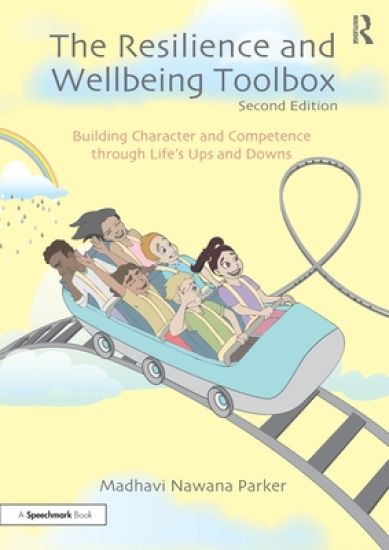
This fully updated second edition is a practical guide for parents, teachers and other professionals to create cultures of resilience and wellbeing in schools, homes and health care settings. Students will build lifelong competencies to improve their emotional regulation, empathy, persistence, problem solving, mindset, optimism, gratitude, kindness and values; improving their psychological readiness to bounce back from life’s ups and downs. Alongside new lesson plans that are even easier to follow and specific guidance on how to meet criteria on social emotional learning frameworks, the lively and engaging resources in this book include:Practical, photocopiable guide sheets and worksheets, also available as eResources via www.positivemindsaustralia.com.auAdaptable role plays and activitiesSolid research-based strategiesA flexible framework that can be creatively implemented in classrooms, homes and health care settings Parent tips at the end of each chapterThis is a must-have handbook for anyone seeking to provide young people in their care with a strong foundation for life long social, emotional and learning outcomes.
The Resilience and Wellbeing Toolbox

The Resilience and Wellbeing Toolbox

Madhavi Nawana Parker

Routledge
2020
nidottu
This fully updated second edition is a practical guide for parents, teachers and other professionals to create cultures of resilience and wellbeing in schools, homes and health care settings. Students will build lifelong competencies to improve their emotional regulation, empathy, persistence, problem solving, mindset, optimism, gratitude, kindness and values; improving their psychological readiness to bounce back from life’s ups and downs. Alongside new lesson plans that are even easier to follow and specific guidance on how to meet criteria on social emotional learning frameworks, the lively and engaging resources in this book include:Practical, photocopiable guide sheets and worksheets, also available as eResources via www.positivemindsaustralia.com.auAdaptable role plays and activitiesSolid research-based strategiesA flexible framework that can be creatively implemented in classrooms, homes and health care settings Parent tips at the end of each chapterThis is a must-have handbook for anyone seeking to provide young people in their care with a strong foundation for life long social, emotional and learning outcomes.
Educator Wellbeing

Educator Wellbeing

Madhavi Nawana Parker

Routledge
2020
sidottu
Educator Wellbeing, written in response to the 2020 Global Pandemic, speaks to the long-ignored expectations that Educators live with and the impact on their wellbeing that going above and beyond to serve their students has. This book is a relatable and practical read for teachers to build tools for life, bringing their wellbeing to the forefront. It provides a toolbox of preventative and responsive strategies to help Educators look after their wellbeing so they can continue with supporting their students.Madhavi Nawana Parker provides a supportive and practical wellbeing framework that can be tailored to meet teachers’ unique and personal needs, and supports theory with personal vignettes to bring to life topics such as: Areas for improved wellbeing in the current climate Giving yourself permission to prioritise wellbeing Wellbeing for Educators going forwardA timely response to an international event with far-reaching effects, Educator Wellbeing has never been more needed by practitioners, as a contemporary answer and basis for a new tradition of supportive practice.
Educator Wellbeing

Educator Wellbeing

Madhavi Nawana Parker

Routledge
2020
nidottu
Educator Wellbeing, written in response to the 2020 Global Pandemic, speaks to the long-ignored expectations that Educators live with and the impact on their wellbeing that going above and beyond to serve their students has. This book is a relatable and practical read for teachers to build tools for life, bringing their wellbeing to the forefront. It provides a toolbox of preventative and responsive strategies to help Educators look after their wellbeing so they can continue with supporting their students.Madhavi Nawana Parker provides a supportive and practical wellbeing framework that can be tailored to meet teachers’ unique and personal needs, and supports theory with personal vignettes to bring to life topics such as: Areas for improved wellbeing in the current climate Giving yourself permission to prioritise wellbeing Wellbeing for Educators going forwardA timely response to an international event with far-reaching effects, Educator Wellbeing has never been more needed by practitioners, as a contemporary answer and basis for a new tradition of supportive practice.
Wanton Words

Wanton Words

Madhavi Menon

University of Toronto Press
2004
sidottu
In Wanton Words, Madhavi Menon intimately and expertly couples classical and Renaissance handbooks of rhetoric with canonical Renaissance plays and demonstrates their shared propensity to speak about sex - often transgressive sex - in the same instance that they speak about the workings of language. While other studies of rhetoric have confined their analyses to local questions of interpretive interest, Menon introduces rhetoric into the largely medico-juridical realm of studies on Renaissance sexuality. In doing so, she suggests that rhetoric allows us to think through the erotics of language in ways that pay most attention to the frisson of English Renaissance drama. Sustained deconstructive parsings of tropes - metaphor, metonymy, allegory, catechresis, and more - enables their wantonness to emerge in subjects usually considered unrelated to rhetoric: race in Othello, colonialism in The Tempest, tragedy in Romeo and Juliet, and cowardice in The Roaring Girl.
Fragments of Empire

Fragments of Empire

Madhavi Kale

University of Pennsylvania Press
1998
sidottu
When Great Britain abolished slavery in 1833, sugar planters in the Caribbean found themselves facing the prospect of paying working wages to their former slaves. Cheaper labor existed elsewhere in the empire, however, and plantation owners, along with the home and colonial governments, quickly began importing the first of what would eventually be hundreds of thousands of indentured laborers from India. Madhavi Kale draws extensively on the archival materials from the period and argues that imperial administrators sanctioned and authorized distinctly biased accounts of postemancipation labor conditions and participated in devaluing and excluding alternative accounts of slavery. As she does this she highlights the ways in which historians, by relying on these biased sources, have perpetuated the acceptance of a privileged perspective on imperial British history.
Indifference to Difference

Indifference to Difference

Madhavi Menon

University of Minnesota Press
2015
nidottu
Indifference to Difference organizes around Alain Badiou’s suggestion that, in the face of increasing claims of identitarian specificity, one might consider the politics and practice of being indifferent to difference. Such a politics would be based on the superabundance of desire and its inability to settle into identity. Madhavi Menon shows that if we turn to another kind of universalism-not one that insists we are all different but one that recognizes we are all similar in our powerlessness to contain desire-then difference no longer becomes the focus of our identity.Instead, we enter the worlds of desire. Following up on ideas of sameness and difference that have animated queer theory, Menon argues that what is most queer about indifference is not that it gives us queerness as an identity but that it is able to change queerness into a resistance of ontology. Firmly committed to the detours of desire, queer universalism evades identity.This polemical book demonstrates that queerness is the condition within which we labor. Our desires are not ours to be owned; they are indifferent to our differences.
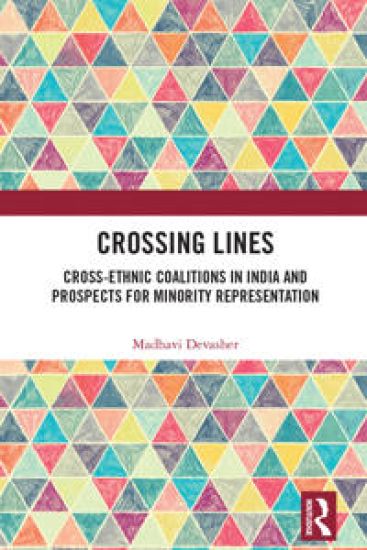
Crossing Lines

Crossing Lines

Madhavi Devasher

TAYLOR FRANCIS LTD
2024
sidottu
This book explains why, how, and where ethnic political parties unexpectedly seek votes from non-coethnics and when voters support non-coethnic parties. It draws on case studies of three Indian states (Uttar Pradesh, Punjab, Rajasthan) and of Indian national elections to demonstrate how differences in party systems impact political party strategies and voter choices. It shows that multipolar party systems encourage political parties to provide physical security, representation, and economic benefits for minorities, especially Muslims, in India and as a result, foster cross-ethnic links between parties and voters. However, as political arenas become dominated by two or even one party, advocacy for the interests of marginalized groups declines, weakening cross-ethnic linkages. The book thus explains why representation and advocacy for Muslims in Uttar Pradesh and at the national level has alternated dramatically in the 21st century. Based on original fieldwork and supplemented by existing surveys and secondary sources from the 1990s to the present day, the book addresses critical themes such as inclusion and substantive representation in a democracy, caste and minority politics, ethnic violence, and inter-ethnic linkages between politicians and voters. Demonstrating why political parties support and protect the interests of marginalized ethnic groups in certain political conditions but not others, the volume also speaks to larger questions of the health of multiethnic democracies and democratic backsliding around the world.
Crossing Lines

Crossing Lines

Madhavi Devasher

TAYLOR FRANCIS LTD
2025
nidottu
This book explains why, how, and where ethnic political parties unexpectedly seek votes from non-coethnics and when voters support non-coethnic parties. It draws on case studies of three Indian states (Uttar Pradesh, Punjab, Rajasthan) and of Indian national elections to demonstrate how differences in party systems impact political party strategies and voter choices. It shows that multipolar party systems encourage political parties to provide physical security, representation, and economic benefits for minorities, especially Muslims, in India and as a result, foster cross-ethnic links between parties and voters. However, as political arenas become dominated by two or even one party, advocacy for the interests of marginalized groups declines, weakening cross-ethnic linkages. The book thus explains why representation and advocacy for Muslims in Uttar Pradesh and at the national level has alternated dramatically in the 21st century. Based on original fieldwork and supplemented by existing surveys and secondary sources from the 1990s to the present day, the book addresses critical themes such as inclusion and substantive representation in a democracy, caste and minority politics, ethnic violence, and inter-ethnic linkages between politicians and voters. Demonstrating why political parties support and protect the interests of marginalized ethnic groups in certain political conditions but not others, the volume also speaks to larger questions of the health of multiethnic democracies and democratic backsliding around the world.