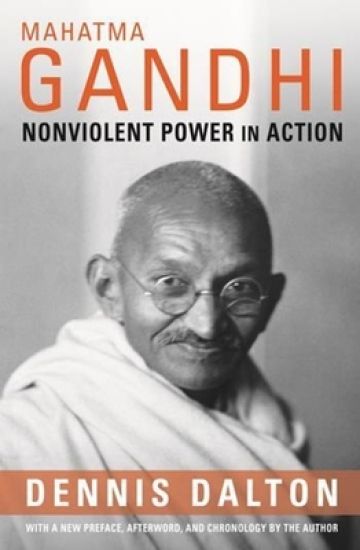
Dennis Dalton's classic account of Gandhi's political and intellectual development focuses on the leader's two signal triumphs: the civil disobedience movement (or salt satyagraha) of 1930 and the Calcutta fast of 1947. Dalton clearly demonstrates how Gandhi's lifelong career in national politics gave him the opportunity to develop and refine his ideals. He then concludes with a comparison of Gandhi's methods and the strategies of Martin Luther King Jr. and Malcolm X, drawing a fascinating juxtaposition that enriches the biography of all three figures and asserts Gandhi's relevance to the study of race and political leadership in America. Dalton situates Gandhi within the "clash of civilizations" debate, identifying the implications of his work on continuing nonviolent protests. He also extensively reviews Gandhian studies and adds a detailed chronology of events in Gandhi's life.
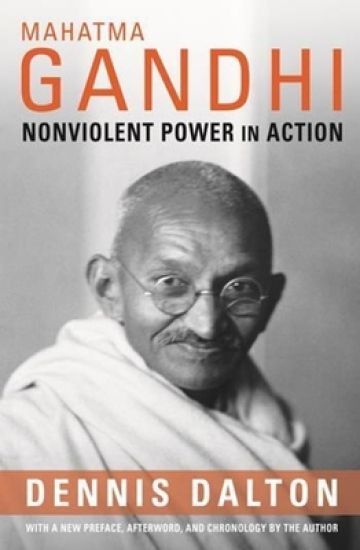
Dennis Dalton's classic account of Gandhi's political and intellectual development focuses on the leader's two signal triumphs: the civil disobedience movement (or salt satyagraha) of 1930 and the Calcutta fast of 1947. Dalton clearly demonstrates how Gandhi's lifelong career in national politics gave him the opportunity to develop and refine his ideals. He then concludes with a comparison of Gandhi's methods and the strategies of Martin Luther King Jr. and Malcolm X, drawing a fascinating juxtaposition that enriches the biography of all three figures and asserts Gandhi's relevance to the study of race and political leadership in America. Dalton situates Gandhi within the "clash of civilizations" debate, identifying the implications of his work on continuing nonviolent protests. He also extensively reviews Gandhian studies and adds a detailed chronology of events in Gandhi's life.
Selectively drawing on the vast literature on Gandhi since the 1920s, this bibliography covers his life, political campaigns, philosophy of nonviolence, and strategy of nonviolence, or satyagraha. It also includes assessments of his historical significance and works on the Gandhian movement since 1948. The book sets Gandhi in his historical and political context, including material on his colleagues and contemporaries, the Indian National Congress, and how governments in South Africa, India, and Britain responded to his campaigns. Directed to English-speaking students, the work concentrates on English-language materials. It includes important works published in India, but stresses perceptions of Gandhi and his significance in the West.A particularly useful volume for students, as well as scholars of 20th century Indian history, the volume does not assume prior knowledge. It opens with a short biography of Gandhi, followed by a chronology of his life, and includes a glossary of Indian terms. Entries are carefully annotated to set books and authors in their historical context and to distinguish between scholarly and more personal or partisan assessments of Gandhi. Designed specifically for researchers in the Western English-speaking world, the book emphasizes books and articles published in the West and selective literature published in India from the 1920s to the 1990s.
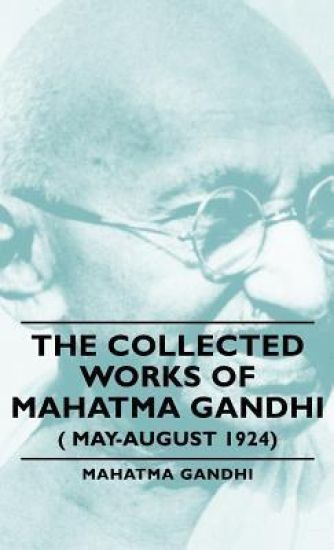
Published in 1939, this work was presented to Mahatma Gandhi on his 70th birthday, October 22nd, 1939. This work is not only a remarkable tribute from notable men and women of diverse views, but an important estimate of the life and thought of Mahatma Gandhi.
Published in 1939, this work was presented to Mahatma Gandhi on his 70th birthday, October 22nd, 1939. This work is not only a remarkable tribute from notable men and women of diverse views, but an important estimate of the life and thought of Mahatma Gandhi.
This book maps the genesis and development of Gandhi’s idea of non-violence. It traces the evolution of the message of peace from its first expressions in South Africa to Gandhi’s later campaigns against British rule in India, most prominently the Salt March campaign of 1930. It argues that Gandhi’s blueprint for change must be adopted in the present, as the world craters on the precipice of catastrophic climate change, and the threat of nuclear war hangs over our heads.A timely book for uncertain times, this work is a reminder of the value of peace in the 21st century. It will be of great interest to readers, scholars and researchers of peace and conflict studies, politics, philosophy, history and South Asian studies.
This book maps the genesis and development of Gandhi’s idea of non-violence. It traces the evolution of the message of peace from its first expressions in South Africa to Gandhi’s later campaigns against British rule in India, most prominently the Salt March campaign of 1930. It argues that Gandhi’s blueprint for change must be adopted in the present, as the world craters on the precipice of catastrophic climate change, and the threat of nuclear war hangs over our heads.A timely book for uncertain times, this work is a reminder of the value of peace in the 21st century. It will be of great interest to readers, scholars and researchers of peace and conflict studies, politics, philosophy, history and South Asian studies.
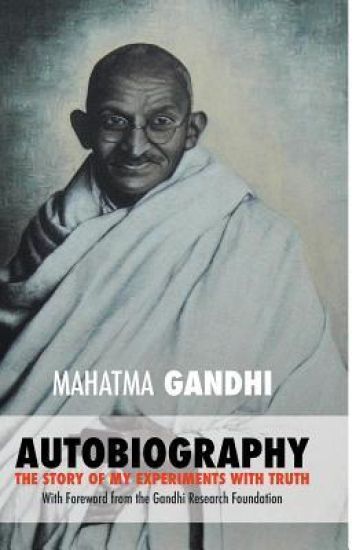
This is the extended edition of Mahatma Gandhi's original and unabridged autobiography titledThe Story of My Experiments with Truth, with a new Foreword from The Gandhi Research Foundation. The Story of My Experiments with Truth is the autobiography of Mohandas K. Gandhi, covering his life from early childhood through to 1921. It was written and published in his journal, Navjivan from 1925 to 1929. It was initiated at the insistence of Swami Anand and other close co-workers of Gandhi, who encouraged him to explain the background of his public campaigns. The Story of My Experiments with Truth is the personal account of the life of the man who freed India from colonization through the Satyagraha - nonviolent protest - movement. His early boyhood life, legal studies, purification, and ultimate salvation of his homeland is carefully recounted in this inspiring and critical work of insurmountable importance. In 1999, the book was designated as one of the "100 Best Spiritual Books of the 20th Century" by a committee of global spiritual and religious authorities.
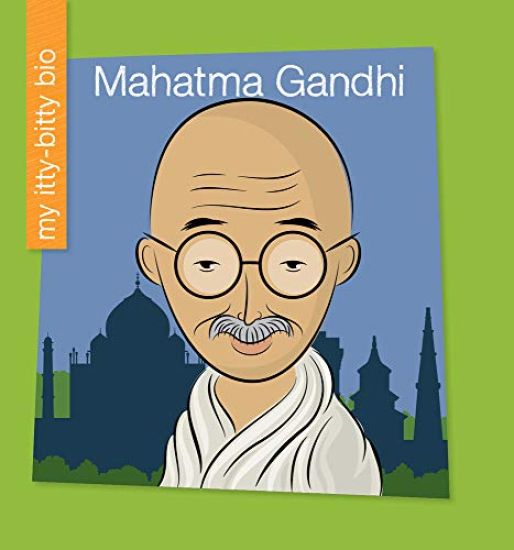
The My Itty-Bitty Bio series are biographies for the earliest readers. This book examines the life of social activist Mahatma Gandhi in a simple, age-appropriate way that will help young readers develop word recognition and reading skills. Includes a table of contents, author biography, timeline, glossary, index, and other informative backmatter.
The My Itty-Bitty Bio series are biographies for the earliest readers. This book examines the life of social activist Mahatma Gandhi in a simple, age-appropriate way that will help young readers develop word recognition and reading skills. Includes a table of contents, author biography, timeline, glossary, index, and other informative backmatter.
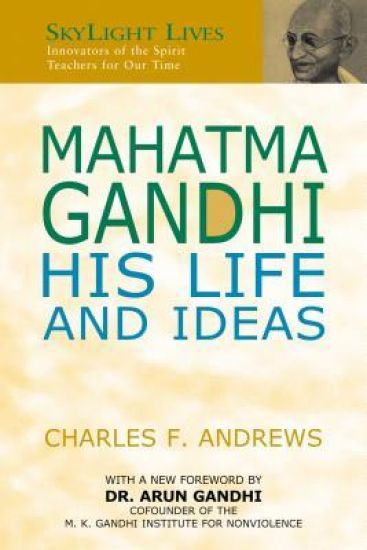
An intimate biography of one of the greatest social and religious reformers of the modern world. "Gandhi's work in nonviolence was comprehensive and not simply confined to politics or human rights. It was about building positive relationships based on respect, understanding, acceptance and appreciation. It was about eliminating exploitation of all kinds and creating harmony." —from the Foreword by Dr. Arun Gandhi, cofounder of the M. K. Gandhi Institute for Nonviolence Mohandas Gandhi (1869–1948) was one of the most important and influential social and religious reformers of the past century, spending his life striving for justice, peace and equality among countries, races and classes. His ideas and ideals have inspired generations of activists—from Martin Luther King Jr. to Vaclav Havel—and acted as catalysts for change in every corner of the globe. In this intimate biography, Charles ("Charlie") Andrews-Englishman, Anglican priest, and a close friend and colleague of Gandhi's in both South Africa and India—explores the life and times of this great soul, providing fascinating insight into the spiritual, political and historical environment that affected Gandhi, playing key roles in the development of his thought and action. Mahatma Gandhi: His Life and Ideas uses letters, personal reminiscences and excerpts from Gandhi's many published and private writings to paint a vivid and accessible portrait of the personality and spirit of one of the most prominent figures in Indian—and world—history. This updated edition showcases a new foreword about the continuing impact and importance of Gandhi's message today, written by Dr. Arun Gandhi, Mahatma Gandhi's grandson and cofounder of the M. K. Gandhi Institute for Nonviolence.
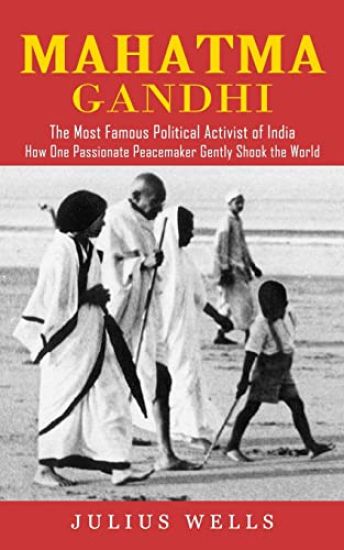
Mahatma gandhi was the primary leader of india's independence movement and also the architect of a form of non-violent civil disobedience that would influence the world.-power is of two kinds. One is obtained by the fear of punishment and the other by acts of love. Power based on love is a thousand times more effective and permanent then the one derived from fear of punishment. Inside you will read about...Growing up in indiaStudying law in londonPolitical activism in south africaBecoming the mahatmaThe battle for independence in indiaThe martyr of indiaAnd much more Mohandas k. Gandhi, the mahatma, the father of indian independence, remains an enigma despite the fact that virtually everyone knows who he was. He lived with a politically active father and a religiously devout mother, but as a child, he displayed no particular brilliance. He went to school and gave no indication of academic promise. He studied law in england, did well, and returned to india where his law practice eventually failed. When he accepted a job in south africa, it was because he had no other prospects.
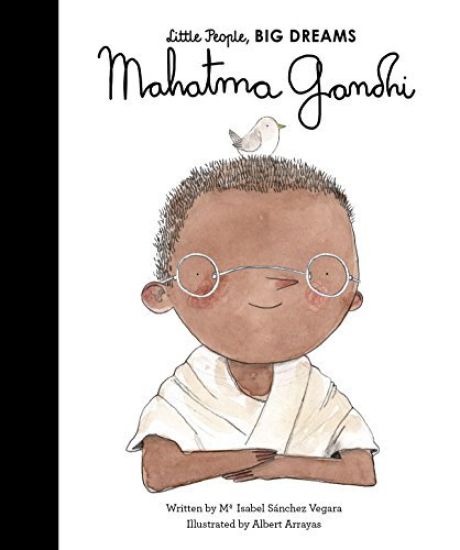
In this book from the critically acclaimed, multimillion-copy bestselling Little People, BIG DREAMS series, discover the life of Mohandas Gandhi, the father of India. As a young teenager in India, Gandhi led a rebellious life and went against his parents' values. But as a young man, he started to form beliefs of his own that harked back to the Hindu principles of his childhood. Gandhi began to dream of unity for all peoples and religions. Inspired by this idea, he led peaceful protests to free India from British rule and unite the country – ending violence and unfair treatment. His bravery and free-thinking made him one of the most iconic people of peace in the world, known as Mahatma, meaning 'great soul'. This moving book features stylish and quirky illustrations and extra facts at the back, including a biographical timeline with historical photos and a detailed profile of the activist's life.Little People, BIG DREAMS is a bestselling biography series for kids that explores the lives of outstanding people, from designers and artists to scientists and activists. All of them achieved incredible things, yet each began life as a child with a dream.This empowering series of books offers inspiring messages to children of all ages, in a range of formats. The board books are told in simple sentences, perfect for reading aloud to babies and toddlers. The hardback and paperback versions present expanded stories for beginning readers. With rewritten text for older children, the treasuries each bring together a multitude of dreamers in a single volume. You can also collect a selection of the books by theme in boxed gift sets. Activity books and a journal provide even more ways to make the lives of these role models accessible to children.Inspire the next generation of outstanding people who will change the world with Little People, BIG DREAMS!