Kirjojen hintavertailu. Mukana 11 244 527 kirjaa ja 12 kauppaa.

Kirjahaku

Etsi kirjoja tekijän nimen, kirjan nimen tai ISBN:n perusteella.

1000 tulosta hakusanalla Maisha T. Winn

Futuring Black Lives: Independent Black Institutions and the Literary Imagination
Futuring Black Lives is a historical ethnography examining Black institution builders in the late 1960s and early 1970s and their work to leverage the power of publications and the literary imagination to engage "concerned men and women" in conversations about the educational journeys and futures of Black children. While many began as reactions to anti-Blackness and American public schooling failing Black children, Independent Black Institutions (IBIs) came to be viable ecosystems anchored in a shared Black value system preparing Black children in three areas: identity, purpose, and direction. The rationale for establishing and valuing IBIs remains highly relevant, given the sociopolitical landscape of education today. In addition to persistent racial disparities in academic achievement and Black students' highly disproportionate experiences of punishment and "discipline," friction and legislation against critical examination of race, racism, and racist ideas in school settings are front and center, and children's and young adult literature are under attack through censorship and outright book bans. Yet Black institution builders left useful maps of and for the educational future/s of Black children that remain available in journals, newspapers, pamphlets, and other ephemera. Author Maisha T. Winn demonstrates how and why the historiography-grounded futuring of Black education can and should inform current pursuits of equity, justice, and liberation through education.
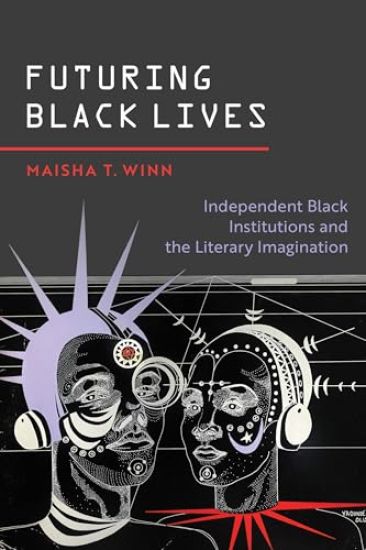
Futuring Black Lives: Independent Black Institutions and the Literary Imagination
Futuring Black Lives is a historical ethnography examining Black institution builders in the late 1960s and early 1970s and their work to leverage the power of publications and the literary imagination to engage "concerned men and women" in conversations about the educational journeys and futures of Black children. While many began as reactions to anti-Blackness and American public schooling failing Black children, Independent Black Institutions (IBIs) came to be viable ecosystems anchored in a shared Black value system preparing Black children in three areas: identity, purpose, and direction. The rationale for establishing and valuing IBIs remains highly relevant, given the sociopolitical landscape of education today. In addition to persistent racial disparities in academic achievement and Black students' highly disproportionate experiences of punishment and "discipline," friction and legislation against critical examination of race, racism, and racist ideas in school settings are front and center, and children's and young adult literature are under attack through censorship and outright book bans. Yet Black institution builders left useful maps of and for the educational future/s of Black children that remain available in journals, newspapers, pamphlets, and other ephemera. Author Maisha T. Winn demonstrates how and why the historiography-grounded futuring of Black education can and should inform current pursuits of equity, justice, and liberation through education.
Justice on Both Sides

Justice on Both Sides

Maisha T. Winn

Harvard Educational Publishing Group
2018
nidottu
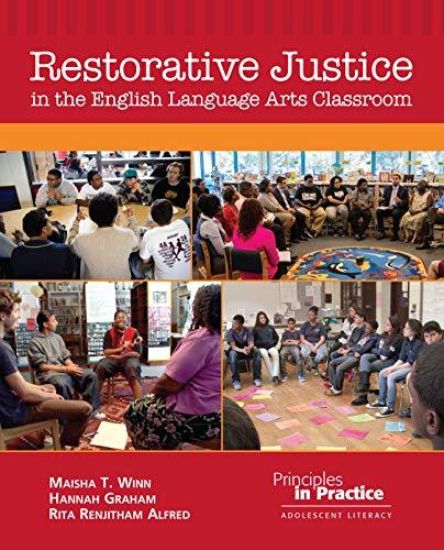
Restorative justice represents “a paradigm shift in the way Americans conceptualize and administer punishment,” says author Maisha T. Winn, from a focus on crime to a focus on harm, including the needs of both those who were harmed and those who caused it. Her book, Justice on Both Sides, provides an urgently needed, comprehensive account of the value of restorative justice and how contemporary schools can implement effective practices to address inequalities associated with race, class, and gender.Winn, a restorative justice practitioner and scholar, draws on her extensive experience as a coach to school leaders and teachers to show how indispensable restorative justice is in understanding and addressing the educational needs of students, particularly disadvantaged youth. Justice on Both Sides makes a major contribution by demonstrating how this actually works in schools and how it can be integrated into a range of educational settings. It also emphasizes how language and labeling must be addressed in any fruitful restorative effort. Ultimately, Winn makes the case for restorative justice as a crucial answer, at least in part, to the unequal practices and opportunities in American schools.
Justice on Both Sides

Justice on Both Sides

Maisha T. Winn

Harvard Educational Publishing Group
2018
sidottu
Restorative justice represents “a paradigm shift in the way Americans conceptualize and administer punishment,” says author Maisha T. Winn, from a focus on crime to a focus on harm, including the needs of both those who were harmed and those who caused it. Her book, Justice on Both Sides, provides an urgently needed, comprehensive account of the value of restorative justice and how contemporary schools can implement effective practices to address inequalities associated with race, class, and gender.Winn, a restorative justice practitioner and scholar, draws on her extensive experience as a coach to school leaders and teachers to show how indispensable restorative justice is in understanding and addressing the educational needs of students, particularly disadvantaged youth. Justice on Both Sides makes a major contribution by demonstrating how this actually works in schools and how it can be integrated into a range of educational settings. It also emphasizes how language and labeling must be addressed in any fruitful restorative effort. Ultimately, Winn makes the case for restorative justice as a crucial answer, at least in part, to the unequal practices and opportunities in American schools.
Girl Time

Girl Time

Maisha T. Winn; Michelle Fine

Teachers' College Press
2011
nidottu
This original account is based on the author’s experiences with incarcerated girls participating in Girl Time, a programme created by a theatre company that conducts playwriting and performance workshops in youth detention centres. In addition to examining the lives of these and other formerly incarcerated girls, Girl Time shares the stories of educators who dare to teach children who have been “thrown away” by their schools and society. The girls, primarily African American teens, write their own plays, learn ensemble-building techniques, explore societal themes, and engage in self analysis as they prepare for a final performance. The book describes some of the girls and their experiences in the programme, examines the implications of the school-to-prison pipeline, and offers ways for young girls to avoid incarceration. Readers will learn how the lived experiences of incarcerated girls can inform their teaching in public school classrooms and the teaching of literacy as a civil and human right.
Black Literate Lives

Black Literate Lives

Maisha T. Fisher

Routledge
2008
sidottu
Black Literate Lives offers an innovative approach to understanding the complex and multi-dimensional perspectives of Black literate lives in the United States. Author Maisha Fisher reinterprets historiographies of Black self-determination and self-reliance to powerfully interrupt stereotypes of African-American literacy practices. The book expands the standard definitions of literacy practices to demonstrate the ways in which 'minority' groups keep their cultures and practices alive in the face of oppression, both inside and outside of schools. This important addition to critical literacy studies:-Demonstrates the relationship of an expanded definition of literacy to self-determination and empowerment-Exposes unexpected sources of Black literate traditions of popular culture and memory-Reveals how spoken word poetry, open mic events, and everyday cultural performances are vital to an understanding of Black literacy in the 21st centuryBy centering the voices of students, activists, and community members whose creative labors past and present continue the long tradition of creating cultural forms that restore collective, Black Literate Lives ultimately uncovers memory while illuminating the literate and literary contributions of Black people in America.
Black Literate Lives

Black Literate Lives

Maisha T. Fisher

Routledge
2008
nidottu
Black Literate Lives offers an innovative approach to understanding the complex and multi-dimensional perspectives of Black literate lives in the United States. Author Maisha Fisher reinterprets historiographies of Black self-determination and self-reliance to powerfully interrupt stereotypes of African-American literacy practices. The book expands the standard definitions of literacy practices to demonstrate the ways in which 'minority' groups keep their cultures and practices alive in the face of oppression, both inside and outside of schools. This important addition to critical literacy studies:-Demonstrates the relationship of an expanded definition of literacy to self-determination and empowerment-Exposes unexpected sources of Black literate traditions of popular culture and memory-Reveals how spoken word poetry, open mic events, and everyday cultural performances are vital to an understanding of Black literacy in the 21st centuryBy centering the voices of students, activists, and community members whose creative labors past and present continue the long tradition of creating cultural forms that restore collective, Black Literate Lives ultimately uncovers memory while illuminating the literate and literary contributions of Black people in America.
The Seven Minute Synergy Workbook

The Seven Minute Synergy Workbook

Myisha T Hill

Myisha T Hill
2018
pokkari
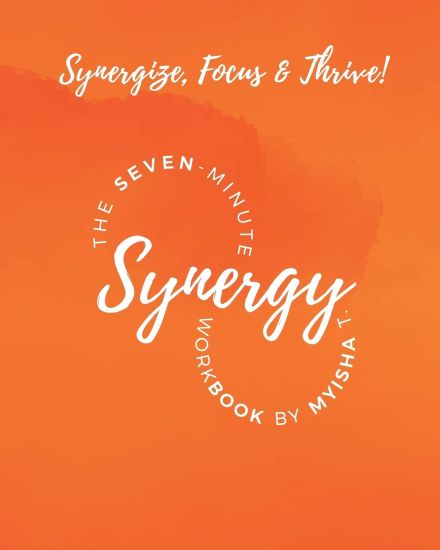
The self-help world is rife with all sorts of well-meaning "hacks" that promise maximum productivity and growth in our daily lives. A simple INTERNET search will you give you back hundreds - if not, thousands - of articles that list out what CEOs, Life Gurus, and other successful individuals do in order to achieve as much as they do. For folks like us living average lives, typically grinding out through a 9-to-5 job or running small side businesses and at the same time trying our best to manage a household, these vast solutions can beat us with tremendous overwhelm that we end up not being able to successfully integrate these habits into our daily routines.What this workbook offers is a simple, easy and sustainable two- pronged approach in order for you to actually implement whatneeds to be done while maintaining a healthy dose of self-care in your life - and all it takes is just SEVEN MINUTES of your day in order to figure out the best way you can spend the rest of your 1433 minutes.
Heal Your Way Forward

Heal Your Way Forward

Myisha T. Hill

Row House Publishing
2022
sidottu
Heal Your Way Forward is a seminal work in antiracism, guiding white and white-identifying folks to utilize activism for intergenerational healing. In 2018, myisha t hill created the @ckyourprivilege handle on Instagram to undo the harm created between white women and women of the Global Majority. After years of living in the micro- and macro-aggressions of white culture, myisha was tired of staying silent. But she wanted to do more than fight back--she wanted to heal forward. "myisha t hill is a rare educator who comes from a place of compassion and profound emotional insight. She is leading a revolution of mind, heart, and soul, one that she now continues in her highly anticipated book, Heal Your Way Forward. myisha's work changes how we experience the world by helping us understand our place within it. This book shows anyone interested in human liberation the way to heal, to hope, and to become true advocates and co-conspirators -- not just for justice and change, but for the future of who we are as humans." -- Anna Paquin, Actress and Producer In just over three short years, Check Your Privilege and myisha's personal platform have amassed more than 750K followers on Instagram and became hubs for interracial activism during the Great White Awakening of 2020. But like many antiracism activists, myisha saw the activism abate after the election of President Biden. Heal Your Way Forward: The Co-Conspirator's Guide to an Antiracist Future is the trumpet call to white and white-identifying folks, guiding them to recognize their antiracism work as intergenerational healing. In her first major book, myisha asks the most critical question of antiracism work: what do we want the world to look like in seven generations? This book is her answer, but also, it's a tactical, practical guide for learning (and unlearning), heal­ing (and feeling through the hurt), and committing (and recommitting) to real change and a reparative future. This is the book myisha's 750,000 followers have been waiting for--a marriage of personal story, antiracist handbook, and an emotional plea to all people to be the change today so we can heal the world for tomorrow. In this important work, myisha offers readers the ultimate reason to engage in activism--to create a better world not just for our babies, but for our babies' babies--and a clear strategy to change the future and nature of interracial activism by: Sustaining the great white awakening by discovering the sweet spot of shame and vulnerability Making room for white tears Developing radical listening and lifelong learning Practicing the great act of recommitment And building a reparative future As myisha shares, the more you fail forward, the more you heal your way forward, and the better we can heal the future together. myisha t hill is a mental health activist, speaker, and entrepreneur passionate about mental wellness and empowerment for all. She runs the advocacy site Check Your Privilege with nearly 700K followers on Instagram. Additionally, myisha works with organizations and community groups taking white people on a self-reflective journey to explore their relationship with power, privilege, and racism.
Masha i medved (il. T. Troschevoj)
Eta jarkaja kniga sozdana spetsialno dlja samykh malenkikh. Vmeste s ljubimymi gerojami malysh sovershit puteshestvie v mir volshebstva i poluchit pervye znanija o dobrote i spravedlivosti. Skazka budet radovat rebjonka dolgoe vremja, ved ona vypolnena iz kachestvennogo plotnogo kartona. Stranichki s kruglymi ugolkami legko perevorachivat malenkimi ladoshkami. Blagodarja formatu izdanija malysh smozhet kak sleduet rassmatrivat svoikh ljubimykh geroev snova i snova. Kniga izgotovlena v Rossii s sobljudeniem vysochajshikh standartov kachestva.
Don't Tell the Nazis

Don't Tell the Nazis

Marsha Forchuk Skrypuch

Scholastic Press
2019
sidottu
Marsha Forchuk Skrypuch (author of Making Bombs for Hitler) crafts a story of ultimate compassion and sacrifice based on true events during WWII.The year is 1941. Krystia lives in a small Ukrainian village under the cruel -- sometimes violent -- occupation of the Soviets. So when the Nazis march into town to liberate them, many of Krystia's neighbors welcome the troops with celebrations, hoping for a better life.But conditions don't improve as expected. Krystia's friend Dolik and the other Jewish people in town warn that their new occupiers may only bring darker days.The worst begins to happen when the Nazis blame the Jews for murders they didn't commit. As the Nazis force Jews into a ghetto, Krystia does what she can to help Dolik and his family. But what they really need is a place to hide. Faced with unimaginable tyranny and cruelty, will Krystia risk everything to protect her friends and neighbors?
Don't Tell the Nazis

Don't Tell the Nazis

Marsha Forchuk Skrypuch

Scholastic Inc.
2021
nidottu
Marsha Forchuk Skrypuch (author of Making Bombs for Hitler) crafts a story of ultimate compassion and sacrifice based on true events during WWII.The year is 1941. Krystia lives in a small Ukrainian village under the cruel -- sometimes violent -- occupation of the Soviets. So when the Nazis march into town to liberate them, many of Krystia's neighbors welcome the troops with celebrations, hoping for a better life.But conditions don't improve as expected. Krystia's friend Dolik and the other Jewish people in town warn that their new occupiers may only bring darker days.The worst begins to happen when the Nazis blame the Jews for murders they didn't commit. As the Nazis force Jews into a ghetto, Krystia does what she can to help Dolik and his family. But what they really need is a place to hide. Faced with unimaginable tyranny and cruelty, will Krystia risk everything to protect her friends and neighbors?