Kirjojen hintavertailu. Mukana 11 244 527 kirjaa ja 12 kauppaa.

Kirjahaku

Etsi kirjoja tekijän nimen, kirjan nimen tai ISBN:n perusteella.

1000 tulosta hakusanalla Major General Vijay Singh

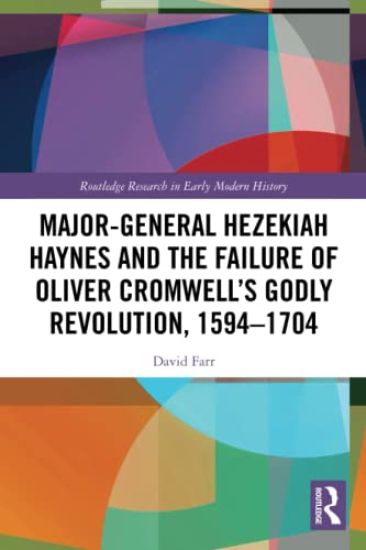
Major-General Hezekiah Haynes and the Failure of Oliver Cromwell’s Godly Revolution, 1594–1704
Hezekiah Haynes was shaped by the Puritanism of his father’s network and experienced emigration to New England as part of a community removing themselves from Charles I’s Laudianism. Returning to fight in the British Civil Wars, Haynes rose to become Cromwell’s ruler of the east of England, tasked with bringing about a godly revolution, and in rising to prominence he became the centre of his own developing political and religious network, which included a kin link to Cromwell himself. As one of Cromwell’s Major-Generals Haynes was tasked with security and a reformation of manners, but he was hampered by the limits of the early modern state and Cromwell’s own contradictory political and religious ideas. The Restoration saw Haynes imprisoned in the Tower before emerging to return to the community in which he had been raised, and continuing the links with some of those he had worked with for Cromwell and the kin he had left behind in New England in dealing with the norms of early modern life. This book will appeal to specialists in the area and students taking courses on early modern English and American history, as well as those with a more general interest in the period.
Major-General Hezekiah Haynes and the Failure of Oliver Cromwell’s Godly Revolution, 1594–1704
Hezekiah Haynes was shaped by the Puritanism of his father’s network and experienced emigration to New England as part of a community removing themselves from Charles I’s Laudianism. Returning to fight in the British Civil Wars, Haynes rose to become Cromwell’s ruler of the east of England, tasked with bringing about a godly revolution, and in rising to prominence he became the centre of his own developing political and religious network, which included a kin link to Cromwell himself. As one of Cromwell’s Major-Generals Haynes was tasked with security and a reformation of manners, but he was hampered by the limits of the early modern state and Cromwell’s own contradictory political and religious ideas. The Restoration saw Haynes imprisoned in the Tower before emerging to return to the community in which he had been raised, and continuing the links with some of those he had worked with for Cromwell and the kin he had left behind in New England in dealing with the norms of early modern life. This book will appeal to specialists in the area and students taking courses on early modern English and American history, as well as those with a more general interest in the period.
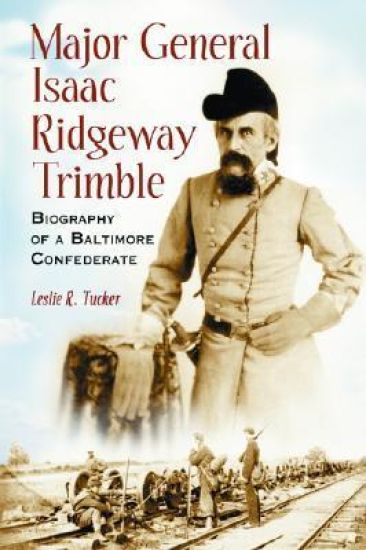
Major General Isaac Ridgeway Trimble

Major General Isaac Ridgeway Trimble

Leslie R. Tucker

McFarland Co Inc
2005
pokkari
Major General Isaac Ridgeway Trimble, one of the oldest and more eccentric officers involved in the Civil War, made himself a favorite of Stonewall Jackson through his courage and stubborn energy. Born to a Quaker family, Trimble spent his childhood on the American frontier. After graduating from West Point, he served in the Old Army and then involved himself with the growing railroad industry of the 1830s, living at the forefront of American modernization. As the war began, he sided with the South, burning railroad bridges north of Baltimore to deny Washington the support of Union troops, and then moving to Virginia. He enlisted in the Engineers and constructed battery emplacements. Commissioned brigadier general in late 1861, Trimble distinguished himself at Cross Keys, Gaines's Mill, Manassas, and Gettysburg; was involved in the Baltimore riots; and spent time as a prisoner on Johnson's Island. This biography covers Trimble's personal life and career with both the railroad and the military. Simultaneously, it serves as a case study of an American who chose to side with the South. Before the war, Trimble traveled freely between states and showed no early indication of a regional attachment. The work uses Abraham Maslow's motivation model, the hierarchy of needs, to reconcile Trimble's self-interest with his need to belong to a community. It also raises various questions related to Southern history, including community identity, modernization, and the concept of the "New South."
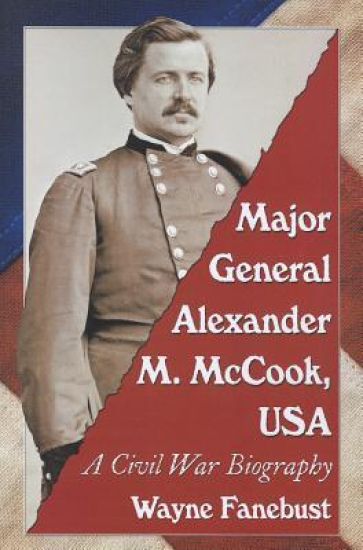
Major General Alexander M. McCook, USA

Major General Alexander M. McCook, USA

Wayne Fanebust

McFarland Co Inc
2012
pokkari
Alexander M. McCook, one of the youngest major generals in the Union army, was a member of a patriotic family from Ohio that became known as the "Fighting McCooks." He participated in some of the bloodiest campaigns of the Civil War, including Bull Run, Shiloh, Perryville, Stones River and Chickamauga. In battle, McCook could be rash and reckless, but his personal courage was beyond reproach, even as his career was marked by controversy. Subjected to an inquiry into his conduct at the battle of Chickamauga, he was cleared of all charges but relieved of command to spend the remainder of the war in relatively minor assignments. This biography, focusing especially on McCook's Civil War service, fills out the full picture of a proud if clouded career.
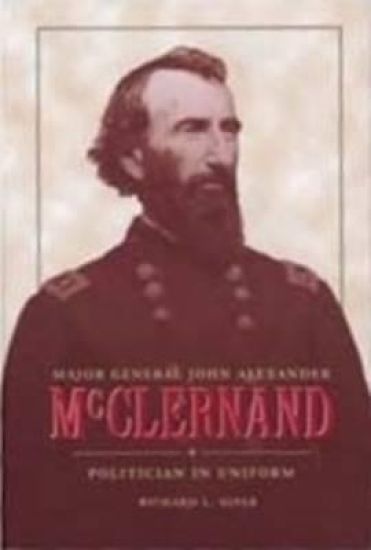
Major General John Alexander McClernand

Major General John Alexander McClernand

Kent State University Press
1999
sidottu
A sympathetic assessment of Major General John Alexander McClernand, a highly controversial individual who served his country as soldier and statesman. It sheds light on the Union command systems and the politics of war, as well as the personalities and relationships among senior officers.
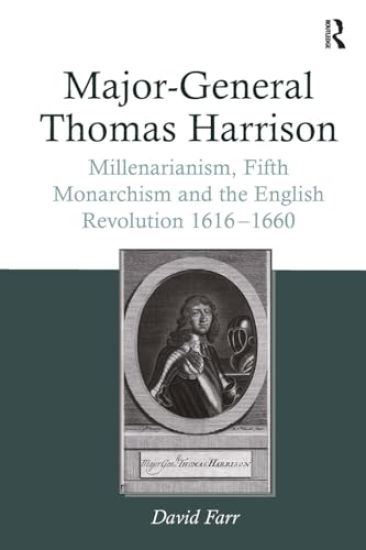
Major-General Thomas Harrison

Major-General Thomas Harrison

David Farr

TAYLOR FRANCIS LTD
2024
nidottu
Thomas Harrison is today perhaps best remembered for the manner of his death. As a leading member of the republican regime and signatory to Charles I’s death warrant, he was hanged, drawn and quartered by the Restoration government in 1660; a spectacle witnessed by Samuel Pepys who recorded him ’looking as cheerful as any man could do in that condition’. Beginning with this grisly event, this book employs a thematic, rather than chronological approach, to illustrate the role of millenarianism and providence in the English Revolution, religion within the new model army, literature, image and reputation, and Harrison’s relationship with key individuals like Ireton and Cromwell as well as groups, most notably the Fifth Monarchists. Divided in three parts, the study starts with an analysis of Harrison’s last year of life, the nature of his response to the political collapse of the Interregnum regimes, and his apparent acceptance of the Restoration without overt resistance. Part two considers Harrison’s years of ’power’, analysing his political activities and influence in the New Model, especially with regard to the regicide. The final part ties Harrison’s political retreat to his initial emergence from obscurity; arguing that Harrison’s relative political quietism during the later 1650s was a reflection of the development of his millenarianism. Unlike the only two previous full length studies of Harrison the present work makes use of a full range of manuscript, primary and secondary sources, including the huge range of new material that has fundamentally changed how the early modern period is now understood. Fully footnoted and referenced, this study provides the first modern academic study of Harrison, and through him illuminates the key themes of this contested period.