Kirjojen hintavertailu. Mukana 11 717 486 kirjaa ja 12 kauppaa.

Kirjahaku

Etsi kirjoja tekijän nimen, kirjan nimen tai ISBN:n perusteella.

1000 tulosta hakusanalla Malcolm K. Sparrow

Imposing Duties

Imposing Duties

Malcolm K. Sparrow

Praeger Publishers Inc
1994
sidottu
Policing, environmental protection, and tax administration have much more in common than practitioners in these areas often recognize. Their cultures and traditions have, for the past few decades, incorporated a classic enforcement mentality, based on the underlying assumption that a ruthless and efficient investigative and enforcement capability would produce compliance through the mechanisms of deterrence. In these fields, and perhaps in many other enforcement or compliance oriented professions, Sparrow believes the traditional enforcement approach is under stress. There are too many violators, too many laws to be enforced, and not enough resources to get the job done. In this book, Sparrow draws out remarkable parallels in the ways these professions are adapting to meet their current challenges, as they reject their traditional reliance on retrospective, case-by-case, after-the-fact enforcement. Rather than perpetuating their dependence on processes, procedures, and coverage, these professions are each developing new capacities for analyzing important patterns of noncompliance, prioritizing risks, and designing intelligent interventions using a much broader range of tools. Sparrow extracts the essence of the transformations underway, explores the critical implications for information management, and lays out the issues that need resolution before the emerging compliance strategies can reach maturity. This book is required reading for all those concerned with either the theory or the practice of the compliance side of government.
Imposing Duties

Imposing Duties

Malcolm K. Sparrow

Praeger Publishers Inc
1994
nidottu
Policing, environmental protection, and tax administration have much more in common than practitioners in these areas often recognize. Their cultures and traditions have, for the past few decades, incorporated a classic enforcement mentality, based on the underlying assumption that a ruthless and efficient investigative and enforcement capability would produce compliance through the mechanisms of deterrence. In these fields, and perhaps in many other enforcement or compliance oriented professions, Sparrow believes the traditional enforcement approach is under stress. There are too many violators, too many laws to be enforced, and not enough resources to get the job done.In this book, Sparrow draws out remarkable parallels in the ways these professions are adapting to meet their current challenges, as they reject their traditional reliance on retrospective, case-by-case, after-the-fact enforcement. Rather than perpetuating their dependence on processes, procedures, and coverage, these professions are each developing new capacities for analyzing important patterns of noncompliance, prioritizing risks, and designing intelligent interventions using a much broader range of tools. Sparrow extracts the essence of the transformations underway, explores the critical implications for information management, and lays out the issues that need resolution before the emerging compliance strategies can reach maturity. This book is required reading for all those concerned with either the theory or the practice of the compliance side of government.
License to Steal

License to Steal

Malcolm K. Sparrow

Routledge
2019
sidottu
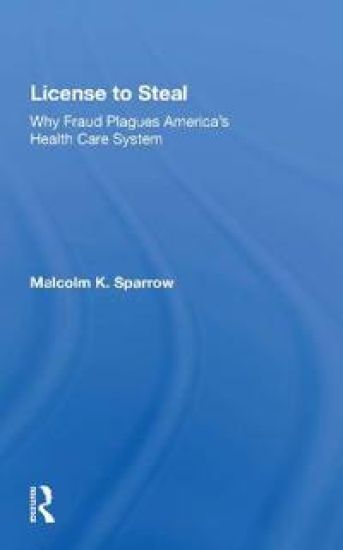
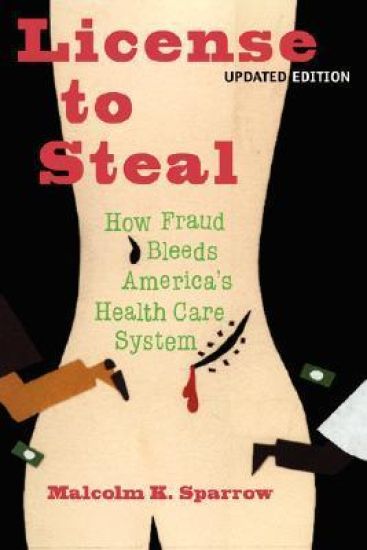
Criminal fraud must be factored into the current debates about health care reform, budget deficits, and proposed Medicare/Medicaid cutbacks. As a polity, how can we make good public policy if we don’t know how much of the nation’s one trillion dollar health care budget is being lost to fraud? The amounts are staggering, measured in hundreds of billions of dollars, but nobody knows for sure exactly how much is being lost. Malcolm Sparrow, an expert on fraud control, reviews how the health care industry approaches the problem and concludes that fraud is rampant, largely uncontrolled, and mostly invisible to policymakers. The problem will only get worse, he says, unless the industry at all levels changes its priorities, its strategies for uncovering and preventing fraud, and its technological approach. Many believe that electronic claims processing will save billions of dollars and that managed care will eliminate the major categories of fraud. By contrast, Sparrow shows how electronic claims processing could lead to unprecedented fraud losses, and how managed care makes fraud much more dangerous to human health. The final section–prescriptions for progress–is a must for policymakers at every level, and for anyone with an interest in the science of fraud control more broadly, in any context.
License to Steal

License to Steal

Malcolm K. Sparrow

Routledge
2020
nidottu
This book brings an unusual opportunity to explore the peculiarities of America's health care industry's approach to fraud control, when compared with the financial services sector, credit card companies, or the Internal Revenue Service—all of which have to defend themselves against fraud.
The Character of Harms

The Character of Harms

Malcolm K. Sparrow

Cambridge University Press
2008
sidottu
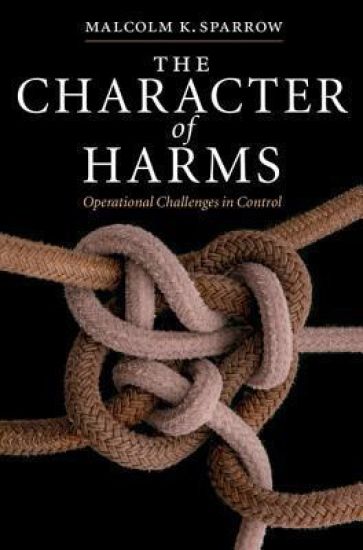
How should we deal with societal ills such as crime, poverty, pollution, terrorism, and corruption? The Character of Harms argues that control or mitigation of 'bad' things involves distinctive patterns of thought and action which turn out to be broadly applicable across a range of human endeavors, and which need to be better understood. Malcolm Sparrow demonstrates that an explicit focus on the bads, rather than on the countervailing goods (safety, prosperity, environmental stewardship, etc.) can provide rich opportunities for surgically efficient and effective interventions - an operational approach which he terms 'the sabotage of harms'. The book explores the institutional arrangements and decision-frameworks necessary to support this emerging operational model. Written for reflective practitioners charged with risk-control responsibilities across the public, private, and non-governmental sectors, The Character of Harms makes a powerful case for a new approach to tackling the complex problems facing society.
Handcuffed

Handcuffed

Malcolm K. Sparrow

Brookings Institution
2016
sidottu
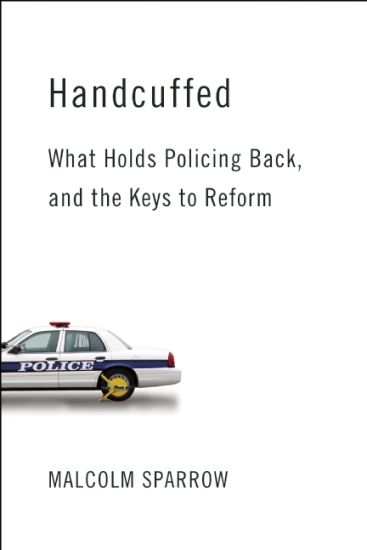
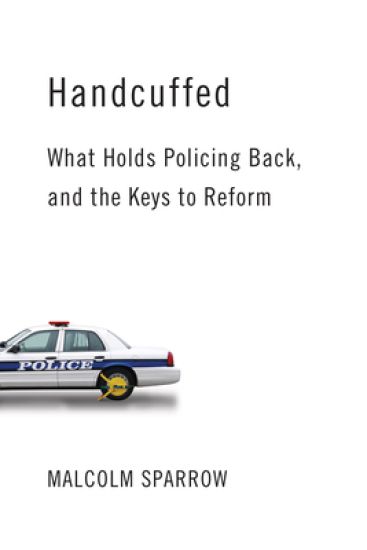
The current crisis in policing can be traced to failures of reform.“Sparrow surely is right to condemn policing directed only at crime rates rather than community satisfaction.”–The New York Times Book ReviewIn the past two years, America has witnessed incendiary milestones in the poor relations between police and the African-American community: Ferguson, Baltimore, and more recently Baton Rouge, St. Paul, and Dallas.Malcolm Sparrow, who teaches at Harvard Kennedy School of Government and is a former British police detective, argues that other factors in the development of police theory and practice over the last twenty-five years have also played a major role in contributing to these tragedies and to a great many other cases involving excessive police force and community alienation.Sparrow shows how the core ideas of community and problem-solving policing have failed to thrive. In many police departments these foundational ideas have been reduced to mere rhetoric. The result is heavy reliance on narrow quantitative metrics, where police define how well they are doing by tallying up traffic stops, or arrests made for petty crimes.Sparrow's analysis shows what it will take for police departments to escape their narrow focus and perverse metrics and turn back to making public safety and public cooperation their primary goals. Police, according to Sparrow, are in the risk-control business and need to grasp the fundamental nature of that challenge and develop a much more sophisticated understanding of its implications for mission, methods, measurement, partnerships, and analysis.
The Regulatory Craft

The Regulatory Craft

Malcolm K. Sparrow

Brookings Institution
2000
nidottu
The Regulatory Craft tackles one of the most pressing public policy issues of our time—the reform of regulatory and enforcement practice. Malcolm K. Sparrow shows how the vogue prescriptions for reform (centered on concepts of customer service and process improvement) fail to take account of the distinctive character of regulatory responsibilities—which involve the delivery of obligations rather than just services.In order to construct more balanced prescriptions for reform, Sparrow invites us to reconsider the central purpose of social regulation—the abatement or control of risks to society. He recounts the experiences of pioneering agencies that have confronted the risk-control challenge directly, developing operational capacities for specifying risk-concentrations, problem areas, or patterns of noncompliance, and then designing interventions tailored to each problem.At the heart of a new regulatory craftsmanship, according to Sparrow, lies the central notion, "pick important problems and fix them." This beguilingly simple idea turns out to present enormously complex implementation challenges and carries with it profound consequences for the way regulators organize their work, manage their discretion, and report their performance. Although the book is primarily aimed at regulatory and law-enforcement practitioners, it will also be invaluable for legislators, overseers, and others who care about the nature and quality of regulatory practice, and who want to know what kind of performance to demand from regulators and how it might be delivered. It stresses the enormous benefit to society that might accrue from development of the risk-control art as a core professional skill for regulators.
Beyond 911

Beyond 911

Malcolm K Sparrow

Basic Books
1992
pokkari
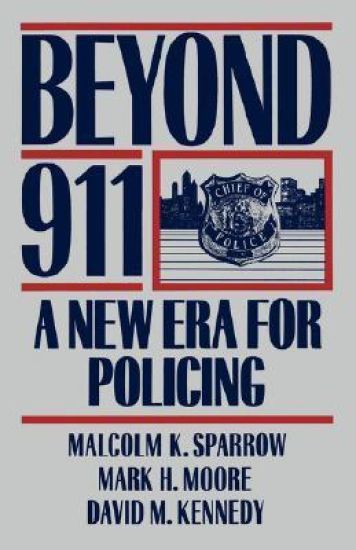
Drawing on the experiences of innovative police departments that have tried new approaches to policing in cities as diverse as Los Angeles, Newport News, Virginia, and London, this important book assesses what can be done by enterprising police chiefs and progressive communities to combat the crime and violence that currently engulf our cities.
License To Steal

License To Steal

Malcolm K Sparrow

Basic Books
2000
sidottu
Explains how fraud, abuse, and theft robs the U.S. health-care system of more than $100 billion each year, discussing current controls and how they fail, the government's attempts to solve the problem, the perpetrators responsible--ranging from organized crime syndicates to hospital systems--and what needs to be done to stop it.
Handcuffed

Handcuffed

Sparrow Malcolm K.

Brookings Institution
2016
nidottu
In the past two years, America has witnessed incendiary milestones in the poor relations between police and the African-American community: Ferguson, Baltimore, and more recently Baton Rouge, St. Paul, and Dallas.Malcolm Sparrow, who teaches at Harvard Kennedy School of Government and is a former British police detective, argues that other factors in the development of police theory and practice over the last twenty-five years have also played a major role in contributing to these tragedies and to a great many other cases involving excessive police force and community alienation.Sparrow shows how the core ideas of community and problem-solving policing have failed to thrive. In many police departments these foundational ideas have been reduced to mere rhetoric. The result is heavy reliance on narrow quantitative metrics, where police define how well they are doing by tallying up traffic stops, or arrests made for petty crimes.Sparrow's analysis shows what it will take for police departments to escape their narrow focus and perverse metrics and turn back to making public safety and public cooperation their primary goals. Police, according to Sparrow, are in the risk-control business and need to grasp the fundamental nature of that challenge and develop a much more sophisticated understanding of its implications for mission, methods, measurement, partnerships, and analysis.
Educating the Educators

Educating the Educators

Malcolm K. Read

University of Delaware Press
2003
nidottu
Educating the Educators consists of two narratives. The first discusses the paradigmatic shifts that have taken place within British Hispanism in response to the historical development of capitalism, through its competitive, monopolistic, and global stages. At the ideological level, these shifts correspond to the transformation of the traditional intellectual into a state functionary and, ultimately, into a technician or 'expert', totally subsumed under capital and charged with the management of 'cultural studies'. Running alongside, and locked into, this first narrative is a second, which, in the form of three autobiographical essays, traces the author's long trek from his childhood origins in a working class family, through the institutions of education- and the experience of embourgeoisement- to his attempts, within the Australasian, Carribean, and North American academies, to retrieve the legacy of socialism. These two narratives are brought into symbolic relation through a theory of ideological production that explores the radicalizing effects of contradiction and conflict within the otherwise unconscious reproduction of social relations.
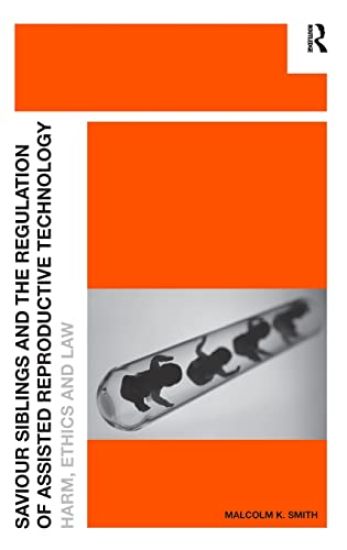
Saviour Siblings and the Regulation of Assisted Reproductive Technology
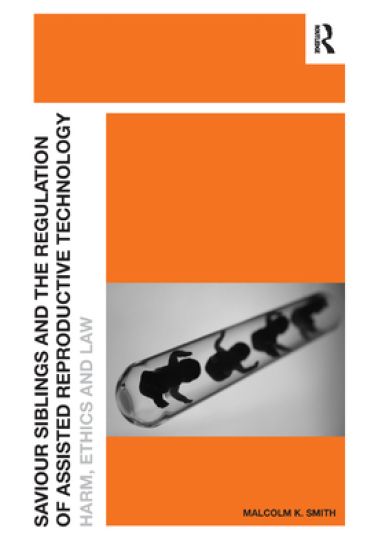
Advances in the field of Assisted Reproductive Technology (ART) have been revolutionary. This book focuses on the use of ARTs in the context of families who seek to conceive a matching sibling donor as a source of tissue to treat an existing sick child. Such children have been referred to as 'saviour siblings'. Considering the legal and regulatory frameworks that impact on the accessibility of this technology in Australia and the UK, the work analyses the ethical and moral issues that arise from the use of the technology for this specific purpose. The author claims the only justification for limiting a family's reproductive liberty in this context is where the exercise of reproductive decision-making results in harm to others. It is argued that the harm principle is the underlying feature of legislative action in Western democratic society, and as such, this principle provides the grounds upon which a strong and persuasive argument is made for a less-restrictive regulatory approach in the context of 'saviour siblings'. The book will be of great relevance and interest to academics, researchers, practitioners and policy makers in the fields of law, ethics, philosophy, science and medicine.
Saviour Siblings and the Regulation of Assisted Reproductive Technology
Advances in the field of Assisted Reproductive Technology (ART) have been revolutionary. This book focuses on the use of ARTs in the context of families who seek to conceive a matching sibling donor as a source of tissue to treat an existing sick child. Such children have been referred to as 'saviour siblings'. Considering the legal and regulatory frameworks that impact on the accessibility of this technology in Australia and the UK, the work analyses the ethical and moral issues that arise from the use of the technology for this specific purpose. The author claims the only justification for limiting a family's reproductive liberty in this context is where the exercise of reproductive decision-making results in harm to others. It is argued that the harm principle is the underlying feature of legislative action in Western democratic society, and as such, this principle provides the grounds upon which a strong and persuasive argument is made for a less-restrictive regulatory approach in the context of 'saviour siblings'. The book will be of great relevance and interest to academics, researchers, practitioners and policy makers in the fields of law, ethics, philosophy, science and medicine.
Greta and Caps: Unlikely Friends

Greta and Caps: Unlikely Friends

Malcolm K. Chadbourne

Createspace Independent Publishing Platform
2018
nidottu
Chester, known as "Caps," an innocent teen-age boy living in a small town in Ohio, comes to learn about new things such as Reiki healing, Swedish superstitions and games, pileated woodpeckers, and the migration of monarch butterflies. This happens as he delivers the local newspaper to Greta Olson, a middle-aged Swedish immigrant. At the same time, Caps teaches Greta new things such as the correct placement of flags on a flag pole, how to serve on a jury, avoiding scams from telephone calls from foreign lands, and playing the lottery. As the weeks go by, punctuated by Caps' weekly delivery of the Benton Times, an unlikely friendship develops which both Caps and Greta welcome, but neither one could have anticipated.
The Rise and Fall of Roy Weston

The Rise and Fall of Roy Weston

Malcolm K Needham

Austin Macauley Publishers LLC
2018
sidottu
Roy Weston was born into a wealthy family and raised in a big stone house on a hill overlooking the poor, coal-mining village of Brexley in North Yorkshire, England. Having nearly died of meningitis at the age of three years old, he is bullied by the kids at school until his mother pulls him out of school at the age of ten. His education from that point forward consists of what he learns himself by roaming the streets of the village in the dark and peeping through people's windows. At the age of fourteen, he watches through a window as his football hero, John Finley, attacks a pedophile, meaning to kill him. His friend leaves the building thinking he has done exactly that, but Roy enters afterward, realizes the man is still alive, and finishes the job. And so begins his life of crime.
The Rise and Fall of Roy Weston

The Rise and Fall of Roy Weston

Malcolm K Needham

Austin Macauley Publishers LLC
2018
nidottu
Roy Weston was born into a wealthy family and raised in a big stone house on a hill overlooking the poor, coal-mining village of Brexley in North Yorkshire, England. Having nearly died of meningitis at the age of three years old, he is bullied by the kids at school until his mother pulls him out of school at the age of ten. His education from that point forward consists of what he learns himself by roaming the streets of the village in the dark and peeping through people's windows. At the age of fourteen, he watches through a window as his football hero, John Finley, attacks a pedophile, meaning to kill him. His friend leaves the building thinking he has done exactly that, but Roy enters afterward, realizes the man is still alive, and finishes the job. And so begins his life of crime.