Kirjojen hintavertailu. Mukana 11 342 296 kirjaa ja 12 kauppaa.

Kirjahaku

Etsi kirjoja tekijän nimen, kirjan nimen tai ISBN:n perusteella.

1000 tulosta hakusanalla Marc A. Hertzman

Gilberto Gil's Refazenda

Gilberto Gil's Refazenda

Marc A. Hertzman

Bloomsbury Academic USA
2020
nidottu
Refazenda connects a remarkable album by one of the 20th and 21st centuries' great musicians to a dazzling, often unexpected, array of people and places spread across the globe from Brazil to England to Chile to Japan. Critics and fans often project (or impose) desires and interpretations onto Gil that don't seem to fit. This book explores why familiar political and musical categories so often fall flat and explains why serendipity may instead be the best way to approach this mercurial album and the unrepeatable artist who created it. Based on years of listening to, studying, and teaching about Gil, and the author's own encounters with the album around the world, this book argues that Refazenda does, in fact, contain radical messages, though they rarely appear in the form, shape, or places that we might expect. The book also includes the first English-language translations of the album's lyrics, never-discussed-before 1970s Japanese liner notes, and a recounting of a forgotten moment when censors detained Gil during the album's debut tour.33 1/3 Global, a series related to but independent from 33 1/3, takes the format of the original series of short, music-basedbooks and brings the focus to music throughout the world. With initial volumes focusing on Japanese and Brazilian music, the series will also include volumes on the popular music of Australia/Oceania, Europe, Africa, the Middle East, and more.

Gilberto Gil's Refazenda

Gilberto Gil's Refazenda

Marc A. Hertzman

Bloomsbury Academic USA
2020
sidottu
Refazenda connects a remarkable album by one of the 20th and 21st centuries' great musicians to a dazzling, often unexpected, array of people and places spread across the globe from Brazil to England to Chile to Japan. Critics and fans often project (or impose) desires and interpretations onto Gil that don't seem to fit. This book explores why familiar political and musical categories so often fall flat and explains why serendipity may instead be the best way to approach this mercurial album and the unrepeatable artist who created it. Based on years of listening to, studying, and teaching about Gil, and the author's own encounters with the album around the world, this book argues that Refazenda does, in fact, contain radical messages, though they rarely appear in the form, shape, or places that we might expect. The book also includes the first English-language translations of the album's lyrics, never-discussed-before 1970s Japanese liner notes, and a recounting of a forgotten moment when censors detained Gil during the album's debut tour.33 1/3 Global, a series related to but independent from 33 1/3, takes the format of the original series of short, music-basedbooks and brings the focus to music throughout the world. With initial volumes focusing on Japanese and Brazilian music, the series will also include volumes on the popular music of Australia/Oceania, Europe, Africa, the Middle East, and more.
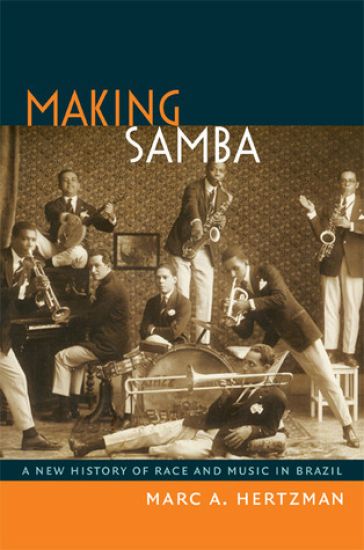
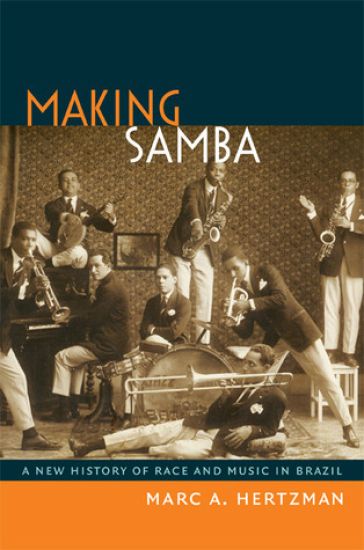
Making Samba

Making Samba

Marc A Hertzman

Duke University Press
2013
sidottu
In November 1916, a young Afro-Brazilian musician named Donga registered sheet music for the song "Pelo telefone" ("On the Telephone") at the National Library in Rio de Janeiro. This apparently simple act-claiming ownership of a musical composition-set in motion a series of events that would shake Brazil's cultural landscape. Before the debut of "Pelo telephone," samba was a somewhat obscure term, but by the late 1920s, the wildly popular song had helped to make it synonymous with Brazilian national music.The success of "Pelo telephone" embroiled Donga in controversy. A group of musicians claimed that he had stolen their work, and a prominent journalist accused him of selling out his people in pursuit of profit and fame. Within this single episode are many of the concerns that animate Making Samba, including intellectual property claims, the Brazilian state, popular music, race, gender, national identity, and the history of Afro-Brazilians in Rio de Janeiro. By tracing the careers of Rio's pioneering black musicians from the late nineteenth century until the 1970s, Marc A. Hertzman revises the histories of samba and of Brazilian national culture.
Making Samba

Making Samba

Marc A Hertzman

Duke University Press
2013
pokkari
In November 1916, a young Afro-Brazilian musician named Donga registered sheet music for the song "Pelo telefone" ("On the Telephone") at the National Library in Rio de Janeiro. This apparently simple act-claiming ownership of a musical composition-set in motion a series of events that would shake Brazil's cultural landscape. Before the debut of "Pelo telephone," samba was a somewhat obscure term, but by the late 1920s, the wildly popular song had helped to make it synonymous with Brazilian national music.The success of "Pelo telephone" embroiled Donga in controversy. A group of musicians claimed that he had stolen their work, and a prominent journalist accused him of selling out his people in pursuit of profit and fame. Within this single episode are many of the concerns that animate Making Samba, including intellectual property claims, the Brazilian state, popular music, race, gender, national identity, and the history of Afro-Brazilians in Rio de Janeiro. By tracing the careers of Rio's pioneering black musicians from the late nineteenth century until the 1970s, Marc A. Hertzman revises the histories of samba and of Brazilian national culture.
After Palmares

After Palmares

Marc A Hertzman

DUKE UNIVERSITY PRESS
2024
sidottu
In After Palmares, Marc A. Hertzman tells the rise, fall, and afterlives of Palmares, one of history’s largest and longest-lasting maroon societies. Forged during the seventeenth century by formerly enslaved Africans in what would become northeast Brazil, Palmares stood for a century, withstanding sustained attacks from two European powers. In 1695, colonial forces assassinated its most famous leader, Zumbi. Hertzman examines the remarkable ways that Palmares and its inhabitants lived on after Zumbi’s death, creating vivid portraits of those whose lives and voices scholars have often assumed are inaccessible. With an innovative approach to African languages, and paying close attention to place as well as African and diasporic spiritual beliefs, Hertzman reshapes our understanding of Palmares and Zumbi and advances a new framework for studying fugitive slave communities and marronage in the African diaspora.
After Palmares

After Palmares

Marc A Hertzman

DUKE UNIVERSITY PRESS
2024
pokkari
In After Palmares, Marc A. Hertzman tells the rise, fall, and afterlives of Palmares, one of history’s largest and longest-lasting maroon societies. Forged during the seventeenth century by formerly enslaved Africans in what would become northeast Brazil, Palmares stood for a century, withstanding sustained attacks from two European powers. In 1695, colonial forces assassinated its most famous leader, Zumbi. Hertzman examines the remarkable ways that Palmares and its inhabitants lived on after Zumbi’s death, creating vivid portraits of those whose lives and voices scholars have often assumed are inaccessible. With an innovative approach to African languages, and paying close attention to place as well as African and diasporic spiritual beliefs, Hertzman reshapes our understanding of Palmares and Zumbi and advances a new framework for studying fugitive slave communities and marronage in the African diaspora.
Un Verano Llamado Marc / A Summer Called Marc
PREPARADA PARA LA SUBIDA DE TEMPERATURAS?Llega Nerea Vara con un spicy romance tan inolvidable como el mejor verano.Nora es una buena chica. Responsable y sensata, procura llevar una vida discreta como influencer, alejada de los viejos h bitos que la defin an hasta hace unos a os. Sin embargo, va a pasar el verano en su pueblo, y eso la aterra y emociona a partes iguales. Cantaroja saca su lado m s salvaje e imprudente. Y Nora no puede permit rselo. Marc, en cambio, est lejos de ser un buen chico. Es el hermano peque o de su mejor amiga, le gustan las emociones fuertes y no disimula su atracci n por Nora. Para colmo, son vecinos. Marc es, precisamente, el tipo de compa a que Nora necesita evitar a toda costa. Separados por escasos metros de terraza y con vistas a sus respectivas habitaciones, resistirse a la adrenalina que sienten cada vez que est n juntos no ser nada f cil... Puede un solo verano alterar el rumbo del resto de sus vidas? ENGLISH DESCRIPTION READY FOR THE TEMPERATURE TO RISE?Nerea Vara brings you a spicy romance as unforgettable as the best summer. Nora is a good girl. Responsible and sensible, she tries to lead a quiet life as an influencer, far removed from the wild habits that used to define her years ago. But she's spending the summer in her hometown--and that both equally terrifies and excites her. Cantaroja brings out her most reckless, untamed side. And that's exactly what Nora can't allow. Marc, on the other hand, is far from being a good guy. He's her best friend's younger brother, a thrill-seeker who makes no effort to hide his attraction to Nora. And to make things worse... they're neighbors. Marc is exactly the kind of temptation Nora needs to stay far away from. Living just feet apart from each other, and with a direct views into each other's rooms, resisting the spark they feel every time they're together won't be easy. Can a single summer change the course of their lives forever?
The Reminiscences of Mrs. Marc A. Mitscher and Mrs. Roy C. Smith Jr.
The two memoirs in this volume are, coincidentally, both from the widows of officers who were graduated in the Naval Academy’s class of 1910. Even so, they are strikingly different in tone. Frances Smalley Mitscher was born on 25 Otcober 1890 in Tacoma, Washington, the daughter of attorney and judge Francis A. Smalley. She married Ensign Marc Andrew Mitscher on 16 January 1913. Admiral Mitscher, born in Hillsborough, Oklahoma, on 26 January 1887, died while serving as Commander in Chief Atlantic Fleet in February 1947. Mrs. Mitscher died in 1982 and is buried beside her husband at Arlington National Cemetery. In her oral history, Mrs. Mitscher provides a wife’s-eye view of one of the U.S. Navy’s most famous admirals of World War II. In so doing, she reveals facets of his personality that only she saw. She recognizes that he was a different man at home than on board ship, and she describes the portion of his life that she shared. One gains a realization of the large degree that her life was shaped by her relationship with Marc Mitscher. She went where his career dictated, and thus her interests were dictated largely by her husband’s interests. Mary Taylor Alger Smith was born on 1 May 1892 in Washington, D.C., the daughter of naval officer Philip R. Alger and the former Louisa Taylor. She married Ensign Roy Campbell Smith Jr. on 1 August 1912. Commander Smith, born in the quarters of the Naval Academy Superintendent (his grandfather) on 1 August 1888, retired from the Navy with a physical disability in 1938 and died in 1946. Mrs. Smith died in 1987 and is buried buried beside her husband at Arlington National Cemetery. In her oral history, Mrs. Smith addresses the theme of dependency to an even larger degree than does Mrs. Mitscher. With a wry sense of humor, Mrs. Smith dwells on the inconveniences that go with raising a Navy family at home and abroad (the Smiths had four children). She had to find solutions to a good many problems that don’t confront a mother rearing children entirely in the United States. One reads here about difficulties in dealing with the cultures in such places as China and Panama, and the ways in which her children got into the sort of scrapes that children inevitably do. In addition to being a Navy wife and Navy mother, Mrs. Smith was also a Navy daughter. Her earliest recollections in this memoir extend back to the early 1900s when she was living on the grounds of the Naval Academy, where her father was a professor and an early secretary-treasurer of the Naval Institute. In engaging fashion, Mrs. Smith describes the simplicity of an era long since past—a time before telephones and automobiles were common and when radio and television had yet to be invented.
The Reminiscences of Mrs. Marc A. Mitscher and Mrs. Roy C. Smith Jr.
The two memoirs in this volume are, coincidentally, both from the widows of officers who were graduated in the Naval Academy’s class of 1910. Even so, they are strikingly different in tone. Frances Smalley Mitscher was born on 25 Otcober 1890 in Tacoma, Washington, the daughter of attorney and judge Francis A. Smalley. She married Ensign Marc Andrew Mitscher on 16 January 1913. Admiral Mitscher, born in Hillsborough, Oklahoma, on 26 January 1887, died while serving as Commander in Chief Atlantic Fleet in February 1947. Mrs. Mitscher died in 1982 and is buried beside her husband at Arlington National Cemetery. In her oral history, Mrs. Mitscher provides a wife’s-eye view of one of the U.S. Navy’s most famous admirals of World War II. In so doing, she reveals facets of his personality that only she saw. She recognizes that he was a different man at home than on board ship, and she describes the portion of his life that she shared. One gains a realization of the large degree that her life was shaped by her relationship with Marc Mitscher. She went where his career dictated, and thus her interests were dictated largely by her husband’s interests. Mary Taylor Alger Smith was born on 1 May 1892 in Washington, D.C., the daughter of naval officer Philip R. Alger and the former Louisa Taylor. She married Ensign Roy Campbell Smith Jr. on 1 August 1912. Commander Smith, born in the quarters of the Naval Academy Superintendent (his grandfather) on 1 August 1888, retired from the Navy with a physical disability in 1938 and died in 1946. Mrs. Smith died in 1987 and is buried buried beside her husband at Arlington National Cemetery. In her oral history, Mrs. Smith addresses the theme of dependency to an even larger degree than does Mrs. Mitscher. With a wry sense of humor, Mrs. Smith dwells on the inconveniences that go with raising a Navy family at home and abroad (the Smiths had four children). She had to find solutions to a good many problems that don’t confront a mother rearing children entirely in the United States. One reads here about difficulties in dealing with the cultures in such places as China and Panama, and the ways in which her children got into the sort of scrapes that children inevitably do. In addition to being a Navy wife and Navy mother, Mrs. Smith was also a Navy daughter. Her earliest recollections in this memoir extend back to the early 1900s when she was living on the grounds of the Naval Academy, where her father was a professor and an early secretary-treasurer of the Naval Institute. In engaging fashion, Mrs. Smith describes the simplicity of an era long since past—a time before telephones and automobiles were common and when radio and television had yet to be invented.
Nonprofit Social Media: A beginner's guide to nurturing relationships from your desk

Nonprofit Social Media: A beginner's guide to nurturing relationships from your desk

Marc a. Pitman

Createspace Independent Publishing Platform
2013
nidottu
Is social media baffling to you? Fundraising coach Marc A. Pitman thinks we live in the most exciting time for nonprofits In "Nonprofit Soical Media: A beginner's guide to nurturing relationships from your desk, he sets out to prove it. Rather than diving into Facebook, Google+, Twitter, and LinkedIn, Nonprofit Social Media starts with your nonprofit. Pitman walks you through the how and why of social media. He gives you tips and an outline for starting a social media strategy and shows how to get your website up and running on a shoe-string budget. Then he shows you how email, blogging, Facebook, Google+, Twitter, Linkedin, YouTube, and other social media tools fit into your strategy. He even shows you how to learn all these new tools and still stay sane. Social media can help you create stronger relationships with donors than you ever thought possible. And it can help them introduce their friends to your nonprofit. "Nonprofit Social Media" shows you how
A Poetic View of Hospice

A Poetic View of Hospice

Marc a. Lerner

Createspace Independent Publishing Platform
2015
nidottu
In March, 2014, I had my 33rd anniversary of my diagnosis of multiple sclerosis (MS). In my 33rd year, after dealing with partial blindness, brain surgery, coping with a wheelchair and excruciating pain, I entered Hospice. My entry was not because I was expected to die soon; it was just that I was on a downhill progression with my illness and I needed to manage my pain. It was a shock to me to be put into Hospice and I knew I had to deal with it myself. My wife, Amy, and my mom were incredible supports, but they were not always available. I used poetry as a way of coping. When issues came up, writing poetry allowed me to view that same situation from a poetic perspective. In 2013, I wrote The End: A Creative Approach to Death. I felt creativity was important, because it allowed me to use my whole brain, instead of just linear thinking. I would encourage everybody to approach any major struggle using their whole brain, especially at the end of their life. It does not really matter what your creativity is, but it has to be an expression that goes beyond worry, fear or negativity. I am not a professional poet, but I wrote these poems to help me process the dramatic journey I was on. This is the way I coped with a situation that even the experts do not have a cure for. The spiritual perspective for me was the deepest way to capture my situation not as a victim, but making the best out of a devastating situation. For those who related to my poetry, it triggered beautiful communications. Everyone has the opportunity to utilize their right brain, if they express their heart to those they love. Only utilizing the left brain is a way to trigger frustration and a disconnect with those you love or those who love you. It is not time to focus on intellectually figuring out your situation; that needed to have been done before your final days. Completing unfinished business in your relationships is the best thing you can leave those who love you. The following poems are an expression of the 3 months of my time in Hospice; July, 2014 to October, 2014. I am now in palliative care. My decline is not as dramatic and pain is relatively under control.