Kirjojen hintavertailu. Mukana 11 244 527 kirjaa ja 12 kauppaa.

Kirjahaku

Etsi kirjoja tekijän nimen, kirjan nimen tai ISBN:n perusteella.

1000 tulosta hakusanalla Marc David Baer

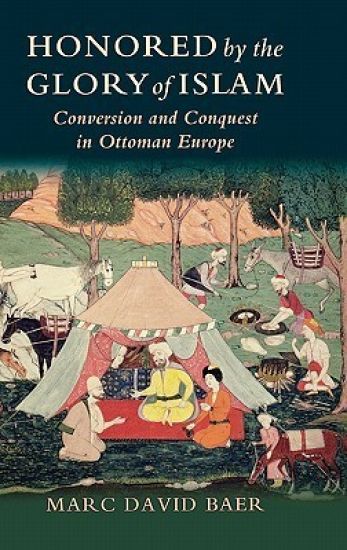
Honored by the Glory of Islam

Honored by the Glory of Islam

Marc David Baer

Oxford University Press Inc
2008
sidottu
In Honored by the Glory of Islam Marc David Baer proposes a novel approach to the historical record of Islamic conversions during the Ottoman age and gathers fresh insights concerning the nature of religious conversion itself. Rejecting any attempt to explain Ottoman Islamization in terms of the converts' motives, Baer instead concentrates on the proselytizers - in this case, none other than the sultan himself. Mehmed IV (1648-87) is remembered as an aloof ruler whose ineffectual governing led to the disastrous siege of Vienna. Through an integrated reading of previously unexamined Ottoman archival and literary texts, Baer reexamines Mehmed IV's failings as a ruler by underscoring the sultan's zeal for bringing converts to Islam. As an expression of his rededication to Islam, Mehmed IV actively sought to establish his reputation as a convert-maker, convincing or coercing Christian and Jewish subjects to be "honored by the glory of Islam," and Muslim subjects to turn to Islamic piety. Revising the conventional portrayal of a ruler so distracted by his passion for hunting that he neglected affairs of state, Baer shows that Mehmed IV saw his religious involvement as central to his role as sultan. He traces an ever-widening range of reform, conversion, and conquest expanding outward from the heart of Mehmed IV's empire. This account is the first to correlate the conversion of people and space in the mature Ottoman Empire, to investigate conversion from the perspective of changing Ottoman ideology, and to depict the sultan as an interventionist convert maker. The resulting insights promise to rework our understandings of the reign of a forgotten ruler, a largely neglected period in Ottoman history, the changing nature of Islam and its history in Europe, relations between Muslims, Christians, and Jews in Europe, the practice of Jihad, and religious architecture in urban history.
Honored by the Glory of Islam

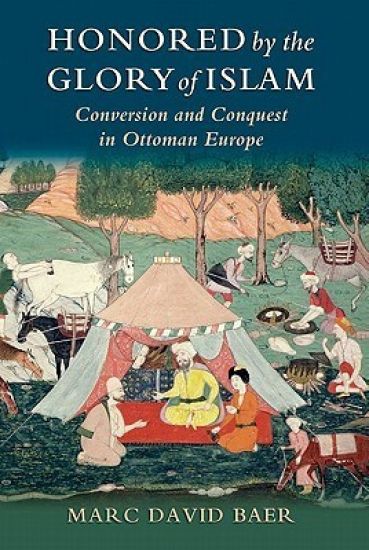
Honored by the Glory of Islam

Marc David Baer

Oxford University Press Inc
2011
nidottu
"Honored by the Glory of Islam is an important new source on the study of conversion. Much of this most informative book deals with the dual role of conversion and conquest in defining the controversial reign of Sultan Mehmed IV. Baer's innovative reading of Ottoman chronicles and his focus on the nuances of conversion within one own's religion makes this text an invaluable presentation of an exciting new area of research." --Ethel Wolper, Associate Professor of History, University of New Hampshire "Marc Baer offers an innovative interpretation of religious conversion, especially conversion to Islam in the Ottoman age. Lacking enough evidence to speculate on the motives of the converts, he instead focuses on the agency of those who initiated the conversion process - in this case no less than the sultan himself. Baer focuses on the career of Sultan Mehmed IV (r. 1648-87), and on the people who came into direct contact with his court. In this way he sheds important new light on a critical period in the Ottoman Empire's long history. Baer also convincingly revises the character of Mehmed IV as an inept ruler whose incompetence led to the catastrophic siege of Vienna in 1683. This original study will be of great interest not only to Ottoman specialists, but to students of Islam and of religious conversion." --R.M.Eaton, Professor of History, University of Arizona Winner of the Albert Hourani Book Award of the Middle East Studies Association of North America for the best book in Middle East Studies (2008) and short-listed for the Best First Book in the History of Religions by the American Academy of Religion (2009).
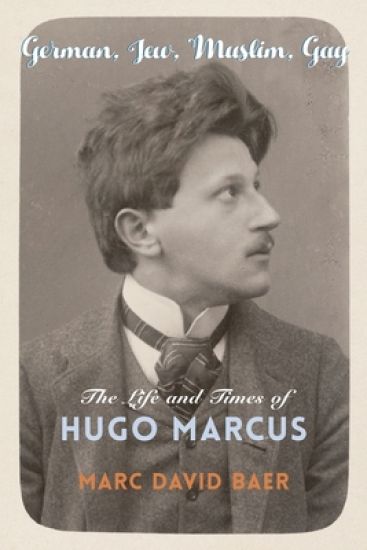
German, Jew, Muslim, Gay

German, Jew, Muslim, Gay

Marc David Baer

Columbia University Press
2020
sidottu
Hugo Marcus (1880–1966) was a man of many names and many identities. Born a German Jew, he converted to Islam and took the name Hamid, becoming one of the most prominent Muslims in Germany prior to World War II. He was renamed Israel by the Nazis and sent to the Sachsenhausen concentration camp before escaping to Switzerland. He was a gay man who never called himself gay but fought for homosexual rights and wrote queer fiction under the pen name Hans Alienus during his decades of exile.In German, Jew, Muslim, Gay, Marc David Baer uses Marcus’s life and work to shed new light on a striking range of subjects, including German Jewish history and anti-Semitism, Islam in Europe, Muslim-Jewish relations, and the history of the gay rights struggle. Baer explores how Marcus created a unique synthesis of German, gay, and Muslim identity that positioned Johann Wolfgang von Goethe as an intellectual and spiritual model. Marcus’s life offers a new perspective on sexuality and on competing conceptions of gay identity in the multilayered world of interwar and postwar Europe. His unconventional story reveals new aspects of the interconnected histories of Jewish and Muslim individuals and communities, including Muslim responses to Nazism and Muslim experiences of the Holocaust. An intellectual biography of an exceptional yet little-known figure, German, Jew, Muslim, Gay illuminates the complexities of twentieth-century Europe’s religious, sexual, and cultural politics.
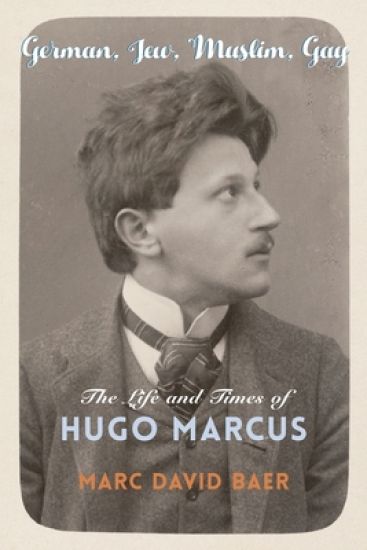
German, Jew, Muslim, Gay

German, Jew, Muslim, Gay

Marc David Baer

Columbia University Press
2020
pokkari
Hugo Marcus (1880–1966) was a man of many names and many identities. Born a German Jew, he converted to Islam and took the name Hamid, becoming one of the most prominent Muslims in Germany prior to World War II. He was renamed Israel by the Nazis and sent to the Sachsenhausen concentration camp before escaping to Switzerland. He was a gay man who never called himself gay but fought for homosexual rights and wrote queer fiction under the pen name Hans Alienus during his decades of exile.In German, Jew, Muslim, Gay, Marc David Baer uses Marcus’s life and work to shed new light on a striking range of subjects, including German Jewish history and anti-Semitism, Islam in Europe, Muslim-Jewish relations, and the history of the gay rights struggle. Baer explores how Marcus created a unique synthesis of German, gay, and Muslim identity that positioned Johann Wolfgang von Goethe as an intellectual and spiritual model. Marcus’s life offers a new perspective on sexuality and on competing conceptions of gay identity in the multilayered world of interwar and postwar Europe. His unconventional story reveals new aspects of the interconnected histories of Jewish and Muslim individuals and communities, including Muslim responses to Nazism and Muslim experiences of the Holocaust. An intellectual biography of an exceptional yet little-known figure, German, Jew, Muslim, Gay illuminates the complexities of twentieth-century Europe’s religious, sexual, and cultural politics.
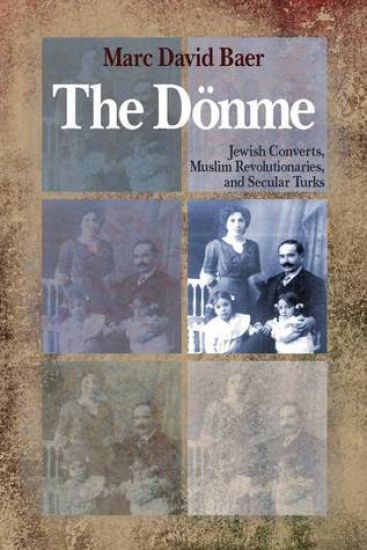
The Dönme

The Dönme

Marc David Baer

Stanford University Press
2009
sidottu
This book tells the story of the Dönme, the descendents of Jews who resided in the Ottoman Empire and converted to Islam along with their messiah, Rabbi Shabbatai Tzevi, in the seventeenth century. For two centuries following their conversion, the Dönme were accepted as Muslims, and by the end of the nineteenth century rose to the top of Salonikan society. The Dönme helped transform Salonika into a cosmopolitan city, promoting the newest innovation in trade and finance, urban reform, and modern education. They eventually became the driving force behind the 1908 revolution that led to the overthrow of the Ottoman sultan and the establishment of a secular republic. To their proponents, the Dönme are enlightened secularists and Turkish nationalists who fought against the dark forces of superstition and religious obscurantism. To their opponents, they were simply crypto-Jews engaged in a plot to dissolve the Islamic empire. Both points of view assume the Dönme were anti-religious, whether couched as critique or praise. But it is time that we take these religious people seriously on their own terms. In the Ottoman Empire, the Dönme promoted morality, ethics, spirituality, and a syncretistic religion that reflected their origins at the intersection of Jewish Kabbalah and Islamic Sufism. This is the first book to tell their story, from their origins to their near total dissolution as they became secular Turks in the mid-twentieth century.
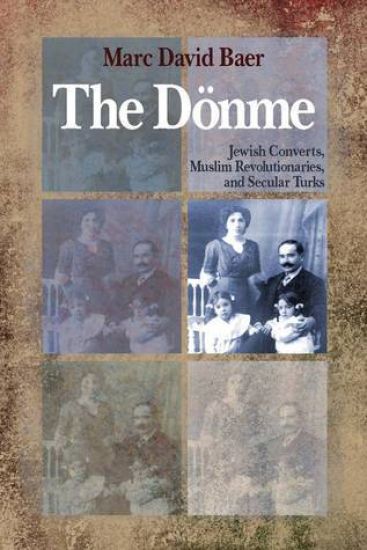
The Dönme

The Dönme

Marc David Baer

Stanford University Press
2009
pokkari
This book tells the story of the Dönme, the descendents of Jews who resided in the Ottoman Empire and converted to Islam along with their messiah, Rabbi Shabbatai Tzevi, in the seventeenth century. For two centuries following their conversion, the Dönme were accepted as Muslims, and by the end of the nineteenth century rose to the top of Salonikan society. The Dönme helped transform Salonika into a cosmopolitan city, promoting the newest innovation in trade and finance, urban reform, and modern education. They eventually became the driving force behind the 1908 revolution that led to the overthrow of the Ottoman sultan and the establishment of a secular republic. To their proponents, the Dönme are enlightened secularists and Turkish nationalists who fought against the dark forces of superstition and religious obscurantism. To their opponents, they were simply crypto-Jews engaged in a plot to dissolve the Islamic empire. Both points of view assume the Dönme were anti-religious, whether couched as critique or praise. But it is time that we take these religious people seriously on their own terms. In the Ottoman Empire, the Dönme promoted morality, ethics, spirituality, and a syncretistic religion that reflected their origins at the intersection of Jewish Kabbalah and Islamic Sufism. This is the first book to tell their story, from their origins to their near total dissolution as they became secular Turks in the mid-twentieth century.
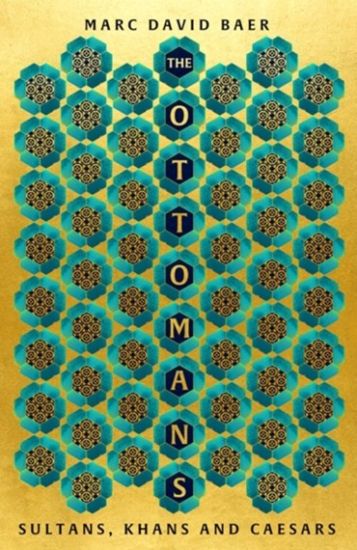
Ottomans

Ottomans

Marc David Baer

John Murray Press
2021
nidottu
The Ottoman Empire has long been depicted as the Islamic-Asian antithesis of the Christian-European West. But the reality was starkly different: the Ottomans' multiethnic, multilingual, and multireligious domain reached deep into Europe's heart. In their breadth and versatility, the Ottoman rulers saw themselves as the new Romans. Recounting the Ottomans' remarkable rise from a frontier principality to a world empire, Marc David Baer traces their debts to their Turkish, Mongolian, Islamic and Byzantine heritage; how they used both religious toleration and conversion to integrate conquered peoples; and how, in the nineteenth century, they embraced exclusivity, leading to ethnic cleansing, genocide, and the dynasty's demise after the First World War. Upending Western concepts of the Renaissance, the Age of Exploration, the Reformation, this account challenges our understandings of sexuality, orientalism and genocide. Radically retelling their remarkable story, The Ottomans is a magisterial portrait of a dynastic power, and the first to truly capture its cross-fertilisation between East and West.
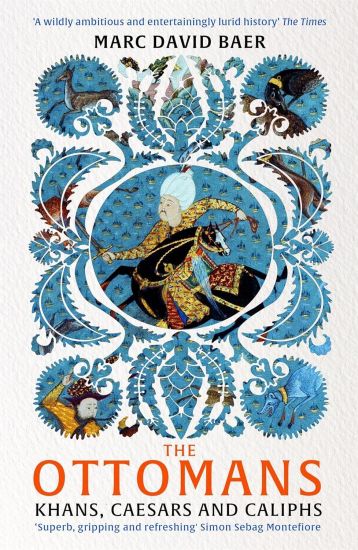
The Ottomans

The Ottomans

Marc David Baer

John Murray Press
2022
pokkari
SHORTLISTED FOR THE WOLFSON HISTORY PRIZEA SUNDAY TIMES PAPERBACK OF THE YEAR'Magnificent . . . Important and hugely readable' William Dalrymple, Financial Times'A wildly ambitious and entertainingly lurid history' James Barr, The Times'A panoramic and thought-provoking account' Guardian'A winning portrait of seven centuries of empire, teeming with life and colour' Sunday Times'Superb, gripping and refreshing' Simon Sebag Montefiore'Sweeping, colorful, and rich in extraordinary characters' Tom HollandThe major new history of a diverse empire that straddled East and West.The Ottoman Empire has long been depicted as the Islamic, Asian antithesis of the Christian, European West, when in reality, their multiethnic, multilingual, and multireligious domain reached deep into Europe's heart. Recounting their remarkable rise to a world empire, Marc David Baer traces their debts to their Turkish, Mongolian, Islamic and Byzantine heritage. Upending Western accounts of the Renaissance, the Age of Exploration and the Reformation, The Ottomans is a magisterial portrait that vividly redefines the dynasty's enduring impact on Europe and the world.
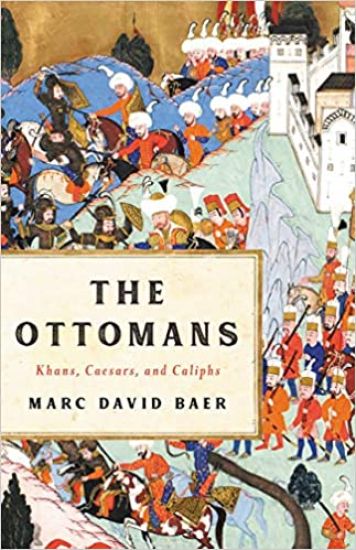
The Ottomans: Khans, Caesars, and Caliphs
A "panoramic and thought-provoking" (The Guardian) history of the Ottoman dynasty, revealing a diverse empire that straddled East and West The Ottoman Empire has long been depicted as the Islamic, Asian antithesis of the Christian, European West. But the reality was starkly different: the Ottomans' multiethnic, multilingual, and multireligious domain reached deep into Europe's heart. Indeed, the Ottoman rulers saw themselves as the new Romans. Recounting the Ottomans' remarkable rise from a frontier principality to a world empire, historian Marc David Baer traces their debts to their Turkish, Mongolian, Islamic, and Byzantine heritage. The Ottomans pioneered religious toleration even as they used religious conversion to integrate conquered peoples. But in the nineteenth century, they embraced exclusivity, leading to ethnic cleansing, genocide, and the empire's demise after the First World War. The Ottomans vividly reveals the dynasty's full history and its enduring impact on Europe and the world.
Atmeydani'nda Olum: 17. Yuzyil Istanbul'unda Toplumsal Cinsiyet, Hosgoru Ve Ihtida
Marc David Baer'in cesitli akademik dergilerde yayimlanan makalelerinden olusan Atmeydani'nda olum, Osmanli tarihinin kara deligi olan 17. yuzyila odaklaniyor. Yarisi IV. Mehmed'in iktidariyla gecen bu yuzyil, hosgorunun ortadan kalktigi, din ici ve dinler arasi iliskilerde siddetin yukseldigi bir donemdi. Baer, daha Musluman bir toplum olusturulmasi icin siddeti gerekli goren, koktendinci Kadiz deli hareketinin bu donemde zirveye cikisinin nedenlerine yakindan bakiyor ve bu hareketin etkisi altina giren devletin yuruttugu yaygin Islamlastirma cabalarini farkli ornekler uzerinden ele aliyor. 1660 yilinda Istanbul'da, ozellikle Hiristiyan ve Yahudilerin yogun olarak yasadigi mahalleleri etkileyen buyuk yanginin Osmanli hanedani nazarinda sehrin Islamlastirilmasi icin bir firsat yarattigini one suren Baer'e gore, kadinlarin eski hayatlarindan kurtulma sansi gibi gordukleri ihtida da bu Islamlastirma cabalarina katkida bulunuyor. Zina yaptiklari iddia edilen Yahudi bir adamla Musluman bir kadinin idamlarini konu alan makalesinde, bu agir cezanin toplumsal cinsiyet duzeninin ve dini hiyerarsinin korunmasina hizmet ettigini gosteriyor. Donemin vakanuvisleriyle baska tarihcileri karsilastiran Baer, padisahin iktidarini guclendirmek amaciyla tarihyazimini kullanarak ideal sultan imgesi cizdirme yonundeki cabalarinin sonuclarini gozler onune seriyor. Hosgoru ve ihtidanin tartisildigi son bolumde Baer, hosgorunun temelinde bir esitsizlik oldugunu, Osmanli'nin toplumsal cinsiyet, din ve sinif farklarini bu esitsizlik uzerinden yonettigini savunuyor.
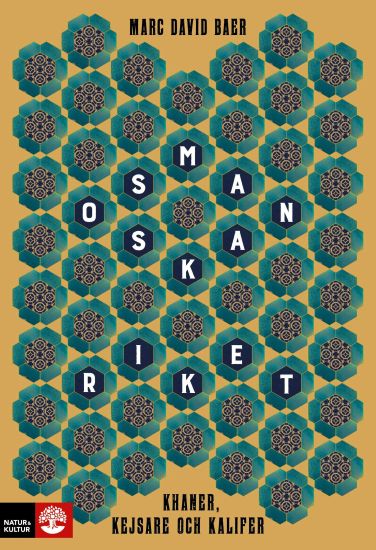
Osmanska riket : khaner, kejsare och kalifer

Osmanska riket : khaner, kejsare och kalifer

Marc David Baer

Natur Kultur Allmänlitteratur
2023
sidottu
HögaktuellDagens NyheterBoken ger en fördjupad och nyanserad bild av ett imperium som varit centralt för den europeiska historien. Att den blir lite repetitiv ibland får man leva med – när 600 år ska avhandlas kan det till och med vara skönt med några extra påminnelser om vem som är vem.ExpressenBaer berättar sin historia utifrån våra samtida frågeställningar… Oerhört läsvärd, unik och gedigen.Wall Street JournalOsmanska riket har ofta framställts som den islamiska motsatsen till det kristna Europa. Men i detta nya standardverk presenteras en annan bild – en bild av ett rike som sammansmälte väst och öst, ett mångetniskt, mångspråkigt och mångreligiöst rike. De osmanska härskarna själva betraktade sig som de gamla romerska kejsarnas arvtagare.Från nomadhövdingar till världsimperium – här skildras hela den häpnadsväckande historien från 1200-talet till 1923. Hur riket bildades ur turkiska, mongoliska, islamiska och bysantinska sammanhang och kom att påverka såväl Europa som världen. Men det är också en skildring av hur tidiga experiment med tolerans och sekularism övergick i exkludering och folkmord. Ur spillrorna av den fallna jätten reste sig staten Turkiet.Boken är en fantastisk genomgång av dess historia.Tidningen ViEn suverän, gripande och uppfriskande ny historieskrivning – fint skriven och full av fascinerande personer och analyser – och som placerar dynastin där den hör hemma: mitt i den europeiska historien.Simon Sebag Montefiore..det är lättläst och fascinerandeKvartalEn av världens största kännare av Osmanska riketSvenska DagbladetMarc David Baer, professor i historia vid London School of Economics, har skrivit en fyllig och underhållande bok om det Osmanska rikets historia. Den ger en fascinerande rundmålning av hur en liten nomadgrupp från Centralasien kunde störta det Östromerska riket och få makten över den sunnimuslimska världen, samt stora delar av sydöstra Europa.Tidningen Vi
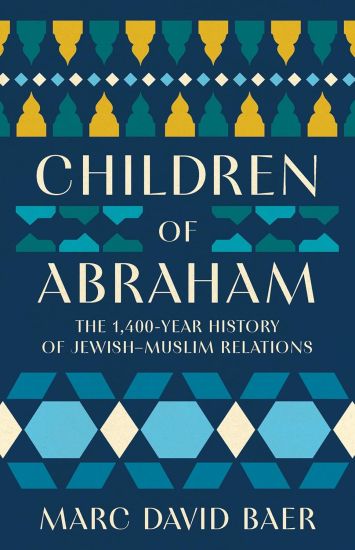
Children of Abraham: The 1,400-Year History of Jewish-Muslim Relations
From the prize-winning author of The Ottomans, a myth-busting history of Muslim-Jewish relations, tracing fourteen centuries of cooperation and conflict Today, the dominant narrative of the relationship between Jewish and Muslim peoples assumes a long history of violent hostility. In Children of Abraham, historian Marc David Baer lays this myth to rest, showing how Jews and Muslims lived together in the Middle East and Europe, more often in cooperation than in conflict, for more than a millennium. When Islam emerged in the seventh century, Muslims and Jews were bound by shared religious tenets and common cultural practices, and for centuries afterward, they were often allies. Baer introduces readers to Muslim warriors fighting for a medieval Turkish Jewish kingdom on the Caspian Sea, Jewish viziers leading the Muslim sultan's troops in Spain, and Jewish literary lights and political party leaders in modern Egypt and Iraq. But Baer resists the alluring fable that Jews and Muslims ever lived in interfaith utopia, and he shows how European colonization and nationalism fed the emergence of modern antisemitism and Islamophobia and helped to drive these two peoples further and further apart. Traversing the full spectrum of Jewish-Muslim relations, this is an urgent, essential history for understanding today's unending conflicts in the Middle East and beyond.
The Ottomans: Khans, Caesars, and Caliphs
This major new history of the Ottoman dynasty reveals a diverse empire that straddled East and West. The Ottoman Empire has long been depicted as the Islamic, Asian antithesis of the Christian, European West. But the reality was starkly different: the Ottomans' multiethnic, multilingual, and multireligious domain reached deep into Europe's heart. Indeed, the Ottoman rulers saw themselves as the new Romans. Recounting the Ottomans' remarkable rise from a frontier principality to a world empire, historian Marc David Baer traces their debts to their Turkish, Mongolian, Islamic, and Byzantine heritage. The Ottomans pioneered religious toleration even as they used religious conversion to integrate conquered peoples. But in the nineteenth century, they embraced exclusivity, leading to ethnic cleansing, genocide, and the empire's demise after the First World War. The Ottomans vividly reveals the dynasty's full history and its enduring impact on Europe and the world.
Children of Abraham

Children of Abraham

Marc David Baer

Profile Books Ltd
2026
sidottu
Muslims and Jews have engaged one another -sometimes for better, sometimes for worse - for over 1,400 years. Yet recent discourse tends to focus on only the most antagonistic aspects of the two communities' interactions. Marc David Baer paints a more nuanced picture of Muslim-Jewish relations, from Muhammad's first interactions with Jewish Arabs in the seventh century and their shared struggles after the Spanish Reconquista to the ongoing modern conflict in the Middle East. Free from the myths and counter-myths of earlier accounts, this is a timely and indispensable new analysis of two communities, often existing side by side, whose relations will continue to shape global politics for decades to come.
Le Papillon d'Emmy

Le Papillon d'Emmy

Marc David

Lulu.com
2017
sidottu
C cile utilisa l'extr mit d'un coupe-papier pour d cacheter l'enveloppe renforc e. Un m daillon et sa cha nette tomb rent sur le sous-main. Elle les ramassa d licatement, tout la fois intrigu e et confuse d'avoir ouvert une lettre de Manon un peu trop personnelle. Dans le creux de sa main, elle admirait le bijou en or, un petit papillon fin avec un petit clat de diamant incrust dans chaque aile. Elle v rifia le contenu de l'enveloppe en enfournant sa main l'int rieur et sentit un morceau de caoutchouc qu'elle retira. Un ballon rouge gonflable la bouche. Un ballon et un bijou. Je range tout cela, je crains que Manon ne r agisse tr s mal cette incursion dans sa vie priv e La d tective Manon Pagan n'a pas oubli son amie. Des souvenirs d'une heureuse adolescence sur les pentes de la Croix-Rousse Lyon. Elle ne pensait pas devoir la chercher au fin fond d'un tepui au Ven zuela.
The Slow Down Diet

The Slow Down Diet

Marc David

Healing Arts Press
2015
pokkari
Our modern culture revolves around fitting as much as possible into the least amount of time. As a result, most people propel themselves through life at a dizzying pace that is contrary to a healthy lifestyle. We eat fast, on the run, and often under stress, not only removing most of the pleasure we might derive from our food and creating digestive upset but also wreaking havoc on our metabolism. Many of us come to the end of a day feeling undernourished, uninspired, and overweight. In this 10th anniversary edition, Marc David presents a new way to understand our relationship to food, focusing on quality and the pleasure of eating to transform and improve metabolism. Citing cutting-edge research on body biochemistry as well as success stories from his own nutritional counseling practice, he shows that we are creatures of body, mind, and spirit and that when we attend to these levels simultaneously we can shed excess pounds, increase energy, and enhance digestion to feel rejuvenated and inspired. He presents an eight-week program that allows readers to explore their unique connection to food, assisting them in letting go of their fears, guilt, and old habits so they can learn to treat their bodies in a dignified and caring way. He reveals the shortcomings of all quick-fix digestive aids and fad diets and debunks common nutrition myths, such as "the right way to lose weight is to eat less and exercise more." He shows instead how to decrease cortisol and other stress hormones and boost metabolic power through proper breathing and nutritional strategies that nourish both the body and soul, proving that fully enjoying each meal is the optimal way to a healthy body. Drawing on more than 30 years of experience in nutritional medicine, the psychology of eating, and the science of yoga, Marc David offers readers practical tools that will yield life-transforming, sustainable results.
Remembering the Cajun Past

Remembering the Cajun Past

Marc David

UNIVERSITY OF MASSACHUSETTS PRESS
2025
nidottu
Exploring how public history creates collective memory of this white ethnic group through memorials Cajuns arrived in southern Louisiana in the 18th century after the British exiled them from eastern Canada. Also known as Acadians, they retain a unique dialect of French, and their distinctive music, food, and other cultural traits characterized them as an ethnic group. Until the 1960s, authorities viewed them as a serious problem, allegedly blocking the state's progress as they clung to their antiquated ways. Few Cajun residents in the region remembered the remote past of their ancestors, but by the 1970s, organizations ranging from local non-profits to the National Park Service created sites that commemorated their history, such as the Acadian Memorial in St. Martinville, allowing Cajuns to connect their lives to their past and claim it as their own. In Remembering the Cajun Past, anthropologist Marc David studies the cultural and political dynamics that reconfigured Cajun memory and identity. Focusing on St. Martinville and the Acadian Memorial, he explores how authorities changed their minds about Cajuns and demonstrates how Cajuns' historical memories took shape. Part ethnography and part history, David examines the racial aspects of the Memorial's creation in the wake of the Civil Rights movement and the growth of a new Cajun history, one through which individual Cajuns rejected the label's connotation of 'white trash' and embraced belonging within a storied white ethnic group. Based on decades of fieldwork and deep engagement with public history practices, David explores how historical memory and the historic sites that foster it are intertwined with the politics of civic life.
Remembering the Cajun Past

Remembering the Cajun Past

Marc David

UNIVERSITY OF MASSACHUSETTS PRESS
2025
sidottu
Exploring how public history creates collective memory of this white ethnic group through memorials Cajuns arrived in southern Louisiana in the 18th century after the British exiled them from eastern Canada. Also known as Acadians, they retain a unique dialect of French, and their distinctive music, food, and other cultural traits characterized them as an ethnic group. Until the 1960s, authorities viewed them as a serious problem, allegedly blocking the state's progress as they clung to their antiquated ways. Few Cajun residents in the region remembered the remote past of their ancestors, but by the 1970s, organizations ranging from local non-profits to the National Park Service created sites that commemorated their history, such as the Acadian Memorial in St. Martinville, allowing Cajuns to connect their lives to their past and claim it as their own. In Remembering the Cajun Past, anthropologist Marc David studies the cultural and political dynamics that reconfigured Cajun memory and identity. Focusing on St. Martinville and the Acadian Memorial, he explores how authorities changed their minds about Cajuns and demonstrates how Cajuns' historical memories took shape. Part ethnography and part history, David examines the racial aspects of the Memorial's creation in the wake of the Civil Rights movement and the growth of a new Cajun history, one through which individual Cajuns rejected the label's connotation of 'white trash' and embraced belonging within a storied white ethnic group. Based on decades of fieldwork and deep engagement with public history practices, David explores how historical memory and the historic sites that foster it are intertwined with the politics of civic life.