Kirjojen hintavertailu. Mukana 11 244 527 kirjaa ja 12 kauppaa.

Kirjahaku

Etsi kirjoja tekijän nimen, kirjan nimen tai ISBN:n perusteella.

1000 tulosta hakusanalla Marc Wanamaker; Arthur C. Verge

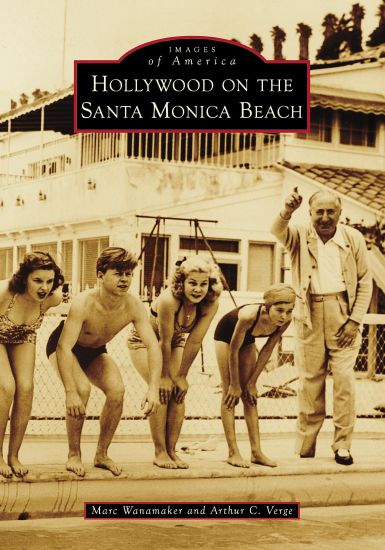
Hollywood on the Santa Monica Beach

Hollywood on the Santa Monica Beach

Marc Wanamaker; Arthur C. Verge

Arcadia Publishing (SC)
2023
nidottu
Since pioneer filmmakers arrived on its shoreline in the early 20th century, the Santa Monica beach has been a popular location for the making of movies and television productions. Its enchanting beauty led studio moguls, producers, and celebrities to build beach houses there, creating what became known as "Hollywood's Playground." The sand and shore of the Santa Monica beach became a favored site for the likes of Charlie Chaplin, Marion Davies, William Randolph Hearst, and Cary Grant. It was on this beach that the Academy Awards were conceived, the movie The Wizard of Oz sprang forth, and a young Pres. John F. Kennedy stunned beachgoers with a surprise ocean swim without the protection of Secret Service agents. In 1962, the beach became the center of the universe as the site of President Kennedy's "Western White House," where the visitors included Frank Sinatra, Dean Martin, Sammy Davis Jr., Marilyn Monroe, and--famously--"anyone who was anyone."
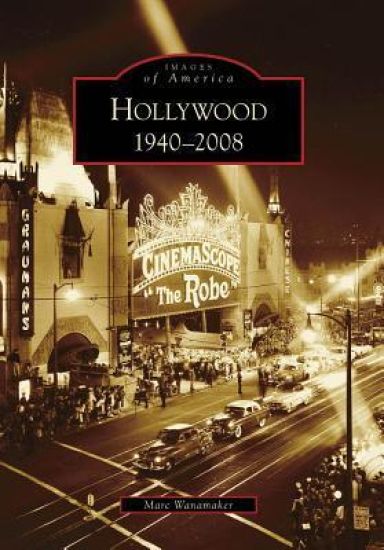
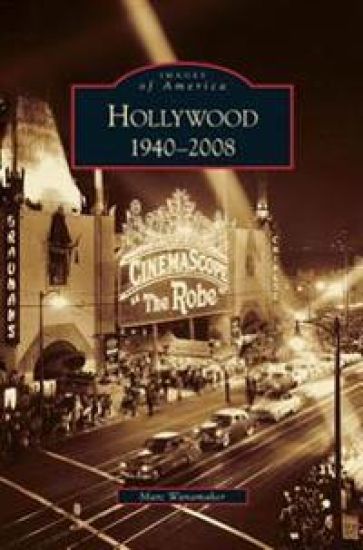
Hollywood 1940-2008

Hollywood 1940-2008

Marc Wanamaker

Arcadia Publishing (SC)
2009
nidottu
Since World War II, Hollywood has fought and won that same war many times, won the West even more often--plus got the girl--and laughed like crazy, too. The postwar era in the dream factory was a prosperous time of expansion and wealth through the 1970s, decline in the 1980s, and rebirth in the new century. Vintage photographs from the rare collections of Hollywood Heritage and Bison Archives depict the municipal, business, residential, and entertainment industry growth in Hollywood proper, from 1940 until the beginning of the 21st century. This companion volume to Arcadia Publishing's Early Hollywood completes the pictorial saga of the world's most renowned storytelling capital. These images depict the rise of the television industry, changes along Hollywood Boulevard, and movers and shakers whose visions and influence have made Hollywood the entertainment industry's Mecca.
Paramount Studios: 1940-2000

Paramount Studios: 1940-2000

Marc Wanamaker; Michael Christaldi; E. J. Stephens

Arcadia Publishing (SC)
2016
nidottu
The fascinating tale of Hollywood powerhouse Paramount Pictures--beginning with its birth in the 1910s through the turbulent decade of the 1930s--was told in Early Paramount Studios by Marc Wanamaker, Michael Christaldi, and E.J. Stephens. Now the same authors are back to tell the next 60 years of the studio saga in Paramount Studios: 1940-2000, with a foreword by former Paramount head of production Robert Evans. This book picks up the story during the time of World War II--a successful era for the studio--which was followed by a decade of decline due to the upstart medium of television. By the 1960s, the studio teetered on the brink of bankruptcy before rebounding, thanks to several 1970s blockbusters, such as Love Story, The Godfather, and Chinatown. The tale continues through the final decades of the 20th century when Paramount showcased some of the greatest hits in its history.
Hollywood Behind the Lens

Hollywood Behind the Lens

Marc Wanamaker; Steven Bingen

ROWMAN LITTLEFIELD
2024
sidottu
“Los Angeles is a city that runs from its own past” explains historian and Bison Archives owner Marc Wanamaker.Many of Hollywood’s legendary sets and props, mansions, theaters, restaurants, nightclubs, hotels, and even the studios and the films they produced are now either gone or have been redeveloped, repurposed, or remade beyond recognition. Even more disarmingly, the physical ephemera associated with such items is often MIA as well. Photographs, files, maps, documents, menus, production paperwork, records, manuscripts, everything from matchbooks to movie magazines and entire movie backlots have now been lost in the backwash of dubious progress, short-sighted corporate mindsets, and civic indifference. Fortunately, for the last fifty years, in the very epicenter of Hollywood, thanks to Wanamaker, there has existed a haven where over 70,000 of these items, physically or photographically, have been collected and protected. These artifacts tell the story of Hollywood’s glorious past, as well as its uncertain future as the hub of filmmaking in America.
Paramount Studios: 1940-2000

Paramount Studios: 1940-2000

Marc Wanamaker; Michael Christaldi; E. J. Stephens

Arcadia Publishing Library Editions
2016
sidottu
The fascinating tale of Hollywood powerhouse Paramount Pictures beginning with its birth in the 1910s through the turbulent decade of the 1930s was told in Early Paramount Studios by Marc Wanamaker, Michael Christaldi, and E.J. Stephens. Now the same authors are back to tell the next 60 years of the studio saga in Paramount Studios: 1940 2000, with a foreword by former Paramount head of production Robert Evans. This book picks up the story during the time of World War II a successful era for the studio which was followed by a decade of decline due to the upstart medium of television. By the 1960s, the studio teetered on the brink of bankruptcy before rebounding, thanks to several 1970s blockbusters, such as Love Story, The Godfather, and Chinatown. The tale continues through the final decades of the 20th century when Paramount showcased some of the greatest hits in its history."
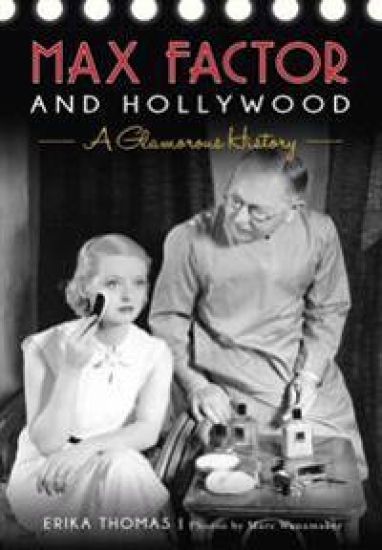
Max Factor and Hollywood: A Glamorous History

Max Factor and Hollywood: A Glamorous History

Erika Thomas; Photos By Marc Wanamaker

History Press
2016
nidottu
When Polish wigmaker and cosmetician Max Factor arrived in Los Angeles at the dawn of the motion picture industry, make-up had been associated only with stage performers and ladies of the oldest profession. Appalled by the garish paints worn by actors, Factor introduced the first flexible greasepaint for film in 1914. With a few careful brush strokes, a lot of innovation and the kind of luck that can happen only in Hollywood, Max Factor changed the meaning of glamour. His innovations can be experienced in every tube of lipstick, palette of eye shadow and bottle of nail lacquer used today. Join author Erika Thomas as she reveals the makeup guru's expert beauty tips and the story of how he created the most iconic golden-era looks that are as relevant today as they were nearly a century ago.
Max Factor and Hollywood: A Glamorous History

Max Factor and Hollywood: A Glamorous History

Erika Thomas; Marc Wanamaker; The Hollywood Museum

History Press Library Editions
2016
sidottu
When Polish wigmaker and cosmetician Max Factor arrived in Los Angeles at the dawn of the motion picture industry, make-up had been associated only with stage performers and ladies of the oldest profession. Appalled by the garish paints worn by actors, Factor introduced the first flexible greasepaint for film in 1914. With a few careful brush strokes, a lot of innovation and the kind of luck that can happen only in Hollywood, Max Factor changed the meaning of glamour. His innovations can be experienced in every tube of lipstick, palette of eye shadow and bottle of nail lacquer used today. Join author Erika Thomas as she reveals the makeup guru s expert beauty tips and the story of how he created the most iconic golden-era looks that are as relevant today as they were nearly a century ago."
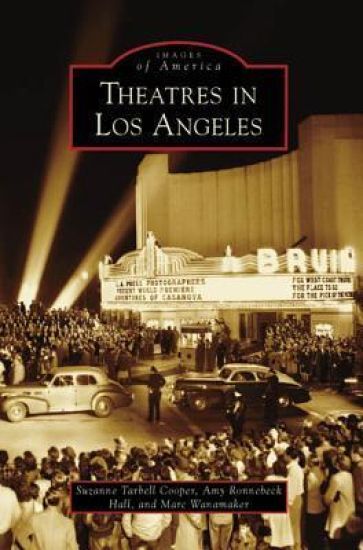
Theatres in Los Angeles

Theatres in Los Angeles

Suzanne Tarbell Cooper; Amy Ronnebeck Hall; Marc Wanamaker

Arcadia Publishing (SC)
2008
nidottu
Los Angeles and the movies grew up together, and a natural extension of the picture business was the premium presentation of the product--the biggest, best, and brightest theatres imaginable. The magnificent movie palaces along Broadway in downtown Los Angeles still represent the highest concentration of vintage theatres in the world. With Hollywood and the movies practically synonymous, the theatres in the studios' neighborhood were state-of-the-art for showbiz, whether they were designed for film, vaudeville, or stage productions. From the elegant Orpheum and the exotic Grauman's Chinese to the modest El Rey, this volume celebrates the architecture and social history of Los Angeles's unique collection of historic theatres past and present. The common threads that connect them all, from the grandest movie palace to the smallest neighborhood theatre, are stories and the ghosts of audiences past waiting in the dark for the show to begin.