

Kirjahaku
Etsi kirjoja tekijän nimen, kirjan nimen tai ISBN:n perusteella.
368 tulosta hakusanalla Marconi Joe

The purpose of this Violin songbook is to provide the beginning Violin player with a repertoire of 101 familiar and easy to play tunes written for Violin. All the songs are written specifically for Violin utilizing dynamics, expression markings, and articulations. Key signatures for the songs are in a comfortable range suitable for the beginning Violin player.This songbook is an ideal supplement to any elementary Violin Method book. Most of the songs are appropriate for performance at concerts, recitals, and contests. Private teachers will assign one or two of the songs from this book at each lesson. The songs will help the beginning Violin student to develop fingering technique, rhythm reading ability, and confidence.

The purpose of this Cello songbook is to provide the beginning Cello player with a repertoire of 101 familiar and easy to play tunes written for Cello. All the songs are written specifically for Cello utilizing dynamics, expression markings, and articulations. Key signatures for the songs are in a comfortable range suitable for the beginning Cello player.This songbook is an ideal supplement to any elementary Cello Method book. Most of the songs are appropriate for performance at concerts, recitals, and contests. Private teachers will assign one or two of the songs from this book at each lesson. The songs will help the beginning Cello student to develop fingering technique, rhythm reading ability, and confidence.
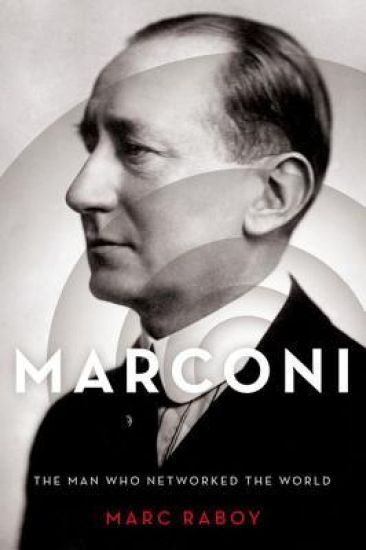
A little over a century ago, the world went wireless. Cables and all their limiting inefficiencies gave way to a revolutionary means of transmitting news and information almost everywhere, instantaneously. By means of "Hertzian waves," as radio waves were initially known, ships could now make contact with other ships (saving lives, such as on the doomed S.S. Titanic); financial markets could coordinate with other financial markets, establishing the price of commodities and fixing exchange rates; military commanders could connect with the front lines, positioning artillery and directing troop movements. Suddenly and irrevocably, time and space telescoped beyond what had been thought imaginable. Someone had not only imagined this networked world but realized it: Guglielmo Marconi. As Marc Raboy shows us in this enthralling and comprehensive biography, Marconi was the first truly global figure in modern communications. Born to an Italian father and an Irish mother, he was in many ways stateless, working his cosmopolitanism to advantage. Through a combination of skill, tenacity, luck, vision, and timing, Marconi popularized--and, more critically, patented--the use of radio waves. Soon after he burst into public view at the age of 22 with a demonstration of his wireless apparatus in London, 1896, he established his Wireless Telegraph & Signal Company and seemed unstoppable. He was decorated by the Czar of Russia, named an Italian Senator, knighted by King George V of England, and awarded the Nobel Prize for Physics--all before the age of 40. Until his death in 1937, Marconi was at the heart of every major innovation in electronic communication, courted by powerful scientific, political, and financial interests. He established stations and transmitters in every corner of the globe, from Newfoundland to Buenos Aires, Hawaii to Saint Petersburg. Based on original research and unpublished archival materials in four countries and several languages, Raboy's book is the first to connect significant parts of Marconi's story, from his early days in Italy, to his groundbreaking experiments, to his protean role in world affairs. Raboy also explores Marconi's relationshps with his wives, mistresses, and children, and examines in unsparing detail the last ten years of the inventor's life, when he returned to Italy and became a pillar of Benito Mussolini's fascist regime. Raboy's engrossing biography, which will stand as the authoritative work of its subject, proves that we still live in the world Marconi created.
A little over a century ago the world went wireless. Cables and all their limiting inefficiencies gave way to a revolutionary means of transmitting news and information almost everywhere, instantaneously. By means of "Hertzian waves," as radio waves were initially known, ships could now make contact with other ships (saving lives, such as on the doomed R.M.S. Titanic); financial markets could coordinate with other financial markets, establishing the price of commodities and fixing exchange rates; military commanders could connect with the front lines, positioning artillery and directing troop movements. Suddenly and irrevocably, time and space telescoped beyond what had been thought imaginable. Someone had not only imagined this networked world but realized it: Guglielmo Marconi. As Marc Raboy shows us in this enthralling and comprehensive biography, Marconi was the first truly global figure in modern communications. Born to an Italian father and an Irish mother, he was in many ways stateless, working his cosmopolitanism to advantage. Through a combination of skill, tenacity, luck, vision, and timing, Marconi popularized-and, more critically, patented-the use of radio waves. Soon after he burst into public view with a demonstration of his wireless apparatus in London at the age of 22 in 1896, he established his Wireless Telegraph & Signal Company and seemed unstoppable. He was decorated by the Czar of Russia, named an Italian Senator, knighted by King George V of England, and awarded the Nobel Prize for Physics-all before the age of 40. Until his death in 1937, Marconi was at the heart of every major innovation in electronic communication, courted by powerful scientific, political, and financial interests, and trailed by the media, which recorded and published nearly every one of his utterances. He established stations and transmitters in every corner of the globe, from Newfoundland to Buenos Aires, Hawaii to Saint Petersburg. Based on original research and unpublished archival materials in four countries and several languages, Raboy's book is the first to connect significant parts of Marconi's story, from his early days in Italy, to his groundbreaking experiments, to his protean role in world affairs. Raboy also explores Marconi's relationships with his wives, mistresses, and children, and examines in unsparing detail the last ten years of the inventor's life, when he returned to Italy and became a pillar of Benito Mussolini's fascist regime. Raboy's engrossing biography, which will stand as the authoritative work of its subject, proves that we still live in the world Marconi created.

The Marconi New Street works in Chelmsford, Essex was the world's first purpose built wireless factory and became the world's first electronics factory using mass production techniques. For well over ninety years the huge factory was the centre of the massive Marconi Company Empire that stretched across the world. However, the disastrous collapse of the Marconi Company prompted the abandonment of the huge complex of offices, workshops, laboratories, test areas and manufacturing plant that alone once employed over 10,000 people. When the factory was opened in 1912, the SS Titanic had just sunk in the middle of the Atlantic and 711 lives were saved solely due to the use of Guglielmo Marconi's invention and the brave Marconi wireless operators aboard. It was the tragedy of the Titanic that gave birth to the modern wireless age and spurred a growth in manufacture and development that probably could not have occurred otherwise. One hundred years later in 2012 the site stands empty and vandalised.This is the story of the world's first wireless factory, partly told in the words of the people who worked there. Within its walls the science and art of wireless communication was born. I also firmly believe that this is where the modern electronics age, be it radio, television, radar, satellite or even mobile telephones was born. The Marconi New Street Works, 1912 - 2012, was the birthplace of Britain's last industrial revolution.
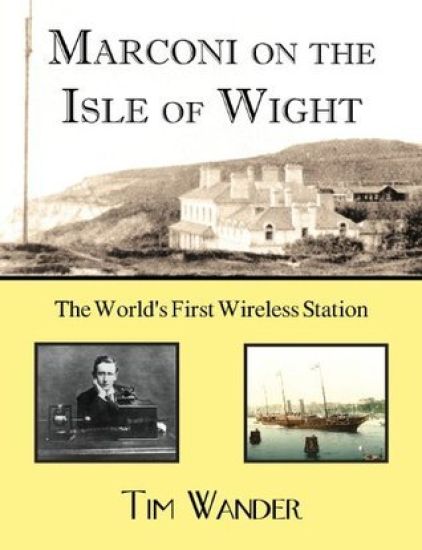
In November 1897, a twenty-three year old Italian inventor visited the Royal Needles Hotel that overlooked Alum Bay on the west coast of the Isle of Wight. The young Guglielmo Marconi's proposal to rent rooms to perform his 'experiments' over the deserted winter months was warmly welcomed by the hotels proprietors. Marconi used some of the working capital of his newly formed Wireless Telegraph & Signal Company to convert the hotel's billiard room and install his equipment and spark transmitter. Several small ships were hired and fitted with wireless aerials and receivers while moored at the pier below. A huge mast, 168 feet high, had to be hauled up the cliff face of Alum Bay and raised in the hotel grounds, a feat that required the help of most of the able bodied men in Totland. On Monday 6th December 1897 Marconi started his wireless experiments from the Royal Needles Hotel, including a month of private demonstrations for Queen Victoria and the Royal family using wireless stations he installed at Osborne House and on board the Royal Yacht. For the next two and a half years the world's first permanent wireless station would be operated from the Isle of Wight. By 1900 Marconi realised he need more space, greater privacy and longer ranges to his new stations being built in Cornwall. He moved his equipment and aerial mast from Alum Bay across the Island to a new station built in Knowles farm in Niton. While there Marconi developed the vital science of tuning, enabling multiple wireless signals to be separated without interference. In January 1901 transmissions from Niton reached Marconi's new station at Lizard Point in Cornwall. This was 196 miles away, a world record for 'radio' waves, convincing Marconi that his system was now ready to attempt to transmit across the Atlantic ocean, over 2,100 miles. The science and art of wireless communication was born on the Isle of Wight. This is the story of a young Italian engineer, whose small experiments on a small Island grew to produce our modern world of instant global communication, radio broadcasting, mobile phones, television, satellite communication and even the internet. Marconi on the Isle of Wight changed the world forever.


""Marconi: The Man And His Wireless"" is a biography of Guglielmo Marconi, the Italian inventor and electrical engineer who is credited with developing the first practical radio communication system. Written by Orrin E. Dunlap Jr., the book provides a comprehensive account of Marconi's life, from his early experiments with wireless telegraphy to his later work on radio broadcasting and his involvement in the development of radar during World War II.In addition to chronicling Marconi's personal and professional achievements, the book also explores the social and political context in which he lived and worked. Dunlap examines the impact of Marconi's inventions on global communication and the role that wireless technology played in shaping the modern world.Overall, ""Marconi: The Man And His Wireless"" offers a fascinating look at one of the most important figures in the history of technology and communication. It is a must-read for anyone interested in the history of science, engineering, or telecommunications.This is a new release of the original 1937 edition.This scarce antiquarian book is a facsimile reprint of the old original and may contain some imperfections such as library marks and notations. Because we believe this work is culturally important, we have made it available as part of our commitment for protecting, preserving, and promoting the world's literature in affordable, high quality, modern editions, that are true to their original work.
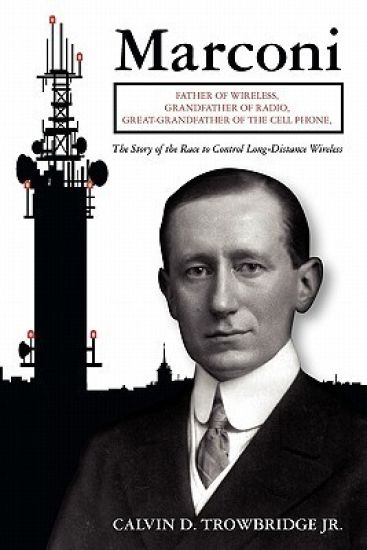
Marconi: Father of Wireless, Grandfather of Radio, Great-Grandfather of the Cell Phone, The Story of the Race to Control Long-Distance Wireless
Calvin D. Trowbridge Jr
Booksurge Publishing
2010
nidottu


Marconi Radio Officer: The convoys of a WW2 "Sparks"
David John Whitfield
Createspace Independent Publishing Platform
2015
nidottu
The story of my father, William Whitfield who joined the Merchant Navy in November 1939 as young Radio Officer. The narrative tells of all William s ships and the convoys they took part in during WW2. The sad losses on some of these convoys and the part played by the convoy escorts, notably the corvettes of the Canadian Navy are all described in the book. William served until 1946 and then departed from the sea only to make a brief two year return in 1948. After 1950 my father served as a Preston Borough policeman until his sad and premature death in 1967 at the age of 45.

By the end of 1898 Guglielmo Marconi's fledgling new Wireless Telegraph Companywas just over two years old. The young Italian engineer was exhausted from endlessmonths of intense testing and developments, trying to prove that his systemof wireless communication was a viable commercial proposition. But Marconihad no customers and his company was teetering on the edge of bankruptcy.However Marconi was no ordinary man. He believed in his system and he believedthat the orders would come and that he would need to fulfil them.In January 1899, in a brave, perhaps even reckless move, he opened the world's first wirelessfactory in Chelmsford, employing 20 people. For a time his new factory had to scramblefor sub-contract manufacture, but over the next 13 years the Hall Street Works engineers,technicians and staff were to build the foundations of a new wireless age.Soon the Hall Street Works would send equipment to the Boer War, the Chinese BoxerRebellion and supply the huge Poldhu and Clifden transatlantic stations. In December1901, against all the odds, Marconi managed to receive a wireless message sent across theAtlantic Ocean, over 2,170 miles, and much of the equipment was built in the Hall StreetWorks. Despite Marconi and his Company becoming world famous it was still a desperatestruggle to find paying customers for his new 'wire-less' system. On 8th May 1901 the RoyalNavy would place the first order for 32 sets, which was increased to 108 sets by 1905.The Hall Street Works then supplied all the equipment for Marconi's growing networkof coastal wireless stations and started to equip increasing numbers of civilian ships.The factory supplied customers across the globe including the Amazon Basin, Hawaii,Congo, Thailand, South Africa, India, Canada and even to both sides in the Balkan Warof 1912. It was Marconi wireless equipment manufactured in Hall Street installed aboardthe ill-fated RMS Titanic that saved over 730 people when the great ship was lost in 1912and over 760 people when the RMS Lusitania was sunk in May 1915. This successful useof wireless for safety at sea effectively generated a new and vast market for Marconi'sequipment.In the same year the Hall Street Works officially closed its doors as the huge New StreetWorks took over the workload and the world's first wireless factory fell silent, apart fromits wireless station across the road that continued to eavesdrop on the German fleetfeeding vital intelligence to the Navy's top secret Room 40 code breakers. It was thisand all the work done at Hall Street that ensured that Britain and the Marconi Companywere ready to face the extreme demands ofa world now at war.

Marconi's Wireless Telegraph Stations in Essex
Paul M. Hawkins; Paul G. Reyland
New Generation Publishing
2022
pokkari
Marconi's Wireless Telegraph Stations in Essex The Centenary of Brentwood and Ongar Radio Stations A hundred years ago Guglielmo Marconi was busy setting up telegraph links between the UK and countries across the world and was operating wireless stations in the west of Ireland and in Wales. After WW1 new advances in valves and electronic technology enabled wireless stations to be built closer to London. With the engineering and manufacturing facilities of the Marconi Company already set up in Chelmsford it was logical to build new wireless, or radio as it was becoming known, stations in Essex and Brentwood and Ongar were the chosen locations for the establishment of new European and Worldwide links. This book tells the story of these two radio stations from their establishment in 1921 until new technology and other factors saw their demise, Brentwood in 1967 and Ongar in 1985.Paul HawkinsPaul Hawkins spent his whole career working in radio communications. He joined the British Post Office International Telecommunication service in 1967 working at Dorchester Radio Station, then Goonhilly Satellite Station and Bearley Radio Station. From 1980-83 he worked in the USA and from 1983 until his retirement in 2013 he worked for the Thales Company in England, where he was involved in the design of antennas and communication systems for Naval vessels. Radio and its history is a personal interest of Paul and he has published a number of articles in the vintage wireless press, conference papers for the IEE and a book concerning the history of radio communications. He has also given lectures to various groups about radio telecommunications history and at one of these he was fortunate enough to meet Princess Elettra Marconi, the daughter of Guglielmo Marconi.Paul ReylandPaul Reyland was brought up and educated in Brentwood. After leaving school in 1965 he started working at Brentwood Radio Receiving Station as an apprentice. When the station closed in 1967, he was transferred to Ongar Radio Transmitting Station at North Weald to complete his training. He was employed by the Post Office International Telecommunication service, later to become British Telecom International (BTI), for nearly 30 years working mainly in radio and satellite operations. From 1995 Paul worked for the International Maritime Satellite organization (INMARSAT), retiring in 2002. After writing an article about Brentwood Radio Station for the Essex Journal magazine in 2019, it was suggested by his friend Paul Hawkins that they should produce a book to mark the centenary of both Brentwood and Ongar radio stations. This book is the result of their collaboration and research.

A collection of 13 short stories, where the characters have to make the impossible choices which circumstances, and the will to love and live, make inevitable.
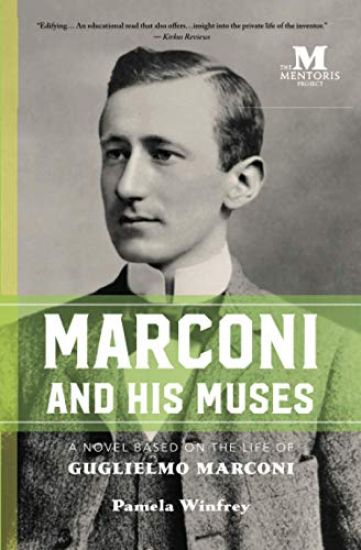
Born with an inquisitive imagination...Brilliant inventor, electrical engineer, and wise entrepreneur, Guglielmo Marconi was best known for inventing long-distance radio transmissions and the telegraph system.But his success wasn't solely a product of his curious mind. Marconi attributed his prosperity to the people in his life who encouraged him to achieve his goals. Fostering his relationships with his mother, his wives, and other female friends allowed Marconi to grow and explore as an inventor without the fear of isolation, political disassociation, and covert racism hindering his dreams.Although he spent most of his time spanning the globe and using the entire planet as his creative palette, the people he chose to associate himself with were critical to his well-being, his inventive nature, and his general physical and mental health. Without his close-knit relationships, long-distance transmission may have never come to fruition.



Det går mot vår i Göteborg, och Erik Winter känner hur hans sinne ljusnar när dagarna blir längre.Men verkligen hinner ikapp honom, som den alltid gör. En tidig morgon står han i ett värdelöst ljus under en värdelös himmel och ser ner på ett lik av en man som dött en våldsam död. En plastpåse har trätts över mannens huvud. På mannens kropp ligger en avriven bit kartong på vilken någon med bred pensel skrivit en versal bokstav. Det blir fler offer, i Göteborg och Stockholm, med samma sorts våldsamt tecknade lappar. Samtidigt som Winter lägger pussel med lapparna för att kunna utläsa ett ord, försöker man alltmer deseperat finna ett samband mellan de mördade. Det är ett mysterium.En av de verkliga pionjärerna i det som kallas det svenska deckarundret, Åke Edwardson, är tillbaka med en ny Winter-roman, den tolfte i ordningen. Marconi Park, som är ett bostadsområde i Göteborg, har fått ge namn åt den tolfte romanen med Erik Winter i huvudrollen.

This book examines the discourse surrounding the wireless, created by the Anglo-Italian inventor Guglielmo Marconi. The wireless excited early twentieth-century audiences before it even became a viable black box technology. The wireless adhered to modernist values—speed, efficiency, militarization, and progress. Language surrounding the wireless is a form of technical communication, overlooked by today’s practitioners. This book establishes a broader definition for technical communication by examining a selection of the discourse surrounding Marconi's wireless. The book’s main themes are the following: 1) technical communication is all discourse surrounding technology, 2) the field of technical communication (or technical writing) should incorporate analyses of discourse surrounding technologies into its epistemology, 3) the wireless is a product of the society from which it comes (early twentieth-century Western civilization), and 4) the discourse surrounding the wireless is infused with tropes of progress—speed, efficiency, evolution, and ahistoricity.