Kirjojen hintavertailu. Mukana 11 244 527 kirjaa ja 12 kauppaa.

Kirjahaku

Etsi kirjoja tekijän nimen, kirjan nimen tai ISBN:n perusteella.

1000 tulosta hakusanalla Marcy J. Dinius

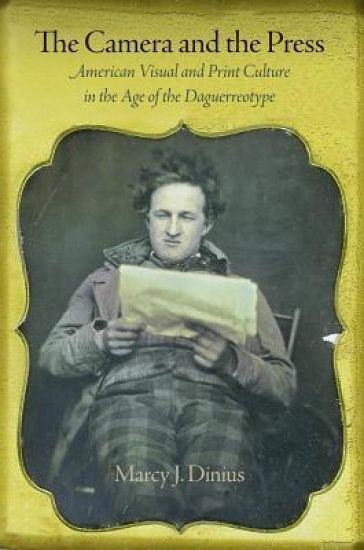
The Camera and the Press

The Camera and the Press

Marcy J. Dinius

University of Pennsylvania Press
2012
sidottu
Before most Americans ever saw an actual daguerreotype, they encountered this visual form through written descriptions, published and rapidly reprinted in newspapers throughout the land. In The Camera and the Press, Marcy J. Dinius examines how the first written and published responses to the daguerreotype set the terms for how we now understand the representational accuracy and objectivity associated with the photograph, as well as the democratization of portraiture that photography enabled. Dinius's archival research ranges from essays in popular nineteenth-century periodicals to daguerreotypes of Americans, Liberians, slaves, and even fictional characters. Examples of these portraits are among the dozens of illustrations featured in the book. The Camera and the Press presents new dimensions of Nathaniel Hawthorne's The House of the Seven Gables, Herman Melville's Pierre, Harriet Beecher Stowe's Uncle Tom's Cabin, and Frederick Douglass's The Heroic Slave. Dinius shows how these authors strategically incorporated aspects of daguerreian representation to advance their aesthetic, political, and social agendas. By recognizing print and visual culture as one, Dinius redefines such terms as art, objectivity, sympathy, representation, race, and nationalism and their interrelations in nineteenth-century America.
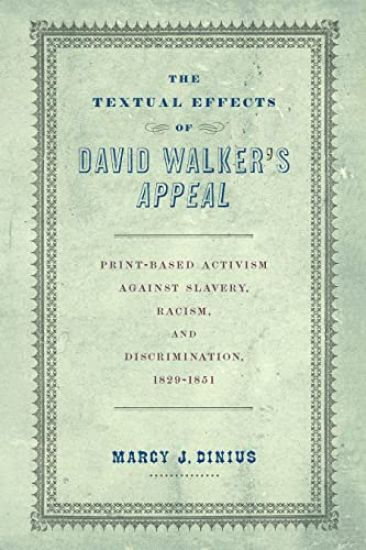
The Textual Effects of David Walker's "Appeal"

The Textual Effects of David Walker's "Appeal"

Marcy J. Dinius

UNIVERSITY OF PENNSYLVANIA PRESS
2022
sidottu
Historians and literary historians alike recognize David Walker's Appeal to the Coloured Citizens of the World (1829-1830) as one of the most politically radical and consequential antislavery texts ever published, yet the pamphlet's significant impact on North American nineteenth-century print-based activism has gone under-examined. In The Textual Effects of David Walker's "Appeal" Marcy J. Dinius offers the first in-depth analysis of Walker's argumentatively and typographically radical pamphlet and its direct influence on five Black and Indigenous activist authors, Maria W. Stewart, William Apess, William Paul Quinn, Henry Highland Garnet, and Paola Brown, and the pamphlets that they wrote and published in the United States and Canada between 1831 and 1851. She also examines how Walker's Appeal exerted a powerful and lasting influence on William Lloyd Garrison's Liberator and other publications by White antislavery activists. Dinius contends that scholars have neglected the positive, transnational, and transformative effects of Walker's Appeal on print-based political activism and literary and book history-that is, its primarily textual effects-due to an enduringly narrow focus on the violence that the pamphlet may have occasioned. She offers as an alternative a broadened view of activism and resistance that centers the works of Walker, Stewart, Apess, Quinn, Garnet, and Brown within an exploration of radical forms of authorship, publication, civic participation, and resistance. In doing so, she has written a major contribution to African American literary studies and the history of the book in antebellum America.
The Textual Effects of David Walker's "Appeal"

The Textual Effects of David Walker's "Appeal"

Marcy J. Dinius

UNIVERSITY OF PENNSYLVANIA PRESS
2025
pokkari
Historians and literary historians alike recognize David Walker's Appeal to the Coloured Citizens of the World (1829-1830) as one of the most politically radical and consequential antislavery texts ever published, yet the pamphlet's significant impact on North American nineteenth-century print-based activism has gone under-examined. In The Textual Effects of David Walker's "Appeal" Marcy J. Dinius offers the first in-depth analysis of Walker's argumentatively and typographically radical pamphlet and its direct influence on five Black and Indigenous activist authors, Maria W. Stewart, William Apess, William Paul Quinn, Henry Highland Garnet, and Paola Brown, and the pamphlets that they wrote and published in the United States and Canada between 1831 and 1851. She also examines how Walker's Appeal exerted a powerful and lasting influence on William Lloyd Garrison's Liberator and other publications by White antislavery activists. Dinius contends that scholars have neglected the positive, transnational, and transformative effects of Walker's Appeal on print-based political activism and literary and book history-that is, its primarily textual effects-due to an enduringly narrow focus on the violence that the pamphlet may have occasioned. She offers as an alternative a broadened view of activism and resistance that centers the works of Walker, Stewart, Apess, Quinn, Garnet, and Brown within an exploration of radical forms of authorship, publication, civic participation, and resistance. In doing so, she has written a major contribution to African American literary studies and the history of the book in antebellum America.
Crossroads

Crossroads

Marcy J. Miller

AuthorHouse
2004
pokkari
Against a stark backdrop of territorial Arizona, a veteran fleeing his past tries to outrun his destiny. Caught between nightmares of past battles and visions of the future, Royal Healey is hired as the marshal of a small town. His new life provides Royal with happiness he can't quite accept. When the town is afflicted by tragic events, Royal pursues a truth so dark and sinister it threatens to destroy him. Sparse but lyrical in style, this is a classic tale of opposing forces. Individual choices collide with fate; past, future and present commingle; chaos evolves into darker order. Themes of divisiveness and connectedness; fratricide and patricide; and unnatural love give this small novel a vast and compelling scope.
Crossroads

Crossroads

Marcy J. Miller

AuthorHouse
2004
sidottu
Against a stark backdrop of territorial Arizona, a veteran fleeing his past tries to outrun his destiny. Caught between nightmares of past battles and visions of the future, Royal Healey is hired as the marshal of a small town. His new life provides Royal with happiness he can't quite accept. When the town is afflicted by tragic events, Royal pursues a truth so dark and sinister it threatens to destroy him. Sparse but lyrical in style, this is a classic tale of opposing forces. Individual choices collide with fate; past, future and present commingle; chaos evolves into darker order. Themes of divisiveness and connectedness; fratricide and patricide; and unnatural love give this small novel a vast and compelling scope.
Zoonoses, Public Health and the Exotic Animal Practitioner, An Issue of Veterinary Clinics: Exotic Animal Practice
A comprehensive review of zoonoses and public health for the exotic animal practitioner! The issue will cover: zoonoses and preventive medicine practices, rabies, followed by specific, individual chapters on zoonoses associated with invertebrates, fish, reptiles and amphibians, common pet birds, backyard flocks, wild birds, rabbits and rodents, pocket pets, felids & procyonids, and primates and monkeys.
New River

New River

Marcy J. Miller

Arcadia Publishing Library Editions
2016
sidottu
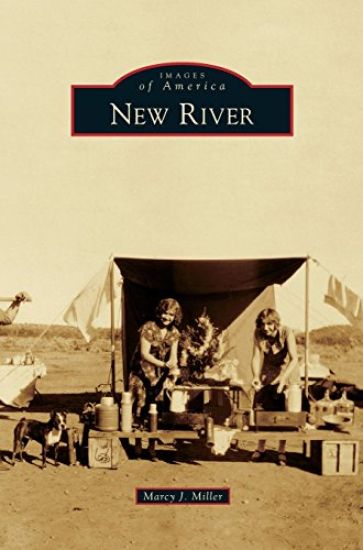
Long before the cavalry and stagecoaches traveled through on military roads and the Old Black Canyon Stage Road, the ancient Hohokam people relied on New River s peaks for fortresses and lookouts. In the late 1800s, the military sweep of the last native people, the Apache and Yavapai, rendered the region safe for settlers. Situated between the cool north and the hot, arid Salt River Valley below, New River became a key location for watering sheep and cattle driven between seasonal pastures. Ranches, such as the Triangle-Bar, sprang to life in the cactus-studded foothills. From the 1920s to the 1940s, the arrival of tough, capable homesteaders formed the community that thrives today. Still an unincorporated area of north Maricopa County, New River retains its western heritage and scenic desert vistas"
The Sciopticon Manual, Explaining Lantern Projection In General, And The Sciopticon Apparatus In Paricular; Including Magic Lantern Attachments, Experiments, Novelties, Colored And Photo-Transparencies, Mechanical Movements, Etc.
The book, The Sciopticon Manual, Explaining Lantern Projection In General, And The Sciopticon Apparatus In Paricular; Including Magic Lantern Attachments, Experiments, Novelties, Colored And Photo-Transparencies, Mechanical Movements, Etc., has been considered by academicians and scholars of great significance and value to literature. This forms a part of the knowledge base for future generations. So that the book is never forgotten we have represented this book in a print format as the same form as it was originally first published. Hence any marks or annotations seen are left intentionally to preserve its true nature.
Emotionally Intelligent Leadership for Students

Emotionally Intelligent Leadership for Students

Marcy Levy Shankman; Scott J. Allen

John Wiley Sons Inc
2010
nidottu
The EILS Development Guide is meant to be used as a companion to the EILS Inventory, which offers a valid and reliable, quantitative and qualitative, self assessment of emotionally intelligent leadership skills. The EILSDevelopment Guide contains guidance for students who want to develop each of the 21 capacities, including: definitions for each capacity, student quotes, suggested leadership development experiences and activities, suggested further reading and films to watch, other learning opportunities, notable quotes, and reflection questions.
Emotionally Intelligent Leadership for Students

Emotionally Intelligent Leadership for Students

Marcy Levy Shankman; Scott J. Allen; Rosanna Miguel

John Wiley Sons Inc
2015
nidottu
The only instrument that measures behaviors associated with emotionally intelligent leadership The Emotionally Intelligent Leadership for Students: Inventory is an evidence-based assessment of the capacities of emotionally intelligent leadership (EIL). Research that spans the globe has demonstrated that there is a relationship between emotional intelligence and leadership. For the second edition, the authors have conducted original studies, yielding a substantial revision that better reflects the world of emotionally intelligent leadership and will be transformative for students of all backgrounds. First, this 57-item assessment measures how often students engage in behaviors that align with emotionally intelligent leadership. Then, the reflection portion walks students through the process of analyzing and understanding their results, giving them concrete suggestions for how to explore and improve their emotionally intelligent leadership. The inventory reflects 19 EIL capacities supported by recent studiesA section on guided interpretation allows students to determine next steps to help them prepare to become effective leadersGuidance for reflection and analysis of the results introduces learning opportunities that align with unique learning styles Use the inventory along with Emotionally Intelligent Leadership: A Guide for Students and its Student Workbook for an immersive and transformative educational experience. Students will appreciate the opportunity to learn more about themselves as they reflect on their experiences as learners and their own leadership journeys.
Emotionally Intelligent Leadership for Students

Emotionally Intelligent Leadership for Students

Marcy Levy Shankman; Scott J. Allen; Paige Haber-Curran

John Wiley Sons Inc
2015
nidottu
A how-to guide to help for facilitators and instructors develop emotionally intelligent leadership capacities in their students The Emotionally Intelligent Leadership for Students: Facilitation and Activity Guide delivers a comprehensive curriculum for those who want to help students foster the 19 emotionally intelligent leadership (EIL) capacities presented in the book Emotionally Intelligent Leadership: A Guide for Students. Research from around the world has demonstrated that there is a relationship between emotional intelligence and leadership. For the all-new second edition, the authors have completely rewritten all the modules according to their revised, data-based EIL model. These activities bring theory into practice, targeting specific learning outcomes that will help students become better leaders. This guide will allow you to lead students through the Emotionally Intelligent Leadership for Students: Student Workbook and can be used with or without the Emotionally Intelligent Leadership for Students: Inventory, which helps students to assess their EIL capacities. Contains 23 all new modules consisting of step-by-step instructions for facilitating leadership activitiesReflects 19 emotionally intelligent leadership capacities derived from new researchProvides hands-on learning experiences and case studies that allow students to enhance their leadership abilitiesIncludes clear instructions for modifying activities to fit any setting or time constraint The Emotionally Intelligent Leadership for Students suite of resources offers an immersive and transformative educational experience, fostering growth and promoting intense self-reflection. Students will be empowered to develop into the effective leaders of the future.
Emotionally Intelligent Leadership

Emotionally Intelligent Leadership

Marcy Levy Shankman; Scott J. Allen; Paige Haber-Curran

John Wiley Sons Inc
2015
nidottu
The only book for students which explores the connection between emotional intelligence and effective leadership Emotionally Intelligent Leadership: A Guide for Students is based on a conceptual model that helps students to become emotionally intelligent leaders. Research from around the world has demonstrated that there is a relationship between emotional intelligence and leadership. For the second edition of Emotionally Intelligent Leadership, the authors have incorporated their revised, data-based emotionally intelligent leadership (EIL) model into an engaging text for high school, undergraduate, and graduate students. The book can be used in conjunction with the Emotionally Intelligent Leadership for Students Inventory and Student Workbook for an immersive and transformative educational experience. Students will appreciate the opportunity to learn more about themselves as they reflect on their experiences as learners and their own leadership journeys. The new edition is substantially rewritten based new research on the EIL modelIts clear structure is organized around the three facets of emotionally intelligent leadership and 19 leadership capacitiesQuestions at the end of each chapter encourage purposeful reflection and leadership growth Emotionally Intelligent Leadership is one of a kind, fostering growth and promoting intense self-reflection. Students are empowered to enhance the campus experience and develop into effective leaders of the future. Emotionally Intelligent Leadership is the perfect introduction to leading with emotional intelligence.