Kirjojen hintavertailu. Mukana 11 342 296 kirjaa ja 12 kauppaa.

Kirjahaku

Etsi kirjoja tekijän nimen, kirjan nimen tai ISBN:n perusteella.

1000 tulosta hakusanalla Margaret Cavendish

Margaret Cavendish

Margaret Cavendish

David Cunning

Oxford University Press Inc
2019
sidottu
The Seventeenth-Century philosopher, scientist, poet, playwright, and novelist Margaret Cavendish went to battle with the great thinkers of her time, and arguably got the better of them in many cases. She took a creative and systematic stand on the major questions of philosophy of mind, epistemology, metaphysics, and political philosophy. She argued that human beings and all other members of the created universe are purely material creatures, and she held that there are many other ways in which creatures are alike as well: for example, human beings, non-human animals, spiders, cells, and all other beings exhibit skill, wisdom, and activity, and so the universe of matter is not the largely dead and unimpressive region that most of her contemporaries thought it to be. Creatures instead are sophisticated and display a wide spectrum of intelligent activity, ranging from the highly conscious mentality that Descartes posited to be part and parcel of human thought, to embodied forms of cognition that is more common in non-human creatures but that guide a significant portion of human behavior as well. Cavendish then used her fictional work to further illustrate her views and arguments, and also to craft alternative fictional worlds in which the climate for women was very different than on Seventeenth-Century earth - a climate in which women could be taken seriously in the role of philosopher, writer, scientist, military general, and other roles. This is the first volume to provide a cross-section of Cavendish's writings, views and arguments, along with introductory material. It excerpts the key portions of all her texts including annotated notes highlighting the interconnections between them. Including a general introduction by Cunning, the book will allow students to work toward a systematic picture of Cavendish's metaphysics, epistemology, and political philosophy (and including some of her non-philosophical work as well) and to see her in dialogue with philosophers who are part of the traditional canon.
Margaret Cavendish

Margaret Cavendish

David Cunning

Oxford University Press Inc
2019
nidottu
The Seventeenth-Century philosopher, scientist, poet, playwright, and novelist Margaret Cavendish went to battle with the great thinkers of her time, and arguably got the better of them in many cases. She took a creative and systematic stand on the major questions of philosophy of mind, epistemology, metaphysics, and political philosophy. She argued that human beings and all other members of the created universe are purely material creatures, and she held that there are many other ways in which creatures are alike as well: for example, human beings, non-human animals, spiders, cells, and all other beings exhibit skill, wisdom, and activity, and so the universe of matter is not the largely dead and unimpressive region that most of her contemporaries thought it to be. Creatures instead are sophisticated and display a wide spectrum of intelligent activity, ranging from the highly conscious mentality that Descartes posited to be part and parcel of human thought, to embodied forms of cognition that is more common in non-human creatures but that guide a significant portion of human behavior as well. Cavendish then used her fictional work to further illustrate her views and arguments, and also to craft alternative fictional worlds in which the climate for women was very different than on Seventeenth-Century earth - a climate in which women could be taken seriously in the role of philosopher, writer, scientist, military general, and other roles. This is the first volume to provide a cross-section of Cavendish's writings, views and arguments, along with introductory material. It excerpts the key portions of all her texts including annotated notes highlighting the interconnections between them. Including a general introduction by Cunning, the book will allow students to work toward a systematic picture of Cavendish's metaphysics, epistemology, and political philosophy (and including some of her non-philosophical work as well) and to see her in dialogue with philosophers who are part of the traditional canon.
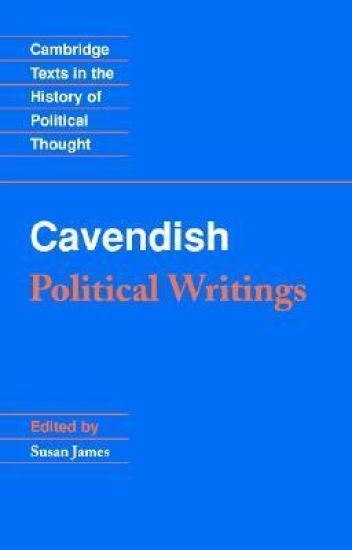
Margaret Cavendish: Political Writings

Margaret Cavendish: Political Writings

Margaret Cavendish

Cambridge University Press
2003
sidottu
Margaret Cavendish, Duchess of Newcastle, published a wide variety of works including poems, plays, letters and treatises of natural philosophy, but her significance as a political writer has only recently been recognised. This major contribution to the series of Cambridge Texts includes the first ever modern edition of her Divers Orations on English social and political life, together with a new student-friendly rendition of her imaginary voyage, A New World called the Blazing World. Susan James explains the allusions made in this classic text, and directs readers to the many intellectual debates with which Cavendish engages. Together these two works reveal the character and scope of Margaret Cavendish's political thought. She emerges as a singular and probing writer, who simultaneously upholds a conservative social and political order and destabilises it through her critical and unresolved observations about natural philosophy, scientific institutions, religion, and the relations between men and women.
Margaret Cavendish: Political Writings

Margaret Cavendish: Political Writings

Margaret Cavendish

Cambridge University Press
2003
pokkari
Margaret Cavendish, Duchess of Newcastle, published a wide variety of works including poems, plays, letters and treatises of natural philosophy, but her significance as a political writer has only recently been recognised. This major contribution to the series of Cambridge Texts includes the first ever modern edition of her Divers Orations on English social and political life, together with a new student-friendly rendition of her imaginary voyage, A New World called the Blazing World. Susan James explains the allusions made in this classic text, and directs readers to the many intellectual debates with which Cavendish engages. Together these two works reveal the character and scope of Margaret Cavendish's political thought. She emerges as a singular and probing writer, who simultaneously upholds a conservative social and political order and destabilises it through her critical and unresolved observations about natural philosophy, scientific institutions, religion, and the relations between men and women.
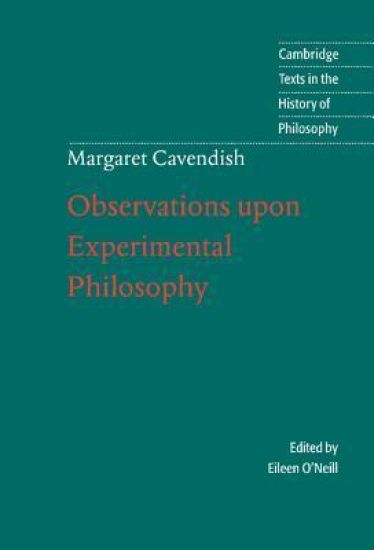
Margaret Cavendish: Observations upon Experimental Philosophy

Margaret Cavendish: Observations upon Experimental Philosophy

Margaret Cavendish

Cambridge University Press
2001
sidottu
Margaret Cavendish's 1668 edition of Observations upon Experimental Philosophy, presented here in a 2001 edition, holds a unique position in early modern philosophy. Cavendish rejects the Aristotelianism which was taught in the universities in the seventeenth century, and the picture of nature as a grand machine which was propounded by Hobbes, Descartes and members of the Royal Society of London, such as Boyle. She also rejects the views of nature which make reference to immaterial spirits. Instead she develops an original system of organicist materialism, and draws on the doctrines of ancient Stoicism to attack the tenets of seventeenth-century mechanical philosophy. Her treatise is a document of major importance in the history of women's contributions to philosophy and science.
Margaret Cavendish: Observations upon Experimental Philosophy

Margaret Cavendish: Observations upon Experimental Philosophy

Margaret Cavendish

Cambridge University Press
2001
pokkari
Margaret Cavendish’s 1668 edition of Observations upon Experimental Philosophy, presented here in its first modern edition, holds a unique position in early modern philosophy. Cavendish rejects the Aristotelianism which was taught in the universities in the seventeenth century, and the picture of nature as a grand machine which was propounded by Hobbes, Descartes and members of the Royal Society of London, such as Boyle. She also rejects the views of nature which make reference to immaterial spirits. Instead she develops an original system of organicist materialism, and draws on the doctrines of ancient Stoicism to attack the tenets of seventeenth-century mechanical philosophy. Her treatise is a document of major importance in the history of women’s contributions to philosophy and science.
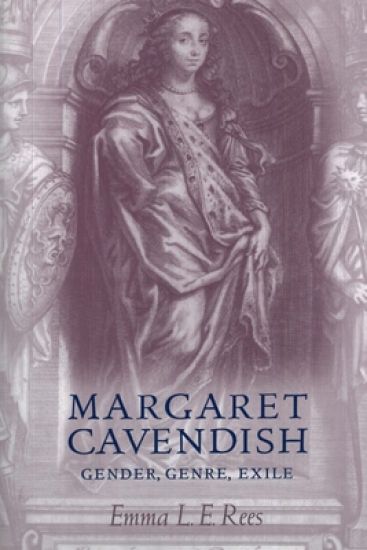
Margaret Cavendish

Margaret Cavendish

Emma Rees

Manchester University Press
2015
nidottu
Margaret Cavendish was one of the most prolific, complex and misunderstood writers of the seventeenth century. A contemporary of Descartes and Hobbes, she was fascinated by philosophical, scientific and imaginative advances, and struggled to overcome the political and cultural obstacles which threatened to stop her engagement with such discourses.Emma Rees examines how Cavendish engaged with the work of thinkers such as Lucretius, Plato, Homer and Harvey in an attempt to write her way out of the exile which threatened not only her intellectual pursuits but her very existence. What emerges is the image of an intelligent, audacious and intrepid early modern woman whose tale will appeal to specialists and general readers alike.
Margaret Cavendish

Margaret Cavendish

CRC Press Inc
1996
sidottu
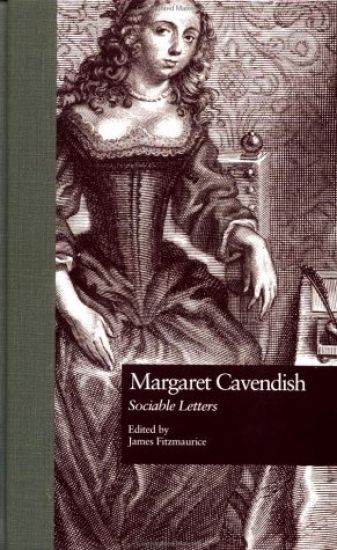
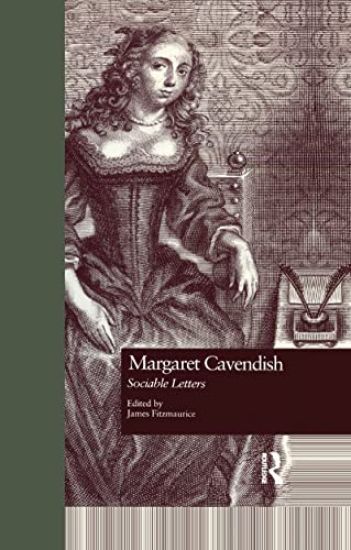
Margaret Cavendish (1623-1673), Duchess of Newcastle and one of the best-known women writers of the her time, is enjoying a revival in the wake of Aphra Behn's canonization: She appears in the Norton Anthology of English Literature , her poetry will appear in a new edition, and Penguin has recently reprinted her science-fiction novel The Blazing World . This is an edition of her hilarious and rowdy letters, unavailable since their original publication in 1664 Margaret Cavendish: Sociable Letters is a window into the world of 17th-century marriage and daily life displaying a pleasing blend of the comic, the ironic, and the serious. Along the way, the author provides us with the first detailed criticism of Shakespeare's plays, which she defends against the Restoration distaste for low characters. She also comments on food, home remedies, the English Civil Wars, religious fanaticism, street entertainers, churchgoing as a way to find a husband, and winter sports This edition offers a full introduction to Cavendish's life and works, a bibliography, and detailed notes, and takes account of hand-corrections made at the author's behest
Margaret Cavendish

Margaret Cavendish

Lisa Walters

Cambridge University Press
2014
sidottu
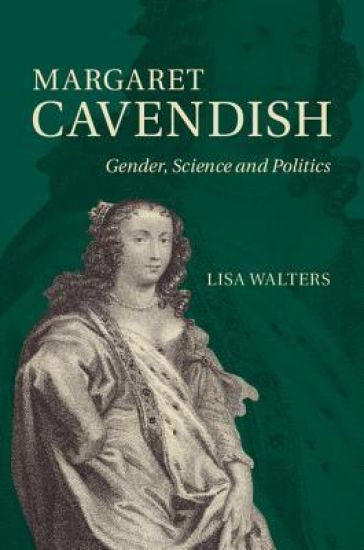
It is often thought that the numerous contradictory perspectives in Margaret Cavendish's writings demonstrate her inability to reconcile her feminism with her conservative, royalist politics. In this book Lisa Walters challenges this view and demonstrates that Cavendish's ideas more closely resemble republican thought, and that her methodology is the foundation for subversive political, scientific and gender theories. With an interdisciplinary focus Walters closely examines Cavendish's work and its context, providing the reader with an enriched understanding of women's contribution to early modern scientific theory, political philosophy, culture and folklore. Considering also Cavendish's ideas in relation to Hobbes and Paracelsus, this volume is of great interest to scholars and students of literature, philosophy, history of ideas, political theory, gender studies and history of science.
Margaret Cavendish

Margaret Cavendish

Lisa Walters

Cambridge University Press
2017
pokkari
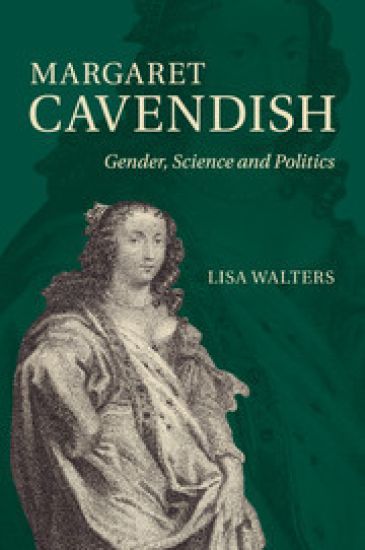
It is often thought that the numerous contradictory perspectives in Margaret Cavendish's writings demonstrate her inability to reconcile her feminism with her conservative, royalist politics. In this book Lisa Walters challenges this view and demonstrates that Cavendish's ideas more closely resemble republican thought, and that her methodology is the foundation for subversive political, scientific and gender theories. With an interdisciplinary focus Walters closely examines Cavendish's work and its context, providing the reader with an enriched understanding of women's contribution to early modern scientific theory, political philosophy, culture and folklore. Considering also Cavendish's ideas in relation to Hobbes and Paracelsus, this volume is of great interest to scholars and students of literature, philosophy, history of ideas, political theory, gender studies and history of science.
Margaret Cavendish

Margaret Cavendish

Cambridge University Press
2022
sidottu
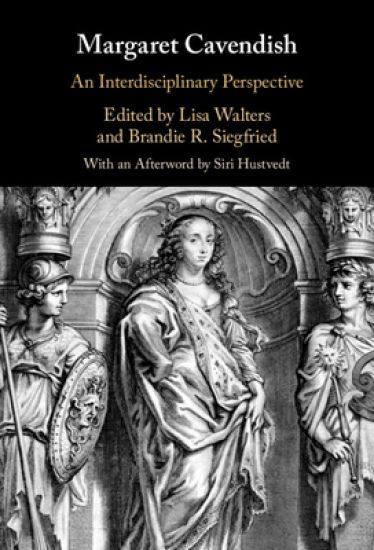
Margaret Cavendish's prolific and wide-ranging contributions to seventeenth-century intellectual culture are impossible to contain within the discrete confines of modern academic disciplines. Paying attention to the innovative uses of genre through which she enhanced and complicated her writings both within literature and beyond, this collection addresses her oeuvre and offers the most comprehensive and multidisciplinary resource on Cavendish's works to date. The astonishing breadth of her varied intellectual achievements is reflected through elegantly arranged sections on History of Science, Philosophy, Literature, Politics and Reception, and New Directions, together with an Afterword by award-winning novelist Siri Hustvedt. The first book to cover nearly all of Cavendish's major works in a single volume, this collection brings together a variety of expert perspectives to illuminate the remarkable ideas and achievements of one of the most fascinating and prolific figures of the early modern period.
Margaret Cavendish
Margaret Cavendish (1623-1673), Duchess of Newcastle and one of the best-known women writers of the her time, is enjoying a revival in the wake of Aphra Behn's canonization: She appears in the Norton Anthology of English Literature , her poetry will appear in a new edition, and Penguin has recently reprinted her science-fiction novel The Blazing World . This is an edition of her hilarious and rowdy letters, unavailable since their original publication in 1664 Margaret Cavendish: Sociable Letters is a window into the world of 17th-century marriage and daily life displaying a pleasing blend of the comic, the ironic, and the serious. Along the way, the author provides us with the first detailed criticism of Shakespeare's plays, which she defends against the Restoration distaste for low characters. She also comments on food, home remedies, the English Civil Wars, religious fanaticism, street entertainers, churchgoing as a way to find a husband, and winter sports This edition offers a full introduction to Cavendish's life and works, a bibliography, and detailed notes, and takes account of hand-corrections made at the author's behest
Margaret Cavendish

Margaret Cavendish

Margaret Cavendish; Michael Robbins

The New York Review of Books, Inc
2019
nidottu
An eclectic collection of poetry by one of 17th century England's boldest, smartest, and independent women. "What a vision of loneliness and riot the thought of Margaret Cavendish brings to mind " Virginia Woolf wrote in A Room of One's Own. Cavendish, the Duchess of Newcastle-upon-Tyne, was a groundbreaking woman writer--a utopian visionary, a scientist, a science-fiction pioneer. She interacted with Thomas Hobbes and Rene Descartes. And she produced startlingly modern poems unlike anything else published in the seventeenth century for their mixture of scientific and proto-Blakean vision, their deep sympathy with the non-human world, and their feminist passion.
The Metaphysics of Margaret Cavendish and Anne Conway

The Metaphysics of Margaret Cavendish and Anne Conway

Marcy P. Lascano

OXFORD UNIVERSITY PRESS INC
2023
sidottu
Marcy P. Lascano examines the philosophical systems of Margaret Cavendish and Anne Conway. Cavendish and Conway are both known for their monism, i.e., the view that there is only one kind of substance in the world, which is capable of self-motion and life. Lascano here provides detailed analyses of their respective accounts of monism, substance, self-motion, individuation, and identity over time, as well as causation, perception, and freedom. She thereby shows how their superficially similar views provide importantly different explanations of the workings of the world. Lascano illuminates under-appreciated nuances in Cavendish's and Conway's views, highlighting the important differences between their systems. Examining their views in tandem allows readers to appreciate the originality of their ideas and their responses to seventeenth-century debates. The book's final chapter then explains how Cavendish's metaphysics lays the groundwork for her natural philosophy, while Conway's metaphysics provides the foundation for her theodicy. Drawing on their original writing and engaging with existing scholarship, Lascano presents the first sustained comparison of Cavendish's and Conway's metaphysics revealing the differences between Cavendish's thoroughgoing naturalism and Conway's spiritualism. In turn, she enlarges our view of these thinkers and their unique ways of understanding the world around us.
The Literary Invention of Margaret Cavendish

The Literary Invention of Margaret Cavendish

Lara A. Dodds

Pennsylvania State University Press
2022
pokkari
As a reader of her literary predecessors, and as a writer who herself contributed to the emerging literary tradition, Margaret Cavendish is an extraordinary figure whose role in early modern literary history has yet to be fully acknowledged. In this study, Lara Dodds reassesses the literary invention of Cavendish—the use she makes of other writers, her own various forms of writing, and the ways in which she creates her own literary persona—to transform our understanding of Cavendish’s considerable accomplishments and influence. In spite of Cavendish’s claims that she did little reading whatsoever, Dodds demonstrates that the duchess was an agile, avid reader (and misreader) of other writers, all of them male, all of them now considered canonical—Shakespeare, Jonson, Donne, Milton, Bacon. In each chapter, Dodds discusses Cavendish’s moments of reading of these authors, revealing their influence on Cavendish while also providing a lens to investigate more broadly the many literary forms—poetry, letters, fiction, drama—that Cavendish employed. Seeking a fruitful exchange between literary history and the history of reading, Dodds examines both the material and social circumstances of reading and the characteristic formal features and thematic preoccupations of Cavendish’s writing in each of the major genres. Thus, not only is our view of Cavendish and her specific literary achievements enhanced, but we see too the contributions of this female reader to the emerging idea of literature in late seventeenth century England. Most previous studies of Cavendish have been preoccupied with literary biography, looking into her royalist politics, materialist natural philosophy, and ambivalent protofeminism. The Literary Invention of Margaret Cavendish is significant, then, in its focus outward from Cavendish to her most enduring and positive contributions to literary history—her revival of an expansive model of literary invention that rests uneasily, but productively, alongside a Jonsonian aesthetics of the verisimilar and a Hobbesian politics of social strife.
The Natural Philosophy of Margaret Cavendish

The Natural Philosophy of Margaret Cavendish

Lisa T. Sarasohn

Johns Hopkins University Press
2010
sidottu
Margaret Cavendish, Duchess of Newcastle, led a remarkable-and controversial-life, writing poetry and prose and philosophizing on the natural world at a time when women were denied any means of a formal education. Lisa T. Sarasohn acutely examines the brilliant work of this untrained mind and explores the unorthodox development of her natural philosophy. Cavendish wrote copiously on such wide-ranging topics as gender, power, manners, scientific method, and animal rationality. The first woman to publish her own natural philosophy, Cavendish was not afraid to challenge the new science and even ridiculed the mission of the Royal Society. Her philosophy reflected popular culture and engaged with the most radical philosophies of her age. To understand Cavendish's scientific thought, Sarasohn explains, is to understand the reception of new knowledge through both insider and outsider perspectives in early modern England. In close readings of Cavendish's writings-poetry, treatises, stories, plays, romances, and letters-Sarasohn explores the fantastic and gendered elements of her natural philosophy. Cavendish saw knowledge as a continuum between reason and fancy, and her work integrated imaginative speculation and physical science. Because she was denied the university education available to her male counterparts, she embraced an epistemology that favored contemplation and intuition over logic and empiricism. The Natural Philosophy of Margaret Cavendish serves as a guide to the unusual and complex philosophy of one of the seventeenth century's most intriguing minds. It not only celebrates Cavendish as a true figure of the scientific age but also contributes to a broader understanding of the contested nature of the scientific revolution.
The Literary Invention of Margaret Cavendish

The Literary Invention of Margaret Cavendish

Lara A. Dodds

Duquesne University Press
2013
sidottu
As a reader of her literary predecessors, and as a writer who herself contributed to the emerging literary tradition, Margaret Cavendish is an extraordinary figure whose role in early modern literary history has yet to be fully acknowledged. In this study, Lara Dodds reassesses the literary invention of Cavendish the use she makes of other writers, her own various forms of writing, and the ways in which she creates her own literary persona to transform our understanding of Cavendishs considerable accomplishments and influence.