
Kirjahaku
Etsi kirjoja tekijän nimen, kirjan nimen tai ISBN:n perusteella.
1000 tulosta hakusanalla Margaret Davies Sullivan
This book re-imagines law as ecolaw.The key insight of ecological thinking, that everything is connected to everything else – at least on the earth, and possibly in the cosmos – has become a truism of contemporary theory. Taking this insight as a starting point for understanding law involves suspending theoretical certainties and boundaries. It involves suspending theory itself as a conceptual project and practicing it as an embodied and material project. Although an ecological imagining of law can be metaphorical, and can be highly imaginative and suggestive, this book shows that it is also literal. Law is part of the material ‘everything’ that is connected to everything else. This means that once the previous certainties of legal thinking have been dismantled, it is after all possible to think of law as ‘natural’ – as embedded in and emergent from a normative biophysical nature. The book proposes that there exists a natural nomos: animals, plants, and Earth systems that produce their own values and norms from which human norms and laws emerge. This book, then, proposes a new way to understand law, and pursues specific arguments to demonstrate the feasibility of law as ecolaw.Drawing inspiration from current trends in the post-humanities, socioecological thought, and developments across the natural sciences in their specific intersections with humanities and social science disciplines, this book will appeal both to legal theorists and to others with interests in these areas.
This book re-imagines law as ecolaw.The key insight of ecological thinking, that everything is connected to everything else – at least on the earth, and possibly in the cosmos – has become a truism of contemporary theory. Taking this insight as a starting point for understanding law involves suspending theoretical certainties and boundaries. It involves suspending theory itself as a conceptual project and practicing it as an embodied and material project. Although an ecological imagining of law can be metaphorical, and can be highly imaginative and suggestive, this book shows that it is also literal. Law is part of the material ‘everything’ that is connected to everything else. This means that once the previous certainties of legal thinking have been dismantled, it is after all possible to think of law as ‘natural’ – as embedded in and emergent from a normative biophysical nature. The book proposes that there exists a natural nomos: animals, plants, and Earth systems that produce their own values and norms from which human norms and laws emerge. This book, then, proposes a new way to understand law, and pursues specific arguments to demonstrate the feasibility of law as ecolaw.Drawing inspiration from current trends in the post-humanities, socioecological thought, and developments across the natural sciences in their specific intersections with humanities and social science disciplines, this book will appeal both to legal theorists and to others with interests in these areas.

This critique of property examines its classical conception: addressing its ontology and history, as well as considering its symbolic aspects and connection to social relations of power.It is organized around three themes: the ways in which concepts of property are symbolically and practically connected to relations of powerthe 'objects' of property in changing contexts of materialismchallenges to the Western idea of property posed by colonial and post-colonial contexts, such as the disempowerment through property of whole cultures, the justifications for colonial expansion and bio piracy.Dealing with the symbolism of property, its history, traditional philosophical accounts and cultural difference, Margaret Davis has written an invaluable volume for all law students interested in property law.
This book engages with a traditional yet persistent question of legal theory – what is law? However, instead of attempting to define and limit law, the aim of the book is to unlimit law, to take the idea of law beyond its conventionally accepted boundaries into the material and plural domains of an interconnected human and nonhuman world. Against the backdrop of analytical jurisprudence, the book draws theoretical connections and continuities between different experiences, spheres, and modalities of law. Taking up the many forms of critical and socio-legal thought, it presents a broad challenge to legal essentialism and abstraction, as well as an important contribution to more general normative theory. Reading, crystallising, and extending themes that have emerged in legal thought over the past century, this book is the culmination of the author’s 25 years of engagement with legal theory. Its bold attempt to forge a thoroughly contemporary approach to law will be of enormous value to those with interests in legal and socio-legal theory.
This book engages with a traditional yet persistent question of legal theory – what is law? However, instead of attempting to define and limit law, the aim of the book is to unlimit law, to take the idea of law beyond its conventionally accepted boundaries into the material and plural domains of an interconnected human and nonhuman world. Against the backdrop of analytical jurisprudence, the book draws theoretical connections and continuities between different experiences, spheres, and modalities of law. Taking up the many forms of critical and socio-legal thought, it presents a broad challenge to legal essentialism and abstraction, as well as an important contribution to more general normative theory. Reading, crystallising, and extending themes that have emerged in legal thought over the past century, this book is the culmination of the author’s 25 years of engagement with legal theory. Its bold attempt to forge a thoroughly contemporary approach to law will be of enormous value to those with interests in legal and socio-legal theory.
This critique of property examines its classical conception: addressing its ontology and history, as well as considering its symbolic aspects and connection to social relations of power.It is organized around three themes: the ways in which concepts of property are symbolically and practically connected to relations of powerthe 'objects' of property in changing contexts of materialismchallenges to the Western idea of property posed by colonial and post-colonial contexts, such as the disempowerment through property of whole cultures, the justifications for colonial expansion and bio piracy.Dealing with the symbolism of property, its history, traditional philosophical accounts and cultural difference, Margaret Davis has written an invaluable volume for all law students interested in property law.

Margaret Llewelyn Davies (1861-1944), a co-operator, feminist and socialist, was well known in her time as the outstanding leader of the Women’s Co-operative Guild. This first full scale biography chronicles her life and achievements, intertwining activity among working class women with her personal story. Margaret Llewelyn Davies’ system of education, discussion and campaigning opened doors. Women became impressive activists, committed to change both in the co-operative movement and the wider public world. As one Guild member put it, ‘from a shy, nervous woman the Guild made me a fighter’. The Guild flourished, developing what has been termed a distinctively working class feminism. By 1914 the Manchester Guardian could describe it as ‘probably the most remarkable women’s organisation in the world’. The Guild pressed for boycotting ‘sweated’ goods, supported trade unions, battled for a minimum wage, fought for the vote, new divorce laws and for state maternity benefit to be paid to the wife. Cohen draws on original research: in newspapers, the women’s pages of the Co-operative News, Guild records, unpublished papers, and more. This book breaks new ground, providing not only compelling insights into Margaret Llewelyn Davies’ life and politics, but a fresh perspective on working class women’s activism, rediscovering their words, lives, ideas and campaigns.
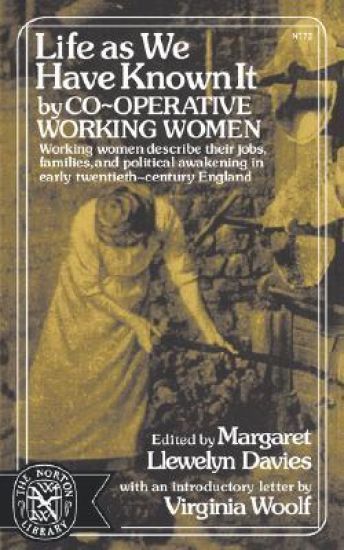
A first-hand record of working class women's experiences in early twentieth-century England, Life as We Have Known It is a unique view of lives Virginia Woolf described as "still half hidden in profound obscurity." The women write about growing up in poverty, going into domestic service, being a hat factory worker, or a miner's wife concerned about the colliery baths, and how they became politically active through the Women's Co-operative Guild movement. Virginia Woolf's essay contains her candid and searching reflections on the Guild's 1913 Congress, the women who spoke there, and the differences between their lives and hers.
The Women's Cooperative Guild, 1883-1904 (1904)
Margaret Llewelyn Davies
KESSINGER PUBLISHING, LLC
2010
pokkari
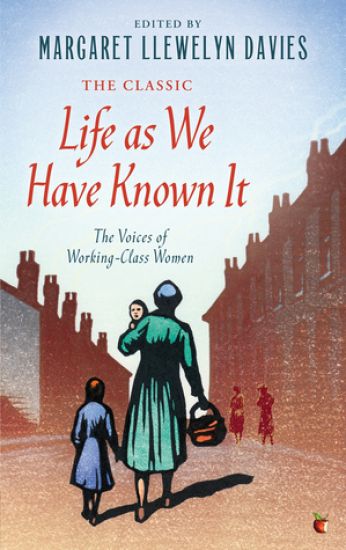
'I was born in Bethnal Green ...a tiny scrap of humanity. I was my mother's seventh, and seven more were born after me ...When I was ten years old I began to earn my own living.' Told in the distinctive and memorable voices of working class women, Life as We Have Known It is a remarkable first-hand account of working lives at the turn of the last century. First published in association with the Women's Co-operative Guild in 1931, Life as We Have Known it is a unique evocation of a lost age, and a humbling testament to what Virginia Woolf called 'that inborn energy which no amount of childbirth and washing up can quench'. Here is domestic service; toiling in factories and in the fields, and of husbands - often old and ill before their time, some drinkers or gamblers. Despite telling of the hardship of a poverty-stricken marriage, the horrors of childbirth and of lives spent in search of jobs, these are spirited and inspiring voices.
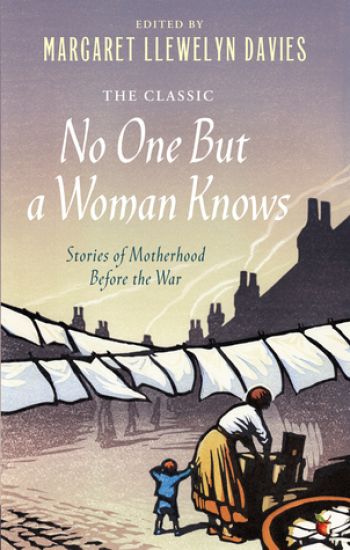
'I was married at twenty and a mother of three by twenty-three ...When I look back at the first three years of my marriage, I wonder how I lived through it.' When it was published in 1915 No One But a Mother Knows provoked a sensation - for the first time, working women were able to put across their view of maternity. These humbling autobiographical portraits are as valuable today as they were almost 100 years ago: in their own words these women tell of the horrors of bringing ten children into the world in as many years; of not being able to afford a doctor or nurse; of the physical and emotional strain of bringing up large families with very little help. These extraordinary and inspiring stories of poverty and hardship remind us of the astounding endurance of woman and of the strength of a mother's love.
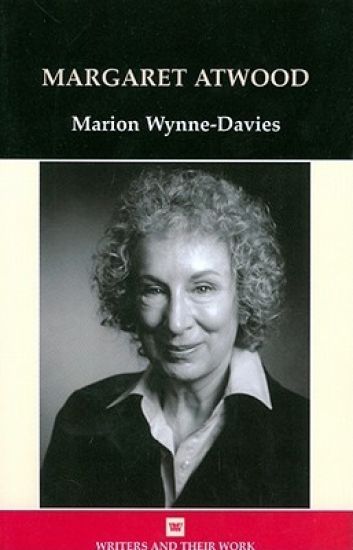
This book traces the chronological development of Atwood’s global reputation from Canadian nationhood to world-wide politics and from the role of women to gender identity. Chapters offer a comprehensive overview of her poetry, novels, shorter fiction, children’s books, criticism and experimental multi-genre work. There are more detailed analyses of Atwood’s most influential writing, from her first novels such as Surfacing and The Edible Woman, through the works that ensured her international reputation such as The Handmaid’s Tale, Cat’s Eye and The Robber Bride, to her most recent work, Alias Grace and Oryx and Crake. Wynne-Davies presents these works through an overall understanding of Atwood’s intelligence, humour, linguistic dexterity, breadth of vision and ethical integrity.

'Warm, revelatory and moving' – The New Statesman's Books of the Year, 2024At the end of almost every day of their fifty-five years of married life, the publicity-shy author Margaret Forster would ask her naturally gregarious and outgoing husband Hunter Davies to describe to her the highlights of his working day spent in the worlds of journalism and publishing. In the six years that have elapsed since Margaret’s death, Hunter has continued these conversations with his wife, regaling her with accounts of the events and developments in his life – domestic, social, romantic, book-related, health-related and others – through a sequence of ‘Letters to Margaret’.Whether recounting adventures in online dating, the pleasures and pitfalls of buying a new house by the seaside, the trauma of major operations on his heart and gall bladder, a chance encounter at a book-signing session that led to a new romantic attachment, or a visit to A&E when he was supposed to be watching the World Cup final, these twenty-three letters weave together strands of confession, self-mockery, anecdote and touching remembrance of married happiness with Margaret.Letters to Margaret reveals Hunter Davies raging happily against the dying of the light in his late eighties, and seeking consolation for life’s frustrations and disappointments through a sustained conversation with the woman he shared his life with for more than half a century.

At the end of almost every day of their fifty-five years of married life, the publicity-shy author Margaret Forster would ask the naturally gregarious and outgoing Hunter Davies to describe to her the highlights of his day in the worlds of journalism and publishing. In the six years that have elapsed since Margaret's death, Hunter has continued these conversations with his wife, regaling her with accounts of the events and developments in his life – domestic, social, romantic, book-related, health-related and others – through a sequence of 'Letters to Margaret’. The letters are pure Hunter Davies: a feast of gossipy stream-of-consciousness that weaves together strands of confession, self-mockery, anecdote and touching remembrance of married happiness with Margaret. Entertaining, informative, irreverent and indiscreet – and sometimes very touching – Letters to Margaret reveals an eighty-seven-year-old Hunter still raging against the dying of the light, and seeking consolation for life’s frustrations and disappointments (and the loneliness of widowerhood) through a sustained conversation with the woman he shared his life with for more than half a century.
A Sketch of the Character, Experience, and Triumphant Death of Margaret Leaden, Who Renounced the Errors of Popery
John Davies
Kessinger Pub
2009
pokkari
A Sketch Of The Character, Experience, And Triumphant Death Of Margaret Leaden, Who Renounced The Errors Of Popery (1816)
John Davies
KESSINGER PUBLISHING, LLC
2010
sidottu
Famine Early Warning and Response
Margaret Buchanan-Smith; Susanna Davies
Practical Action Publishing
1995
nidottu
Drawing on case studies from Ethiopia, Sudan, Chad, Mali and Kenya (focusing on Turkana district) during the drought years of 1990-91, this book investigates why early warning signals were not translated into timely intervention. It examines, for the first time, the role of early warning information in decision-making processes, particularly within key donor agencies. The book concludes with practical policy recommendations, on who 'owns' early warning information, how it is used and looks at how to speed up the logistics of emergency relief.