Kirjojen hintavertailu. Mukana 11 342 296 kirjaa ja 12 kauppaa.

Kirjahaku

Etsi kirjoja tekijän nimen, kirjan nimen tai ISBN:n perusteella.

1000 tulosta hakusanalla Margaret Fuller

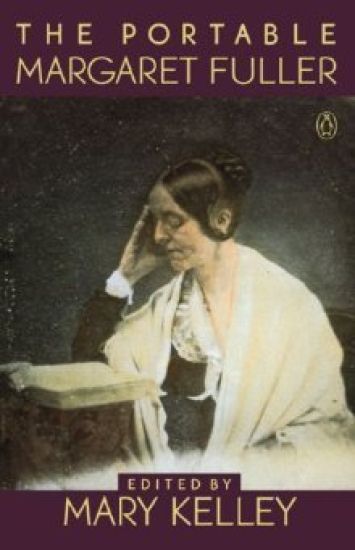
The Portable Margaret Fuller

The Portable Margaret Fuller

Margaret Fuller

PENGUIN BOOKS LTD
1994
pokkari
An anthology of the writings of Margaret Fuller (1810-1850), American editor, essayist, poet, teacher and author. An associate of Emerson, Thoreau and William Henry Channing at the Brook Farm Community in Massachusetts, Fuller edited the transcendentalist journal "The Dial", and became the first woman journalist for the "New York Tribune". This book includes the texts "Summer on the Lakes" and "Women in the Nineteenth Century" in their entirety, a selection of criticisms, her despatches from Italy for Horace Greeley during the Italian Revolution, and selected correspondence. Mary Kelley has edited and prefaced the collection with a critical introduction, and provided chronology and notes.
Margaret Fuller

Margaret Fuller

Charles Capper

Oxford University Press Inc
2007
sidottu
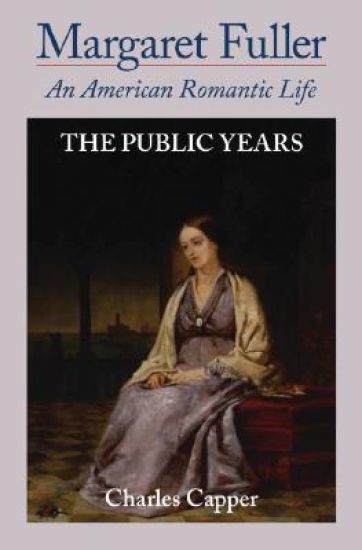
Winner of the 1993 Bancroft Prize and praised in The Nation as 'the richest account we have yet of Fuller's formative years,' the first volume of Margaret Fuller: An American Romantic Life was acclaimed by critics and scholars alike as the finest portrait available of Fuller's early life. Now, in the much-anticipated sequel, Charles Capper illuminates Fuller's "public years," focusing on her struggles to establish her identity as an influential intellectual woman in the Romantic Age. Capper brings to life Fuller's dramatic mixture of inward struggles, intimate social life, and deep engagements with the major movements of her time--from outré Boston Transcendentalism to contentious New York journalism and European revolutionary ideas. Capper describes how Fuller struggled to reconcile high avant-garde cultural ideals and Romantic critical methods with democratic social and political commitments, and he reveals how she strove to articulate--through the lens of American idealism and European "experience"--a cosmopolitan vision for her nation's culture and politics. Capper also sheds light on Fuller's complex personal life. He offers fresh and often startlingly new treatments of Fuller's friendships with Ralph Waldo Emerson, Thomas Carlyle, and Giuseppe Mazzini and provides new insights into such badly understood intimates as the shadowy James Nathan, the poetic genius Adam Mickiewicz, and Fuller's Roman lover Giovanni Ossoli. Readers will also find lively portraits of many other famous figures with whom Fuller associated, including Henry David Thoreau, Nathaniel Hawthorne, Horace Greeley, Lydia Maria Child, George Sand, and Robert and Elizabeth Browning. Filled with dramatic, ironic, and sometimes tragic turns, this superb biography captures the story of one of America's most extraordinary figures, producing at once the best life of Fuller ever written and one of the great biographies in American history.
Margaret Fuller

Margaret Fuller

Charles Capper

Oxford University Press Inc
2010
nidottu
Filled with dramatic, ironic, and sometimes tragic turns, this superb biography captures the story of one of America's most extraordinary figures, producing at once the best life of Fuller ever written and one of the great biographies in American history. In Volume II, Charles Capper illuminates Fuller's "public years," focusing on her struggles to establish her identity as an influential intellectual woman in the Romantic Age. Capper brings to life Fuller's dramatic mixture of inward struggles, intimate social life, and deep engagements with the major movements of her time. He describes how Fuller struggled to reconcile high avant-garde cultural ideals and Romantic critical methods with democratic social and political commitments, and he reveals how she strove to articulate a cosmopolitan vision for her nation's culture and politics. Capper also offers fresh and often startlingly new treatments of Fuller's friendships with Ralph Waldo Emerson, Thomas Carlyle, and Giuseppe Mazzini and many others.
Margaret Fuller

Margaret Fuller

Lester K. Little

University of Wisconsin Press
2007
sidottu
Margaret Fuller (1810-1850), a pioneering gender theorist, transcendentalist, journalist, and literary critic, was one of the most well-known and highly regarded feminist intellectuals of nineteenth-century America. With her contemporaries Ralph Waldo Emerson and Henry David Thoreau, she was one of the predominant writers of the Transcendentalist movement, and she aligned herself in both her public and private life with the European revolutionary fervor of the 1840s. She traveled to Italy as a foreign correspondent for the New York Tribune to cover the nascent revolutions, pursuing the transnational ideal awakened in her youth by a classical education in European languages and a Romantic curiosity about other cultures, traditions, and identities. This volume is a collaboration of international scholars who, from varied fields and approaches, assess Fuller's genius and character. Treating the last several years of Margaret Fuller's short life, these essays offer a truly international discussion of Fuller's unique cultural, political, and personal achievements. From the origins and articulations of Fuller's cosmopolitanism to her examination of ""the woman question,"" and from her fascination with the European ""other"" to her candid perception of imperial America from abroad, they ponder what such an extraordinary woman meant to America, and also to Italy and Europe, during her lifetime and continuing to the present.
Margaret Fuller

Margaret Fuller

Joel Myerson

Greenwood Press
1998
sidottu
One of the most influential American women writers of the 19th century, Margaret Fuller (1810-1850) played a vital role in the shaping of New England Transcendentalism and the birth of the women's movement. Her Woman in the Nineteenth Century (1845) was the first thorough discussion of feminism by an American. As a feminist manifesto, her treatise examined the economic, political, and cultural roles of women in society. As the editor of The Dial, the quarterly literary and philosophical publication of the Transcendentalists, she was in close contact with Emerson, Thoreau, and other leading thinkers of the era. As a staff member of the New York Tribune, she developed a widespread reputation as a critic. Her influence was so great that her ideas and persona were reflected in the literary works of Hawthorne, Lowell, and other writers of the period.For many decades, Margaret Fuller was largely neglected by the scholarly community. While she was always considered a pioneering feminist, she was also seen as only a peripheral figure of the American Renaissance. In recent years, however, scholarship on Fuller has exploded, and her great contributions to 19th century American literature and culture are receiving much attention. This bibliography cites and annotates several hundred scholarly studies about Fuller published between 1983 and 1995. It also provides entries for roughly 100 works about Fuller not included in the author's previous bibliographies. Entries are grouped in chapters devoted to each year, so that the reader may trace the growth in Fuller scholarship. A comprehensive index allows the user to locate sources according to author, subject, and periodical title.
The Letters of Margaret Fuller

The Letters of Margaret Fuller

Margaret Fuller

Cornell University Press
1983
sidottu
The first letters in Volume I are those of a seven-year-old child; the last were written by an uncommonly well-educated woman ready for a larger challenge than schoolteaching could offer her. The letters tell the story of her work with Amos Bronson Alcott and his experimental Temple School, of the early days of her friendship with Ralph Waldo Emerson, of the beginnings of her life as a writer, and of her important work as translator and critic of Goethe.
The Letters of Margaret Fuller

The Letters of Margaret Fuller

Margaret Fuller

Cornell University Press
1983
sidottu
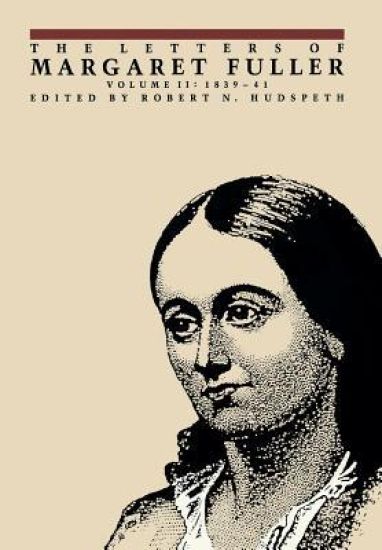
This second volume publishes all of Margaret Fuller's letters written from 1839 to 1841—the years in which she first began to achieve fame as a writer and an editor. Addressed to such eminent figures as Ralph Waldo Emerson, Henry David Thoreau, William H. Channing, Elizabeth Peabody, and Frederic H. hedge as well as to Fuller's family and intimate friends, these letters record the years of her involvement in the Transcendentalist Club—a group of liberal clergymen and writers who gathered to discuss theology, literature, and philosophy. In 1839 the Club decided to found a magazine, The Dial; Fuller became the editor, and at last she had a forum for her innovative views of literature and of literary criticism. These are also the years of her famous "conversations" for women—weekly discussions of mythology which were attended by twenty-five of the most prominent women in the area. The letters chronicle the most emotionally turbulent period in her life. In the course of little more than a year she was rejected by the man she loved, Samuel G. Ward, who then married her close friend Anna Barker; she was rebuffed by Emerson as well; and she underwent a profound religious experience that she felt changed her life.
The Letters of Margaret Fuller

The Letters of Margaret Fuller

Margaret Fuller

Cornell University Press
1984
sidottu
The third volume of this major series opens with Fuller's decision in early 1842 to resign her post as editor of The Dial, after she realized she would never be paid for her work there. It closes with her in New York, having accepted Horace Greeley's invitation to work as a book reviewer for The Daily Tribune. Her position was nearly without precedent for a woman, and she wrote enthusiastically of her job that it provided "a more various view of life than any I ever before was in." She found herself in a larger world: the new tasks of daily journalism replaced the demands of The Dial, and a mass audience replaced her coterie of intellectual readers. These were prolific years for Fuller, during which she wrote on a wide variety of subjects, and the letters chronicle her progress on a number of projects, among them her travel book, Summer on the Lakes, in 1843, which grew out of a trip to the Midwest; her translation of Bettina von Arnim's Die Günderode; and her essays on contemporary poetry, fiction, and drama. She devoted the fall of 1844 to expanding "The Great Lawsuit," an essay she had written for The Dial; the letters document how the piece grew to become her most important book—Woman in the Nineteenth Century, a provocative study of woman's role in American life.
The Letters of Margaret Fuller

The Letters of Margaret Fuller

Margaret Fuller

Cornell University Press
1987
sidottu
From 1844 to 1847 Margaret Fuller served as review editor for Horace Greeley's New-York Herald Tribune—and herself reviewed books by Edgar Allan Poe and Herman Melville among others—and published Papers on Literature and Art, a volume of her own essays. She became known as something of a radical in literary circles, allying herself with George Sand, Emerson, and Goethe, and with the Young America poets, Evert A. Duyckinck, Cornelius Mathews, and William Gilmore Simms. In August 1846 Fuller left for Europe with her friends Marcus and Rebecca Spring. Her letters describe her meetings there with Thomas Carlyle, George Sand, Lamennais, and the aging Wordsworth, and with such political figures as the exiles Giuseppe Mazzini and Adam Mickiewicz. Often the letters expand upon topics addressed in her public writing. Her life in these years, however, is dominated by her love for the German businessman James Nathan. The nearly fifty letters she wrote to him in 1845 and 1846 show her startling willingness to take a subservient role and her longing for emotional acceptance. Dreams of a lasting relationship with Nathan end in Europe with his betrothal to another woman, but by the spring of 1847 she had recovered from her deep disappointment and gone on to achieve great personal growth, both in her consciousness of herself as a woman and in political awareness. By the time this volume comes to a close she has met Giovanni Ossoli, a man who shares her ideals and offers her emotional security.
The Letters of Margaret Fuller

The Letters of Margaret Fuller

Margaret Fuller

Cornell University Press
1988
sidottu
The fifth volume of the collected letters of Margaret Fuller traces a period of great emotional turbulence, reflecting the personal struggles she faced in motherhood and the external strife of revolutionary Europe in 1848. The book opens as she takes up residence in Rome, where she continued to write essays for the New-York Daily Tribune and kept up a steady flow of commentary on the political situation for her family and friends. Among Fuller's correspondents are Ralph Waldo Emerson, Giovanni Ossoli, William Wetmore Story, Giuseppe Mazzini, Horace Greeley, George William Curtis, and Elizabeth Barrett Browning. Many of the letters were written in Italian and are translated here for the first time. Since Fuller was more centrally involved in the Italian Risorgimento than any other American, they constitute an entirely new documentary source for historians of nineteenth-century Italy.
Margaret Fuller

Margaret Fuller

Margaret Bell

Literary Licensing, LLC
2013
sidottu
Margaret Fuller is a biography written by Margaret Bell that explores the life of Margaret Fuller, a prominent figure in the American Transcendentalist movement. The book delves into Fuller's early life, her education, and her career as a writer and editor for various publications. It also examines her involvement in the women's rights movement and her travels to Europe, where she became acquainted with notable figures such as Ralph Waldo Emerson and Thomas Carlyle. Throughout the biography, Bell provides insight into Fuller's personal struggles, including her search for love and her battle with depression. Overall, Margaret Fuller offers a comprehensive look at the life of a pioneering woman who made significant contributions to American literature and feminist thought.This is a new release of the original 1930 edition.This scarce antiquarian book is a facsimile reprint of the old original and may contain some imperfections such as library marks and notations. Because we believe this work is culturally important, we have made it available as part of our commitment for protecting, preserving, and promoting the world's literature in affordable, high quality, modern editions, that are true to their original work.